
A trailer goes missing on a Friday night, and by Monday morning the real problem is bigger than the asset itself. Deliveries have to be reshuffled, customers need answers, and someone is still trying to work out when the trailer was last seen because the tracking data sits in a different system from the rest of the fleet. That is why unattended asset tracking options matter. For transport operators, they are not just about recovery after theft. They are about keeping control of trailers, plant and non-powered equipment that still affect planning, utilisation and compliance.
For most fleets, the question is not whether to track unattended assets. It is which type of tracking makes sense for the way those assets actually move, sit idle and return to service. A box trailer parked in a customer yard has different requirements from a generator, a welfare unit or a refrigerated trailer working across multiple depots. The right choice depends on power source, update frequency, installation constraints and how well the tracking data fits into day-to-day fleet management.
What unattended asset tracking options usually include
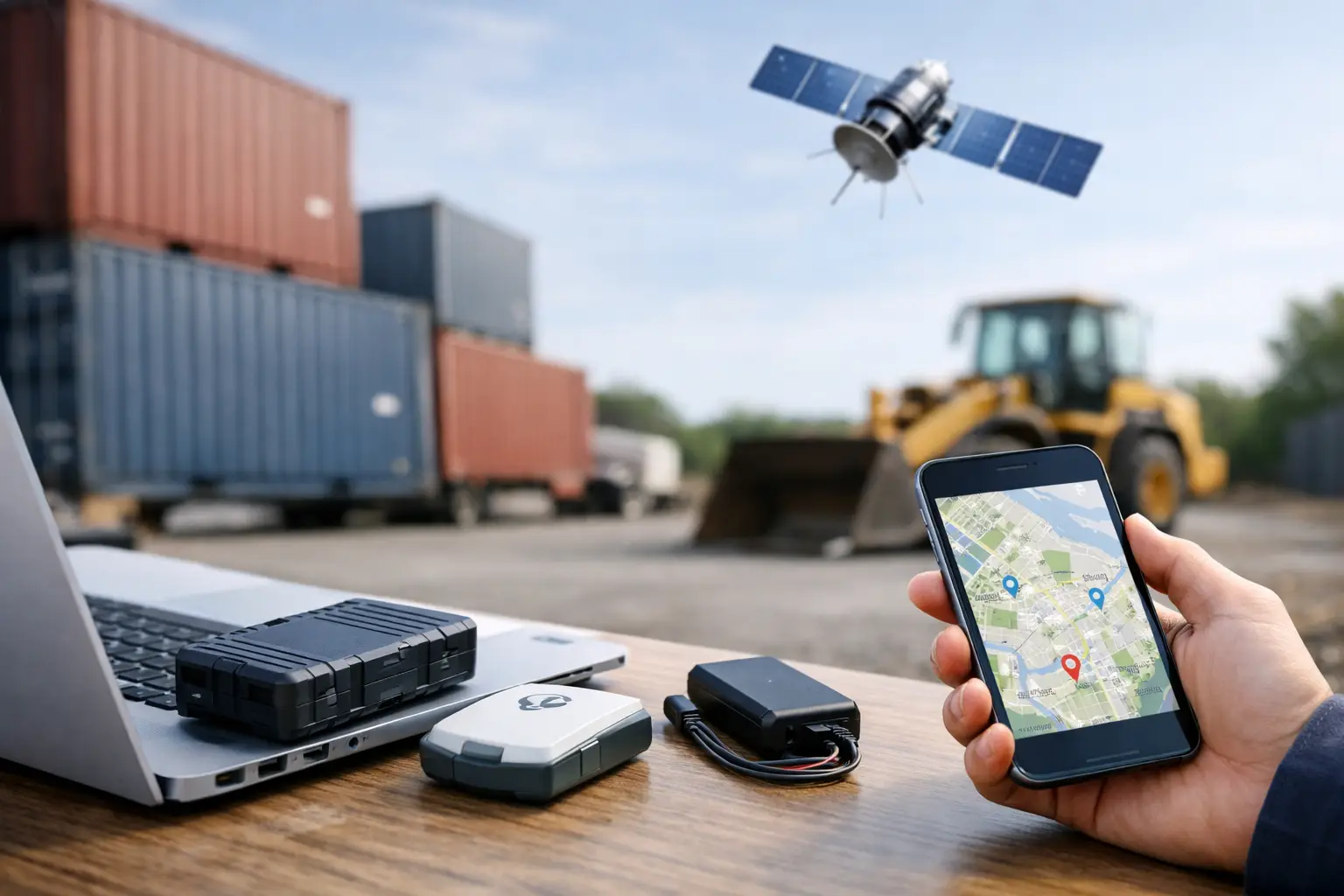
When people talk about unattended asset tracking options, they are usually referring to battery-powered trackers, solar-assisted trackers and wired units fitted to assets that have their own power supply. All three can provide location data, movement alerts and usage history, but they behave very differently in live operations.
Battery-powered trackers are often the starting point for trailers and equipment with no permanent power. They are relatively quick to fit and work well where an asset may sit idle for long periods. The trade-off is battery life versus reporting frequency. If you want updates every few minutes, the battery will drain faster. If you only need alerts when an asset moves, battery life can extend significantly.
Solar-assisted trackers can be a good fit for assets that spend enough time outdoors to maintain charge. They reduce the need for battery replacement and can support more regular reporting than a standard battery unit. That said, they are not ideal for every use case. Assets stored indoors, parked in covered yards or used in low-light conditions may not generate enough charge to support reliable tracking.
Wired trackers suit assets with an available power source, such as some refrigerated trailers or specialist equipment. They support more frequent data transmission and can offer a more continuous view of location and movement. The downside is installation complexity. For operators looking to avoid workshop time and keep fitment simple, a wired option is not always the easiest route.
Choosing unattended asset tracking options by asset type
The best tracking setup starts with the asset, not the technology. A high-value trailer on long-distance work justifies a different level of visibility from a skip loader attachment or a seldom-used lighting tower.
Trailers
Trailer tracking is the most common unattended asset requirement in transport. Operators need to know where trailers are, whether they are moving unexpectedly, how long they have been stationary and which site they are currently on. For most standard trailers, battery or solar-powered devices are the practical choice because they avoid hard wiring and can be fitted with minimal disruption.
If your operation depends on tight trailer rotation, quicker updates can help dispatch teams avoid unnecessary phone calls and yard checks. If the main priority is theft detection and recovery, movement alerts and geofencing may matter more than constant live tracking.
Plant and equipment
Plant, generators and site equipment often spend longer periods off-road and outside normal transport workflows. Here, battery life and physical durability tend to matter more than second-by-second visibility. A tracker that can withstand harsh conditions and still send an alert when the asset moves is usually more valuable than one designed for frequent positional updates.
Refrigerated and powered assets
Powered assets can support more capable tracking because they are less constrained by battery life. If temperature-controlled trailers or powered units form part of daily planning, a wired or externally powered device can make sense. It allows more regular reporting and often supports broader monitoring without the compromises that come with sleep-mode battery preservation.
The operational features that matter most
Not every tracking feature improves fleet control. For unattended assets, a few capabilities do most of the work.
Location history is essential because it gives transport teams a clear record of where an asset has been and when. This is useful for recovery, but it is just as useful for customer queries, detention disputes and internal checks on trailer utilisation.
Movement alerts are often the quickest route to value. If a trailer leaves a site outside expected hours, or equipment starts moving when it should be parked, the team knows immediately. That shortens response time and reduces the chance of discovering a problem hours later.
Geofencing is especially useful for depots, customer sites and regular drop locations. It allows planners and depot teams to confirm arrivals and departures without relying on manual updates. For larger fleets, this can remove a lot of avoidable chasing and guesswork.
Reporting should not be overlooked. A tracker that provides a map pin but no usable reporting may help with recovery, but it does little for utilisation analysis. Operators need to see which trailers are active, which have been idle too long and which assets are spending more time in third-party yards than expected.
Why integration matters more than another map
One of the biggest mistakes operators make is treating unattended asset tracking as a standalone purchase. On paper, a low-cost tracker for each trailer looks sensible. In practice, it can create another login, another report and another disconnected stream of data that the transport office has to manage.
If vehicle tracking, trailer tracking and compliance data sit in separate places, dispatch decisions slow down. Teams spend more time piecing together basic answers like which unit is closest, which trailer is available and whether the driver has the hours to move it. The value of tracking improves when unattended assets are visible within the same platform used for daily fleet control.
That matters for more than convenience. It affects utilisation, planning accuracy and admin time. A single platform gives transport managers a clearer picture of the fleet as a working operation rather than a collection of separate systems. For businesses running mixed fleets, that visibility is often more useful than having the most advanced standalone tracker on the market.
Cost, battery life and reporting frequency
There is no universal best option because cost and performance are linked. Lower-cost battery devices can be very effective where assets move infrequently and alerts are event-based. They are less suitable where the operation needs regular polling throughout the day.
Battery replacement also needs to be considered properly. A tracker with a lower upfront cost may become less attractive if devices need frequent maintenance across a large trailer fleet. On the other hand, paying for high-frequency tracking on assets that rarely move can be unnecessary.
This is where honest specification matters. Operators should ask how often the asset really needs to report, how long it may sit idle, whether it has access to light or power, and who will manage device maintenance at scale. Good unattended asset tracking options are matched to operational reality, not just brochure claims.
Common buying mistakes to avoid
The first is buying purely for theft recovery. Recovery matters, but if that is the only use case, you may miss the wider operational gains from utilisation reporting and planning visibility.
The second is overlooking installation and maintenance. A tracker that looks straightforward at purchase can become a burden if every battery change requires extra admin or workshop time.
The third is accepting a separate platform as normal. For transport businesses already managing tachographs, driver hours, vehicle tracking and maintenance schedules, another silo rarely helps. Fleet operators generally need fewer systems, not more.
How to assess the right option for your fleet
Start with your highest-value unattended assets and the points where lack of visibility causes real operational friction. That may be trailers sitting too long at customer sites, plant that regularly moves between depots, or specialist equipment that is hard to locate when jobs are scheduled at short notice.
Then define what success actually looks like. If the goal is faster recovery, prioritise movement alerts and dependable location reporting. If the goal is better planning, focus on utilisation history, geofencing and platform integration. If the goal is lower admin, simplicity of fitment and a single operational view may be more important than advanced device specification.
For UK operators managing compliance alongside fleet visibility, this joined-up approach is usually where the return becomes clear. That is the thinking behind platforms like Fleetalyse, where asset tracking works best as part of wider transport control rather than another isolated tool.
The best unattended asset tracking options are the ones your team will actually use every day. Not because they add another dashboard to watch, but because they make dispatch decisions quicker, reduce avoidable chasing and give you fewer blind spots across the fleet.