
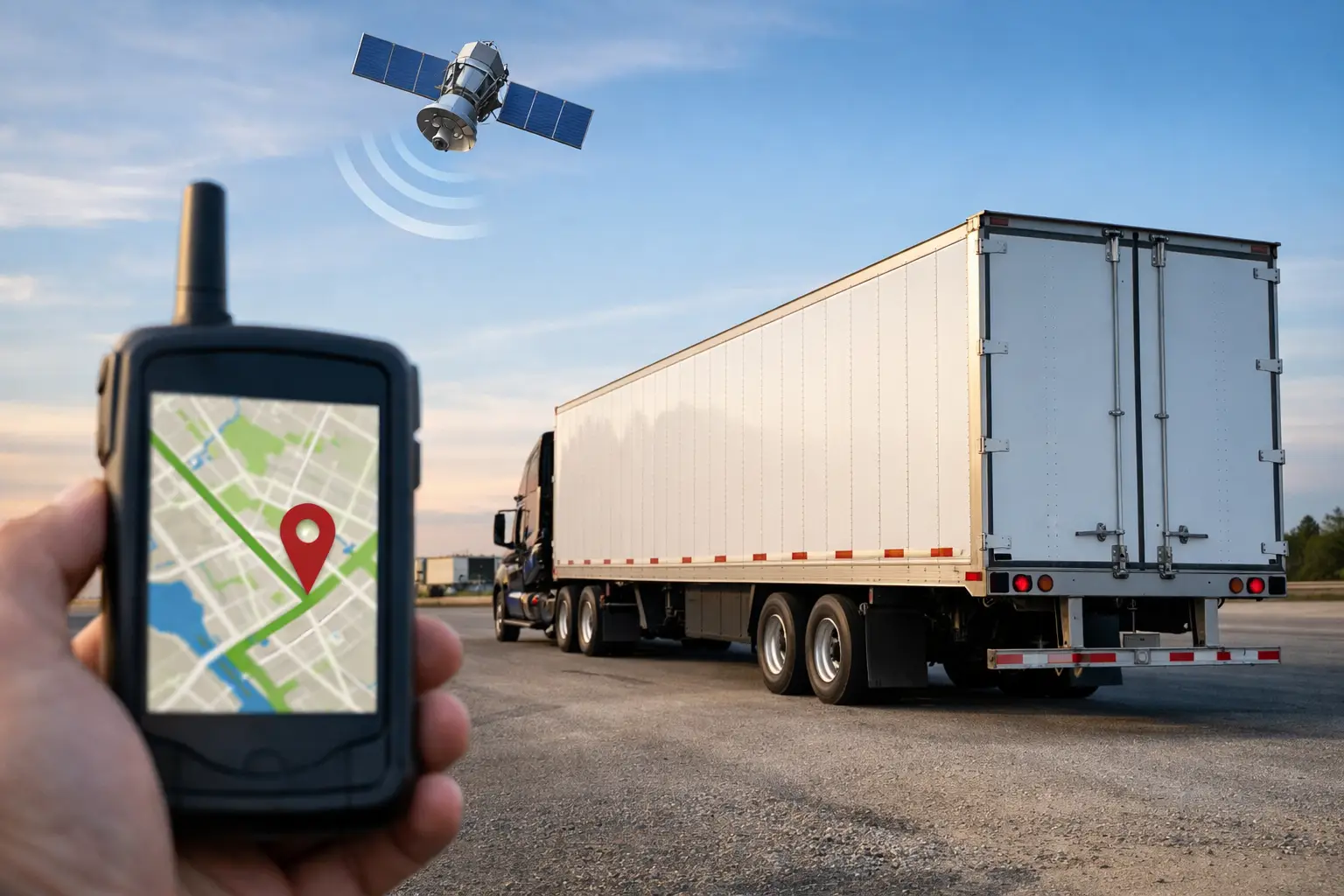
A trailer goes missing less dramatically than a lorry. There is no driver stranded at the roadside and no obvious breakdown to report. More often, it is simply not where the depot team expected it to be. A planner thinks it is at customer site A, the yard team says it came back last week, and by the time someone confirms the truth, the job has already slipped. That is usually when operators start asking: do trailers need GPS tracking?
The honest answer is no, not every trailer needs tracking in every operation. But many fleets are carrying far more risk, delay and admin than they realise because trailers remain the least visible part of the fleet. If you run curtain-siders, box trailers, refrigerated units, plant trailers or mixed assets across multiple sites, GPS tracking can move from “nice to have” to operationally necessary very quickly.
Do trailers need GPS tracking for every fleet?
Not automatically. A small fleet with a handful of trailers, fixed routes and one depot may cope perfectly well with manual control. If the same units return to the same yard each day and your team always knows what is connected to what, trailer tracking may not be the first investment to make.
But that is not how many transport operations work in practice. Trailers are dropped, swapped, subcontracted, parked at customer sites, left in overflow yards, sent for maintenance and moved between depots. Once that happens, visibility starts to rely on phone calls, handwritten notes, driver memory and spreadsheets that are already out of date.
That is the point where the question changes. It stops being “Do we legally need trailer tracking?” and becomes “Can we still control trailer movements without it?” For many operators, especially those scaling beyond a simple depot model, the answer is increasingly no.
What trailer GPS tracking actually solves
Most buyers start with theft prevention in mind. That is reasonable. Trailers are valuable assets, and a stolen trailer often means a lost load, missed delivery slot, insurance disruption and customer problems all at once. GPS tracking gives you a live or recent location, which can support a faster response.
But security is only one part of the business case. In day-to-day fleet operations, trailer tracking often pays for itself through better planning and less wasted time. Dispatch teams can see which trailers are available and where they are. Depot staff spend less time searching yards. Drivers are less likely to be sent for the wrong trailer. Maintenance teams can identify low-use assets and overused ones more accurately.
There is also a utilisation question. Plenty of operators own or lease more trailers than they actively need, simply because they do not have clear data on which units are moving, which are sitting idle and which are stuck at customer locations for too long. GPS tracking turns that from guesswork into evidence.
The biggest risks of running untracked trailers
An untracked trailer does not just create blind spots when something goes wrong. It creates small inefficiencies every week that are easy to ignore because they are spread across different teams.
A planner may lose 20 minutes confirming whether a trailer is loaded and on site. A transport office may arrange an unnecessary trailer movement because the original unit was actually available elsewhere. A depot may hold extra assets as a buffer because no one is confident about real availability. None of that looks dramatic in isolation, but over a month it adds up to labour cost, vehicle time and avoidable pressure.
There is also a compliance and audit angle. While trailer tracking is not a direct substitute for tachograph management or operator licence compliance, better asset visibility supports stronger control. If a trailer is due for inspection, repair or service, you need to know where it is. If a trailer has been standing for too long, that matters too. Operators who rely on manual trailer checks often find that administrative gaps appear long before anyone notices them.
Where trailer tracking makes the most sense
Trailer GPS tracking tends to deliver the clearest return in fleets where trailers are regularly uncoupled from the same towing unit. That includes haulage businesses running drop-and-swap work, distribution fleets with customer-site dwell time, and operations using multiple depots or shared yards.
It also makes sense where the trailer itself carries higher operational value. Refrigerated trailers, specialist plant trailers and units carrying high-value goods are obvious examples. In those cases, the cost of losing visibility is not just the trailer. It is the knock-on effect on service, margin and customer confidence.
Mixed fleets often benefit too. If you already track lorries and vans but not trailers, you still have a gap in the operational picture. You may know where the vehicle is, but not where detached assets are sitting, how long they have been there, or whether they are being used efficiently.
Do trailers need GPS tracking if the main concern is theft?
If theft is the only issue you are considering, GPS tracking can still be worthwhile, but it should be judged realistically. Tracking does not physically prevent theft. It does not replace site security, locks, yard procedures or good driver discipline. What it does is improve the chance of locating an asset quickly and understanding where it has moved.
That matters because trailer theft is often about speed. The longer it takes to realise a unit is gone, confirm which unit it is, and identify its last known location, the harder recovery becomes. A tracked trailer gives your team a stronger starting point and a more credible response than “we think it was left near the back fence on Tuesday”.
For many operators, though, the stronger argument is that tracking helps before and after any security event. It establishes normal patterns, identifies unexpected movements and reduces uncertainty across the fleet.
Trailer tracking and operational control
The strongest reason to fit trailer tracking is usually not a single dramatic event. It is better control over daily transport decisions.
When planners can see where trailers are, they can allocate work faster. When depot teams know which units have returned, they can turn them around sooner. When managers can see how long assets remain idle at a customer site, they can challenge delays or improve charging models. That is practical value, not dashboard theatre.
This is where integrated systems matter. If trailer tracking sits in isolation from your wider fleet data, you may gain a map view but still leave the office doing manual cross-checking between compliance records, vehicle locations and trailer availability. A single platform approach is often more useful because it reduces admin rather than adding another screen to monitor.
How to decide if your trailers need GPS tracking
A simple test is to look at how often your team asks basic location and status questions they cannot answer immediately. Where is trailer 214? Has that unit left the customer site? Which spare trailers are actually available this afternoon? How long has that refrigerated trailer been standing? If those questions trigger a chain of calls, the operation already has a visibility problem.
You should also look at avoidable cost. If your fleet carries spare trailer capacity because nobody trusts the utilisation picture, tracking may help reduce overcapacity. If drivers or yard teams regularly spend time locating units, that labour has a cost. If customer-site dwell time is poorly controlled, the trailer is tying up capital while adding no value.
The final test is whether the fleet is becoming more complex. Growth, additional depots, more subcontracting, more dropped work and tighter delivery windows all increase the value of live trailer data. What was manageable with ten trailers and one yard often breaks down with thirty trailers spread across different sites.
The trade-off: not every trailer needs the same level of visibility
There is a middle ground here. Some operators benefit from tracking every trailer. Others only need it on high-value, high-risk or high-movement units. The right choice depends on how trailers are used, how often they are detached, and how much uncertainty currently exists in the business.
The key is to avoid buying on fear alone. If the operation is stable, local and tightly controlled, universal trailer tracking may not be the priority. But if trailer movements affect planning, utilisation, maintenance scheduling or customer service, the return is usually broader than security alone.
That is why the best decisions are made operationally, not just technically. Start with the problems your team deals with every week - missing assets, wasted calls, poor yard visibility, delayed maintenance, underused trailers - and judge whether tracking removes friction from those processes.
For UK operators trying to tighten control without adding more admin, that is where a platform built around real fleet management tends to stand apart. Fleetalyse, for example, is designed around practical transport tasks rather than generic map tracking, which matters when you need visibility to support planning and compliance at the same time.
If you can already account for every trailer, every day, without delays or uncertainty, you may not need GPS tracking yet. If you cannot, the question is less whether trailers need GPS tracking and more how long you can afford to run without it.