

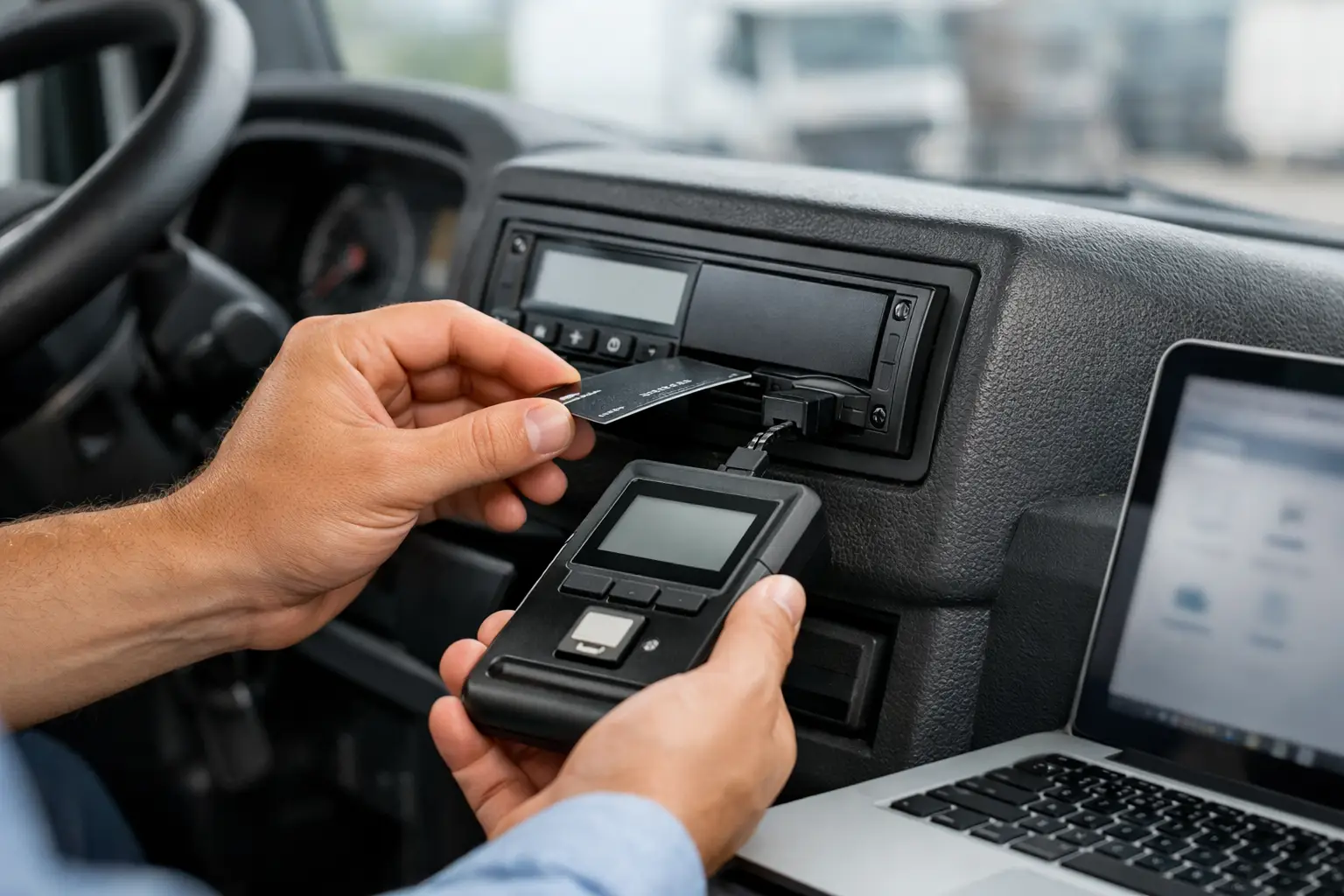
If your team is still relying on diary reminders, depot visits and USB keys to stay compliant, digital tachograph download rules can become a weak point very quickly. The issue is rarely knowing that downloads must happen. It is keeping every driver card and every vehicle unit downloaded on time, with records stored properly, while the fleet is out earning.
For UK operators, this is not just an admin task. Tachograph download compliance sits close to operator licence protection, driver hours management and audit readiness. Miss the timings, lose files or depend on someone remembering to do it manually, and small gaps can turn into avoidable risk.
What the digital tachograph download rules actually require
At a practical level, the rules are straightforward. Driver cards must be downloaded at least every 28 days. Vehicle units must be downloaded at least every 90 days. Operators also need to make sure the data is retained securely and remains available for inspection.
That sounds simple enough until real life gets involved. Drivers swap vehicles, units are away from base for weeks, agency staff join at short notice, and depot teams are juggling maintenance, routing and customer deadlines. The rule itself is fixed. The hard part is building an operation that meets it consistently.
It also matters that these are maximum intervals, not best practice targets. Waiting until day 28 or day 90 every time leaves little room for failed downloads, driver absence, workshop delays or card issues. Many operators choose to download more frequently because it gives them more time to spot infringements and fix process gaps before they escalate.
Why digital tachograph download rules matter beyond the deadline
The biggest mistake is treating downloads as a box-ticking exercise. The download is only the start. Once the data is captured, it needs to be reviewed, stored and used.
If records are missing, incomplete or late, you may struggle to demonstrate proper control during a DVSA investigation or traffic commissioner scrutiny. If driver hours are only reviewed weeks after the event, infringements and working time issues can build up before anyone notices. A fleet can look compliant on paper while still operating with poor visibility.
That is why download rules matter operationally, not just legally. Good download discipline supports faster infringement reporting, better driver management and less last-minute panic when an audit lands.
Driver card downloads and vehicle downloads are different jobs
One reason fleets fall behind is that driver card downloads and vehicle unit downloads get treated as if they are the same task. They are linked, but they behave differently.
A driver card follows the person. If the driver is using different vehicles, working across depots or spending long periods away, you need a reliable way to collect that card data without waiting for them to return to the yard. This is often where manual systems start to break down.
A vehicle unit download depends on access to the lorry or van and the right authorisation tools. If vehicles are out on long-distance work, operating from customer sites or running irregular schedules, the 90-day rule can creep up unnoticed. One missed vehicle unit download can create a bigger records problem than many operators expect.
The practical answer is to manage them as two separate compliance processes, each with their own monitoring and alerts.
Common mistakes with digital tachograph download rules
Most compliance failures are not caused by misunderstanding the law. They come from weak process design.
The first issue is relying on manual reminders. A spreadsheet may work for a small fleet with stable routes and a hands-on transport manager. Once the fleet grows, shifts change or vehicles spend more time off-site, it becomes far too easy for dates to slip.
The second is assuming the download happened because someone said it did. Without confirmation that the file was captured, stored and readable, there is still risk. A failed or partial download is not much use in an audit.
The third is keeping data but not reviewing it. Downloading on time helps, but it does not protect the business if infringements are left sitting unresolved. Compliance is about showing control, not just file storage.
Another common problem is leaving downloads to the last possible day. That creates pressure and removes any buffer for technical issues, absent staff or card faults. A good process builds margin into the schedule.
How to manage digital tachograph download rules in a busy fleet
For most operators, the right approach is not more paperwork. It is fewer moving parts.
Start by mapping the fleet reality rather than the ideal version. How often do vehicles return to base? Which drivers are tramping? Who is responsible for checking download status? What happens if a driver card is due while the driver is away? Where are files stored, and who checks they are complete?
Once those questions are answered, the process usually becomes clearer. Fleets with regular depot returns may manage with structured on-site downloads and strict reporting. Fleets with mobile operations, multiple depots or mixed assets generally need a more automated approach because manual control becomes expensive and fragile.
This is where remote downloading makes a material difference. Instead of waiting for the driver or vehicle to come back to base, the data can be collected automatically through a connected compliance platform. That cuts admin time, but more importantly, it reduces the chance of missed deadlines caused by operational reality.
The value is not only convenience. It is consistency. Transport teams can see what has been downloaded, what is due next and where gaps are appearing before they become exceptions.
Digital tachograph download rules and operator licence protection
From an operator licence perspective, download compliance is part of the wider question regulators ask: are you in control of your fleet?
A missed download on its own may not define the whole picture. Repeated missed downloads, patchy records, delayed infringement follow-up and no clear system for managing driver hours present a different story. They suggest compliance is reactive rather than controlled.
That is why transport managers increasingly want tachograph data tied into everyday fleet oversight rather than handled as a separate, back-office task. If compliance sits in one place and planning sits somewhere else, problems can go unseen. If vehicle activity, driver hours and download status are visible together, decisions are easier and faster.
For example, when dispatch can see driver availability and compliance teams can see download status in the same operational rhythm, there is less chance of assigning work to a driver who is close to limits or overdue for review. Better visibility supports better judgement.
When manual downloads may still work - and when they usually do not
There are still fleets where manual downloading can be workable. A smaller operation with a tight geographic area, stable staffing and vehicles back at the depot each day may be able to keep on top of it with disciplined routines.
Even then, the trade-off is time. Someone still has to chase cards, perform downloads, check records and maintain the filing system. If that person is off, busy or leaves the business, the process can weaken quickly.
For larger fleets, multi-site operations or businesses where vehicles and drivers are rarely in the same place at the right time, manual systems tend to become a false economy. The direct cost may look lower, but the hidden cost shows up in admin hours, missed deadlines, compliance stress and poor visibility.
That is why many operators move towards a single platform approach. A system that combines remote tachograph downloads, live driver hours monitoring and vehicle tracking is not just tidier. It reduces duplication and gives transport teams one source of truth.
Fleetalyse is built around that kind of day-to-day control, where compliance is not isolated from planning, vehicle visibility and fleet performance.
What good looks like in practice
A strong process is usually quite boring, and that is the point. Driver cards are downloaded before they become urgent. Vehicle unit downloads happen without needing to chase lorries across the country. Files are stored securely. Infringements are reviewed promptly. Managers can see due dates and exceptions without digging through spreadsheets.
That kind of control makes audits easier, but it also improves normal operations. Depot teams spend less time on manual collection. Dispatch gets a clearer view of available drivers. Compliance managers spend more time resolving issues and less time hunting for data.
The best setup is not always the most complex one. It is the one that fits the way your fleet actually runs and removes dependence on memory, paper trails and last-minute recovery work.
Digital tachograph download rules are clear enough on paper. The real test is whether your process still works when the fleet is busy, the phones are ringing and vehicles are nowhere near the depot. If it does, you are not just meeting a deadline - you are running a more controlled operation.