

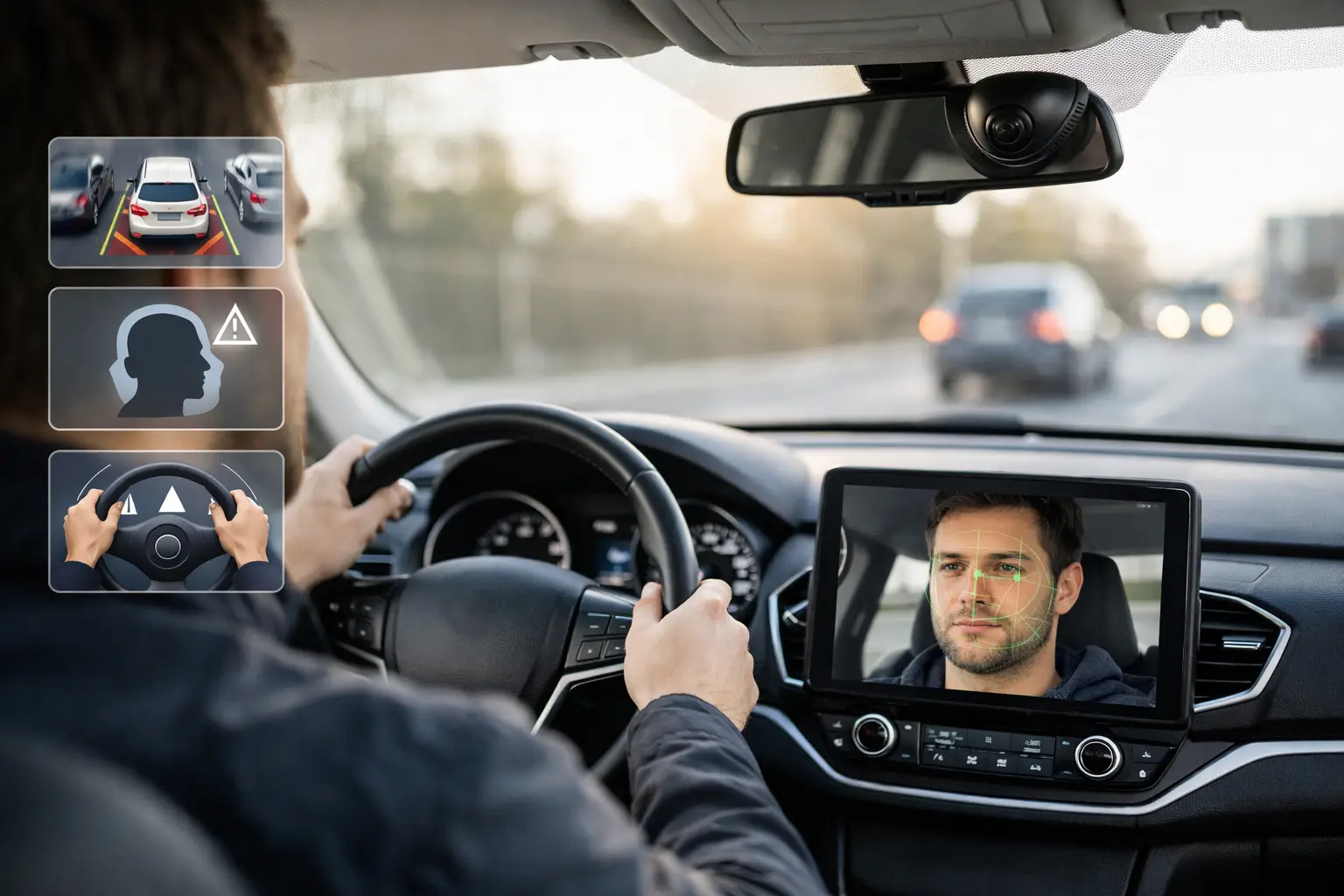

A harsh braking event on its own rarely tells you much. Put it next to the route, vehicle type, driver hours, camera footage and repeated patterns across a week, and it becomes useful management information. That is where a driver behaviour monitoring system earns its place in a commercial fleet - not as another scorecard, but as a practical way to reduce risk, improve fuel performance and give transport teams clearer control.
For UK operators, the value is not only safety. Driver behaviour affects fuel spend, vehicle wear, customer service and, in some cases, the wider compliance picture. If your team is already juggling tachograph downloads, driver hours, maintenance schedules and dispatch changes, the last thing you need is behaviour data living in a separate tool that creates more admin. The right setup should turn everyday driving data into actions your office can actually use.
What a driver behaviour monitoring system actually does
At a basic level, a driver behaviour monitoring system records how a vehicle is being driven. That usually includes events such as harsh acceleration, heavy braking, sharp cornering, speeding and excessive idling. More advanced systems also bring in smart dashcam footage, location data, journey context and driver identification so that events can be tied to a specific person, vehicle and job.
That distinction matters. Raw alerts without context can create noise. A vehicle that brakes hard in city traffic will produce a different pattern from an artic running long motorway work. The best systems do not just flag incidents. They help managers understand whether the issue is a one-off, a route-related trend or a coaching problem that needs attention.
In practical terms, this means your transport office can see which drivers are consistently efficient, which vehicles are exposed to repeated risk, and where intervention is likely to have the biggest operational impact. It also means fewer arguments based on guesswork. When behaviour data is paired with footage and live tracking, the conversation moves from opinion to evidence.
Why fleets use driver behaviour monitoring systems
Most operators do not go looking for driver behaviour monitoring systems because they want more dashboards. They do it because something in the day-to-day operation is costing time or money.
Fuel is usually one of the first pressure points. Aggressive acceleration, poor anticipation and unnecessary idling all add avoidable cost across a fleet. On a single vehicle, the impact can look marginal. Across dozens of HGVs or vans over a month, it becomes a meaningful line on the P&L.
Then there is wear and tear. Harsh driving habits place more strain on brakes, tyres and driveline components. That does not always show up immediately, but it does affect maintenance spend and vehicle availability. If you are trying to keep utilisation high and workshop downtime low, behaviour data gives you a way to tackle causes rather than only reacting to faults.
Risk reduction is the other obvious driver. Fleets need to be able to identify unsafe patterns before they turn into collisions, complaints or insurance issues. A system that highlights repeated speeding, distraction indicators or risky manoeuvres gives managers a chance to coach early. It is rarely about catching people out. It is about building a safer, more defensible operation.
The difference between useful monitoring and more admin
This is where many platforms fall short. If your driver behaviour monitoring system sits apart from tracking, compliance and reporting, somebody in the office ends up stitching the picture together manually. That usually means spreadsheets, separate logins and too much time chasing information that should already be joined up.
For commercial fleets, especially those working under operator licence obligations, the smarter approach is integration. Behaviour alerts are far more useful when they sit alongside live vehicle positions, driver hours status, tachograph activity and maintenance planning. If a manager can see a driving event, the journey context and the driver’s working status in one platform, decision-making becomes much faster.
That also changes how coaching works. Instead of broad, generic reminders to drive more carefully, you can have a short, evidence-based conversation with a driver about a specific route, time and event pattern. That is easier to manage, easier to defend and usually more effective.
What to look for in a driver behaviour monitoring system
Start with accuracy and context. Event detection needs to be reliable enough that managers trust what they are seeing. If the system produces too many false positives, the office will ignore it and drivers will push back.
Next, look at how behaviour data is presented. Simple scoring can be helpful, but only if you can drill into the reasons behind the score. A number on its own is not enough. You need to know what happened, where it happened and whether it forms part of a wider pattern.
Smart dashcam integration is often worth serious consideration. Video does not replace telematics data, but it adds the detail needed to review incidents properly. A harsh brake alert caused by poor anticipation is very different from one caused by a car cutting across the front of an HGV. If you are dealing with insurance claims, customer complaints or internal coaching, footage can save a great deal of time.
Ease of deployment matters too. If hardware installation is disruptive or costly, roll-out gets delayed. UK fleets are increasingly looking for plug-and-play options that can be fitted without taking vehicles off the road for long periods. That is especially relevant for mixed fleets where rigid lorries, vans and trailers may need different levels of visibility.
Finally, consider reporting and alerting. Managers do not need every event in real time. They need the right exceptions, trends and scheduled reports to help them act. Daily event floods are not helpful if they bury the patterns that matter.
How transport teams use the data day to day
The biggest gains usually come from routine management rather than one-off investigations. A transport manager might review weekly driver score trends to identify who needs coaching. A depot team might compare idling across similar routes to spot fuel waste. A planner might use live visibility to understand whether rushed schedules are contributing to poor driving behaviour.
This is where a joined-up platform becomes valuable. If the same system also handles remote tachograph downloads, live driver hours and vehicle tracking, office teams can make better operational decisions without jumping between tools. A driver showing repeated harsh events late in a shift may need a different conversation from one showing the same events first thing in the morning. Context changes the response.
There is also a cultural element. The most effective fleets do not position monitoring as surveillance for its own sake. They use it to support fair, consistent standards. Good drivers can be recognised, not just poor habits flagged. That tends to improve adoption and reduce resistance.
Trade-offs worth thinking about
More data is not always better. If your business lacks the time or process to review alerts properly, adding another stream of information can make things worse. That is why implementation should start with clear goals. Are you trying to cut fuel use, reduce collisions, improve claims defence, or support broader compliance control? The answer affects how the system should be configured.
It also depends on fleet type. Long-distance HGV operations, urban delivery fleets and mixed commercial vehicle businesses will not all use the same thresholds or reporting style. A one-size-fits-all score often masks important differences.
Driver communication needs care as well. If behaviour monitoring is introduced badly, it can be seen as punitive. If it is explained properly, with clear standards and evidence-based coaching, it becomes a management tool that benefits both the business and the driver.
Why integration matters more than another standalone tool
A driver behaviour monitoring system should not be viewed in isolation. In most transport operations, safety, compliance, utilisation and cost control overlap every day. If the platform helps you see driving performance but tells you nothing about hours, asset location or maintenance planning, the office still has to do the hard work manually.
That is why integrated fleet technology tends to deliver stronger results. When behaviour data sits with tracking, camera evidence, tachograph compliance and operational reporting, managers can move from reacting to incidents to managing the whole fleet with more confidence. For operators that want practical control rather than another software headache, that makes a significant difference.
Fleetalyse is built around that joined-up approach, giving UK transport teams one platform for visibility, compliance and driver performance without adding friction to the day-to-day job.
The real test is simple. If your system helps the office spend less time chasing data, gives drivers fairer feedback and helps the business act earlier on risk, it is doing the job properly. That is what a driver behaviour monitoring system should deliver - clearer decisions, not more noise.