

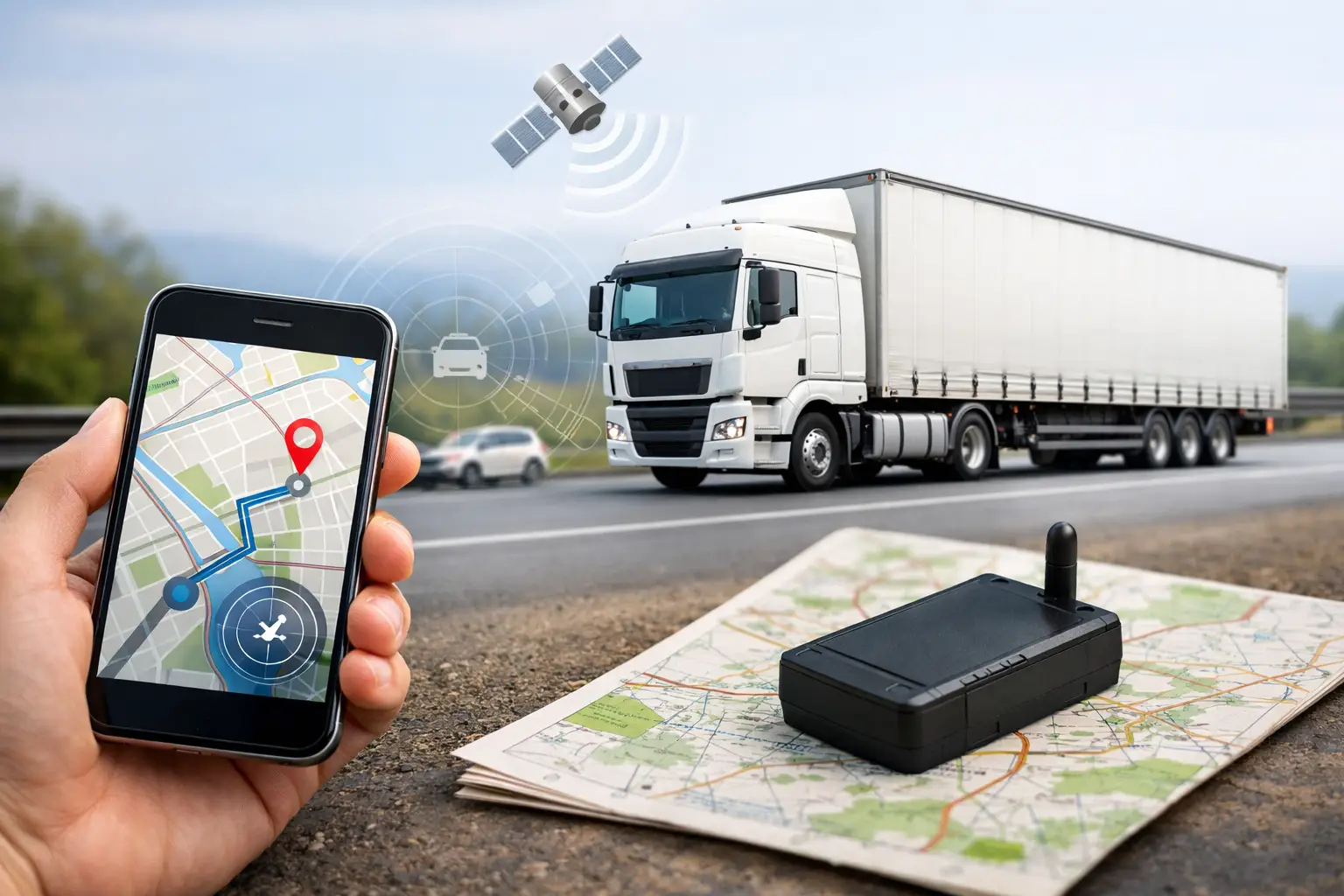

A trailer disappears more easily than most operators like to admit. It might be on a customer site, parked in an overflow yard, sent out with another unit, or simply logged in the wrong place on a spreadsheet. That is where a vehicle and trailer tracking system earns its keep - not as a nice extra, but as a practical way to keep control of assets, planning and compliance across a working fleet.
For UK transport operators, the issue is rarely just location. It is knowing which vehicle is available, which trailer is attached, whether a driver is close to hours limits, and whether the day’s plan still works after the first delay. If those answers sit in separate systems, or worse, in phone calls and manual checks, the operation slows down and the risk goes up.
What a vehicle and trailer tracking system should actually solve
At its simplest, tracking tells you where an asset is. In practice, commercial fleets need far more than a moving dot on a map. A useful system should help transport managers make quicker decisions, reduce avoidable admin and spot issues before they become service failures or compliance problems.
That means visibility of both powered and unpowered assets. Vehicles are easier to account for because they are in regular use and usually linked to a driver. Trailers are different. They can sit still for days, move between depots, be dropped at customer premises, or end up underused because nobody has a clear picture of what is available. When trailers are not tracked properly, utilisation suffers and planners often compensate by hiring extra equipment or moving assets unnecessarily.
A proper setup should also show relationships between assets. Knowing a trailer is in Birmingham is useful. Knowing it is attached to a specific unit, assigned to a live job and due back at a depot by a certain time is much more valuable.
Why separate systems create avoidable problems
Many operators already have some form of vehicle tracking. The gap usually appears when trailer tracking, tachograph data, driver hours and maintenance records sit in different places. The result is more admin than anyone expected and less control than the business actually needs.
A planner might see that a vehicle is close by, but not know whether the driver can legally complete the job. A compliance manager may have remote downloads in one platform and location data in another, making it harder to investigate issues quickly. Depot teams may still be checking trailer locations manually because the tracking setup was designed mainly for vehicles.
This is where an integrated approach matters. When tracking sits alongside live driver hours, tachograph compliance and asset reporting, the data becomes operational rather than decorative. It supports dispatch, protects the operator licence and gives management a clearer view of fleet use.
The operational case for tracking trailers properly
Trailer tracking often gets treated as secondary until the costs become obvious. A missing or idle trailer affects more than equipment availability. It can delay collections, create unnecessary phone calls, increase hire spend and make customer service harder to manage.
For mixed fleets, trailer visibility helps answer practical questions quickly. Which trailers are loaded and waiting? Which ones have not moved for a week? Which assets are sitting too long on customer sites? Which depots are short of capacity? These are everyday decisions, and without reliable data, they rely too heavily on memory and manual updates.
There is also a security angle. Trailers are vulnerable because they are detached, often unattended and not always checked regularly. A vehicle and trailer tracking system gives operators a better chance of reacting quickly to unauthorised movement, out-of-hours use or assets leaving expected areas.
What transport teams should look for in a system
Not every tracking platform is built for commercial fleet reality. Some are fine for basic vehicle location but weak on compliance, trailer management or reporting. For operators running HGVs, vans and trailers under UK regulation, the system needs to support how the business actually works.
The first requirement is live, reliable visibility across all asset types. That sounds obvious, but the detail matters. Location updates need to be timely enough for dispatch decisions, and the interface needs to make it easy to identify vehicles, trailers and their current status without clicking through multiple screens.
The second is practical implementation. If fitting hardware is complex, expensive or disruptive, rollout slows down and coverage becomes inconsistent. Self-install or plug-and-play hardware can make a genuine difference, especially for operators adding assets regularly or managing fleets across multiple sites.
The third is reporting that answers operational questions. It is not enough to know where something is right now. Managers need utilisation trends, movement history, stop durations and exceptions that highlight underused or misplaced assets. Reporting should reduce spreadsheet work, not create another layer of it.
The fourth is integration with compliance and driver data. This is especially important for HGV operators. If a planner can see location, job status and driver hours in one platform, decisions are quicker and less risky. If a compliance team can match tachograph records with vehicle movements without switching systems, investigation time drops.
The trade-off between simple tracking and useful control
There is always a temptation to buy the cheapest tracking option available. For some businesses, particularly those with a small number of vehicles and straightforward routes, basic location data may be enough for a while. But as fleets grow, add trailers, or operate under tighter compliance pressure, cheap tracking often becomes a false economy.
The trade-off is usually between headline price and operational value. A low-cost system may show where a vehicle is, but if it cannot support trailer visibility, utilisation reporting or compliance workflows, the admin burden remains. Teams still spend time chasing drivers, checking trailer locations and reconciling separate records.
On the other hand, the most complex platform is not automatically the right one either. Features only matter if they are usable day to day. Transport managers generally need clarity, speed and dependable data more than a long list of functions they will never use.
Where the return usually comes from
The strongest return on a vehicle and trailer tracking system often appears in small daily improvements rather than one dramatic saving. Dispatch gets faster because planners can see what is nearest and available. Trailer use improves because underused assets become visible. Admin falls because teams stop maintaining parallel spreadsheets or making repeated location calls.
Fuel waste can also reduce when location data is combined with driver behaviour and utilisation reporting. So can downtime, if maintenance scheduling is linked to actual vehicle use and reminders are handled in the same platform.
For compliance-led operators, the return also comes from lower risk. Better visibility of vehicles, trailers and driver activity supports cleaner records, quicker investigations and stronger control over the operation. That matters not just for efficiency, but for protecting the operator licence.
Why integration matters more than another map screen
A map on its own does not run a fleet. The real value comes from bringing operational data together so teams can act on it without chasing information. That is why systems built purely as generic GPS tools often fall short for haulage and regulated commercial fleets.
An integrated platform can connect live location with remote tachograph downloads, driver hours monitoring, maintenance reminders and behavioural reporting. That changes tracking from a visibility tool into a control tool. It gives transport managers a clearer view of what is happening now and what needs attention next.
For operators trying to reduce friction in everyday fleet management, that difference is significant. It means fewer systems, fewer manual checks and fewer gaps between planning, compliance and vehicle control. Fleetalyse is built around that reality, combining tracking and compliance tools in one platform designed for UK operators rather than generic fleet use.
Choosing a system that fits the way your fleet works
The right choice depends on the shape of the operation. A regional van fleet has different needs from a national haulage business with trailers moving between depots and customer sites. A business focused heavily on operator licence compliance will need stronger integration between tracking and tachograph management than a fleet using tracking mainly for service visibility.
That said, a few questions usually cut through the sales language. Can your team see vehicles and trailers clearly in one place? Can planners make dispatch decisions without switching systems? Can compliance staff investigate quickly using the same operational data? Can the system be rolled out without weeks of engineering time or hidden costs?
If the answer to those questions is no, the platform may still be adding complexity rather than removing it.
The best vehicle and trailer tracking system is the one that gives your team control without creating more work. When location, utilisation and compliance data sit together, fleet management becomes less reactive and far easier to trust. For transport operators dealing with tight margins, legal obligations and constant movement, that is not a technology upgrade - it is a better way to run the day.