

What if the biggest drain on your 2026 fleet budget isn't the price of fuel, but the cost of what you can't see? With commercial insurance premiums rising by 25% according to recent industry data, choosing the right car tracker is no longer just about security; it's about survival. You're likely already struggling with the administrative headache of manual compliance and the uncertainty of driver hours whilst vehicles are out on the road. It's a common pressure point for UK operators trying to maintain tight margins in a demanding sector.
This guide shows you how to select technology built for real transport operations, rather than just basic data collection. You'll learn how to protect your assets, ensure full DVSA compliance, and automate your reporting to reclaim lost time and reduce overheads. We will examine the specific features and hardware integrations that turn raw telematics into actionable insights for your business.
Key Takeaways
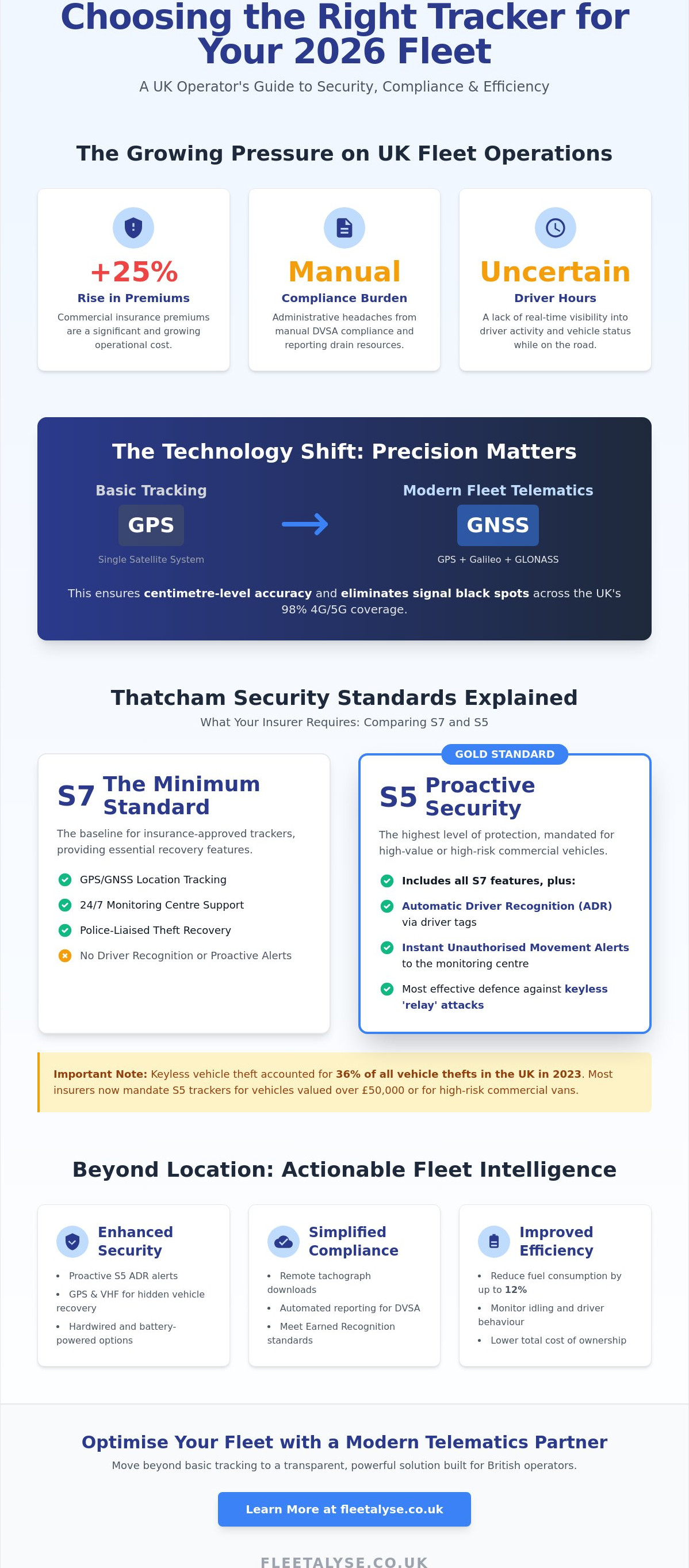
- Understand the technical shift from GPS to GNSS and how Thatcham S5 and S7 ratings directly impact your fleet insurance requirements.
- Learn why consumer devices fail in commercial settings and how a professional car tracker provides the centralised control necessary for UK haulage operations.
- Discover how to simplify DVSA compliance by integrating real-time tracking data with remote tachograph downloads and Earned Recognition standards.
- Identify the strategic benefits of moving beyond simple location data to leverage analytics that improve fuel efficiency and asset security.
- Avoid hidden costs by adopting a transparent pricing model built specifically for the practical needs of British fleet operators.
Understanding Car Tracker Technology for Modern Fleet Management
For the 2026 fleet, a car tracker is an integrated telematics node that serves as the primary gateway for real-time operational intelligence. It is no longer a simple beacon; it is a sophisticated data hub. Modern systems have transitioned from basic GPS to Global Navigation Satellite Systems (GNSS). This shift allows devices to communicate with multiple satellite constellations, including Europe's Galileo and Russia's GLONASS, ensuring centimetre-level accuracy. Real-time data transmission means fleet managers receive updates every few seconds, providing a live view of the entire operation.
UK businesses are moving beyond "where is my car" functionality because location alone does not drive profit. Understanding Car Tracker Technology is now about capturing engine diagnostics, fuel levels, and driver behaviour. This data is critical for reducing the total cost of fleet ownership. By identifying excessive idling or aggressive braking, operators can see fuel consumption drop by 12% within the first year. Efficiency is the goal. Transparency is the method.
The Evolution of Vehicle Tracking in the UK
British vehicle tracking has moved from passive loggers that required manual data retrieval to live-streamed 5G telematics. Since 2022, the expansion of 4G and 5G infrastructure has reached over 98% of the UK population. This has virtually eliminated "black spots" on major routes like the M6 or the A1, where connectivity was previously intermittent. Cloud-based platforms have replaced local software installations. This allows transport managers to monitor their assets from a tablet or smartphone whilst on the move, ensuring total visibility regardless of their physical location.
Key Components: Hardware, Software, and Connectivity
The hardware is the foundation of the system. Hardwired units are the standard for permanent vehicle security, drawing power directly from the 12V or 24V system. For unattended assets like trailers or plant machinery, internal battery-powered units provide years of protection without needing a constant power source. These devices feed data into user-friendly dashboards. A good dashboard turns complex coordinates into clear insights for transport managers, highlighting compliance issues or maintenance needs instantly.
- Hardwired Systems: Best for permanent fleet vehicles and engine data.
- Battery Units: Ideal for non-powered assets and theft recovery.
- Roaming SIMs: Essential for UK and European haulage to ensure constant signal.
Connectivity is maintained through multi-network roaming SIMs. This ensures that if one provider's signal drops, the device automatically switches to the strongest available network. It is a vital feature for vehicles crossing the Channel or operating in rural parts of Scotland and Wales. This level of reliability is what separates a professional car tracker from a consumer-grade gadget.
The Science of Security: GPS, VHF, and Thatcham Standards
GPS technology forms the foundation of almost every modern car tracker. It provides real-time location data with high accuracy under open skies. However, satellite signals require a clear line of sight. Professional thieves understand this limitation. They often move stolen assets into shipping containers or underground storage centres to "darken" the signal. This is where VHF technology becomes essential. VHF operates at a frequency that penetrates metal and concrete, allowing recovery teams to locate a vehicle even when it's hidden from the sky.
Thatcham S5 vs S7: Which Does Your Business Need?
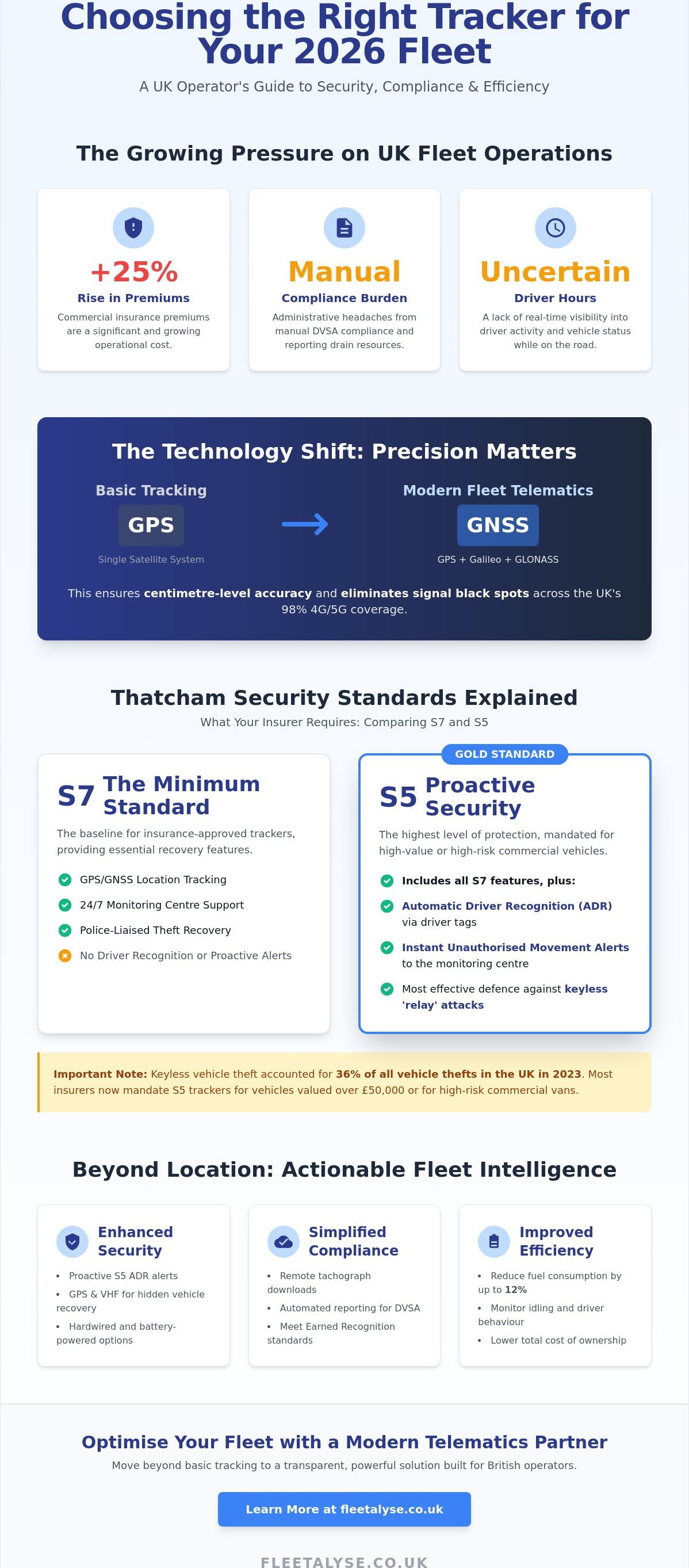
Thatcham Research sets the benchmark for UK vehicle security. Their categories determine whether a device meets insurance requirements. S7 trackers provide basic recovery features and remain the minimum requirement for many standard commercial policies. S5 is the gold standard. It includes proactive alerts and Automatic Driver Recognition (ADR). This system uses a small tag carried by the driver. If the vehicle moves without the tag present, the monitoring centre receives an immediate alert.
Keyless car theft accounted for 36% of all vehicle thefts in the UK in 2023. Driver ID tags are the most effective defence against these relay attacks. Even if a thief clones your key, they won't have the ID tag. The system identifies the movement as unauthorised instantly. Most UK insurers now mandate S5 trackers for vehicles valued over £50,000 or for high-risk commercial vans. You can verify a device's status by checking the Thatcham Research certified product list before purchase. If you want to ensure your fleet meets these rigorous criteria, it's wise to consult a UK specialist for fleet telematics to avoid compliance gaps.
Anti-Jamming and Signal Protection
Criminals frequently use cheap GPS jammers bought online to block tracking signals. These devices flood the area with electronic noise. Modern trackers fight back using multi-constellation support, switching between different satellite networks to maintain a lock. VHF remains the ultimate fallback because it's virtually impossible to jam with standard equipment. It allows police to pinpoint a vehicle's exact location, even within major shipping hubs or industrial areas. Signal resilience is the top priority for HGV security because it maintains a constant data stream during cross-border transit and within shielded loading bays.
- S5 Trackers: Best for high-value HGVs and plant machinery.
- S7 Trackers: Suitable for standard delivery vans and lower-risk assets.
- VHF Technology: Essential for recovery from containers and underground locations.
- Driver ID: The primary tool for stopping relay-based keyless theft.
UK commercial premiums are rising. Many insurers now refuse cover for certain models unless an S5-rated device is fitted by a certified installer. This isn't just about recovery; it's about prevention. A proactive alert can mean the difference between a vehicle being stopped at the end of the road or disappearing beyond national borders. Choose hardware that offers both GPS for daily logistics and VHF for worst-case recovery scenarios.
Business vs Personal: Why Commercial Fleets Need More Than Basic Tracking
Consumer-grade devices like Apple AirTags or basic DIY kits are sufficient for finding lost keys, but they fail in a professional transport environment. These tools lack the high-frequency polling and hardwired reliability required for HGVs or LCVs. A professional car tracker for business use is built for real transport operations, providing data updates every 30 seconds rather than relying on a passing Bluetooth signal. For a UK fleet manager, this distinction is the difference between a rough estimate and actionable intelligence.
Managing a fleet requires a centralised management centre to oversee every asset simultaneously. You can't manage 20 vehicles through 20 different smartphone apps. Professional systems aggregate data into a single dashboard, allowing for automated geofencing. This technology triggers instant alerts when a vehicle enters or leaves a specific UK depot or a restricted zone. It removes the need for constant manual checks, letting operators focus on logistics instead of screens.
Driver behaviour monitoring is another critical differentiator. Basic trackers won't tell you if a driver is idling for 45 minutes in a lay-by or braking harshly at every roundabout. Industry data suggests that excessive idling can waste up to two litres of fuel per hour. Professional tracking identifies these patterns, directly impacting your bottom line and reducing unnecessary vehicle wear and tear.
Turning Fleet Data into Decisions
Data is only useful if it leads to better choices. Use journey history to spot overlaps in delivery routes. If two vans are visiting the same postcode on the same afternoon, your routing needs adjustment. High-quality visibility also helps identify under-utilised assets. If a trailer hasn't moved for 72 hours, it's costing you money without generating revenue. Real-time visibility allows your customer service team to provide accurate ETAs, which builds trust and reduces the volume of status enquiry phone calls.
Privacy and Driver Relations
Transparency is the foundation of a productive fleet. You must balance operational visibility with GDPR compliance and driver privacy. This starts with a clear Vehicle Tracking Policy for all UK employees. Explain that the car tracker is there to protect the business and the driver, not to spy on their personal time. Use the data to reward smooth, efficient driving. Many UK operators now offer bonuses based on telematics scores; this turns monitoring into a positive incentive rather than a punitive measure.
Implementation and Compliance: Integrating Trackers into Your Operations
Compliance isn't a choice for UK operators; it's the foundation of a valid operator licence. Integrating a professional car tracker into your daily workflow transforms compliance from a manual chore into an automated, digital process. The DVSA Earned Recognition scheme relies on operators sharing performance data to prove they meet national standards. Tracking systems provide the digital evidence required to maintain this status without the need for constant roadside stops.
A robust system ensures you're always audit-ready. By automating maintenance schedules through real-time odometer readings, you ensure vehicles never miss a safety inspection. This removes the guesswork from service intervals. Most UK transport managers find that automating these alerts reduces the risk of missing a 6-week inspection by 94% compared to manual spreadsheets. It's about building a system that works for real transport operations, not just collecting dots on a map.
Remote Tachograph and Driver Hour Monitoring
Manual tachograph downloads are a significant drain on UK transport office resources. On average, manual collection takes 20 minutes per vehicle every month. Remote download technology eliminates this waste. It pulls data directly from the vehicle while it's on the road, sending it straight to your analysis software. Live driver hours monitoring prevents infringements before they happen. If a driver is approaching their 4.5-hour limit, the system alerts the office immediately. This proactive approach protects your O-licence and keeps your drivers safe.
Plug and Play vs Professional Installation
Choosing the right hardware setup depends on your fleet's specific requirements. OBD-II port trackers allow for fast deployment across car and van fleets. They're ideal for temporary vehicles or rapid scaling because they require zero downtime for fitting. However, hardwired installations remain the preferred choice for permanent asset security and HGVs. These units are hidden behind the dashboard, which makes them much harder for unauthorised parties to tamper with.
- OBD-II Trackers: Best for cars and light commercials where rapid deployment is the priority.
- Hardwired Units: Essential for HGVs and high-value assets where security is paramount.
- Professional Fitting: Fleetalyse recommends professional installation to maintain your vehicle's warranty and ensure insurance validity.
A botched DIY job can lead to electrical faults or voided insurance claims. Professional engineers ensure that your car tracker is integrated correctly with the vehicle's CAN-bus system to provide accurate fuel and diagnostic data. This level of precision is what separates a basic gadget from a professional fleet tool.
Ready to automate your compliance and protect your fleet? Explore our professional tracking solutions today.
Optimising Your Fleet with Fleetalyse: Beyond Simple Location Data
Fleetalyse is built for real transport operations, not just basic tracking. Many generic systems provide coordinates but fail to understand the specific pressures of the UK haulage sector. We've designed our platform to meet the needs of British operators who deal with complex HGV regulations and tight margins every day. Choosing a car tracker or a heavy-duty telematics unit shouldn't be a gamble. We provide the industry expertise required to turn raw data into operational wins.
Total transparency is our core promise. We've seen how hidden fees and convoluted contracts damage trust in the logistics industry. Our pricing is clear and upfront. We've pioneered the "Fee-Free Lease" model to make advanced telematics accessible to everyone. This approach removes the barrier of high initial hardware costs, allowing you to deploy the latest tech without draining your capital. It's a straightforward way to modernise your fleet while keeping your cash flow predictable.
Expert assistance is available to fleets across the entire United Kingdom. We don't just operate from a distant call centre. Our national support network ensures that whether you're based in a London hub or a rural Scottish depot, you have access to specialists who understand your local challenges. Reliability is non-negotiable in haulage, and we provide the boots-on-the-ground support to keep your assets moving.
A Partner, Not Just a Provider
Small hauliers often find it difficult to compete with national logistics giants who have massive IT budgets. We bridge that gap by providing enterprise-level insights to businesses of all sizes. Our personalised onboarding process ensures you don't just see dots on a map. We help you interpret driver behaviour, fuel usage, and idle times so you can make informed decisions. Your hardware won't become obsolete either. We provide ongoing firmware updates to keep your equipment at the cutting edge of 2026 technology, ensuring your investment remains future-proof as regulations evolve.
Ready to Take Control?
The return on investment with a high-quality car tracker and fleet management system is immediate. You'll see the impact in three main areas:
- Fuel Savings: Reducing idle times and optimising routes cuts your weekly diesel spend.
- Insurance Discounts: Many UK insurers offer lower premiums for fleets with active, monitored tracking.
- Compliance Peace of Mind: Automated data collection makes staying on the right side of DVSA regulations simple.
Getting started is a straightforward 3-step process. First, we help you select the right hardware for your specific vehicle types. Second, we handle the setup and personalised configuration. Third, you gain instant visibility over your entire operation. There's no complexity, just clear results. Contact Fleetalyse for a transparent quote today and start running a more efficient, profitable fleet.
Future-Proof Your Fleet Performance
Managing a UK business fleet in 2026 demands more than basic location pings. Success depends on meeting Thatcham S5 or S7 standards to satisfy insurance requirements and using telematics to maintain strict tachograph compliance. A professional car tracker doesn't just prevent theft; it provides the granular data needed to reduce idling and streamline delivery routes. Whilst generic trackers offer surface-level visibility, commercial operations require a robust system that integrates directly into daily workflows.
Fleetalyse delivers a platform built for real transport operations. We've removed the barriers to entry by offering fee-free hardware leasing and total transparency on monthly subscriptions. You won't find hidden costs or confusing contract terms here. We focus on providing UK operators with the tools they need to stay profitable and compliant in a competitive market. It's time to move beyond simple tracking and start making data-driven decisions that impact your bottom line.
Get a Transparent Fleet Tracking Quote Today
We're ready to help you transform your fleet efficiency with a solution designed for the realities of British roads.
Frequently Asked Questions
Will a car tracker reduce my business insurance premiums in the UK?
Installing a Thatcham-approved car tracker can reduce your business insurance premiums by 5% to 15% depending on your provider. Insurers value the increased recovery rate of stolen vehicles because it reduces their total loss liability. This lower risk profile directly translates into reduced annual costs for your fleet operations.
Is it legal to track my employees in company cars whilst they are working?
Tracking employees is legal in the UK if you have a clear business reason, such as improving route efficiency or ensuring driver safety. You must inform staff about the tracking and update your privacy policy to remain GDPR compliant. Avoid monitoring private use outside of working hours to respect driver privacy rights and maintain trust.
What is the difference between a car tracker and a telematics system?
A basic car tracker focuses primarily on real-time location and theft recovery. In contrast, a telematics system provides deeper insights into driver behaviour, fuel consumption, and engine diagnostics. Telematics turns simple location data into actionable intelligence for real transport operations, whereas a tracker is often a security-first tool.
Can a car tracker help with my DVSA compliance and operator licence?
Advanced tracking systems help maintain your operator licence by automating tachograph downloads and monitoring vehicle maintenance schedules. The DVSA requires rigorous record-keeping; digital logs reduce the risk of human error and potential fines. Accurate data ensures your fleet stays compliant with UK road safety regulations at all times.
Do car trackers work if the vehicle is taken outside of the United Kingdom?
Most professional trackers include a multi-network roaming SIM that operates across the EU and beyond. If a vehicle crosses the English Channel, the device switches to a local network to maintain visibility for the fleet manager. Check that your service plan includes European roaming to avoid unexpected data charges during international hauls.
How long does it take to install a professional fleet tracker?
A professional engineer typically completes a hardwired installation in 45 to 60 minutes per vehicle. Plug and play devices offer an immediate connection and require no downtime at all. Scheduling installations during vehicle rest periods ensures your transport operations continue without any interruption to your delivery schedule.
What happens if a car tracker signal is jammed by a thief?
High-specification trackers use VHF technology or anti-jamming sensors to counter illegal signal blockers used by organised criminals. If a thief attempts to jam the GPS signal, the system alerts the monitoring centre immediately. This ensures the vehicle remains visible even in shielded locations like shipping containers or underground car parks.
Do I need a separate tracker for my trailers and HGVs?
You should install dedicated battery-powered trackers on trailers to maintain visibility when they're uncoupled from the HGV. Units on the tractor unit won't track a trailer left at a distribution centre or port. This approach protects your entire asset pool and helps locate unattended trailers amongst thousands of others in busy hubs.
Frequently asked questions
The Evolution of Vehicle Tracking in the UK
British vehicle tracking has moved from passive loggers that required manual data retrieval to live-streamed 5G telematics. Since 2022, the expansion of 4G and 5G infrastructure has reached over 98% of the UK population. This has virtually eliminated "black spots" on major routes like the M6 or the A1, where connectivity was previously intermittent. Cloud-based platforms have replaced local software installations. This allows transport managers to monitor their assets from a tablet or smartphone whilst on the move, ensuring total visibility regardless of their physical location.
Key Components: Hardware, Software, and Connectivity
The hardware is the foundation of the system. Hardwired units are the standard for permanent vehicle security, drawing power directly from the 12V or 24V system. For unattended assets like trailers or plant machinery, internal battery-powered units provide years of protection without needing a constant power source. These devices feed data into user-friendly dashboards. A good dashboard turns complex coordinates into clear insights for transport managers, highlighting compliance issues or maintenance needs instantly. Connectivity is maintained through multi-network roaming SIMs. This ensures that if one provider's signal drops, the device automatically switches to the strongest available network. It is a vital feature for vehicles crossing the Channel or operating in rural parts of Scotland and Wales. This level of reliability is what separates a professional car tracker from a consumer-grade gadget. GPS technology forms the foundation of almost every modern car tracker. It provides real-time location data with high accuracy under open skies. However, satellite signals require a clear line of sight. Professional thieves understand this limitation. They often move stolen assets into shipping containers or underground storage centres to "darken" the signal. This is where VHF technology becomes essential. VHF operates at a frequency that penetrates metal and concrete, allowing recovery teams to locate a vehicle even when it's hidden from the sky.
Thatcham S5 vs S7: Which Does Your Business Need?
Thatcham Research sets the benchmark for UK vehicle security. Their categories determine whether a device meets insurance requirements. S7 trackers provide basic recovery features and remain the minimum requirement for many standard commercial policies. S5 is the gold standard. It includes proactive alerts and Automatic Driver Recognition (ADR). This system uses a small tag carried by the driver. If the vehicle moves without the tag present, the monitoring centre receives an immediate alert. Keyless car theft accounted for 36% of all vehicle thefts in the UK in 2023. Driver ID tags are the most effective defence against these relay attacks. Even if a thief clones your key, they won't have the ID tag. The system identifies the movement as unauthorised instantly. Most UK insurers now mandate S5 trackers for vehicles valued over £50,000 or for high-risk commercial vans. You can verify a device's status by checking the Thatcham Research certified product list before purchase. If you want to ensure your fleet meets these rigorous criteria, it's wise to consult a UK specialist for fleet telematics to avoid compliance gaps.
Anti-Jamming and Signal Protection
Criminals frequently use cheap GPS jammers bought online to block tracking signals. These devices flood the area with electronic noise. Modern trackers fight back using multi-constellation support, switching between different satellite networks to maintain a lock. VHF remains the ultimate fallback because it's virtually impossible to jam with standard equipment. It allows police to pinpoint a vehicle's exact location at ports like Tilbury or Felixstowe. Signal resilience is the top priority for HGV security because it maintains a constant data stream during cross-border transit and within shielded loading bays. UK commercial premiums are rising. Many insurers now refuse cover for certain models unless an S5-rated device is fitted by a certified installer. This isn't just about recovery; it's about prevention. A proactive alert can mean the difference between a vehicle being stopped at the end of the road or disappearing across the English Channel. Choose hardware that offers both GPS for daily logistics and VHF for worst-case recovery scenarios. Consumer-grade devices like Apple AirTags or basic DIY kits are sufficient for finding lost keys, but they fail in a professional transport environment. These tools lack the high-frequency polling and hardwired reliability required for HGVs or LCVs. A professional car tracker for business use is built for real transport operations, providing data updates every 30 seconds rather than relying on a passing Bluetooth signal. For a UK fleet manager, this distinction is the difference between a rough estimate and actionable intelligence. Managing a fleet requires a centralised management centre to oversee every asset simultaneously. You can't manage 20 vehicles through 20 different smartphone apps. Professional systems aggregate data into a single dashboard, allowing for automated geofencing. This technology triggers instant alerts when a vehicle enters or leaves a specific UK depot or a restricted zone. It removes the need for constant manual checks, letting operators focus on logistics instead of screens. Driver behaviour monitoring is another critical differentiator. Basic trackers won't tell you if a driver is idling for 45 minutes in a lay-by or braking harshly at every roundabout. Industry data suggests that excessive idling can waste up to two litres of fuel per hour. Professional tracking identifies these patterns, directly impacting your bottom line and reducing unnecessary vehicle wear and tear.
Turning Fleet Data into Decisions
Data is only useful if it leads to better choices. Use journey history to spot overlaps in delivery routes. If two vans are visiting the same postcode on the same afternoon, your routing needs adjustment. High-quality visibility also helps identify under-utilised assets. If a trailer hasn't moved for 72 hours, it's costing you money without generating revenue. Real-time visibility allows your customer service team to provide accurate ETAs, which builds trust and reduces the volume of status enquiry phone calls.
Privacy and Driver Relations
Transparency is the foundation of a productive fleet. You must balance operational visibility with GDPR compliance and driver privacy. This starts with a clear Vehicle Tracking Policy for all UK employees. Explain that the car tracker is there to protect the business and the driver, not to spy on their personal time. Use the data to reward smooth, efficient driving. Many UK operators now offer bonuses based on telematics scores; this turns monitoring into a positive incentive rather than a punitive measure. Compliance isn't a choice for UK operators; it's the foundation of a valid operator licence. Integrating a professional car tracker into your daily workflow transforms compliance from a manual chore into an automated, digital process. The DVSA Earned Recognition scheme relies on operators sharing performance data to prove they meet national standards. Tracking systems provide the digital evidence required to maintain this status without the need for constant roadside stops. A robust system ensures you're always audit-ready. By automating maintenance schedules through real-time odometer readings, you ensure vehicles never miss a safety inspection. This removes the guesswork from service intervals. Most UK transport managers find that automating these alerts reduces the risk of missing a 6-week inspection by 94% compared to manual spreadsheets. It's about building a system that works for real transport operations, not just collecting dots on a map.
Remote Tachograph and Driver Hour Monitoring
Manual tachograph downloads are a significant drain on UK transport office resources. On average, manual collection takes 20 minutes per vehicle every month. Remote download technology eliminates this waste. It pulls data directly from the vehicle while it's on the road, sending it straight to your analysis software. Live driver hours monitoring prevents infringements before they happen. If a driver is approaching their 4.5-hour limit, the system alerts the office immediately. This proactive approach protects your O-licence and keeps your drivers safe.
Plug and Play vs Professional Installation
Choosing the right hardware setup depends on your fleet's specific requirements. OBD-II port trackers allow for fast deployment across car and van fleets. They're ideal for temporary vehicles or rapid scaling because they require zero downtime for fitting. However, hardwired installations remain the preferred choice for permanent asset security and HGVs. These units are hidden behind the dashboard, which makes them much harder for unauthorised parties to tamper with. A botched DIY job can lead to electrical faults or voided insurance claims. Professional engineers ensure that your car tracker is integrated correctly with the vehicle's CAN-bus system to provide accurate fuel and diagnostic data. This level of precision is what separates a basic gadget from a professional fleet tool. Ready to automate your compliance and protect your fleet? Explore our professional tracking solutions today. Fleetalyse is built for real transport operations, not just basic tracking. Many generic systems provide coordinates but fail to understand the specific pressures of the UK haulage sector. We've designed our platform to meet the needs of British operators who deal with complex HGV regulations and tight margins every day. Choosing a car tracker or a heavy-duty telematics unit shouldn't be a gamble. We provide the industry expertise required to turn raw data into operational wins. Total transparency is our core promise. We've seen how hidden fees and convoluted contracts damage trust in the logistics industry. Our pricing is clear and upfront. We've pioneered the "Fee-Free Lease" model to make advanced telematics accessible to everyone. This approach removes the barrier of high initial hardware costs, allowing you to deploy the latest tech without draining your capital. It's a straightforward way to modernise your fleet while keeping your cash flow predictable. Expert assistance is available to fleets across the entire United Kingdom. We don't just operate from a distant call centre. Our national support network ensures that whether you're based in a London hub or a rural Scottish depot, you have access to specialists who understand your local challenges. Reliability is non-negotiable in haulage, and we provide the boots-on-the-ground support to keep your assets moving.
A Partner, Not Just a Provider
Small hauliers often find it difficult to compete with national logistics giants who have massive IT budgets. We bridge that gap by providing enterprise-level insights to businesses of all sizes. Our personalised onboarding process ensures you don't just see dots on a map. We help you interpret driver behaviour, fuel usage, and idle times so you can make informed decisions. Your hardware won't become obsolete either. We provide ongoing firmware updates to keep your equipment at the cutting edge of 2026 technology, ensuring your investment remains future-proof as regulations evolve.
Ready to Take Control?
The return on investment with a high-quality car tracker and fleet management system is immediate. You'll see the impact in three main areas: Getting started is a straightforward 3-step process. First, we help you select the right hardware for your specific vehicle types. Second, we handle the setup and personalised configuration. Third, you gain instant visibility over your entire operation. There's no complexity, just clear results. Contact Fleetalyse for a transparent quote today and start running a more efficient, profitable fleet. Managing a UK business fleet in 2026 demands more than basic location pings. Success depends on meeting Thatcham S5 or S7 standards to satisfy insurance requirements and using telematics to maintain strict tachograph compliance. A professional car tracker doesn't just prevent theft; it provides the granular data needed to reduce idling and streamline delivery routes. Whilst generic trackers offer surface-level visibility, commercial operations require a robust system that integrates directly into daily workflows. Fleetalyse delivers a platform built for real transport operations. We've removed the barriers to entry by offering fee-free hardware leasing and total transparency on monthly subscriptions. You won't find hidden costs or confusing contract terms here. We focus on providing UK operators with the tools they need to stay profitable and compliant in a competitive market. It's time to move beyond simple tracking and start making data-driven decisions that impact your bottom line. Get a Transparent Fleet Tracking Quote Today We're ready to help you transform your fleet efficiency with a solution designed for the realities of British roads.
Will a car tracker reduce my business insurance premiums in the UK?
Installing a Thatcham-approved car tracker can reduce your business insurance premiums by 5% to 15% depending on your provider. Insurers value the increased recovery rate of stolen vehicles because it reduces their total loss liability. This lower risk profile directly translates into reduced annual costs for your fleet operations.
Is it legal to track my employees in company cars whilst they are working?
Tracking employees is legal in the UK if you have a clear business reason, such as improving route efficiency or ensuring driver safety. You must inform staff about the tracking and update your privacy policy to remain GDPR compliant. Avoid monitoring private use outside of working hours to respect driver privacy rights and maintain trust.
What is the difference between a car tracker and a telematics system?
A basic car tracker focuses primarily on real-time location and theft recovery. In contrast, a telematics system provides deeper insights into driver behaviour, fuel consumption, and engine diagnostics. Telematics turns simple location data into actionable intelligence for real transport operations, whereas a tracker is often a security-first tool.
Can a car tracker help with my DVSA compliance and operator licence?
Advanced tracking systems help maintain your operator licence by automating tachograph downloads and monitoring vehicle maintenance schedules. The DVSA requires rigorous record-keeping; digital logs reduce the risk of human error and potential fines. Accurate data ensures your fleet stays compliant with UK road safety regulations at all times.
Do car trackers work if the vehicle is taken outside of the United Kingdom?
Most professional trackers include a multi-network roaming SIM that operates across the EU and beyond. If a vehicle crosses the English Channel, the device switches to a local network to maintain visibility for the fleet manager. Check that your service plan includes European roaming to avoid unexpected data charges during international hauls.
How long does it take to install a professional fleet tracker?
A professional engineer typically completes a hardwired installation in 45 to 60 minutes per vehicle. Plug and play devices offer an immediate connection and require no downtime at all. Scheduling installations during vehicle rest periods ensures your transport operations continue without any interruption to your delivery schedule.
What happens if a car tracker signal is jammed by a thief?
High-specification trackers use VHF technology or anti-jamming sensors to counter illegal signal blockers used by organised criminals. If a thief attempts to jam the GPS signal, the system alerts the monitoring centre immediately. This ensures the vehicle remains visible even in shielded locations like shipping containers or underground car parks.
Do I need a separate tracker for my trailers and HGVs?
You should install dedicated battery-powered trackers on trailers to maintain visibility when they're uncoupled from the HGV. Units on the tractor unit won't track a trailer left at a distribution centre or port. This approach protects your entire asset pool and helps locate unattended trailers amongst thousands of others in busy hubs.