
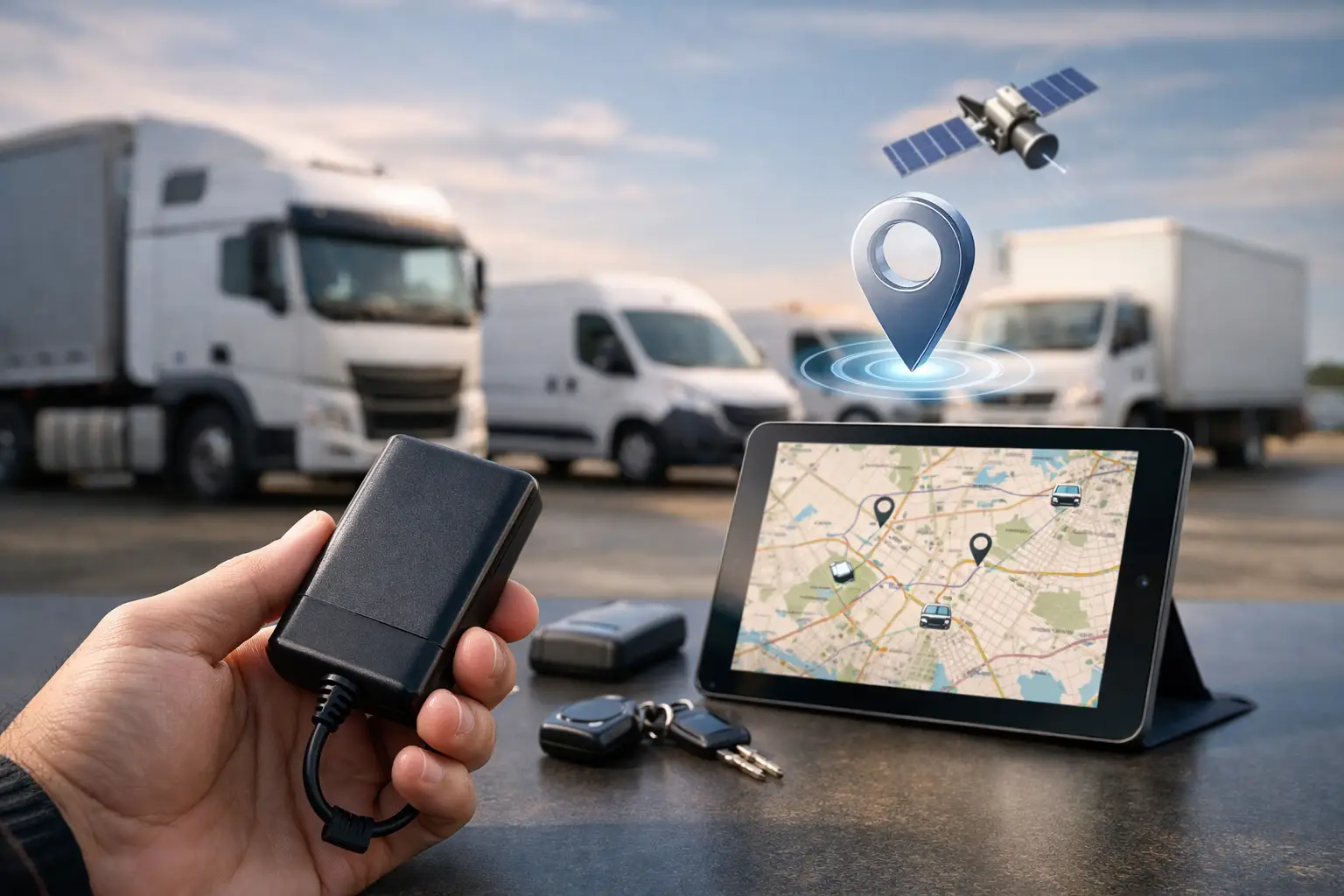
A cheap tracker can tell you where a vehicle is. That is not the same as giving a transport team control. In any useful commercial gps tracker review, the real question is whether the system helps you run a fleet with less admin, fewer blind spots and lower compliance risk.
For UK operators, that matters because location data on its own rarely fixes the day-to-day problems. Dispatch still needs live visibility. Compliance still needs driver hours and tachograph data. Workshop teams still need service reminders. If those jobs sit across separate systems, the tracker becomes another tab to check rather than a tool that saves time.
What a commercial GPS tracker review should actually assess
Most reviews focus too heavily on maps, app screenshots and headline pricing. Those points matter, but they do not tell you much about whether the platform will work in a busy haulage, van or mixed-fleet operation.
A better commercial gps tracker review starts with operational fit. Can the system help planners react quickly when vehicles are delayed? Can managers see which assets are underused? Can the compliance team reduce manual work instead of chasing downloads and building reports in spreadsheets? If the answer is no, the tracker may be technically fine but commercially weak.
That is why fleet operators should review tracking platforms in the context of the wider job. Visibility, compliance, utilisation and reporting are closely linked. A tracker that only covers one part of that picture often creates more work elsewhere.
Core features that make a difference in practice
Live vehicle and trailer visibility
Real-time mapping is the baseline, not the selling point. You need dependable updates, clear trip history and a practical way to monitor both powered vehicles and trailers. For operators running shared trailers, subcontracted work or multiple depots, trailer visibility can be just as valuable as vehicle tracking.
The key test is whether the map answers operational questions quickly. Which unit is nearest to the job? Which trailer has been left idle too long? Which vehicle has deviated from route or sat at a customer site for an hour? If your team has to export data or ring drivers to fill gaps, the system is not doing enough.
Driver behaviour and fuel visibility
Tracking data becomes more useful when it shows how vehicles are being driven. Harsh braking, idling, speeding and route inefficiency all affect fuel use, wear and customer service. A decent platform should present this in a way a transport manager can act on, not bury it in technical scoring.
There is a balance here. Some driver behaviour tools are so detailed they become noise. Others are so basic they tell you nothing beyond a weekly score. The right level depends on your fleet, but the goal is straightforward - identify waste, coach fairly and spot repeat issues before they become cost or safety problems.
Tachograph and driver hours integration
This is where many generic tracking products fall short for UK commercial fleets. If you operate vehicles subject to tachograph rules, your tracking platform should help you manage that reality, not sit beside it.
Remote downloads, live driver hours visibility and infringement reporting reduce manual effort and make dispatch planning more reliable. Without those tools, a planner may see where a vehicle is but still not know whether the driver can legally complete the next job. That gap creates unnecessary calls, poor decisions and avoidable risk to the operator licence.
Maintenance and utilisation reporting
A vehicle that is visible but poorly maintained is not under control. Tracking systems are more valuable when they support service scheduling, mileage-based reminders and asset utilisation reporting. That helps operators plan maintenance before issues become downtime and identify whether the fleet is the right size for the workload.
Again, this is about management action. You should be able to see which assets are productive, which sit idle and which are approaching service intervals without building your own workaround.
Where many commercial trackers fall short
The biggest weakness in this market is fragmentation. One supplier handles vehicle tracking. Another handles dashcams. Another handles tachograph compliance. The result is a stack of subscriptions, disconnected reports and too much manual work joining the dots.
For a small fleet, that might feel manageable at first. As the operation grows, it usually becomes expensive in time rather than just money. Depot teams chase information across systems. Managers duplicate reports. Drivers field more calls because the office still cannot see the full picture in one place.
Another common issue is pricing that looks simple until the contract arrives. Some platforms advertise low monthly fees, then layer on installation charges, support costs, download extras or separate modules for functions most operators would consider essential. A tracker is not good value if the useful parts sit behind add-ons.
There is also the question of installation. Hard-wired systems can be suitable in some fleets, particularly where a fixed long-term setup is needed. But they can slow rollout, add cost and complicate swaps between vehicles. For many operators, plug-and-play hardware is the more practical choice because it gets assets live faster and reduces disruption.
How to compare systems properly
The best way to assess a tracking platform is to work backwards from your daily pressure points. If your biggest issue is missed manual tachograph downloads, you need compliance capability built in. If dispatch loses time ringing round for ETA updates, live location and trip history matter most. If fuel spend is climbing, driver behaviour and idling reports need to be credible and easy to use.
It also helps to look at who the product is really built for. Some systems are designed for broad field service fleets and light commercial use. Others are more closely aligned with transport operations, where vehicle visibility, driver hours, maintenance and operator licence protection all need to sit together.
That difference affects the quality of the fit. A generic platform may tick the GPS box but still leave transport managers dealing with separate compliance processes. A specialist platform tends to make more sense where legal duties and day-to-day traffic management overlap.
The trade-off between simplicity and depth
Fleet operators often assume they must choose between a simple tracker and a fully featured fleet management system. In practice, the better platforms do both reasonably well. They keep the day-to-day tasks straightforward while still giving managers access to the data they need.
What you do not want is complexity for its own sake. A system packed with features is no use if depot staff avoid it because it takes too long to find anything. Equally, a stripped-back tracker may be easy to adopt but fail once the business wants reports, compliance tools or better operational planning.
The right balance depends on your fleet size and structure. A ten-vehicle van fleet has different needs from a mixed operation running lorries, trailers and drivers under tachograph rules. Still, most commercial operators benefit from a platform that can grow without forcing another software change a year later.
What good looks like for a UK operator
A strong platform gives transport teams one working view of the fleet. Vehicles, trailers, drivers, tachograph data and key reports should sit in the same environment. That cuts down admin, improves decision-making and makes it easier to prove that compliance is being managed properly.
It should also be transparent. Clear monthly pricing, practical contract terms and straightforward hardware options matter because hidden friction usually turns into delayed rollout or weak adoption. Operators do not need another system that promises efficiency while creating more setup work.
This is the reason integrated platforms are gaining attention. When tracking, compliance and operational reporting are joined up, the value of each part increases. Location data becomes more useful when paired with driver hours. Maintenance planning improves when linked to mileage and utilisation. Managers spend less time assembling information and more time acting on it.
For that reason, a product such as Fleetalyse makes sense for operators who want more than dots on a map. The value is in combining live fleet visibility with tachograph compliance, driver management and reporting in one platform built around UK transport requirements.
Questions to ask before you commit
Before signing any contract, ask how quickly the system can be deployed, what is included in the monthly fee and whether compliance tools are native or bolted on. Check how the platform handles trailers, mixed fleets and driver hours visibility. Ask what reporting is available without paid extras.
It is also worth asking who in your business will use it every day. A transport manager, planner, compliance lead and business owner do not all need the same dashboard, but they do need access to clear, reliable information. If a provider cannot show how the system supports each of those roles, the product may be too narrow for commercial use.
A commercial GPS tracker is only worth paying for if it removes work, sharpens decisions and reduces risk. If it cannot do that, it is just another screen in the office. Choose the system that helps your team run the fleet more calmly on a busy Tuesday morning, because that is where the real value shows.