

Commercial vehicle activity monitoring: 2026 UK guide

Commercial vehicle activity monitoring is the systematic tracking of driver behaviour, vehicle location, hours compliance, and maintenance data through vehicle telematics systems, digital tachographs, and GPS vehicle monitoring tools. For UK fleet operators, this is not optional. The DVSA expects operators to demonstrate active oversight of their fleets, and failing to do so puts your Operator Licence at risk. The industry term you will encounter in regulatory guidance is fleet telematics, though the monitoring practice itself spans tachograph compliance, GPS fleet tracking, and driver behaviour analysis. Done well, it reduces fuel costs, prevents infringements, and gives you the audit trail you need when the DVSA comes knocking.
What are the essential technologies for commercial vehicle activity monitoring?
Three core technologies underpin any credible monitoring setup for UK commercial fleets: digital tachographs, GPS telematics platforms, and video telematics systems. Each serves a distinct purpose, and the strongest fleets use all three in combination.
Digital tachographs are the legal backbone of driver hours compliance. Vehicle unit data must be downloaded at least every 90 days, and driver card data at least every 28 days, to satisfy UK law. Most operators run shorter internal cycles, typically every 14 days for driver cards, to create a safety buffer before DVSA inspection deadlines.
GPS vehicle monitoring platforms go beyond dots on a map. Modern fleet tracking solutions from providers such as Fleetalyse deliver real-time location data, route history, idling reports, and speed alerts. This data feeds directly into fuel management and route optimisation decisions, making it one of the highest-return investments in commercial fleet management.

Video telematics and smart dashcams add a layer of contextual evidence that GPS alone cannot provide. Forward-facing and driver-facing cameras capture near-miss events, harsh braking incidents, and distracted driving behaviour. The footage is invaluable for insurance disputes and driver coaching alike.
| Technology | Primary purpose | Key limitation |
|---|---|---|
| Digital tachograph | Driver hours and rest compliance | Requires structured download and analysis workflow |
| GPS telematics platform | Real-time location, route, and behaviour data | Data volume requires filtering to be actionable |
| Video telematics / dashcam | Incident evidence and driver behaviour coaching | High-risk data requiring DPIA under UK GDPR |
| Integrated telematics platform | Combines all data streams in one dashboard | Higher upfront cost and setup complexity |
- Smart tachographs (Generation 2) transmit position data automatically at border crossings and to roadside enforcement units, reducing manual intervention.
- CAN-bus connected telematics units pull fuel consumption and engine fault data directly from the vehicle, removing the need for manual odometer readings.
- Cloud-based platforms allow transport managers to access fleet data remotely, which is particularly useful for multi-depot operations.
Pro Tip: Set your internal driver card download cycle to 21 days rather than the legal maximum of 28. This gives you a one-week buffer to resolve any failed downloads before you breach the legal threshold.
How to comply with UK legal requirements when monitoring vehicle activity
UK compliance for commercial vehicle monitoring rests on two parallel frameworks: transport law and data protection law. Conflating them, or ignoring either, creates serious exposure.
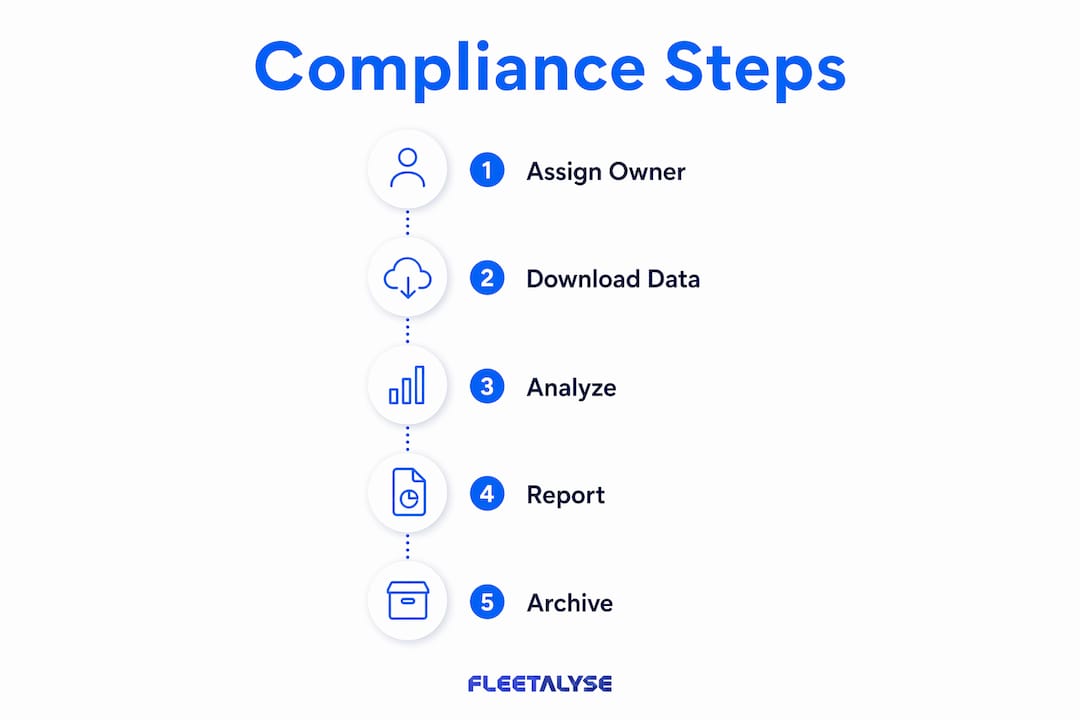
On the transport side, tachograph compliance requires more than simply downloading files. The DVSA expects operators to maintain an auditable process that includes data analysis, driver debriefs, corrective actions, and documented records. A folder of unanalysed download files is not a compliance system. It is a liability.
The data protection dimension is equally demanding. Vehicle tracking data that identifies drivers is personal data under UK GDPR, and you must establish a lawful basis before processing it. For most commercial fleet operators, Legitimate Interests is the appropriate basis, but it requires a documented Legitimate Interests Assessment (LIA) to be valid.
Here is a structured compliance checklist for UK fleet operators:
- Document your download schedule. Record who is responsible for downloading tachograph data, at what frequency, and what happens when a download fails.
- Analyse every download. Review files for infringements, missing records, and signs of tampering. A download file alone is insufficient evidence of compliance without subsequent review and follow-up.
- Conduct driver debriefs. Any infringement identified must be discussed with the driver, with the outcome recorded in writing.
- Complete an LIA for GPS tracking. Document the business purpose, the necessity of the data collected, and the balancing test against driver privacy rights.
- Conduct a DPIA for video telematics. Video telematics use requires a DPIA because of the high-risk personal data involved, including driver-facing footage.
- Publish a monitoring policy. Drivers must be informed that monitoring is in place, what data is collected, how long it is retained, and their rights under UK GDPR.
Operators running international routes face an additional layer of complexity. Tachograph and record-keeping rules vary by jurisdiction, and monitoring workflows must be adapted to remain compliant both within and outside the UK.
Pro Tip: Keep your LIA and any DPIA documents in a dedicated compliance folder alongside your Operator Licence documentation. DVSA and ICO investigations can arrive independently, and having both sets of records in one place saves considerable time under pressure.
What operational processes ensure effective monitoring and compliance?
Technology alone does not deliver compliance. The processes you build around your monitoring tools determine whether your data becomes a genuine audit trail or an unused archive.
Start by assigning clear ownership. One named person, typically the transport manager, should be accountable for tachograph downloads, analysis, and driver debrief records. Shared responsibility without named accountability is the most common reason fleets miss download deadlines.
The analysis step is where most operators underinvest. Operators are expected to maintain an auditable process that goes well beyond file collection, covering driver interaction and record updates that substantially affect compliance outcomes. Use your telematics platform to flag infringements automatically, but always have a human review the flagged records before closing them.
| Process step | Frequency | Record to keep |
|---|---|---|
| Driver card download | Every 21 days (internal target) | Download log with date, driver ID, and file reference |
| Vehicle unit download | Every 56 days (internal target) | Download log with vehicle registration and file reference |
| Infringement analysis | Within 5 working days of download | Infringement report with severity classification |
| Driver debrief | Within 10 working days of analysis | Signed debrief record with corrective action noted |
| GPS data review | Weekly or event-triggered | Exception reports for speeding, harsh braking, idling |
Integrate your GPS fleet tracking data into daily operations rather than treating it as a retrospective reporting tool. Real-time alerts for speeding or geofence breaches allow you to intervene before an incident escalates. For pallet network tracking operations in particular, live location visibility reduces missed collections and improves customer communication.
Retain tachograph records for at least 12 months on-site and 24 months in total, as required under drivers’ hours regulations. GPS and telematics data should be retained only as long as necessary for the stated business purpose, in line with UK GDPR data minimisation principles.
Pro Tip: Create a weekly exception report that surfaces only the top five infringement types across your fleet. Reviewing everything every week is unsustainable. Prioritising by frequency and severity keeps your analysis focused and your corrective actions meaningful.
How to balance monitoring intensity with data privacy and proportionality
The most common GDPR mistake in commercial fleet management is not the absence of a lawful basis. It is collecting far more data than the stated business purpose requires. Many fleet monitoring programmes fail on proportionality by gathering extensive high-frequency data beyond business need, which increases GDPR risk and invites employee pushback.
Proportionality means matching your monitoring granularity to your specific use case. A fleet running long-haul HGV routes under drivers’ hours regulations needs tachograph data and GPS location history. It does not necessarily need continuous one-second GPS polling or always-on driver-facing video unless a specific safety risk justifies it.
Map each monitoring use case to the minimum data required:
- Compliance monitoring (driver hours, rest periods): tachograph data downloaded on a defined schedule.
- Safety monitoring (harsh events, speeding): GPS telematics with event-triggered alerts rather than continuous high-frequency tracking.
- Route optimisation: journey-level GPS data showing start point, end point, distance, and duration.
- Incident investigation: video telematics footage retained for a defined period, typically 30 to 60 days, and accessed only when an incident occurs.
A DPIA for video telematics not only addresses legal requirements but also improves safety outcomes by formalising the controls and protocols around when footage is accessed, by whom, and for what purpose.
Restrict data access to those with a genuine operational need. Your transport manager needs infringement reports. Your accounts team does not need live GPS feeds. Role-based access controls in your telematics platform are a practical way to enforce this without additional administrative burden.
What troubleshooting tips help optimise your monitoring system?
Even well-designed monitoring systems develop gaps over time. The most damaging are the ones you do not notice until a DVSA audit surfaces them.
- Silent failures in remote downloading are the single biggest technical risk. Remote tachograph downloading reduces human error but requires control checks to detect gaps in data completeness. Set up automated alerts for any vehicle that has not successfully downloaded within your internal cycle threshold.
- Firmware and connectivity issues on telematics units can cause data gaps that look like normal operation on the surface. Schedule a monthly check of unit health status across your fleet.
- Driver card non-insertion is a persistent compliance risk. Drivers who forget to insert their card generate missing record flags that require explanation. Address this through driver briefings and, where appropriate, automated cab alerts.
- Incomplete debrief records are as damaging as missed downloads during a DVSA investigation. Use a standardised debrief form, whether paper or digital, to capture the infringement type, the driver’s explanation, and the agreed corrective action.
- Fuel efficiency monitoring is an underused benefit of telematics data. Tracking idling time, harsh acceleration, and speed profiles gives you the data to improve fleet fuel efficiency meaningfully, particularly during colder months when engine idling increases.
Pro Tip: Run a quarterly audit of your telematics platform’s download success rate. Any vehicle showing below 95% successful downloads in a quarter warrants a hardware check and a review of its compliance record.
Key takeaways
Effective commercial vehicle activity monitoring requires the right technology, a structured compliance workflow, and proportionate data practices aligned to UK GDPR and DVSA expectations.
| Point | Details |
|---|---|
| Download deadlines are legal minimums | Driver cards every 28 days, vehicle units every 90 days. Set internal cycles shorter to avoid breaches. |
| Analysis is mandatory, not optional | Downloaded files must be reviewed for infringements and followed up with documented driver debriefs. |
| GPS tracking data is personal data | A Legitimate Interests Assessment is required before processing driver location data under UK GDPR. |
| Video telematics requires a DPIA | Driver-facing cameras collect high-risk personal data and must be covered by a documented impact assessment. |
| Proportionality reduces legal risk | Match monitoring frequency and granularity to your specific business purpose to minimise GDPR exposure. |
The discipline gap nobody talks about
From my experience working with UK transport operators, the technology is rarely the problem. Most fleets have access to capable telematics platforms, smart tachographs, and GPS tracking tools. The gap is almost always in the discipline of the process that surrounds the data.
I have seen operators with fully automated remote downloading systems who still failed DVSA audits because nobody had reviewed the downloaded files in six months. The automation gave them confidence that compliance was happening, when in reality it was only the first step. Compliance is a workflow, not a feature.
The data privacy dimension is becoming harder to ignore in 2026. The ICO is increasingly active in the transport sector, and the combination of GPS tracking, video telematics, and driver profiling creates a data footprint that requires genuine governance. The operators who handle this well are not the ones with the most sophisticated technology. They are the ones who have documented their purposes clearly, restricted access sensibly, and trained their managers to treat driver data with the same care they give to financial records.
My recommendation: before you add any new monitoring capability, spend an hour mapping what data you already collect, what you actually use it for, and whether your current retention periods are defensible. Most operators find they are holding data they no longer need, which is both a GDPR risk and an unnecessary storage cost.
— Vytautas
How Fleetalyse supports your compliance and monitoring needs
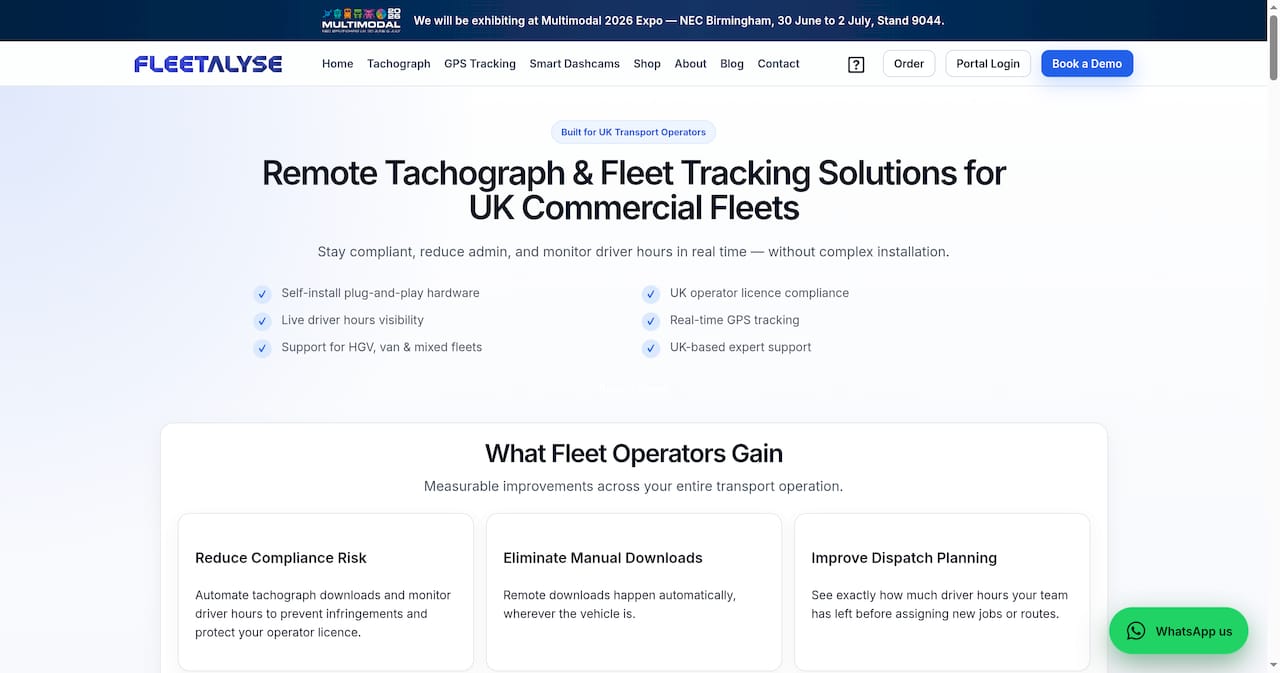
Fleetalyse brings together GPS fleet tracking, automated tachograph downloads, and smart AI dashcams in a single platform built specifically for UK commercial operators. The platform automates download scheduling, flags infringement data for review, and generates the audit-ready reports your transport manager needs without manual data extraction. For HGV operators, the HGV GPS trackers with tachograph support integrate directly with your existing tachograph head units, making setup straightforward without specialist installation. Whether you run a small van fleet or a mixed HGV and trailer operation, Fleetalyse gives you the visibility and documentation tools to stay compliant and in control. Explore the full range of fleet telematics solutions at Fleetalyse to find the right fit for your operation.
FAQ
What is commercial vehicle activity monitoring?
Commercial vehicle activity monitoring is the use of telematics systems, digital tachographs, and GPS tracking to record driver behaviour, vehicle location, and hours compliance data. UK operators use it to meet DVSA requirements and manage fleet performance.
How often must tachograph data be downloaded?
Driver card data must be downloaded at least every 28 days and vehicle unit data at least every 90 days under UK law. Most operators use shorter internal cycles to reduce the risk of missing legal deadlines.
Is GPS vehicle tracking legal for commercial fleets in the UK?
GPS tracking of commercial vehicles is legal, but vehicle tracking data is personal data under UK GDPR when it identifies drivers. Operators must establish a lawful basis, typically Legitimate Interests, and inform drivers that monitoring is in place.
Do I need a DPIA for dashcam monitoring?
Yes. Video telematics use requires a DPIA because driver-facing cameras collect high-risk personal data. The assessment must document the necessity, proportionality, and mitigation measures in place before the system goes live.
What records must I keep for tachograph compliance?
Tachograph records must be retained for at least 12 months on-site and 24 months in total. Records must include download logs, infringement analyses, and signed driver debrief records to satisfy DVSA inspection requirements.