

Fleet telematics investment checklist: 2026 guide

A fleet telematics investment checklist is a structured evaluation tool that helps UK fleet operators assess vendor capabilities, contract terms, and system features before committing to a telematics solution. Platforms like Fleetalyse demonstrate that the right telematics system delivers measurable gains in compliance, fuel efficiency, and driver safety. Yet many operators sign contracts without interrogating data governance, scalability, or exit provisions, and pay for it later. This guide covers every criterion your checklist must address in 2026, from contract clarity to mixed fleet integration, so you invest with confidence rather than regret.
1. What your fleet telematics investment checklist must cover first
The most overlooked starting point in any fleet telematics investment checklist is not hardware specification. It is the question of what happens to your data before, during, and after the contract. Telematics ROI is calculated by subtracting total costs from total savings, dividing by costs, and multiplying by 100, with meaningful returns typically arriving within two to twelve months. That timeline only holds if your system is configured correctly and your data remains accessible throughout. Operators who treat the checklist as a feature comparison miss the deeper procurement objective: building an operational evidence infrastructure, not just installing devices.
The procurement deliverable to aim for is not hardware quantity but an operational evidence infrastructure with forensic capabilities for incident analysis and regulatory defence. This means your telematics platform must produce role-based logs, incident reconstruction data, and audit trails that hold up under DVSA scrutiny. Fleetalyse is built around this principle, combining GPS tracking, driver behaviour monitoring, and tachograph data into a single compliance-ready record.

2. Contract and data governance: the non-negotiable clauses
Clear contract terms on data export, retention, and access are foundational to operational resilience. Vague language buried in annexes creates real risk: you may discover post-termination that your historical data is inaccessible, or that exports are only available in proprietary formats your transport management system cannot read. Before signing, verify every one of the following points:
- Data exportability: Confirm that historical data exports are available in machine-readable formats such as CSV or JSON, not locked to a vendor portal.
- Retention period post-termination: Establish how long the vendor retains your data after the contract ends, and whether you can retrieve it at no additional cost.
- Internal access controls: Clarify which roles within your organisation can access which data sets, and whether access logs are maintained.
- External data sharing: Understand whether the vendor shares your fleet data with third parties, including insurers or analytics partners, and under what conditions.
- Exit provisions: Check whether the contract includes a data handover process or whether migration support is offered.
Many telematics projects falter because unclear contract terms on data access and exit provisions are buried in annexes rather than the main agreement. This is not a minor administrative detail. If your operator licence comes under review and your telematics provider has already deleted your records, you have no defence.
Pro Tip: Request a plain-language exit summary from any vendor before signing. This one-page document should state exactly what data you receive, in what format, and within what timeframe if you terminate the contract.
3. Which features drive the strongest telematics ROI?
Savings from telematics stem from three primary sources: route optimisation reducing fuel consumption, predictive maintenance reducing repair costs, and safety features such as AI dash cams reducing accident frequency. Each of these delivers measurable cost avoidance, but the combined effect is what pushes ROI into the two-to-twelve-month window most operators target.
Route optimisation works by analysing historical journey data alongside real-time traffic conditions to reduce idle time and unnecessary mileage. For a fleet running fifty vehicles, even a five percent reduction in fuel spend represents a significant annual saving. Predictive maintenance alerts flag component wear before failure occurs, avoiding the far greater cost of roadside breakdowns and missed deliveries. AI-equipped dash cams provide video evidence that reduces fraudulent insurance claims and supports driver coaching programmes.
Driver buy-in and analytics fine-tuning are as important as the technology itself. A system that generates data nobody acts on delivers no ROI. Build a post-implementation review into your checklist: schedule KPI assessments at thirty, sixty, and ninety days to confirm the platform is calibrated to your operational patterns. Fleetalyse supports this through automated driver hours monitoring and fuel consumption reporting, giving managers the data they need to coach rather than simply monitor.
4. GDPR and UK data privacy compliance requirements
Vehicle data including geolocation, driving style, and VIN-linked information constitutes personal data under GDPR. This means any telematics platform processing that data must operate on a lawful basis, whether legitimate interest, contractual necessity, or explicit consent, and must be able to demonstrate compliance on request. For UK fleet operators, this obligation sits alongside the UK GDPR framework that replaced the EU regulation post-Brexit, with the Information Commissioner’s Office as the supervising authority.
Your checklist must confirm the following compliance capabilities in any platform you evaluate:
- Lawful processing basis: The vendor must document which legal basis applies to each category of data collected.
- Driver notification: Drivers must be informed that their data is being collected, what it is used for, and how long it is retained.
- Data subject access requests: The platform must support your ability to respond to driver requests for their personal data within the statutory timeframe.
- Audit trails: Every access to personal data should be logged with a timestamp and user identifier.
- Retention schedules: Digital tachograph records should be retained for at least one year, with many operators retaining for two years to support DVSA inspections and insurance claims.
Real-time monitoring and early warning systems are the practical expression of these requirements. Platforms that flag missing tachograph downloads automatically, rather than waiting for a manual audit, reduce the risk of penalties and demonstrate proactive compliance management to enforcement authorities.
5. Scalability and vendor support criteria
Scalability in telematics means the ability to add vehicles, users, geographic regions, and reporting complexity without performance degradation or the need to renegotiate your contract. A platform that works well for twenty vehicles but struggles at two hundred is not a long-term solution. Assess scalability by asking vendors for reference customers at your target fleet size, and by requesting a demonstration of multi-site reporting.
Vendor support quality is equally critical and often underweighted during procurement. The table below sets out the support criteria your checklist should assess:
| Support criterion | What to verify |
|---|---|
| Account management | Is a named account manager assigned, or is support handled by a generic helpdesk? |
| Technical response time | What is the guaranteed response time for critical system outages under the SLA? |
| Compliance expertise | Can the support team advise on DVSA regulations and Operator Licence requirements? |
| Hardware replacement | What is the policy for faulty units, and are loan devices available during repair? |
| Training and onboarding | Is training provided at implementation and again when new features are released? |
Fleetalyse provides UK-based support with compliance expertise built into the team, which matters when you need an answer about tachograph regulations rather than a generic ticket response. Service level agreements should define uptime guarantees, outage definitions, and the remedies available if targets are missed.
Pro Tip: Ask your shortlisted vendors for their average first-response time on support tickets over the past six months. A vendor confident in their service will share this figure without hesitation.
6. Comparing platforms for mixed fleet integration and cost transparency
Parallel telematics systems for different vehicle classes create reporting inconsistencies and significant administrative overhead. A mixed fleet telematics integration checklist must assess whether a single platform can handle HGVs, vans, trailers, and any specialist assets you operate, producing consistent data across all vehicle types. Operators who run separate systems for HGVs and light commercial vehicles frequently find that consolidated reporting is impossible, making fleet-wide KPI analysis unreliable.
The following checklist covers the pricing and contract terms that most operators fail to scrutinise adequately:
- Pricing model: Is the fee per vehicle, per user, or a flat platform licence? Understand how costs scale as your fleet grows.
- Auto-renewal conditions: Does the contract renew automatically, and what notice period is required to prevent renewal?
- Early termination fees: What is the financial penalty for exiting before the contract end date, and is it proportionate?
- Hardware ownership: Do you own the devices at the end of the contract, or must they be returned in original condition?
- Update and change management: How does the vendor communicate software updates, and do they consult customers before making changes that affect workflows?
For a practical reference on fleet management best practices in the UK logistics sector, including how operators structure telematics evaluations, the Jagelo Haulage 2026 guide provides useful context. When comparing platforms, build a side-by-side matrix using these criteria rather than relying on vendor-supplied comparison documents, which naturally favour their own offering.
The GPS trackers and smart dashcams guide from Jagelo Haulage also illustrates how compliance and safety technology work together in commercial UK fleets, which is useful context when assessing whether a vendor’s hardware catalogue matches your operational requirements.
Key takeaways
A successful telematics investment requires data governance, compliance capability, and scalability to be assessed before hardware specifications.
| Point | Details |
|---|---|
| Prioritise data governance | Confirm data export formats, retention periods, and exit provisions before signing any contract. |
| ROI requires active management | Telematics ROI arrives in two to twelve months only when analytics are tuned and drivers are engaged. |
| GDPR applies to fleet data | Geolocation and driving style data are personal data under UK GDPR, requiring lawful processing and documented retention schedules. |
| Scalability must be contractual | Verify that adding vehicles or regions does not trigger contract renegotiation or performance degradation. |
| Mixed fleet needs unified reporting | A single platform covering all vehicle types eliminates reporting inconsistencies and reduces administrative overhead. |
What I have learned from watching operators get this wrong
Most operators I speak with approach telematics procurement as a hardware decision. They compare device specifications, ask about GPS accuracy, and negotiate on unit price. The contract lands on their desk and they skim it, because the commercial terms feel secondary to getting the system live. That is the mistake that costs them later.
The contracts that cause the most damage are not the ones with obviously unfair terms. They are the ones with vague terms. “Data will be available upon request” sounds reasonable until you terminate and discover that “upon request” means a six-week process with a fee attached. I have seen operators lose access to twelve months of tachograph records because they did not ask the right questions before signing.
The other pattern I see repeatedly is the assumption that implementation is the finish line. The system goes live, the devices are installed, and the project is declared complete. Six months later, the platform is generating data that nobody is acting on, drivers have reverted to old habits, and the ROI calculation looks nothing like the vendor’s projection. Meaningful telematics ROI depends on driver acceptance and analytics customisation, and that requires a change-management focus alongside the technology investment.
My practical advice: treat your telematics vendor as a long-term operational partner, not a hardware supplier. The quality of their compliance expertise, their willingness to share support performance data, and their approach to contract transparency will tell you more about the relationship you are entering than any feature demonstration.
— Vytautas
How Fleetalyse supports your telematics investment
If you are working through a telematics evaluation and want a platform built specifically for UK compliance requirements, Fleetalyse is worth examining closely.
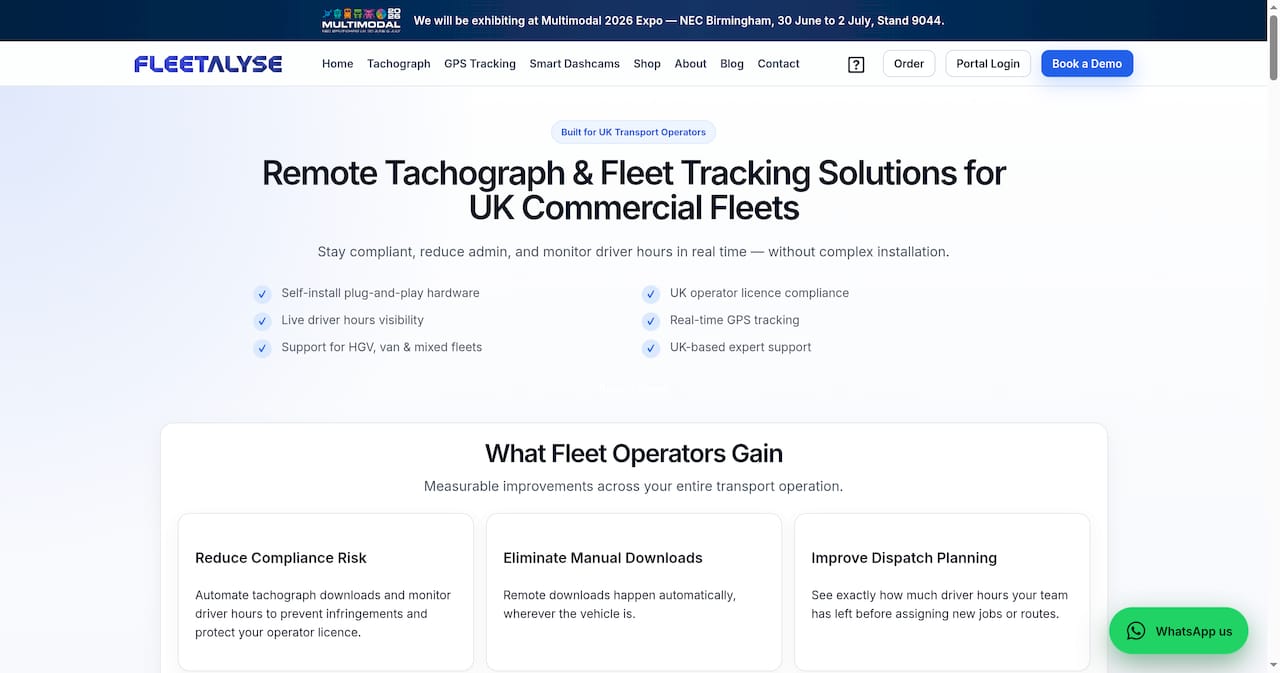
Fleetalyse combines GPS fleet tracking, smart dashcams, and remote tachograph downloads into a single platform designed for HGVs, vans, trailers, and mixed assets. The platform automates driver hours monitoring, flags compliance risks in real time, and produces the audit trails your operator licence depends on. Onboarding uses plug-and-play hardware that does not require professional installation, and UK-based support is available throughout. Explore the full range of telematics solutions to see how Fleetalyse aligns with the checklist criteria covered in this guide.
FAQ
What is a fleet telematics investment checklist?
A fleet telematics investment checklist is a structured set of evaluation criteria covering contract terms, data governance, compliance features, scalability, and pricing that fleet operators use to assess telematics vendors before signing a contract.
How long does telematics ROI typically take?
Meaningful ROI from telematics typically arrives within two to twelve months, depending on fleet size, feature utilisation, and how effectively driver behaviour data is acted upon.
Is vehicle tracking data subject to GDPR?
Yes. Geolocation and driving style data are classified as personal data under GDPR, meaning telematics platforms must operate on a documented lawful processing basis and support driver data access requests.
What should I check in a telematics contract before signing?
Verify data export formats, post-termination retention periods, auto-renewal conditions, early termination fees, and hardware return requirements. Request a plain-language exit summary from the vendor before committing.
Can one telematics platform manage a mixed fleet?
A single platform covering HGVs, vans, and trailers is preferable to parallel systems, which create reporting inconsistencies and increase administrative overhead. Confirm unified reporting capability during your evaluation.