

Types of commercial vehicle assets tracked: 2026 guide

Commercial vehicle asset tracking is defined as the systematic monitoring of powered vehicles, non-powered equipment, and depot tools using telematics hardware, cellular trackers, or passive identification tags. UK fleet managers now recognise three distinct tiers of tracked assets: hardwired telematics for powered vehicles costing £280–£380 annually, cellular asset trackers for remote equipment at £95–£190 annually, and low-cost passive tags at roughly £35 each per year. Understanding the types of commercial vehicle assets tracked is the foundation of any credible fleet asset management strategy, whether you run ten vans or three hundred HGVs.
1. heavy goods vehicles (hgvs) and articulated lorries

HGVs are the most comprehensively tracked asset class in UK commercial fleets. They carry the highest regulatory burden under DVSA rules and Operator Licence conditions, which makes hardwired telematics non-negotiable rather than optional.
Hardwired units connect directly to the vehicle’s CAN-bus, pulling live engine diagnostics, fuel consumption data, and driver hours alongside GPS position. This level of integration supports tachograph compliance, which Fleetalyse automates through remote tachograph downloads, removing the manual collection burden from transport managers.
- Real-time location with geofence alerts
- Driver behaviour scoring: harsh braking, acceleration, cornering
- Engine fault code monitoring
- Automated driver hours reporting aligned to DVSA requirements
Pro Tip: Install your telematics unit with a direct CAN-bus connection rather than a simple OBD-II plug on HGVs. CAN-bus data gives you fuel consumption and engine load figures that OBD-II alone cannot reliably deliver on larger vehicles.
2. light commercial vehicles and vans
Vans represent the largest asset count in most mixed fleets. Tracking them delivers fast returns because van utilisation is frequently poor, with vehicles sitting idle for hours without any visibility from the back office.
Hardwired GPS trackers for vans provide the same core benefits as HGV telematics at a lower installation cost. Vehicle GPS trackers for vans typically install in one to two hours and connect via OBD-II or direct wiring depending on the model. The data feeds into a central dashboard showing live location, mileage, and driver behaviour.
For fleets operating under grey fleet or mixed-ownership arrangements, van tracking also provides the audit trail needed to defend insurance claims and manage duty-of-care obligations under UK health and safety law.
3. trailers and semi-trailers
Trailers are non-powered assets, which means they cannot use a hardwired telematics unit drawing power from an engine. They require dedicated battery-powered cellular asset trackers instead.
Trailer GPS trackers transmit location via cellular networks and are typically mounted to the trailer chassis. The key operational benefit is knowing exactly where each trailer is at any given moment, which prevents the common problem of trailers sitting in customer yards for days without the fleet manager’s knowledge.
Battery life is the critical specification here. Industrial-grade battery chemistries enable 5–10 years of operation for non-powered asset trackers. That longevity matters enormously for trailers operating in remote UK locations where maintenance visits are infrequent.
4. swap bodies, containers, and dollies
Swap bodies and ISO containers present a tracking challenge because they move between multiple vehicles and locations throughout their working life. Standard vehicle telematics cannot follow them once they are detached.
Cellular asset trackers solve this directly. Non-vehicle depot assets such as dollies, swap bodies, cages, containers, and generators are increasingly tracked via GPS or Bluetooth Low Energy (BLE) for real-time location and audit processes. Fleets using platforms like MapTrack can import and tag these assets to start pre-start checks within days of implementation.
The practical benefit extends beyond location. Knowing which swap body is attached to which vehicle at any point in time simplifies damage liability, reduces disputes with customers, and supports accurate maintenance scheduling.
5. depot equipment: forklifts, cages, and generators
Depot equipment rarely leaves a single site, but it still disappears. Forklifts get moved between bays, cages go missing during unloading, and generators are borrowed and never returned. Passive asset tags address this category at the lowest cost point.
QR code tags combined with BLE beacons allow depot staff to scan assets during physical audits, recording location and condition without requiring a live cellular connection. The cost difference is significant: passive tags cost roughly £35 per asset annually compared to £95–£190 for a cellular tracker. For high-volume, low-value depot equipment, passive tags are the correct choice.
The limitation is that passive tags only update when someone physically scans them. They do not provide continuous location data. For assets that move frequently or carry high replacement value, cellular trackers remain the better investment.
6. agricultural and specialist vehicles
Tractors, telehandlers, and specialist plant vehicles used in logistics or construction-adjacent transport operations are tracked using the same hardwired telematics approach as HGVs. The difference lies in connectivity.
Rural UK locations present genuine coverage challenges. Network selection for tracking hardware is critical: LTE Cat 1, Cat M1, or NB-IoT must match the operational geography. Assets working in remote areas may need satellite-capable or multi-network devices to maintain reliable data acquisition. Choosing the wrong network standard is one of the most common and costly mistakes in fleet technology procurement.
Pro Tip: For assets operating in rural Scotland, Wales, or Northern Ireland, specify NB-IoT or satellite fallback capability at the point of purchase. Retrofitting network capability later costs significantly more than specifying it upfront.
7. refrigerated units and temperature-controlled assets
Refrigerated trailers and temperature-controlled vehicles carry an additional compliance requirement beyond location tracking. The cold chain must be documented, and temperature excursions must be recorded and reported.
Telematics units on refrigerated vehicles integrate with the refrigeration unit’s control system to log temperature data alongside GPS position. This creates a single audit record covering both location and cargo condition. For food logistics operators, this data is required under UK food safety regulations and customer contracts alike.
The tracking hardware for refrigerated assets is typically hardwired to both the vehicle and the refrigeration unit, which increases installation complexity and cost compared to a standard van tracker.
8. tracking technologies that power these systems
Understanding the underlying technology helps you make better procurement decisions. A GPS tracker system consists of three components: a hardware sensor, a data network, and a server dashboard. Failure in any one component causes data loss, not just a GPS satellite connection issue.
The main network technologies in use across UK fleets in 2026 are:
- LTE Cat 1: High bandwidth, suitable for dashcams and video telematics
- LTE Cat M1: Lower power, good for vehicles with moderate reporting frequency
- NB-IoT: Very low power, ideal for assets that report infrequently in remote areas
- Satellite: Required where cellular coverage is absent entirely
“Matching tracking device network connectivity to the asset’s location, whether urban, rural, or remote, is the single most important hardware decision a fleet manager makes.” — Queclink technical guidance
BLE is used for short-range depot tracking and asset association, linking a trailer tag to a vehicle telematics unit when they are within range of each other.
9. unified fleet management software
Location data alone is not fleet asset management. The real value comes from combining location with maintenance history, compliance records, and utilisation data in a single platform.
Advanced fleet management software tracks key asset metadata including insurance expiry, permits, and maintenance history to meet audit standards. Asset Panda, for example, manages assets from acquisition through to disposal to support capital asset schedules. Fleetalyse delivers this same integrated view for UK operators, combining GPS tracking, tachograph data, driver behaviour scores, and maintenance alerts under one dashboard.
The compliance benefit is direct. When a DVSA roadside check or an Operator Licence audit occurs, you need records that are accurate, complete, and immediately accessible. Siloed systems where location data sits in one platform and maintenance records sit in a spreadsheet create gaps that cost operators their licence.
10. choosing the right tracker for each asset type
Matching the tracker to the asset is not complicated once you apply a simple decision framework. The right GPS tracker depends on power availability, operating range, reporting frequency, and platform compatibility.
Use this as your starting point:
- Powered vehicle: Hardwired telematics with CAN-bus integration
- Non-powered mobile asset (trailer, container): Battery-powered cellular tracker with industrial-grade battery
- Depot equipment (low movement): Passive QR or BLE tag for audit-based visibility
- Rural or remote asset: Specify NB-IoT or satellite fallback at procurement
Protocol compatibility is the factor most fleet managers overlook. Trackers must communicate with the fleet platform using compatible protocols to avoid data silos and costly integration projects. Confirm protocol compatibility before purchasing any hardware, not after.
Pro Tip: Request a protocol compatibility confirmation in writing from both your tracker supplier and your fleet platform provider before signing any contract. A mismatch discovered post-installation can mean replacing hardware at your own cost.
Key takeaways
Effective fleet asset management requires matching the right tracking technology to each asset type, from hardwired telematics on HGVs to passive tags on depot equipment, with unified software tying all data together for compliance and operational control.
| Point | Details |
|---|---|
| Three tracking tiers exist | Hardwired telematics, cellular asset trackers, and passive tags each serve distinct asset categories. |
| Battery life defines trailer tracking | Industrial-grade batteries enable 5–10 years of operation, reducing maintenance costs on non-powered assets. |
| Network choice affects reliability | LTE Cat M1, NB-IoT, or satellite must match the asset’s operating geography to maintain uptime. |
| Protocol compatibility is critical | Confirm tracker-to-platform protocol compatibility before procurement to avoid costly data silos. |
| Unified platforms support compliance | Combining location, maintenance, and tachograph data in one system is the foundation of DVSA audit readiness. |
What i have learned running mixed UK fleets
The biggest mistake I see UK fleet operators make is treating vehicle tracking and asset tracking as two separate projects with two separate budgets. They buy a telematics system for the trucks, then realise six months later that the trailers are invisible, and then buy a separate asset tracking platform that does not talk to the first one. The result is two dashboards, two data sets, and twice the administrative burden.
The integrated approach is not just more convenient. It produces genuinely better intelligence. When your trailer location data sits alongside your vehicle telematics data, you can see dwell times, identify which drivers consistently leave trailers at customer sites, and build a maintenance schedule that reflects actual usage rather than calendar intervals.
The other thing I would push back on is the assumption that passive tags are a compromise. For depot equipment, they are the correct tool. Spending £190 per year on a cellular tracker for a cage that never leaves your yard is poor asset management. Spend that budget on the assets that actually move.
The future of commercial vehicle asset tracking in the UK sits in tighter integration between telematics hardware and compliance software. DVSA enforcement is not getting lighter, and Operator Licence conditions are not getting simpler. The fleets that will manage this well are the ones building unified data platforms now, not scrambling to connect siloed systems when an audit arrives.
— Vytautas
Track every asset with Fleetalyse
Fleetalyse offers a complete range of GPS trackers designed specifically for UK commercial fleet operators, covering everything from HGVs and vans to trailers and non-powered assets. Every device integrates directly with the Fleetalyse platform, giving you a single dashboard for location, compliance, and driver behaviour data.
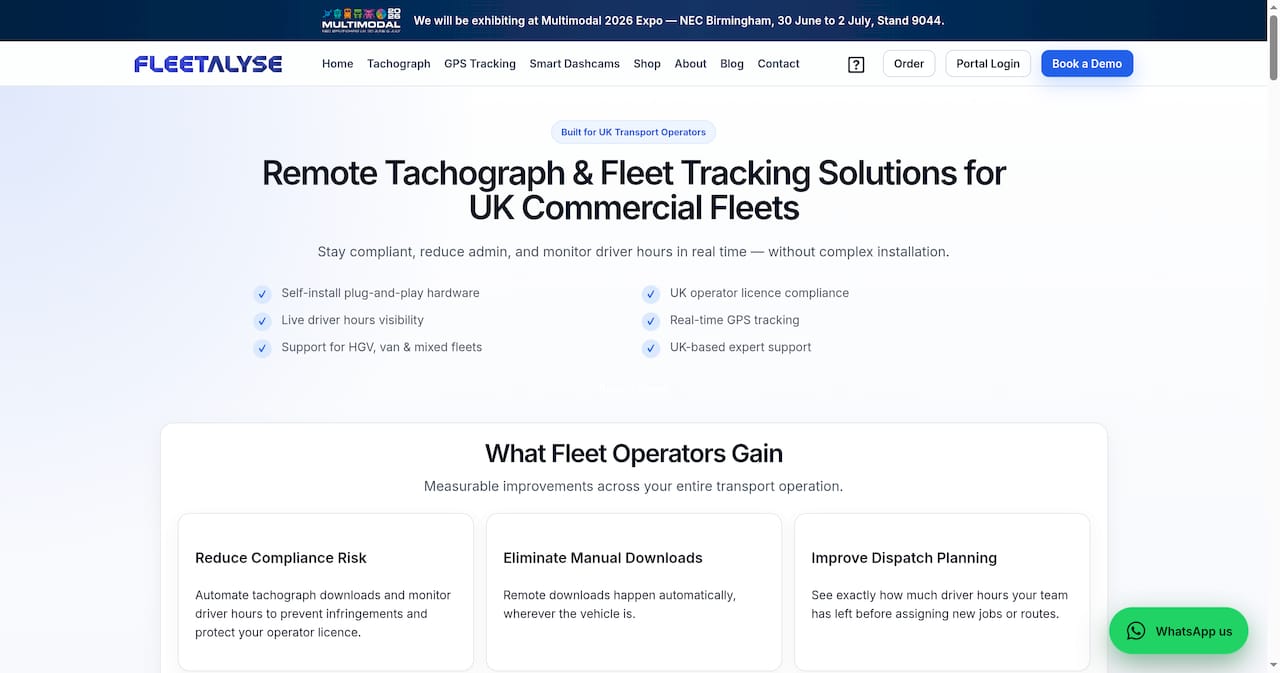
Whether you need HGV trackers with tachograph support or dedicated asset and trailer GPS trackers for your non-powered fleet, Fleetalyse has hardware that installs without professional setup and connects to UK-supported telematics software built around DVSA compliance. Explore the full range and find the right solution for your fleet today.
FAQ
What are the main types of commercial vehicle assets tracked?
The main categories are powered vehicles (HGVs, vans, tractors) tracked with hardwired telematics, non-powered mobile assets (trailers, containers) tracked with cellular battery-powered trackers, and depot equipment tracked with passive QR or BLE tags.
Do trailers need a different tracker to vehicles?
Yes. Trailers have no engine power source, so they require battery-powered cellular asset trackers rather than hardwired telematics units. Industrial-grade batteries in these devices can last 5–10 years.
Which GPS network technology is best for rural UK fleets?
NB-IoT or satellite-capable devices are best for rural and remote UK locations. LTE Cat 1 and Cat M1 work well in urban and suburban areas but may lose connectivity in low-coverage rural zones.
How does asset tracking support DVSA compliance?
Unified fleet platforms combine GPS location, tachograph records, maintenance history, and driver behaviour data into a single audit trail. This gives transport managers the documentation needed to satisfy DVSA roadside checks and Operator Licence audits.
What is protocol compatibility and why does it matter?
Protocol compatibility means the tracker hardware and fleet management software use the same communication standard to exchange data. A mismatch causes data gaps and can require expensive hardware replacement, so confirming compatibility before purchase is critical.