


Commercial fleet GPS tracking explained: 2026 guide

Most fleet managers think GPS tracking means dots on a map. That assumption is costing them money. Commercial fleet GPS tracking explained properly reveals a live operational intelligence layer that covers driver behaviour, fuel consumption, compliance status, and vehicle health, all in one place. The GPS tracking device market is valued at $3.60 billion in 2026, with transportation and logistics accounting for 41.4% of all deployments. For UK fleet operators facing tightening margins and DVSA scrutiny, understanding what these systems actually do is where efficiency gains begin.
Table of Contents
- Key takeaways
- How GPS fleet tracking actually works
- Benefits of GPS fleet tracking for UK operators
- GPS tracking hardware types compared
- Choosing the right fleet tracking system
- Data, privacy, and legal compliance in UK fleet tracking
- My take: stop tracking everything, start solving something
- How Fleetalyse supports your GPS tracking needs
- FAQ
Key takeaways
| Point | Details |
|---|---|
| GPS tracking goes beyond location | Modern fleet systems capture speed, driver behaviour, fuel use, and compliance data in real time. |
| Hardware choice matters | OBD-II, hardwired, and battery-powered trackers each suit different fleet types and operational needs. |
| Fuel savings are measurable | A typical heavy-duty truck idles 1.8 hours daily, wasting over 1,200 litres of diesel each year. |
| Legal compliance is built in | Automated hours monitoring and regulatory reporting reduce administrative burden under UK transport law. |
| System fit beats feature count | Choosing a platform aligned to your specific operational pain points outperforms chasing every new feature. |
How GPS fleet tracking actually works
At its core, a GPS tracking system uses a network of satellites orbiting the Earth to calculate a vehicle’s precise position through a process called trilateration. Three or more satellites measure the time it takes for signals to reach a receiver in the vehicle, and from those time differences the system pinpoints latitude, longitude, speed, and direction of travel.
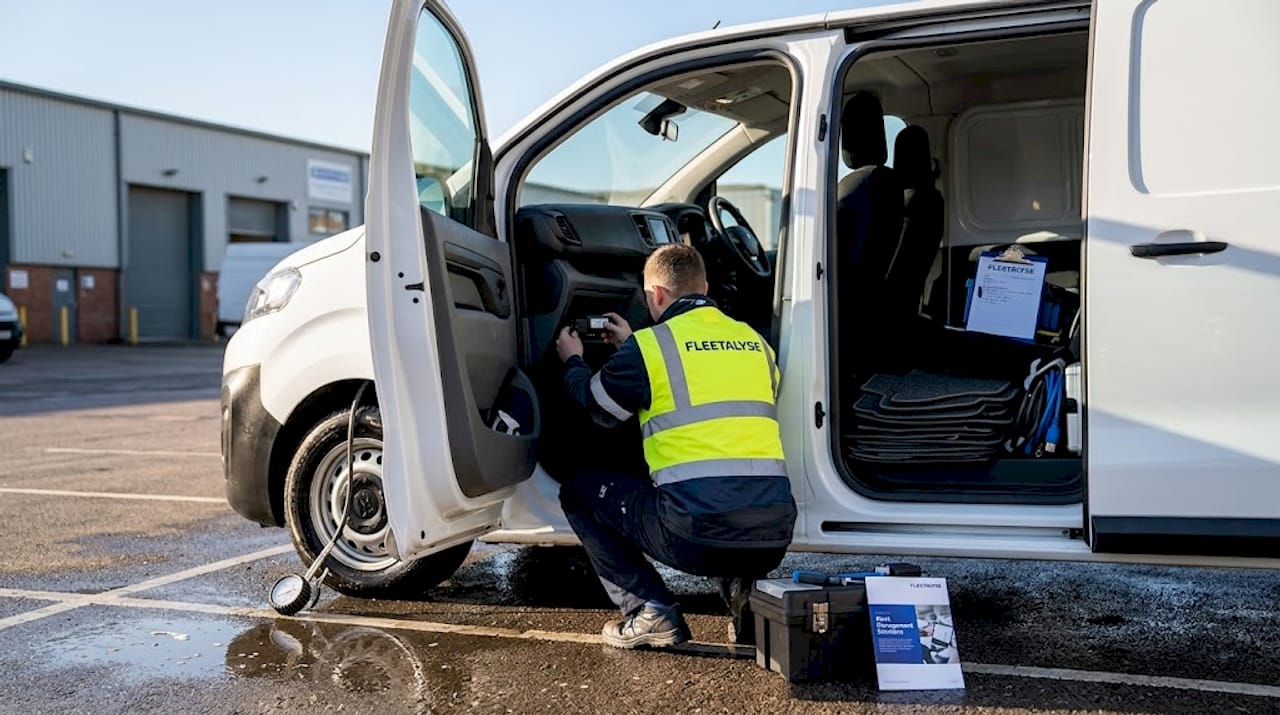
That positioning data alone is only part of the picture. Fleet tracking systems use hardware devices, data transmission networks, and web or mobile dashboards to bring live visibility to your operations. The tracker installed in the vehicle captures core data points: ignition status, heading, speed, and geographic coordinates. That data then travels across a cellular network (typically 4G LTE, with 5G becoming increasingly common) or, in areas with poor coverage, via satellite network to a cloud platform where it becomes visible on your dashboard.
Position updates arrive on dashboards within 10 to 90 seconds via 4G LTE or satellite networks, giving you near real-time operational visibility. That distinction matters for time-sensitive dispatching operations where a 90-second-old location is useful, but a 20-minute-old one is not.
Active versus passive tracking
The two fundamental tracking modes serve very different purposes. Active tracking transmits data continuously, giving you live visibility into every vehicle’s status. Passive tracking, sometimes called breadcrumb tracking, stores positional data locally on the device and uploads it when the vehicle returns to base or connects to Wi-Fi. Passive trackers upload data when vehicles return to base or connect to WiFi, which is perfectly adequate for route analysis, mileage reporting, or driver debrief sessions that do not require live intervention.
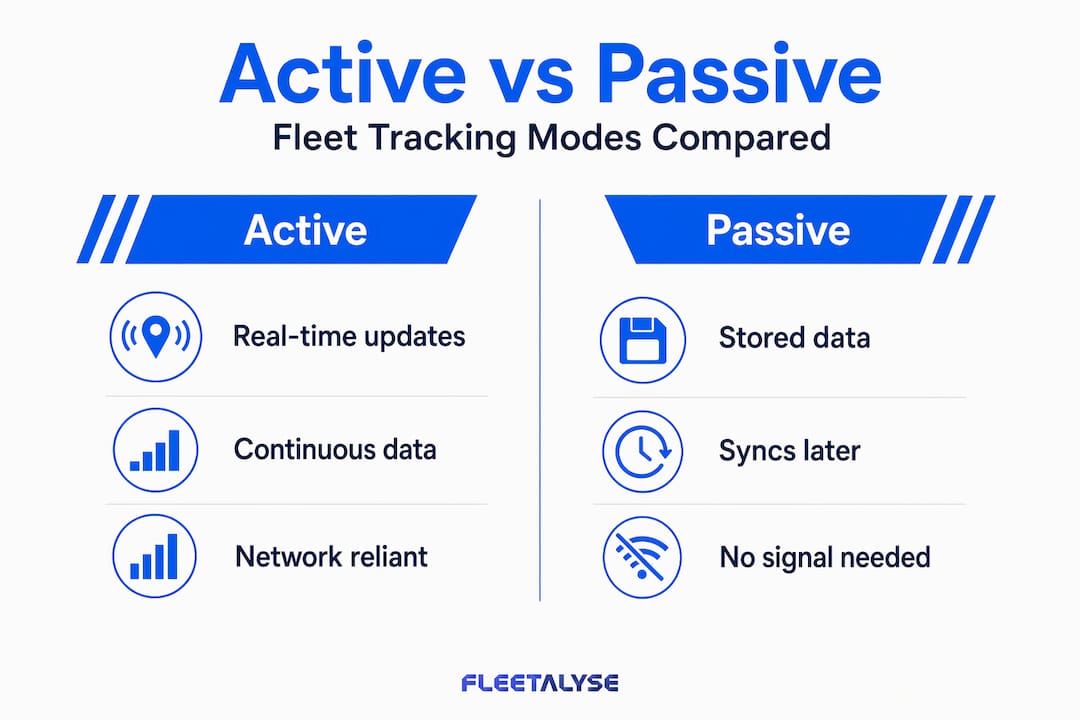
There is also a practical safety net worth knowing. Breadcrumb tracking stores data locally when cellular coverage is lost, uploading it once connectivity is restored to avoid gaps in your compliance history. For fleets operating in rural Scotland or remote parts of Wales, that failsafe is worth its weight.
Pro Tip: If your fleet operates across areas with patchy mobile signal, confirm that your chosen device has onboard data storage capacity. Without it, you will have blind spots in your records at precisely the moments you need them most.
Benefits of GPS fleet tracking for UK operators
Commercial vehicle tracking delivers value across six distinct operational areas. Understanding each one helps you identify where your fleet stands to gain the most.
- Operational visibility. Real-time vehicle tracking lets you see where every asset is at any given moment. This translates directly into smarter dispatching, faster response to job changes, and the ability to communicate accurate ETAs to customers without phoning drivers.
- Fuel management. Fuel accounts for more than 20% of fleet operating costs. A median heavy-duty truck idles 1.8 hours daily, wasting 1,200 to 1,500 litres of diesel each year. GPS systems flag excessive idling, match fuel card transactions against actual vehicle activity, and help you build a case for targeted driver coaching.
- PTO filtering for accurate data. Not all idling is wasteful. Refrigerated vehicles, cherry pickers, and concrete mixers need their equipment running while stationary. PTO filtering technology distinguishes operational activity from genuine fuel waste, so your idling reports reflect reality rather than penalising drivers unfairly.
- Driver safety. GPS fleet management solutions monitor harsh braking, sharp cornering, rapid acceleration, and speeding events. These alerts are most effective when treated as diagnostic signals rather than blame tools. Safety alerts like harsh braking often mask underlying issues such as driver fatigue or poor route planning, which means root cause analysis matters as much as the alert itself.
- Compliance support. For HGV operators, automated hours monitoring removes the manual burden of tachograph analysis and driver hours reporting. This is particularly relevant under current DVSA enforcement priorities.
- Asset security. Geofence alerts notify you the moment a vehicle leaves a designated area outside working hours. Recovery of stolen vehicles becomes significantly faster when you can share a live location with police within minutes.
The broader shift is telling. Fuel-related insight demand increased 41%, with analytics increasingly used to cut waste and demonstrate safety performance to insurers and regulators alike. GPS tracking has become a vital operational intelligence layer, not just location monitoring.
GPS tracking hardware types compared
Choosing the right physical device is where many fleet operators make their first mistake. Each hardware category suits a different operational profile.
| Device type | Installation time | Best for | Limitations |
|---|---|---|---|
| OBD-II plug-in | Under 10 seconds | Cars, light vans, pilots | Easily spotted and removed, limited covert protection |
| Hardwired unit | 30 to 90 minutes | HGVs, long-term fleet assets | Requires installation time, higher upfront effort |
| Battery-powered tracker | Minutes | Trailers, plant, equipment | Requires recharge management, lower update frequency |
OBD-II trackers install in under 10 seconds but are easily spotted and removed by a driver or a thief. If discretion matters for theft prevention or compliance purposes, they fall short. Hardwired installation takes 30 to 90 minutes, but the result is a covertly placed, continuously powered device that is far more theft-resistant and tamper-evident.
Battery-powered trackers fill a specific gap: assets that have no power source of their own. Trailers, skips, plant machinery, and portable equipment all become trackable without any wiring work. The trade-off is managing recharge cycles and accepting that update frequency is typically lower to preserve battery life.
One technical point worth flagging: the best GPS tracking devices now use multi-GNSS receivers, combining GPS with GLONASS and Galileo satellite constellations. In dense urban areas like central London or Glasgow, multi-GNSS coverage significantly reduces signal dropout and positional errors caused by tall buildings.
Pro Tip: For mixed fleets running HGVs alongside trailers and plant, plan your hardware strategy by asset category rather than applying a single device type across the board. A plug-and-play unit on your HGVs and a battery tracker on your trailers will outperform any one-size-fits-all approach.
Choosing the right fleet tracking system
The most common mistake operators make when selecting GPS fleet management solutions is choosing based on the number of features rather than operational fit. Fleet managers often err by choosing GPS systems based on feature quantity rather than operational fit, leading to underutilised platforms that nobody bothers logging into.
Before you evaluate any vendor, be clear on which operational problem you are solving first. Here is a practical framework for making that decision:
- Define your primary pain point. Is it fuel spend, compliance risk, driver safety, or customer service complaints about late deliveries? Your primary pain point should drive your shortlist, not the other way around.
- Check the refresh rate. For live dispatching operations, you need updates every 10 to 30 seconds. For mileage reporting or overnight security, a one-minute ping is adequate. Confirm the actual update frequency the vendor provides on their standard plan.
- Understand the pricing structure. Many providers charge separately for hardware, SIM cards, data, and platform access. Get a total cost of ownership figure over 36 months, not just the monthly subscription headline.
- Assess integration capabilities. Does the system connect with your existing tachograph solution, fuel card provider, or maintenance scheduling software? Isolated data silos create more administrative work, not less.
- Evaluate support quality. UK-based support with knowledge of DVSA regulations and Operator Licence requirements is worth considerably more than a generic overseas helpdesk when you have an urgent compliance question.
Choosing a fleet tracking platform must be purpose-driven; not all fleets need complex AI solutions, and simpler systems may be more effective for operators focused on a single operational outcome. Explore how AI is reshaping fleet logistics to understand where smarter technology genuinely adds value versus where it adds complexity.
Pro Tip: Request a two-week trial on a subset of your fleet before committing to a full deployment. The gap between a vendor’s demo and day-to-day usability is often wider than it appears in a sales presentation.
Data, privacy, and legal compliance in UK fleet tracking
Tracking your drivers is legal in the UK, but it must be done correctly. The law requires a clear, written policy that drivers have read and acknowledged before any tracking begins. Treating this as a paperwork formality rather than a genuine process creates legal exposure and damages driver trust.
Key considerations for compliant GPS tracking:
- Driver consent and transparency. Inform drivers in writing about what data is collected, how it is used, how long it is retained, and who has access to it. This is not just good practice; it is a requirement under UK GDPR.
- Data security. Your GPS platform should offer encrypted data transmission and two-factor authentication on all user accounts. Ask vendors specifically about their data security certifications before you sign a contract.
- Retention and deletion. Define how long you will hold GPS and driver behaviour data. Many operators retain 90 days of detailed positional data and archive compliance-relevant records for longer periods in line with regulatory requirements.
- Proportionality. Tracking must be proportionate to the legitimate business purpose. Monitoring a delivery driver’s route is proportionate. Tracking a director’s personal vehicle at weekends is not.
A well-written tracking policy, communicated openly, reduces driver objections significantly. Drivers who understand why they are being tracked and what the data will and will not be used for are far more likely to engage positively with the system.
Balancing transparency with effective fleet management is not a contradiction. Operators who involve drivers in understanding the benefits (such as exoneration from false incident claims) consistently report faster system adoption and better data quality.
My take: stop tracking everything, start solving something
I have worked with enough UK fleet operators to recognise a pattern that costs real money. A business invests in a GPS fleet management solution, gets access to 40 different report types, and within three months, nobody is looking at more than two of them. The rest becomes noise.
The operators who get the most from fleet optimization with GPS are not the ones with the most data. They are the ones who identified one or two specific problems before they bought anything, and then used the system relentlessly to fix those problems first. Fuel waste from idling is often the starting point because the savings are immediate and measurable.
What I have also found is that safety alerts are frequently misread. A spike in harsh braking events on a particular route is rarely about individual driver behaviour. It is usually about road conditions, traffic patterns, or a route that should be reconsidered entirely. Safety data should address systemic problems, not just penalise individual drivers. The systems that help you move from event to root cause are worth paying more for.
AI-powered features are becoming part of the conversation, but most UK fleets are not ready to extract value from predictive analytics before they have sorted the basics. Get clean, consistent data flowing first. The intelligence layer comes after.
— Vytautas
How Fleetalyse supports your GPS tracking needs
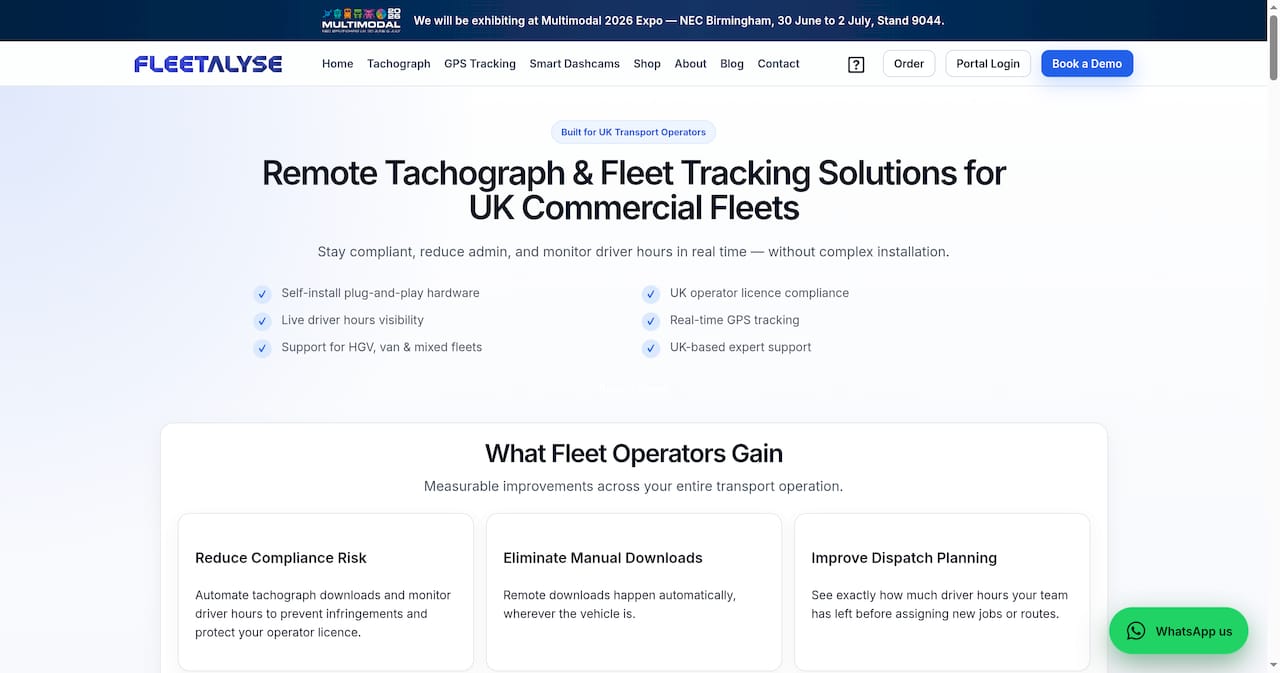
If you are ready to move beyond guesswork and get genuine operational control over your fleet, Fleetalyse brings together GPS vehicle tracking, smart dashcams, driver behaviour monitoring, and tachograph compliance in one platform built specifically for UK commercial operators. Whether you run HGVs, vans, trailers, or a mixed fleet, the platform gives you real-time visibility and automated compliance reporting without the administrative overhead.
The Fleetalyse shop offers plug-and-play telematics hardware, dashcams, and accessories selected for straightforward installation across all fleet types. UK-based support means you get answers from people who understand DVSA regulations and Operator Licence requirements, not a generic overseas helpdesk. Get in touch to discuss which solution fits your fleet’s specific needs.
FAQ
What is commercial fleet GPS tracking?
Commercial fleet GPS tracking is a system that uses satellite signals and cellular networks to monitor the real-time location, speed, and activity of commercial vehicles. Modern systems also capture driver behaviour, fuel consumption, and compliance data beyond simple location monitoring.
How does fleet GPS tracking work in areas with poor signal?
When cellular coverage is unavailable, devices with onboard storage use passive tracking to record positional data locally, then upload it automatically once connectivity is restored. This protects your compliance records in remote or rural areas.
Is GPS tracking of drivers legal in the UK?
Yes, tracking drivers is legal in the UK provided you have a clear written policy in place, drivers have been informed and given consent, and the tracking is proportionate to a legitimate business purpose in line with UK GDPR requirements.
How often does a GPS tracker update the vehicle’s position?
Most commercial GPS tracking systems update vehicle positions every 10 to 90 seconds via 4G LTE networks, providing near real-time visibility suitable for live dispatching and fleet management operations.
What type of GPS tracker is best for HGVs and trailers?
Hardwired GPS units are generally best for HGVs due to their continuous power supply and tamper resistance. For trailers and other unpowered assets, battery-powered trackers offer flexible, wireless tracking without the need for any vehicle wiring.