

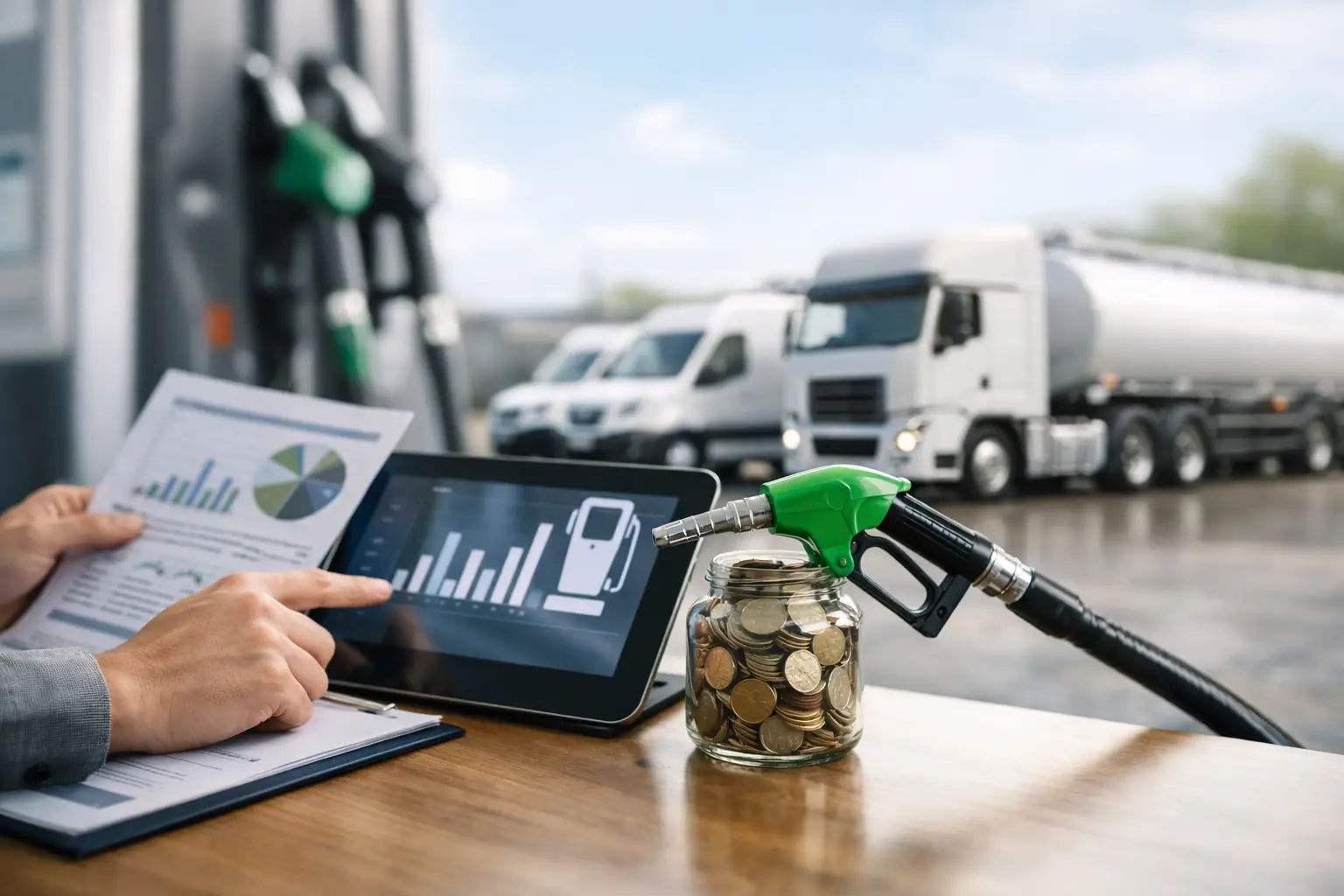

Fuel spend rarely drifts upwards by accident. More often, it leaks away in small, repeated losses - too much idling on local runs, a driver with harsh acceleration habits, a van routed badly, or an ageing vehicle using more fuel than the rest of the fleet. That is why fleet fuel usage reporting matters. Done properly, it turns fuel from a monthly cost you react to into an operating metric you can control.
For transport managers and operators, the issue is not whether fuel data exists. It is whether the data is usable enough to act on. Many fleets still piece reporting together from fuel cards, mileage logs, spreadsheets and driver feedback. That may give you a rough picture of total spend, but it does not tell you where waste sits, which vehicles are underperforming, or what action will actually improve efficiency without disrupting operations.
What fleet fuel usage reporting should actually show
At its most useful, fleet fuel usage reporting is not just a statement of litres consumed. It shows how fuel use changes by vehicle, driver, route, shift pattern and operating condition. That distinction matters, because fuel problems are rarely fleet-wide in exactly the same way.
A mixed fleet running HGVs, vans and trailers will naturally have different consumption profiles across vehicle types and job roles. Urban multi-drop work will never look like motorway trunking. Refrigerated vehicles will not behave like standard box vans. If a report treats all of that as one average, it may look tidy, but it is not helping anyone make better decisions.
Good reporting gives context. It lets you compare similar vehicles on similar duties, track trends over time, and identify whether a rise in fuel use is linked to driver behaviour, route inefficiency, under-inflated tyres, excessive engine idle time, payload changes or maintenance issues. That is where reporting becomes operationally useful rather than purely administrative.
Why spreadsheet-based fuel tracking falls short
Spreadsheets are familiar, but they tend to flatten detail. A depot team might record mileage and fuel purchases accurately enough, yet still struggle to explain why one vehicle costs noticeably more to run than another. Manual reporting also creates delays. By the time someone spots a problem, the fleet may have been absorbing that waste for weeks.
The bigger issue is that manual fuel reporting often sits apart from the rest of fleet management. If fuel sits in one spreadsheet, vehicle tracking in another system, and driver behaviour somewhere else again, you are left to do the joining-up yourself. That costs time and usually means decisions are based on partial information.
For UK operators managing compliance, planning and vehicle availability at the same time, that extra admin is not a small inconvenience. It is one more task competing with tachograph checks, maintenance scheduling, dispatch changes and driver communication. Reporting has to fit real transport operations, not create another layer of work.
What better fleet fuel usage reporting looks like in practice
The strongest reporting setups pull data from live vehicle activity, driver behaviour and mileage records into one view. Instead of just seeing how much fuel was bought, you can see how the vehicle was driven, how long it idled, whether the route was efficient, and how utilisation compares with the rest of the fleet.
That changes the quality of the conversation internally. Rather than saying a vehicle is expensive, you can see whether it is spending too long stationary with the engine running, covering too many low-speed miles, or being driven differently depending on who is behind the wheel. If one route regularly creates avoidable delay, that appears in the data as well.
This is also where telematics becomes more than tracking. When fuel reporting is tied to live fleet visibility, the value is not just retrospective. You can start making earlier interventions - changing route plans, addressing idling, checking vehicle condition, or coaching drivers before waste becomes the norm.
Driver behaviour and fuel performance
Driver behaviour usually has a larger effect on fuel use than teams expect. Harsh acceleration, speeding, heavy braking and unnecessary idling all push consumption in the wrong direction. Over a few shifts, the difference may look minor. Across a year and a multi-vehicle operation, it becomes expensive.
That does not mean every fuel issue is a driver issue. Some vehicles are simply better suited to certain jobs than others, and some routes are structurally inefficient. But where reporting links fuel trends with driver performance, operators can separate bad habits from broader operational constraints.
Handled properly, this is not about blaming drivers. It is about giving transport teams evidence. If one driver consistently uses more fuel on comparable work, there is a coaching opportunity. If all drivers struggle on the same route, then the issue sits with planning, traffic patterns or customer delivery windows.
Vehicle health and hidden fuel waste
Fuel reporting can also act as an early warning sign for maintenance issues. A drop in fuel efficiency may point to tyre pressure problems, poor wheel alignment, engine faults or vehicles overdue attention. Those issues are easy to miss when the fleet is busy and workshop time is tight.
This is one reason integrated fleet systems are more useful than isolated reports. When maintenance reminders, vehicle usage and fuel trends sit together, teams can spot patterns sooner. A lorry consuming more fuel than its peers may not need a replacement - it may just need attention before the problem worsens.
Turning fuel data into decisions
The value of reporting is in what happens next. If reports only land in someone’s inbox at month end, they become history rather than management tools. The better approach is to use reporting to support day-to-day control.
That might mean reviewing high-idle vehicles each week, comparing fuel performance across similar routes, checking whether underused vehicles should be reassigned, or identifying which drivers would benefit from targeted coaching. It may also mean using the data to challenge assumptions. A vehicle that looks costly may actually be handling the hardest work in the fleet, while a supposedly efficient unit is only appearing cheaper because it is less utilised.
Trade-offs matter here. Cutting fuel use should not come at the expense of service levels, driver hours compliance or operational resilience. The goal is not to force every route into the lowest possible fuel number. It is to reduce avoidable waste while keeping the operation compliant and commercially viable.
Choosing a reporting setup that fits UK fleet operations
For UK operators, fuel reporting works best when it is part of a wider control platform rather than a standalone add-on. Transport teams do not manage fuel in isolation. They are balancing operator licence obligations, tachograph compliance, vehicle availability, route planning and customer expectations every day.
A useful system should make fuel data easy to read and easy to trust. It should show trends clearly, support comparison across vehicles and drivers, and reduce manual input rather than add to it. It should also fit the realities of mixed fleets, where HGVs, vans and trailers may all be working under different conditions.
That is where a platform built around day-to-day transport management has an advantage. If the same system already supports tracking, driver hours visibility, compliance tasks and maintenance planning, fuel reporting becomes part of routine control rather than another disconnected report to chase. Fleetalyse is built around that principle - practical visibility, less admin and clearer decisions for UK operators.
Common mistakes in fleet fuel usage reporting
One common mistake is focusing only on total fuel spend. That tells you what happened, but not why. Another is comparing unlike vehicles or routes and then drawing the wrong conclusion. A third is waiting too long to review trends, by which time small inefficiencies have become standard practice.
There is also a temptation to chase every variation in the data. Not every increase is a problem worth solving immediately. Seasonal traffic, changing payloads, weather and customer demand can all affect fuel performance. Reporting needs interpretation, not just collection.
The right question is usually not, why did this number move once? It is, what pattern is emerging, and what can we change without creating a bigger issue elsewhere?
Fuel is too significant a cost to manage by hindsight, and too variable to understand through spreadsheets alone. When reporting is connected to vehicle activity, driver performance and fleet planning, it becomes far more than a finance exercise. It gives transport teams a clearer grip on where money is being lost and what to do about it next.