

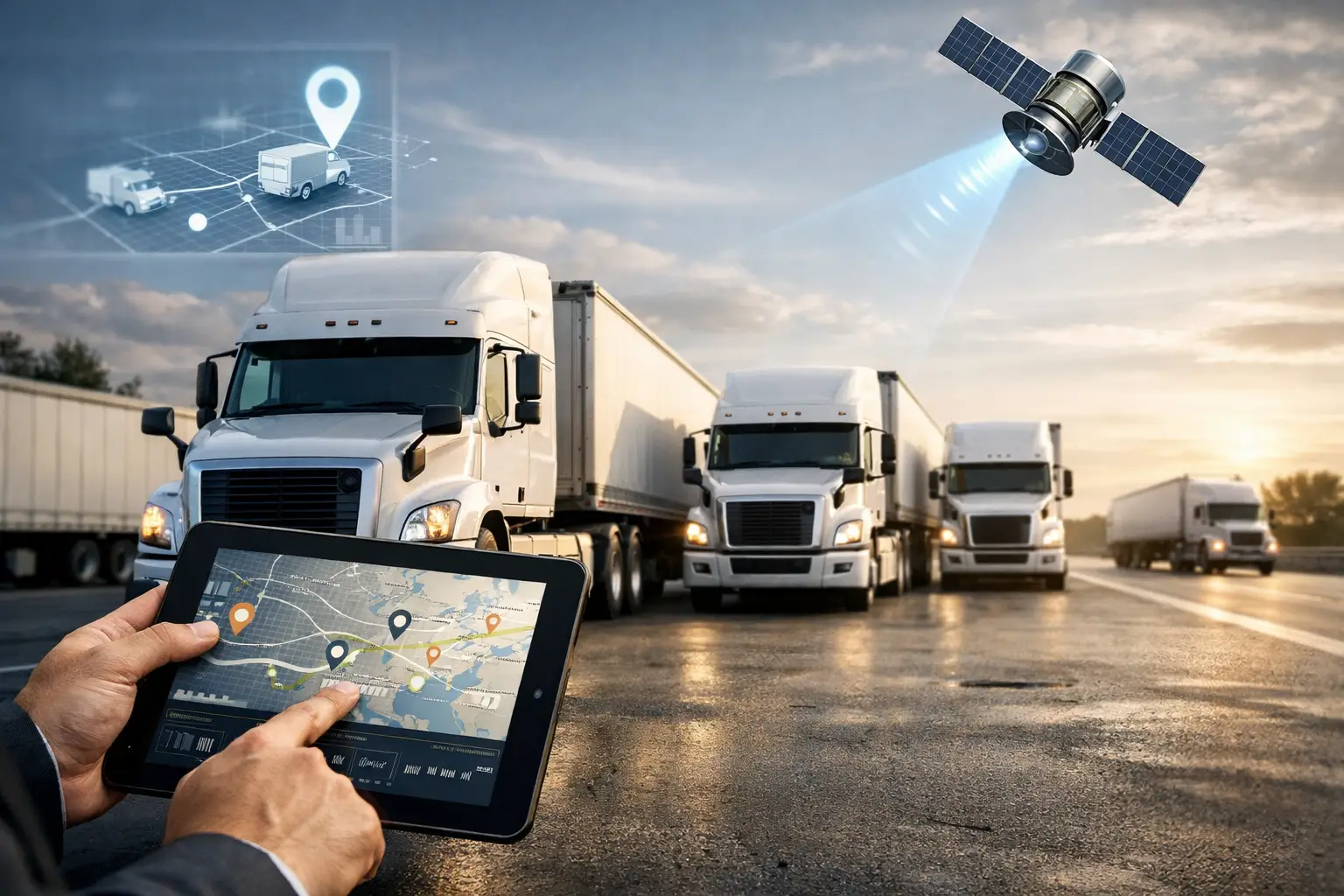

A planner rings a driver for an ETA. The driver is stuck at a customer site, the trailer swap has changed, and the tachograph download is still sitting on someone's to-do list. That is the point where fleet tracking for haulage companies stops being a nice-to-have and starts being basic operational control.
For UK haulage operators, tracking is not just about seeing a vehicle on a map. It affects dispatch decisions, customer updates, trailer security, driver hours, maintenance timing and, ultimately, operator licence risk. If the system only tells you where a lorry was ten minutes ago but leaves compliance and admin in separate tools, the job is only half done.
What fleet tracking for haulage companies should actually solve
A haulage fleet has more moving parts than a standard van operation. You may be managing unit and trailer combinations, subcontracted movements, tight delivery windows, vehicle defects, overnight parking and drivers working close to their legal limits. The value of a tracking platform comes from how well it helps your team handle those day-to-day pressures.
At the most basic level, you need live vehicle visibility. Dispatch should be able to see which lorry is closest to a collection, whether a vehicle has arrived on site, and how long it has been stationary. That saves calls, reduces guesswork and gives customers more accurate updates.
But for most transport managers, live tracking on its own is not enough. If your team still has to chase manual tachograph downloads, piece together mileage from spreadsheets and log into a separate system for trailer locations, you have not reduced friction. You have just added another screen.
Why generic vehicle tracking often falls short
Many tracking systems look fine in a demo because the map works and the reports look tidy. The issue appears later, when a haulage business tries to use that system in a real transport operation.
Generic platforms tend to focus on simple GPS visibility. They can show where the vehicle is, but they often do little to support the compliance and planning work sitting around that movement. For a UK operator, that gap matters. Driver hours, tachograph data, maintenance reminders and trailer oversight are not side issues. They are part of running a compliant fleet.
This is where specialist platforms stand apart. A transport team does not want to stitch together one system for tracking, another for tachograph compliance and another for driver performance. That creates duplicate admin and weakens visibility. If a driver is nearing their legal hours but the planner cannot see that in the same workflow as the vehicle movement, poor decisions become more likely.
The operational gains that matter most
The strongest case for tracking is not technology for its own sake. It is the cumulative effect on time, risk and decision-making.
Faster dispatch and fewer phone calls
When vehicle locations update live, planners can assign work based on actual availability rather than assumptions. That is useful when traffic changes, jobs overrun or a customer asks for a quick amendment. Instead of calling around to find out who can realistically take the next load, the depot can make a decision from live information.
That also improves customer communication. If a delivery is running late, your team can give a realistic ETA rather than a hopeful one. Over time, that reduces unnecessary chasing from customers and cuts pressure on the traffic desk.
Better control of driver hours and compliance
For haulage businesses, this is often where the biggest return sits. Tracking alone will not keep you compliant, but combined with live driver hours and remote tachograph downloads it gives transport managers a far clearer picture of risk.
You can see where the vehicle is, what work is still assigned and whether the driver is likely to complete it within legal limits. That helps prevent poor planning before it becomes an infringement. It also reduces the scramble of manual downloads and paper-based follow-up.
Stronger trailer and asset visibility
A lot of lost time in haulage has nothing to do with the tractor unit. It comes from trailers being in the wrong place, standing unused for too long or being difficult to trace across multiple sites. Trailer tracking helps operators make better use of assets and cuts the time spent hunting for equipment that should already be earning.
It also supports security. Knowing when a trailer moves unexpectedly, leaves a geofenced area or sits in an unauthorised location gives you a chance to act quickly.
Lower fuel waste and improved driver performance
Fuel is still one of the clearest areas for margin improvement. A decent tracking and telematics setup will show idling, harsh driving, route inefficiency and avoidable vehicle use. Those insights are most useful when they are easy to act on, not buried in a monthly report no one reads.
The trade-off here is that too much data can become noise. The best systems do not drown managers in alerts. They highlight exceptions worth dealing with and make driver behaviour trends simple to review.
What to look for in a haulage tracking platform
If you are assessing fleet tracking for haulage companies, focus less on feature volume and more on whether the platform removes work from your team.
A useful system should bring together vehicle tracking, trailer tracking, driver behaviour and tachograph compliance in one place. It should let planners and transport managers work from the same information without switching platforms all day. That matters because delays, driver hours and vehicle utilisation are connected problems, not separate ones.
Implementation matters too. Complex installs can hold projects up for weeks and create extra downtime. For many operators, plug-and-play hardware is a better fit because it gets vehicles live quickly and avoids the cost and hassle of taking units off the road for lengthy fitting.
Pricing is another area worth looking at closely. Hidden fees for reports, downloads or add-on modules can make a low headline price misleading. Haulage businesses tend to prefer predictable monthly costs because they make budgeting easier across mixed fleets and growing contracts.
It depends on how your fleet runs
Not every operator needs the same level of detail. A small haulier running fixed routes may care most about live locations, tachograph compliance and simple maintenance prompts. A larger multi-depot fleet may need deeper reporting, trailer utilisation data and tighter control of out-of-hours vehicle use.
There is also a difference between data visibility and operational discipline. A platform can show late starts, excess idling or missed downloads, but the business still needs someone to act on that information. Technology improves control, but only if the process around it is clear.
That said, the right setup makes those processes much easier to maintain. Instead of relying on depot staff to remember manual checks, the system surfaces what needs attention. Instead of reviewing issues after the event, managers can spot them while there is still time to intervene.
A more practical way to judge value
When operators compare systems, they often start with hardware and map screens. A better test is to ask what would change for the people doing the job every day.
Would your planner make faster dispatch decisions? Would your compliance team spend less time chasing downloads and filing data? Would your maintenance schedule become easier to manage because mileage and usage are current? Would you have clearer evidence when investigating route issues, customer disputes or driver performance?
If the answer is yes, the platform is doing more than tracking dots on a screen. It is helping the business run with less admin and more control.
This is why integrated systems have become more attractive to UK operators. A single platform that covers telematics, GPS tracking, smart dashcams and tachograph compliance is easier to manage than a patchwork of separate tools. That is especially true for businesses trying to protect their operator licence while also keeping vehicles productive. Fleetalyse is built around that reality rather than treating compliance as an afterthought.
Where haulage businesses usually see results first
The early gains are rarely dramatic headline changes. They show up in the daily friction that starts to disappear.
Planners spend less time ringing around for updates. Drivers get fewer avoidable calls. Transport managers can see hours risk before work is assigned badly. Trailers are easier to locate. Vehicle usage becomes clearer. Download schedules stop depending on memory and paper notes.
Those changes matter because they compound. A few minutes saved here and there across dispatch, compliance and reporting quickly turns into meaningful time back for the team. Just as important, fewer blind spots mean fewer avoidable mistakes.
If you run haulage vehicles under UK regulation, tracking should help you do three things well: know where your assets are, know what compliance risks are building, and know what action to take next. Anything less is only partial visibility.
The best systems do not make transport simpler than it is. They make it easier to stay in control when the day stops going to plan.