

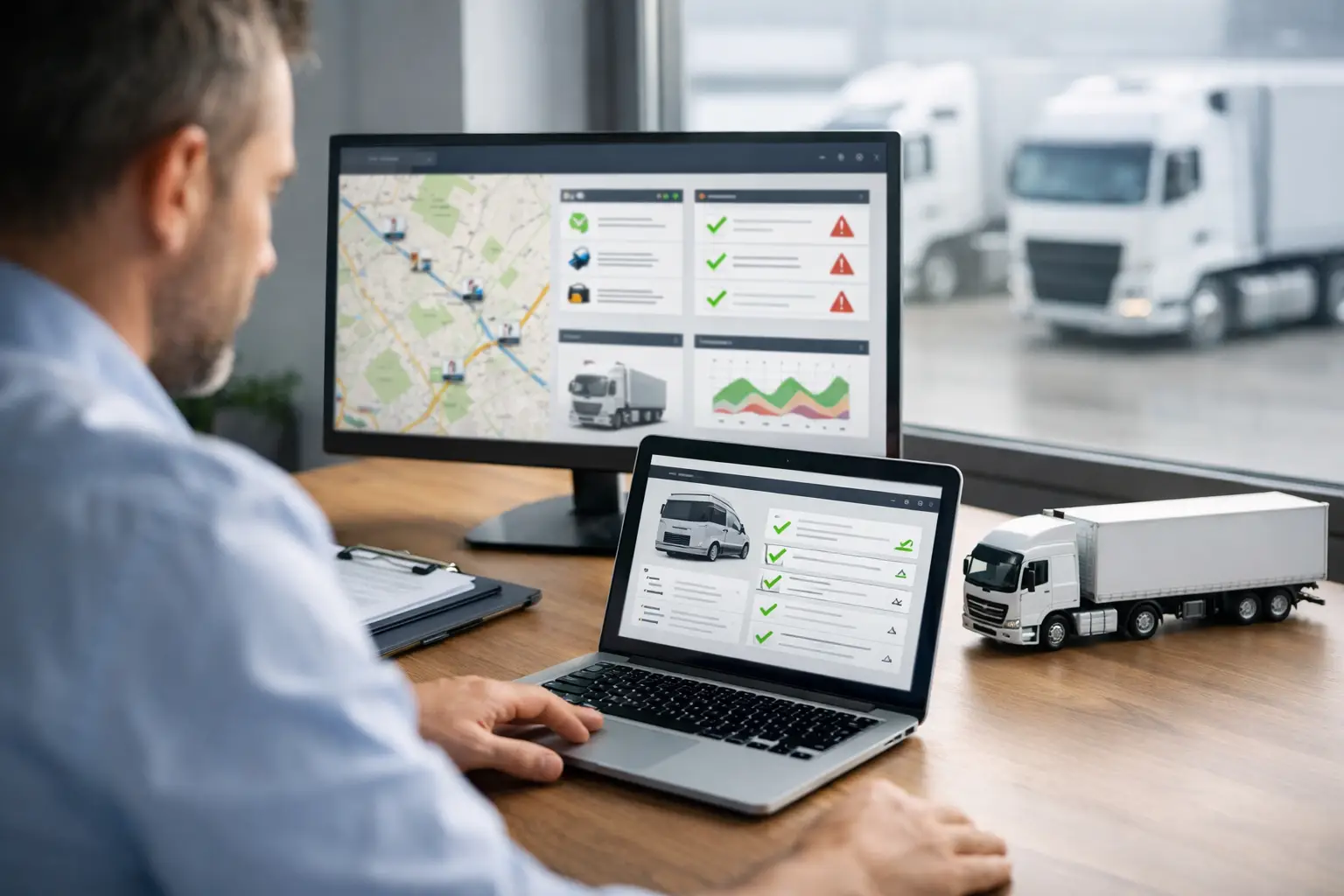

A missed driver card download rarely starts as a major problem. It starts as a busy week, a vehicle off the road, a planner covering two desks, and a transport manager trying to piece together compliance from spreadsheets, emails and separate systems. That is exactly where operator licence compliance software earns its place - not as another dashboard, but as a practical way to keep control of the moving parts that put your O-licence at risk.
For UK fleet operators, compliance is not a side task. It sits inside daily planning, vehicle usage, driver management and workshop activity. If the software you use only covers one slice of that picture, the admin usually lands back on your team. The result is more chasing, more checking and more room for error.
What operator licence compliance software should actually do
The phrase gets used broadly, but for a transport operation it should mean something specific. Operator licence compliance software should help you manage the activities that support legal operation under your licence, while making those activities easier to evidence, review and act on.
That includes tachograph downloads, driver hours monitoring, infringement visibility, vehicle and trailer records, maintenance reminders and the day-to-day oversight needed to show that systems are in place and being followed. In many fleets, those tasks are still split between a telematics platform, a tachograph tool, workshop paperwork and manual reporting. The software may exist, but the control does not.
Good systems reduce that gap. They bring compliance information into one place, highlight exceptions early and help transport teams deal with issues before they become patterns. That matters because most compliance failures are not dramatic. They are cumulative. A late download here, a missed inspection date there, a vehicle with weak visibility, and suddenly the operator is relying on memory rather than process.
Why disconnected systems create avoidable risk
Many operators already have software. The issue is that it often grew in stages. Tracking was bought first to locate vehicles. Tachograph analysis came later. Maintenance planning sits elsewhere. Trailer visibility may not exist at all. Each tool solves its own problem, but none gives the transport office a joined-up operational view.
That creates friction in simple places. A planner can see where the lorry is but not whether the driver is close to a break. A compliance manager can review infringements but cannot easily connect them to route changes, waiting time or poor scheduling. A workshop can plan PMIs, yet transport still has to chase vehicle status manually. When information is split across systems, the team spends more time reconciling data than managing outcomes.
There is also a cost issue. Separate systems often mean separate contracts, hardware, logins and support processes. On paper that can look manageable. In practice, it usually means hidden admin and slower decision-making.
The best operator licence compliance software supports daily operations
The strongest platforms are not built only for audit preparation. They help the operation run better on ordinary Tuesdays.
If remote tachograph downloads happen automatically, your team is not pulling vehicles back or chasing drivers for manual downloads. If live driver hours are visible in the same platform as vehicle tracking, dispatch can make better decisions before assigning the next job. If maintenance reminders sit alongside utilisation data, the workshop can plan around actual vehicle activity rather than static assumptions.
This is where operator licence compliance software becomes commercially useful, not just legally necessary. Better control of compliance data supports better planning, less wasted time and fewer reactive interventions. That has a direct effect on admin hours, vehicle availability and the quality of decisions made in the traffic office.
What to look for when comparing systems
A lot of software claims to improve compliance. The more useful question is how much manual work it removes and how clearly it supports UK operator licence requirements.
A platform should make remote tachograph downloads straightforward, not a project in itself. It should show driver hours clearly enough for planners and transport managers to use in real time. It should give visibility across vehicles, drivers and trailers without forcing teams to switch between tools. It should also support maintenance scheduling and reminders in a way that helps evidence your control processes.
Ease of deployment matters more than many suppliers admit. If hardware installation is disruptive, vehicles can sit in a queue before you even start getting value. If pricing is unclear, budgeting becomes harder than it should be. If the system requires specialist training just to complete ordinary tasks, adoption will lag.
There is also a trade-off to consider. Some operators want a very deep compliance tool with extensive back-office controls. Others need a balanced platform that combines compliance, visibility and day-to-day fleet management. Neither approach is wrong. It depends on how your team works, what systems are already in place and whether the bigger pain point is audit preparation or daily operational control.
One platform beats spreadsheets when exceptions start stacking up
Spreadsheets survive in transport because they are familiar. They are flexible, cheap and easy to start with. The problem is that they depend on someone updating them correctly and on time. Once the fleet grows, or the operation becomes more mixed, spreadsheet control starts to weaken.
That is especially true where HGVs, vans and trailers all move through the same operation. Mixed fleets create more variables. Different asset types, different maintenance rhythms, different reporting expectations and different planning pressures all need to be tracked. A spreadsheet can hold the information, but it cannot monitor the reality as it changes.
Software can. If a driver card has not downloaded, if a vehicle is nearing a scheduled service, if a trailer is sitting idle at the wrong site, or if driver hours are tightening, those are exceptions your team should see quickly. The speed of that visibility makes a real difference. It gives the office time to act while the issue is still manageable.
Compliance software should help planners, not just compliance managers
One common mistake when buying compliance software is treating it as a back-office system. In reality, some of the biggest gains come when planners and dispatch teams can use the same information.
A planner with live location and driver hours visibility is less likely to create avoidable infringements through poor job allocation. A depot team with access to vehicle status can reduce wasted calls and unnecessary vehicle movements. A transport manager who can see compliance and utilisation together is in a stronger position to spot recurring inefficiencies, whether that is underused assets, repeated delays or routes that regularly push drivers close to limits.
This matters because operator licence protection does not happen in isolation. It depends on decisions made throughout the day. The best systems support those decisions without forcing teams into separate workflows for compliance and operations.
Why UK-specific focus matters
Generic fleet software can cover basic tracking well enough, but UK operators working under O-licence requirements usually need more than map visibility. They need software that reflects tachograph obligations, driver hours oversight, vehicle maintenance control and the practical evidence expected from a compliant operator.
That does not mean every business needs the same setup. A regional haulier running artics has different pressures from a mixed fleet with vans, rigids and trailers. A business with an established workshop will use maintenance tools differently from one relying on external service providers. Even so, the underlying need is the same: one reliable view of fleet activity that supports legal operation and reduces manual effort.
That is why purpose-built platforms tend to outperform generic ones in transport environments. They are designed around the questions operators actually ask. Has the card downloaded? Which drivers are close to limits? Which vehicles need attention? Where is the trailer? What has been missed? What needs doing today?
A platform such as Fleetalyse is built around that practical reality, combining tachograph compliance, tracking, trailer visibility and maintenance oversight in one place rather than asking operators to patch together separate systems.
The real return is fewer blind spots
Software decisions are often framed around features, but transport teams usually feel the value elsewhere. They feel it when they stop chasing manual downloads. They feel it when dispatch can see enough to assign work with confidence. They feel it when maintenance dates are not discovered late, when trailer locations are not guessed, and when compliance reviews take minutes instead of half a day.
That is the real case for operator licence compliance software. It gives you fewer blind spots, fewer avoidable gaps and a stronger grip on the routine controls that protect your licence. Not every fleet needs the most complex system on the market. Most need a clearer one.
If your team is still stitching together tachograph data, tracking information and maintenance records by hand, the problem is not a lack of effort. It is that the operation has outgrown patchwork control - and better visibility usually pays for itself long before the next audit date arrives.