

What is fleet data integration? A guide for operators

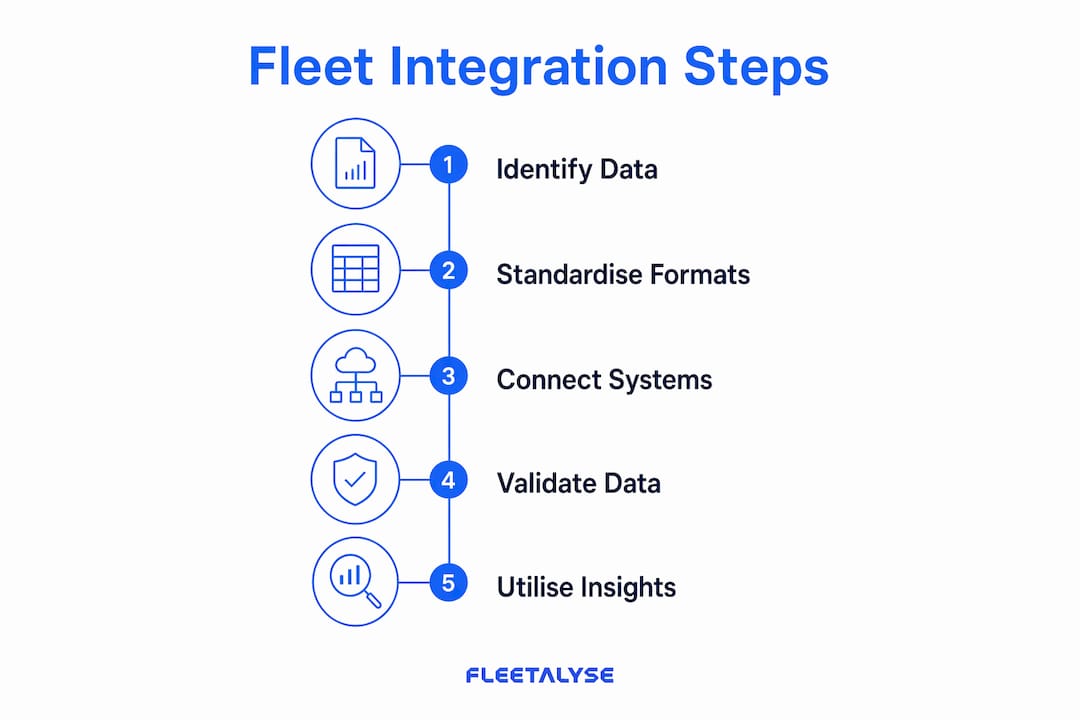
Fleet data integration is defined as the process of connecting and standardising all disparate data sources across your fleet into one unified system for accurate, repeatable analytics. For UK fleet operators managing HGVs, vans, and mixed assets, this means bringing together telematics feeds, tachograph records, fuel data, maintenance logs, and driver behaviour data under a single, consistent framework. Without that unification, you are making decisions based on incomplete or contradictory information. A fleet data warehouse serves as the single source of truth by creating consistent schemas across all these systems.
What is fleet data integration and why does it matter?
Fleet data integration is not simply moving data from one place to another. Integration involves intricate standardisation to make analytics consistent and repeatable across every function of your operation. That distinction matters because many operators assume connecting two systems is enough. It is not. The real work lies in aligning formats, correcting errors, and making sure every figure means the same thing regardless of where it originated.

The industry term for this discipline is fleet data management, and it sits at the heart of any serious telematics or compliance programme. When your GPS tracking platform uses different vehicle identifiers from your maintenance system, every cross-functional report you produce is mathematically unreliable. Fleetalyse addresses this directly by unifying GPS tracking, tachograph data, and driver behaviour monitoring within one platform, removing the need to reconcile figures across separate tools.
What are the main components of fleet data integration?
A working integration relies on four core processes working together.
- Schema alignment: Every data source uses its own structure. Schema alignment maps those structures to a common format so that a fuel reading from one system means exactly the same thing as a fuel reading from another.
- Data cleansing and validation: Proper data cleansing corrects inconsistencies, normalises units such as miles versus kilometres, and fills missing values before analytics run. Skipping this step produces misleading conclusions.
- Master data management: A single vehicle may carry different identifiers in your telematics platform, your maintenance system, and your ERP. Master data management creates common identifiers across all three, making cross-functional reporting mathematically valid.
- API connectors and data pipelines: These are the technical channels that extract data from source systems and transfer it securely. The quality of your API connections determines how reliably and how quickly data flows.
Common data sources unified through fleet telematics integration include GPS position feeds, CAN-bus vehicle diagnostics, tachograph activity records, fuel card transactions, and workshop job cards. Each arrives in a different format and at a different frequency.
Pro Tip: Before selecting any integration platform, map every data source your fleet currently uses and note its format, update frequency, and owner. This exercise alone will reveal where your biggest standardisation gaps are.
Why is fleet data integration vital for compliance and efficiency?
A unified data platform enables proactive maintenance and compliance tracking, reducing costs and safety incidents. That is the practical outcome, but the mechanism behind it is worth understanding clearly.
- Accurate reporting for DVSA compliance: Consistent data tracking creates audit trails that hold up under DVSA scrutiny. When your tachograph records, driver hours, and vehicle inspection data all draw from the same standardised source, discrepancies disappear before they become enforcement issues.
- Proactive maintenance scheduling: When odometer readings, engine fault codes, and service history live in one place, your maintenance team can schedule work before a vehicle fails rather than after. That shift from reactive to proactive servicing directly reduces downtime.
- Fuel cost management: Integrated fleet data improves fuel management by correlating fuel card transactions with route data and driver behaviour scores. You can identify which routes, vehicles, or drivers are consuming disproportionate fuel and act on that finding immediately.
- Driver behaviour analysis: Unified data lets you compare harsh braking events against route conditions and vehicle load. That context turns a raw score into a coaching conversation rather than a disciplinary one.
- Operator Licence protection: For UK transport operators, a single data error in your compliance records can put your Operator Licence at risk. Standardised, integrated data removes the manual reconciliation that creates those errors.
The benefits of data integration compound over time. As your data history grows, the patterns you can identify become more reliable and your forecasting becomes more accurate.
What are the common integration challenges and how can they be overcome?
Semantic alignment is the most underestimated challenge in fleet data management. Your telematics provider might label a vehicle as “VEH-001” while your maintenance system calls it “Fleet-001-LDN”. Without a master data management layer to reconcile those identifiers, every report that spans both systems is wrong.
A second common mistake is treating integration as a one-time project. Data sources change. Providers update their APIs. New hardware gets added to the fleet. Integration requires ongoing governance, not a single implementation.
- Avoid rip-and-replace: Replacing all your existing systems to achieve integration is expensive and disruptive. Integration-as-a-layer adds analytic intelligence on top of your current systems without discarding them. This approach preserves your existing investments while extending their value.
- Audit your APIs before you commit: Auditing vendor APIs for documentation completeness and testing environments helps avoid costly integration debt. Specifically, check for webhook support and sandbox availability before signing any contract.
- Prioritise integration readiness over feature lists: A platform with impressive dashboards but poor API documentation will cost you far more in integration work than a simpler platform with well-documented, testable connections.
Pro Tip: Ask every prospective vendor for access to their API sandbox before the contract stage. If they cannot provide one, treat that as a significant warning sign about their integration maturity.
Mixed fleet environments add another layer of complexity. Different telematics providers supply differently structured data that requires normalisation before it can produce unified insights. A mixed fleet data hub can aggregate and predict fleet health regardless of hardware origin, which gives you vendor flexibility without sacrificing analytical consistency.
How are emerging technologies changing fleet data integration?
The most significant shift in fleet telematics integration is the move away from centralised data warehouses towards zero-copy architectures. The difference is fundamental.
| Approach | How it works | Key advantage |
|---|---|---|
| Traditional data warehouse | Copies all data into a central store | Single location for all queries |
| Zero-copy architecture | Queries live source systems directly | No migration overhead, real-time accuracy |
| Reasoning layer | AI queries multiple live systems simultaneously | Auditable answers without data movement |
Zero-copy architectures run queries against source systems in real-time, preserving historical continuity and eliminating the migration overhead that makes traditional warehousing so expensive. For fleet operators, this means you can gain analytical insight from your existing systems without a costly data migration project.
Reasoning layers allow users to query multiple fleet systems simultaneously using AI, producing auditable answers in real time. In practice, a fleet manager can ask a single question, such as which vehicles are overdue for service and have active driver hours violations, and receive an answer drawn from live telematics, maintenance, and tachograph data simultaneously. That capability was not practically achievable with traditional integration approaches.
The logistics fleet management best practices emerging in 2026 reflect this shift, with operators increasingly evaluating platforms on their ability to query existing data rather than their ability to consolidate it. Agility matters more than architectural tidiness when your operational environment changes frequently.
Key takeaways
Fleet data integration requires standardisation, not just connection, to produce analytics you can trust and act upon.
| Point | Details |
|---|---|
| Standardisation is the foundation | Connecting systems is not enough; schema alignment and data cleansing are what make analytics reliable. |
| Master data management is non-negotiable | Common vehicle identifiers across telematics, maintenance, and ERP systems are required for valid cross-functional reporting. |
| API audits reduce integration risk | Check for webhook support and sandbox environments before committing to any vendor. |
| Zero-copy architecture reduces cost | Querying live source data avoids expensive migration projects while delivering real-time insight. |
| Compliance depends on data consistency | Standardised audit trails protect your DVSA compliance records and Operator Licence. |
The integration mistake I see most often
Fleet operators spend months evaluating platforms based on dashboard aesthetics and feature checklists. The integration question gets asked last, if at all. That is the wrong order entirely.
I have seen operators commit to platforms that looked excellent in a demo but had no sandbox environment and API documentation that was two years out of date. The integration work that followed cost more than the platform itself. The lesson is not subtle: your data architecture is more important than your user interface.
Semantic alignment deserves particular attention. Most operators do not realise their vehicle identifiers are inconsistent across systems until they try to run their first cross-functional report and the numbers do not add up. By that point, fixing the problem means either rebuilding your master data management layer or accepting that your analytics will always carry a margin of error you cannot quantify.
The operators I have seen get this right share one habit. They treat integration readiness as a procurement criterion, not an afterthought. They ask vendors for API documentation on the first call. They request sandbox access before the second. They map their existing data sources before they look at a single demo. That discipline pays for itself within the first quarter of operation.
The emerging reasoning layer approach is genuinely worth attention. Querying live systems without migrating data is not a compromise. For most fleets, it is the more practical and more accurate approach. The fleet intelligence platforms building on this architecture are worth evaluating seriously, particularly if your fleet is growing or your data sources are changing frequently.
— Vytautas
How Fleetalyse brings fleet data together for UK operators
Fleetalyse is built for UK fleet operators who need telematics, compliance, and data management to work as one system rather than three separate tools.
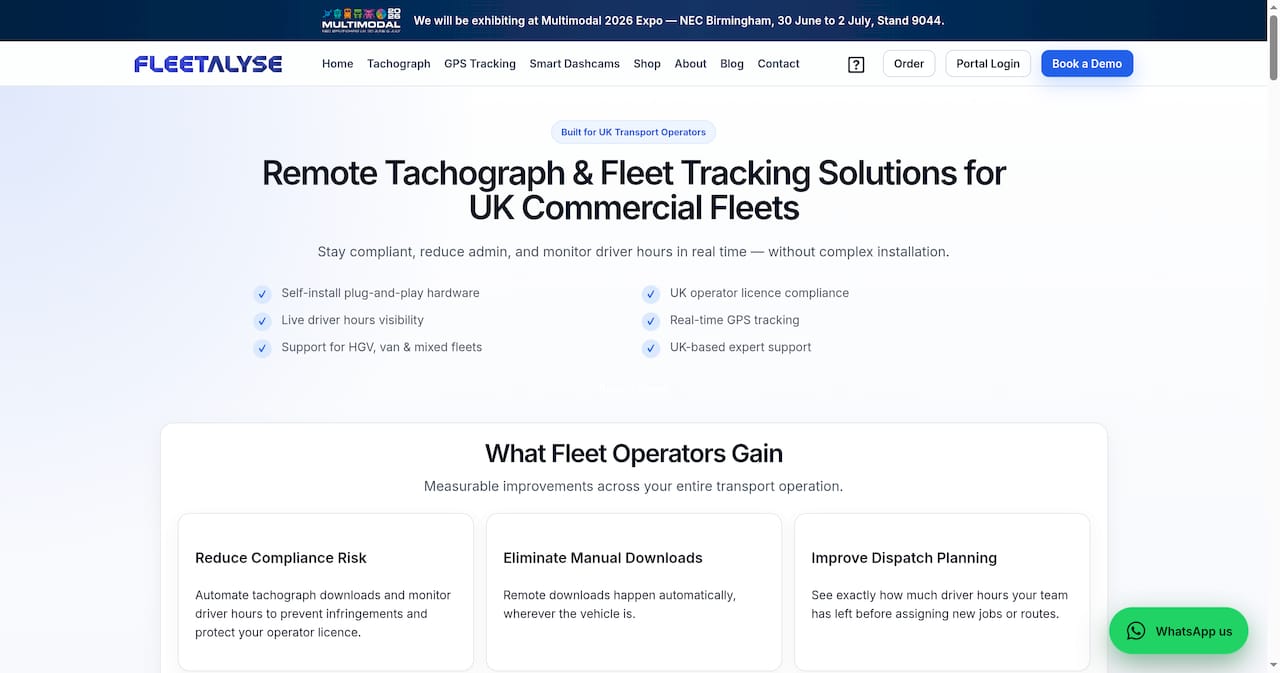
The Fleetalyse platform combines GPS vehicle tracking, remote tachograph downloads, driver behaviour monitoring, and fuel consumption analysis within a single integrated environment. That means your compliance data, your operational data, and your safety data all draw from the same standardised source. For HGV operators managing DVSA requirements and Operator Licence obligations, that consistency is not a convenience. It is a legal necessity. Fleetalyse also supports asset and trailer GPS trackers that feed directly into the platform, giving you full visibility across mixed fleets without additional reconciliation work. Explore the full range of Fleetalyse solutions to see how integrated telematics can work for your operation.
FAQ
What is fleet data integration in simple terms?
Fleet data integration is the process of connecting and standardising data from telematics, maintenance, fuel, and compliance systems into one unified platform. It ensures every report and decision draws from consistent, accurate information.
Why do vehicle identifiers cause integration problems?
A single vehicle often carries different identifiers in telematics, maintenance, and ERP systems. Without a master data management layer to align those identifiers, cross-functional reports produce unreliable figures.
What is a zero-copy architecture in fleet data management?
A zero-copy architecture queries live source systems directly rather than copying all data into a central warehouse. This removes migration overhead and delivers real-time accuracy without disrupting existing systems.
How does fleet data integration support DVSA compliance?
Integrated data creates consistent audit trails across tachograph records, driver hours, and vehicle inspection data. That consistency reduces the risk of discrepancies appearing during DVSA enforcement checks.
What should I check before choosing a fleet integration platform?
Audit the vendor’s API documentation for completeness, confirm webhook support for real-time updates, and request sandbox access for pre-contract testing. Platforms that cannot provide a sandbox environment carry a higher integration risk.