

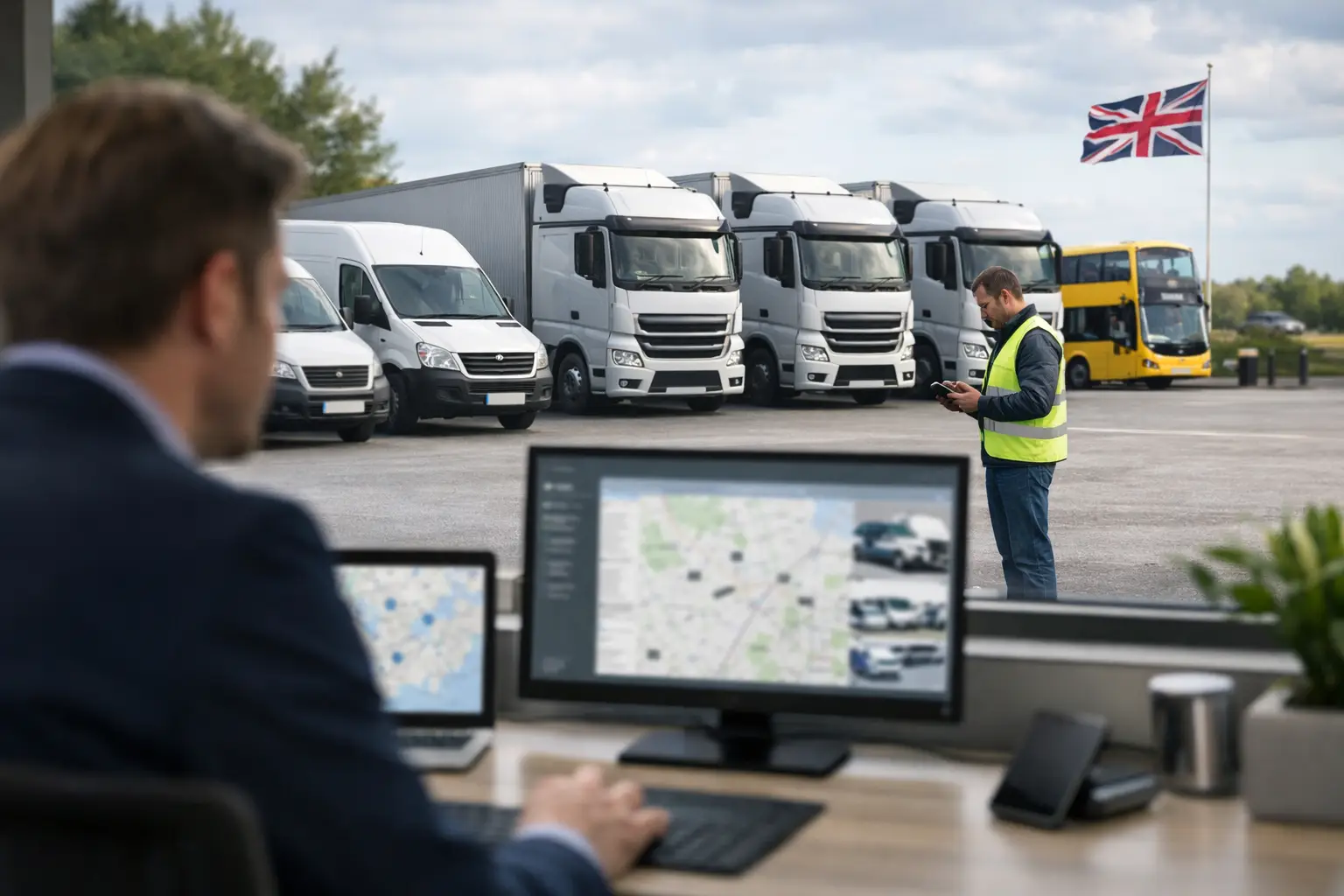

A fleet rarely runs into problems because one vehicle breaks down or one driver is delayed. More often, the pressure builds quietly - missed maintenance, manual tachograph downloads, unclear driver hours, wasted fuel, and planners chasing updates across too many systems. That is exactly where the question of what is fleet management becomes practical rather than theoretical.
Fleet management is the day-to-day control of vehicles, drivers, trailers, compliance tasks and operating costs. For a UK transport business, it means having the systems and processes to keep the fleet legal, visible, efficient and commercially productive. That can include vehicle tracking, driver hours monitoring, remote tachograph downloads, maintenance scheduling, fuel reporting, driver behaviour analysis and asset utilisation.
In simple terms, fleet management is how an operator keeps work moving without losing grip on compliance or cost.
What is fleet management in practice?
On paper, fleet management sounds broad. In practice, it is the work that keeps the transport operation under control from one shift to the next.
For a haulage firm, that may mean checking whether drivers have enough available hours before assigning a job, seeing where trailers are parked, confirming that tachograph data has been downloaded on time, and making sure inspections are not overdue. For a van fleet, it may be more focused on route visibility, driving standards, maintenance reminders and reducing fuel waste.
The principle is the same across both. Fleet management gives transport teams a clearer view of what is happening now, what needs attention next, and where risk is building.
That matters because fleets do not fail through a lack of data. They struggle because the data is scattered across spreadsheets, driver cards, paper records and separate tracking systems. Good fleet management brings that information into a usable process.
The main parts of fleet management
The scope depends on the type of operation, but most commercial fleets are managing the same core areas.
Vehicle and trailer visibility
Knowing where assets are sounds basic, but it changes how a transport office works. Live tracking helps planners respond faster to delays, redeploy nearby vehicles, reduce unnecessary calls to drivers and improve customer communication. Trailer tracking adds another layer, especially where assets are dropped across multiple sites and can sit unused longer than expected.
Visibility is not only about location. It also tells you whether vehicles are moving, idling, parked, or being used outside expected hours. That helps with utilisation as much as dispatch.
Driver hours and tachograph compliance
For HGV operators, this is a central part of fleet management, not an add-on. Driver hours rules, tachograph downloads and infringement risk all affect the operator licence. If these processes are manual, the admin burden rises quickly and issues are easier to miss.
A managed approach means driver card and vehicle unit data is collected on time, monitored regularly and presented clearly enough for transport managers to act on. Live visibility of driver hours is especially useful for planning work during the day, because it reduces guesswork before assigning another job.
Maintenance and roadworthiness
Fleet management also covers keeping vehicles safe and serviceable. That includes inspection schedules, MOT dates, service planning, defect reporting and maintenance reminders.
There is a clear compliance angle here, but the operational value matters just as much. A missed service can lead to downtime. An avoidable breakdown can disrupt customer commitments and tie up the workshop or hire budget. Better maintenance planning reduces both risk and friction.
Driver behaviour and fuel performance
Fuel is one of the largest controllable costs in any fleet. Driver behaviour has a direct impact on that cost, as well as wear and tear and accident exposure. Harsh braking, speeding, excessive idling and poor route discipline all add up.
This is where telematics becomes useful beyond simple tracking. It gives fleet managers evidence rather than assumptions. The goal is not to monitor drivers for the sake of it. The goal is to identify coaching opportunities, improve standards and remove avoidable waste.
Why fleet management matters more in UK transport
Any business with vehicles needs oversight, but fleet management carries extra weight for UK commercial operators. Operator licence obligations, tachograph rules and maintenance expectations create a level of accountability that cannot be handled casually.
If your systems are weak, the consequences are not limited to admin inefficiency. You can end up with missed downloads, unresolved infringements, poor maintenance control or gaps in records when asked to produce them. That creates pressure for compliance managers and business owners alike.
At the same time, the commercial environment is tight. Margins are squeezed by fuel, labour, insurance and delayed jobs. So fleet management has to do two things at once: protect the licence and improve operational efficiency. One without the other is not enough.
What good fleet management looks like
A well-managed fleet is not necessarily the one with the most software. It is the one where transport teams can see the right information quickly and act on it without chasing five different systems.
Good fleet management usually has a few clear characteristics. Drivers and vehicles are visible in real time. Tachograph downloads happen without manual effort. Driver hours are easy to check before work is assigned. Maintenance dates are tracked centrally. Fuel use and idling are reported in a way that supports action. And management reporting does not depend on someone updating a spreadsheet at the end of the week.
That does not mean every fleet needs the same setup. A small mixed fleet may want simplicity above all else. A larger HGV operator may need tighter compliance controls, trailer visibility and depot-wide reporting. It depends on fleet type, operating model and where the current pressure points sit.
Technology has changed what fleet management means
Ten years ago, many operators treated fleet management as a mix of paper files, manual downloads and basic vehicle tracking. That approach can still function, but it becomes harder to scale and harder to defend when workloads increase.
Modern fleet management is more connected. Tracking, compliance, dashcam footage, maintenance alerts and utilisation reporting can now sit in one platform rather than across separate suppliers. That reduces duplicate admin and gives transport teams a better chance of making decisions in the moment rather than after the problem appears.
There is a trade-off, though. More technology is only useful if it is straightforward to deploy and easy to use. A complex system that needs heavy installation, specialist training or hidden add-ons can create a different kind of friction. For most operators, the best setup is the one that gives practical control without adding another layer of work.
Common signs your fleet management needs tightening up
If planners are ringing drivers for updates that should already be visible, there is a gap. If tachograph downloads depend on someone remembering to chase them, there is a gap. If maintenance dates are spread across whiteboards and spreadsheets, there is a gap.
Other warning signs include trailers sitting idle without anyone noticing, recurring fuel overspend with no clear cause, and compliance reviews that take too long because records are not centralised. None of these problems are unusual. The issue is when they become accepted as normal.
Fleet management should reduce firefighting, not formalise it.
What to look for in a fleet management system
If you are assessing software or reviewing current processes, start with the outcomes rather than the feature list. The right system should help your team spend less time gathering information and more time acting on it.
For UK operators, that often means combining live vehicle visibility with tachograph compliance, driver hours monitoring, maintenance planning and reporting in one place. Ease of installation matters. Transparent monthly pricing matters. Clear reporting matters. So does support from a provider that understands operator licence risk rather than treating compliance as a side issue.
This is where specialist platforms such as Fleetalyse fit more naturally than generic tracking tools. If the operation relies on tachograph compliance and transport planning, a platform built around those needs will usually create more value than a tracking map alone.
What is fleet management really for?
At its best, fleet management gives a transport business more control with less effort. It helps dispatch make quicker decisions, gives compliance teams stronger oversight, reduces manual admin and highlights waste before it becomes routine cost.
It will not remove every operational problem. Vehicles will still break down, traffic will still disrupt plans and drivers will still need support. But with the right systems in place, those issues are easier to see early and easier to manage properly.
If you are asking what is fleet management, the useful answer is this: it is the structure that keeps your fleet legal, visible and commercially efficient from one working day to the next. And if your current setup still depends on patchy data and manual chasing, that is usually the clearest sign of where to improve first.