
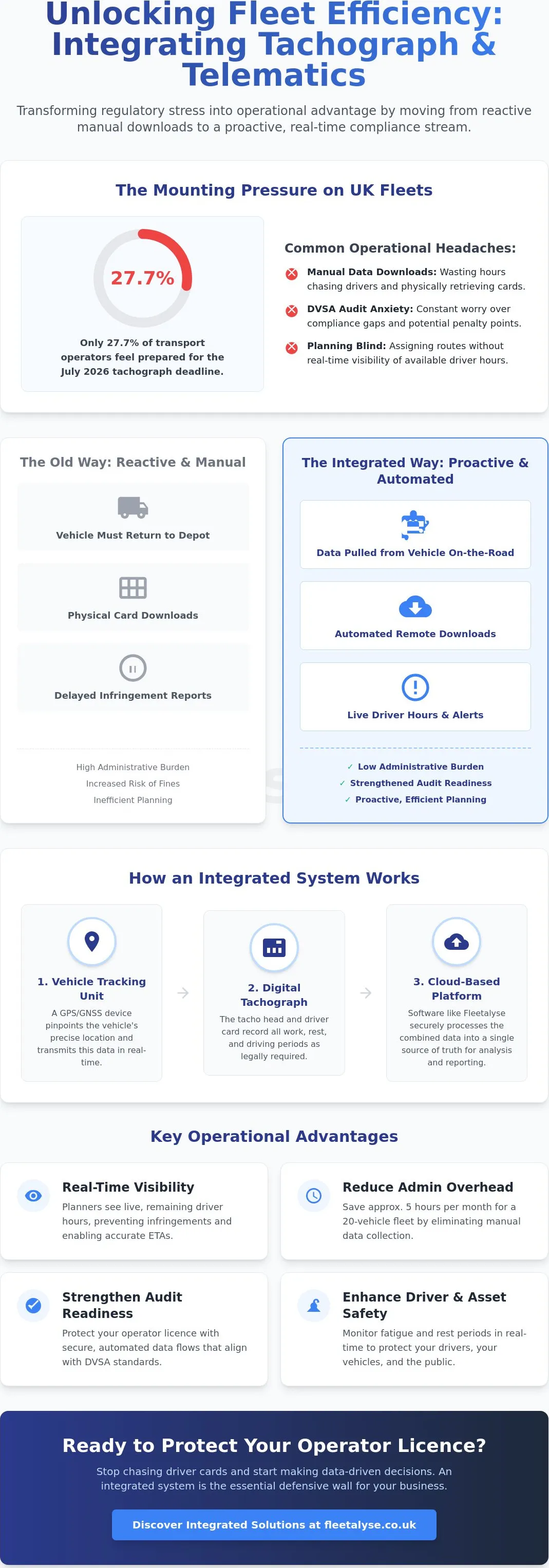
Only 27.7% of transport operators feel prepared for the July 1, 2026 tachograph deadline. It's a sobering statistic that reflects the mounting pressure on UK fleets to modernise compliance systems. You're likely tired of chasing drivers for manual card downloads or feeling the weight of anxiety before a DVSA audit. Integrating telematics and tachograph data is no longer a luxury for large-scale logistics firms. It's the essential defensive wall for your operator licence.
We understand that tracking live driver hours whilst planning complex routes often feels like an uphill battle. This article shows you how merging GPS fleet tracking with remote tachograph download streamlines your compliance and cuts administrative burdens. You'll discover how automated data flow provides real-time visibility of driver rest periods and protects your business from costly penalty points. Here is how a unified system turns regulatory stress into operational efficiency.
Key Takeaways
- Understand how integrating telematics and tachograph data transforms reactive manual downloads into a proactive, real-time compliance stream.
- Eliminate the administrative burden of chasing driver cards by automating remote tachograph downloads directly from the vehicle's CAN-bus.
- Improve dispatch efficiency and route planning by viewing live driver hours alongside GPS location data to prevent rest period violations.
- Strengthen your audit readiness and protect your operator licence with secure, automated data flows that align with DVSA standards.
- Discover the essential hardware and software requirements for a unified system, including the role of the Company Card in secure data authorisation.
What is Tachograph and Telematics Integration?
Integration is the technical synchronisation of GPS location data with digital tachograph records. It represents a fundamental shift in transport management. For years, operators relied on reactive manual downloads. You waited for the vehicle to return to the yard, grabbed the card, and hoped for no infringements. Integrating telematics and tachograph data changes that dynamic. It creates a proactive, real-time data stream that flows directly into your office software.
The bridge between the vehicle and your desk is the Remote Tachograph Download. This technology pulls data from the vehicle unit (VU) and driver card whilst the vehicle is still on the road. By 2026, this level of connectivity will be the standard for any fleet aiming for operational efficiency. It's no longer enough to know where a van is; you must know if the driver is legally allowed to be behind the wheel. To understand the foundation of this record-keeping, it's useful to review what is a tachograph and how its role has evolved from a simple paper disc to a complex digital sensor.
The Synergy of Location and Compliance
Knowing a vehicle's GPS position is useful, but it lacks context without compliance data. When you combine these streams, you see exactly what a driver is doing at any given coordinate. If a vehicle stops at a motorway service station, integration tells you if the driver is taking a mandatory 45-minute rest or simply stuck in traffic. This eliminates data silos. Instead of checking a tracking map and then a separate compliance report, you have a single source of truth. This unified view is vital for DVSA audits, as it proves your organisation has active oversight of its drivers.
Key Components of an Integrated System
A reliable system relies on three specific pillars. First is the vehicle tracking unit, which uses GPS or GNSS to pin the vehicle's location. Second is the digital tachograph head and the driver card, which record the actual work periods. The final piece is a cloud-based platform, such as Fleetalyse, that processes this combined data into actionable insights. This setup allows for the seamless flow of Live Driver Hours and automated downloads, ensuring you never miss a 28-day or 90-day deadline again. It's a pragmatic solution built for the rigours of the UK transport industry.
Operational Advantages of a Unified Data Stream
The "chase" for driver cards is an invisible tax on your productivity. Most regional operators lose hours every month physically retrieving cards from vehicles or waiting for drivers to return to the depot. Integrating telematics and tachograph data removes this friction entirely. It replaces manual labour with a seamless, automated flow of information that keeps your fleet moving. You no longer need to wait for a vehicle to return to the yard to know your compliance status.
Adhering to UK tachograph regulations requires absolute precision. A unified data stream ensures you meet these standards without the administrative headache. Beyond compliance, it offers a distinct commercial edge. You gain the ability to make decisions based on what's actually happening in the cab, rather than relying on yesterday's paperwork. This level of transparency is essential for protecting your operator licence from avoidable points and fines.
Real-Time Visibility of Driver Hours
Planners often work in the dark. Without live data, they might assign a critical delivery to a driver who only has thirty minutes of drive time remaining. Live Driver Hours provide instant clarity. Planners see remaining drive time, rest periods, and shift limits on a single screen. This prevents accidental infringements before they occur. It also improves customer service. You can provide accurate ETAs because you know exactly when a driver is legally required to stop for a break.
Reducing Administrative Overhead
Manual data collection is a magnet for human error. Misplaced files or late downloads can lead to serious DVSA scrutiny. Automated remote downloads send data straight to your Tachograph Analysis Integration software. This removes the need for manual filing and data entry. If you manage 20 vehicles, you could save approximately five hours of administrative work every month. This time is better spent on core business growth. For those ready to reclaim their time, you can view our integrated tracking solutions here.
A unified stream also impacts your bottom line through safety. Fatigue-related incidents are often the result of poor planning or lack of oversight. Monitoring rest periods in real-time protects your drivers and your assets. Aligning driver behaviour data with route efficiency also helps lower fuel costs; similarly, performance optimisations from Naked Frog Vehicle Tuning can help fleets in the North East further reduce consumption. You can identify where idling or harsh braking is wasting resources and adjust your training accordingly. The result is a leaner, safer, and more profitable operation.
How Integration Works: From Hardware to Analysis
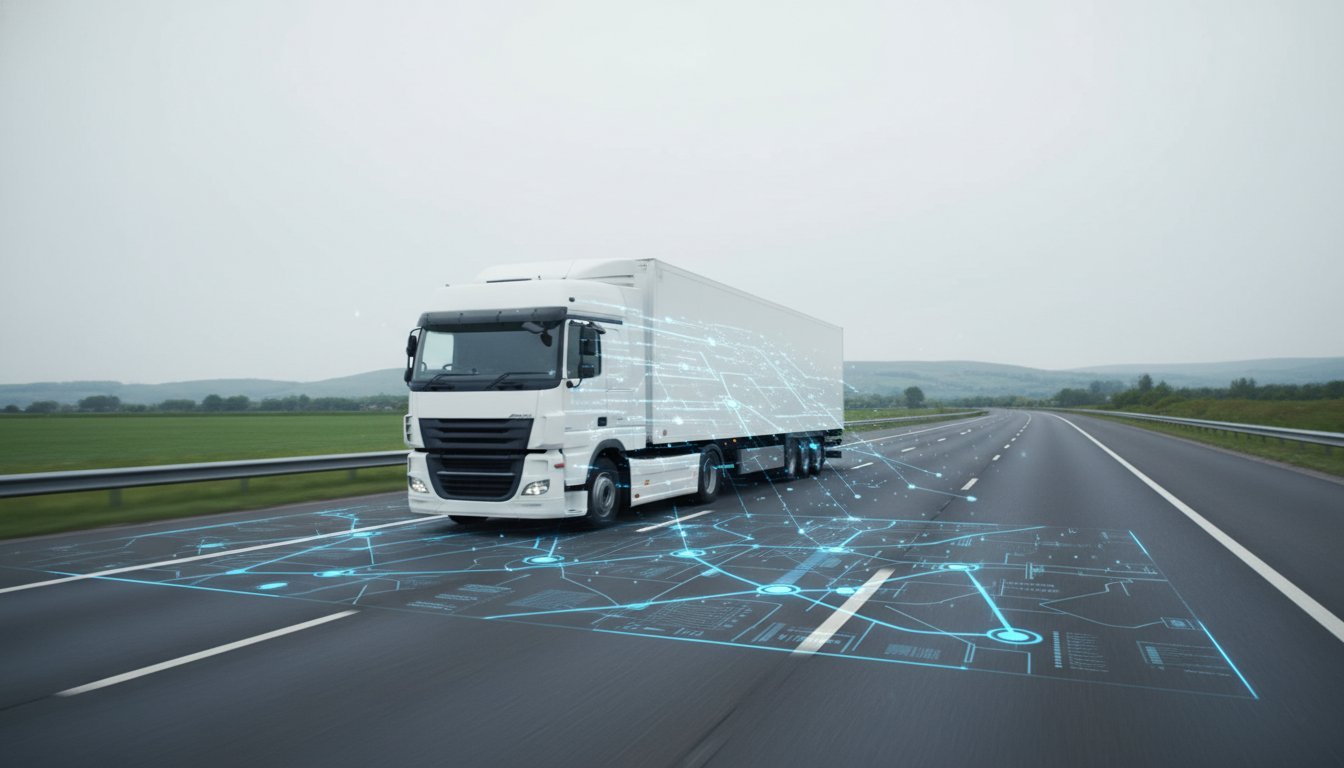
Understanding the mechanics of a unified fleet system removes the mystery from the transition. Integrating telematics and tachograph data requires a physical connection between the vehicle's digital tachograph and a tracking unit. This is a straightforward process. The telematics device connects to the tachograph's rear CAN-bus port, allowing it to read work and rest periods directly from the source. This connection acts as the gateway for all compliance data.
Security is maintained through a digital "handshake" using your Company Card. Instead of carrying this card to every vehicle, you keep it in a card reader at your office. When the telematics unit requests a download, the system verifies the request against the Company Card remotely. This secure authorisation ensures that only your organisation can access your driver and vehicle records. Once authorised, the data travels via the cellular network to a secure cloud platform.
Remote Tachograph Download Technology
Modern systems remove the need for manual intervention by using automated scheduling. You can set the hardware to perform a Remote Tachograph Download of driver cards every 24 hours. Vehicle unit (VU) downloads can be scheduled weekly or monthly to ensure you never exceed the 90-day legal limit. These systems use end-to-end encryption to protect sensitive driver information. Over-the-air updates ensure your hardware stays compatible with the latest smart tachograph versions without requiring a workshop visit.
Connecting to Tachograph Analysis Software
The raw data from a tachograph is only useful if it is analysed correctly. Tachograph Analysis Integration is the final piece of the puzzle. Using secure APIs, the platform sends your .ddd files directly to your preferred analysis provider. This happens automatically. You no longer need to upload files manually or worry about data gaps.
This automated flow provides several advantages for the transport manager:
- Instant reporting of driver infringements.
- Lead-in times for upcoming card and calibration expiry dates.
- Audit-ready reports available at the click of a button.
- Seamless synchronisation with Live Driver Hours for better route planning.
By removing the manual steps between the vehicle and the analysis software, you eliminate the risk of human error. The result is a robust, transparent record of your fleet's activity. For operators looking to modernise their hardware, Fleetalyse provides the necessary infrastructure to bridge the gap between tracking and compliance.
Strengthening Compliance and Audit Readiness
The DVSA doesn't accept "I didn't know" as a valid defence during an audit. Your operator licence is the lifeblood of your business; protecting it requires more than just hope. Integrating telematics and tachograph data provides a digital paper trail that manual systems simply cannot match. This technology creates a robust environment where every driver action is recorded, analysed, and archived. It moves your operation from a state of reactive panic to one of calm, audit-ready confidence.
A primary benefit of this integrated approach is its support for the Earned Recognition scheme. This voluntary initiative allows the DVSA to monitor your fleet's performance remotely. By sharing your compliance data, you reduce the likelihood of your vehicles being stopped for roadside inspections. It signals to the authorities that you are a high-quality operator with nothing to hide. This transparency is only possible when your tracking and tachograph systems speak the same language.
Maintaining Your Operator Licence
Think of data integration as a "compliance insurance" policy. Consistent, timely downloads are essential for O-Licence health. When you automate this process, you eliminate the risk of missing the 28-day driver card or 90-day vehicle unit deadlines. The system doesn't just store data; it highlights trends. If a specific driver consistently triggers rest-period alerts, the software flags this immediately. You can then use these reports to provide targeted training, proving to auditors that you actively manage and correct driver behaviour.
Future-Proofing for 2026 and Beyond
The regulatory landscape is shifting. On July 1, 2026, all commercial vehicles between 2.5 and 3.5 tonnes used for international transport for hire or reward must be equipped with a Smart Tachograph 2 (G2V2). This is a significant change for van operators who have previously avoided tachograph regulations. An IRU survey indicates that only 27.7% of operators currently feel prepared for this deadline. Waiting until the last minute will likely result in higher installation costs and limited workshop availability.
This emphasis on forward-planning is shared by other sectors within the transport industry; for instance, those managing regional logistics or passenger services can check out Brighton Airport Taxis for their comprehensive 2026 guide to airport transfers.
To ensure your fleet is 2026-ready, consider this checklist:
- Identify any LCVs in your fleet that cross international borders.
- Verify that your current telematics hardware is compatible with G2V2 units.
- Confirm your devices support 4G or 5G connectivity to avoid the 2G/3G network shutdowns.
- Ensure your analysis software can handle the increased data depth of Version 2 smart tachographs.
Proactive operators are already upgrading their hardware to avoid the rush. Integrating telematics and tachograph data now ensures you are compliant long before the July 1 deadline. If you need to upgrade your fleet to meet these new standards, you can secure your compliance hardware today. Taking action today prevents the administrative chaos of tomorrow.
Selecting an Integrated Solution for Your Fleet
Selecting the right technology partner is a strategic decision that affects your operational bottom line. Just as hospitality businesses rely on specialised systems like Shift4 POS UK for their efficiency, transport firms need a solution that balances technical capability with financial clarity. When integrating telematics and tachograph data, avoid providers that hide "integration fees" in the small print. You should look for transparent, upfront pricing that reflects the actual value delivered to your transport office. A reliable partner doesn't just sell software; they provide the infrastructure to protect your operator licence.
UK-based support is a non-negotiable requirement for regional operators. Regional infrastructure and DVSA regulations are highly specific. You need a team that understands the difference between a minor infringement and a serious risk to your O-licence. A system that scales with your business is also vital. Whether you are managing a small fleet of vans or a large HGV operation, your data flow must remain consistent as you grow. Fleetalyse focuses on this practical utility. We prioritise the features you actually use, like automated filing and live work periods, over flashy, unnecessary dashboards that clutter your workflow.
The Fleetalyse Difference: Professional and Transparent
Straightforward contracts and clear ROI are the hallmarks of a professional partnership. We combine specialised GPS fleet tracking with deep tachograph expertise to offer a unified perspective on your fleet. Our approach to integrating telematics and tachograph data ensures that your office staff spend less time on paperwork and more time on logistics. This isn't about collecting data for the sake of it. It's about using that data to reduce administrative overheads and improve driver safety. By choosing a partner rather than just a software vendor, you gain access to industry insights that help you stay ahead of regulatory changes.
Next Steps for Integration
The transition to a unified system begins with a clear assessment of your current operation. We suggest a fleet audit to identify data gaps, such as missed downloads or lack of visibility into driver hours during transit. Once you understand your operational weaknesses, you can see how an automated system fills those voids without adding to your workload. A pragmatic audit often reveals hidden costs in your manual processes that an integrated system can quickly eliminate.
We recommend a demo of our Remote Tachograph Download system to see the technology in action. It is the most effective way to understand how live data can transform your daily planning and dispatch accuracy. Don't leave your compliance to chance or wait for a DVSA officer to find a mistake for you. Reach out for a compliance consultation today to ensure your fleet is ready for the rigours of 2026 and beyond.
Modernise Your Fleet Compliance Today
The shift toward automated compliance isn't just about following rules. It's about reclaiming time for your business. By integrating telematics and tachograph data, you remove the guesswork from dispatch and the stress from DVSA audits. You've seen how real-time visibility of driver hours prevents infringements before they happen. You also know why 2026 readiness is essential for any operator crossing international borders. These aren't just technical upgrades; they are the defensive pillars of your operator licence.
Now is the time to act. Don't wait for a workshop backlog or a failed audit to fix your systems. We provide UK-based expert support and DVSA-aligned reporting solutions designed for the rigours of the road. Our commitment to transparent pricing with no hidden fees ensures you know exactly what your investment provides. It's a pragmatic step toward a safer, more efficient operation. Book a transparent consultation for your fleet compliance today and build a resilient foundation for your business growth. We're ready to help you simplify your data and secure your future.
Frequently Asked Questions
Is it legally required to integrate telematics and tachograph data in the UK?
No, there is no specific law that mandates the integration of these two systems. However, you are legally required to download driver card data every 28 days and vehicle unit data every 90 days. Integrating telematics and tachograph data is the most reliable way to ensure these deadlines are never missed, protecting your operator licence from DVSA penalties.
How often should I remotely download my tachograph data?
You should aim for daily driver card downloads and weekly vehicle unit downloads. Whilst the legal limits are 28 and 90 days respectively, frequent automated downloads allow you to identify and rectify infringements immediately. This proactive approach is much more effective than finding a serious violation weeks after it occurred during a manual download session.
Will integrating tacho data work with my existing fleet tracking hardware?
It depends entirely on whether your current tracking unit is compatible with the tachograph's CAN-bus. Many basic GPS units are designed for location only and lack the physical ports or firmware to read compliance data. You should check your hardware specifications or consult a specialist to see if an upgrade to a dedicated Remote Tachograph Download unit is necessary.
What are the upcoming 2026 tachograph requirements for vans?
From July 1, 2026, all vans with a maximum authorised mass between 2.5 and 3.5 tonnes used for international transport for hire or reward must be fitted with a Smart Tachograph 2 (G2V2). This rule applies to journeys between the UK and the EU. It does not currently apply to vans used solely for domestic UK transport, but international operators must prepare for this transition now.
Can I see live driver hours on my mobile phone?
Yes, most cloud-based platforms provide mobile access through a dedicated app or a responsive web portal. This allows transport managers to check Live Driver Hours and remaining shift time whilst away from the office. It is a practical tool for making quick decisions on the go, such as rerouting a vehicle or assigning an urgent collection based on legal availability.
Do I still need a physical company card if I use remote downloads?
Yes, the physical Company Card remains a critical part of the security process. It acts as the digital key that authorises the server to request data from the vehicle. In a remote setup, your card usually stays in a card reader at your office or a secure data centre, providing a constant "handshake" that allows for 24/7 automated downloads without manual intervention.
How does integration help with DVSA Earned Recognition?
Integration simplifies the process by automatically capturing the Key Performance Indicators (KPIs) required for the scheme. By integrating telematics and tachograph data, your system can generate the necessary compliance reports and share them with the DVSA automatically. This proves you are a high-standard operator and reduces the frequency of roadside stops, saving your fleet significant time on the road.
What happens if the telematics hardware fails during a journey?
The legal record of the journey is always safe because the tachograph unit and driver card continue to record data independently of the tracking hardware. If the telematics device fails, you simply lose the live visibility and the ability to download data remotely for that period. You can still retrieve the data manually using a traditional download tool once the vehicle returns to the depot.
Frequently asked questions
The Synergy of Location and Compliance
Knowing a vehicle's GPS position is useful, but it lacks context without compliance data. When you combine these streams, you see exactly what a driver is doing at any given coordinate. If a vehicle stops at a motorway service station, integration tells you if the driver is taking a mandatory 45-minute rest or simply stuck in traffic. This eliminates data silos. Instead of checking a tracking map and then a separate compliance report, you have a single source of truth. This unified view is vital for DVSA audits, as it proves your organisation has active oversight of its drivers.
Key Components of an Integrated System
A reliable system relies on three specific pillars. First is the vehicle tracking unit, which uses GPS or GNSS to pin the vehicle's location. Second is the digital tachograph head and the driver card, which record the actual work periods. The final piece is a cloud-based platform, such as Fleetalyse, that processes this combined data into actionable insights. This setup allows for the seamless flow of Live Driver Hours and automated downloads, ensuring you never miss a 28-day or 90-day deadline again. It's a pragmatic solution built for the rigours of the UK transport industry. The "chase" for driver cards is an invisible tax on your productivity. Most regional operators lose hours every month physically retrieving cards from vehicles or waiting for drivers to return to the depot. Integrating telematics and tachograph data removes this friction entirely. It replaces manual labour with a seamless, automated flow of information that keeps your fleet moving. You no longer need to wait for a vehicle to return to the yard to know your compliance status. Adhering to UK tachograph regulations requires absolute precision. A unified data stream ensures you meet these standards without the administrative headache. Beyond compliance, it offers a distinct commercial edge. You gain the ability to make decisions based on what's actually happening in the cab, rather than relying on yesterday's paperwork. This level of transparency is essential for protecting your operator licence from avoidable points and fines.
Real-Time Visibility of Driver Hours
Planners often work in the dark. Without live data, they might assign a critical delivery to a driver who only has thirty minutes of drive time remaining. Live Driver Hours provide instant clarity. Planners see remaining drive time, rest periods, and shift limits on a single screen. This prevents accidental infringements before they occur. It also improves customer service. You can provide accurate ETAs because you know exactly when a driver is legally required to stop for a break.
Reducing Administrative Overhead
Manual data collection is a magnet for human error. Misplaced files or late downloads can lead to serious DVSA scrutiny. Automated remote downloads send data straight to your Tachograph Analysis Integration software. This removes the need for manual filing and data entry. If you manage 20 vehicles, you could save approximately five hours of administrative work every month. This time is better spent on core business growth. For those ready to reclaim their time, you can view our integrated tracking solutions here. A unified stream also impacts your bottom line through safety. Fatigue-related incidents are often the result of poor planning or lack of oversight. Monitoring rest periods in real-time protects your drivers and your assets. Aligning driver behaviour data with route efficiency also helps lower fuel costs. You can identify where idling or harsh braking is wasting resources and adjust your training accordingly. The result is a leaner, safer, and more profitable operation. Understanding the mechanics of a unified fleet system removes the mystery from the transition. Integrating telematics and tachograph data requires a physical connection between the vehicle's digital tachograph and a tracking unit. This is a straightforward process. The telematics device connects to the tachograph's rear CAN-bus port, allowing it to read work and rest periods directly from the source. This connection acts as the gateway for all compliance data. Security is maintained through a digital "handshake" using your Company Card. Instead of carrying this card to every vehicle, you keep it in a card reader at your office. When the telematics unit requests a download, the system verifies the request against the Company Card remotely. This secure authorisation ensures that only your organisation can access your driver and vehicle records. Once authorised, the data travels via the cellular network to a secure cloud platform.
Remote Tachograph Download Technology
Modern systems remove the need for manual intervention by using automated scheduling. You can set the hardware to perform a Remote Tachograph Download of driver cards every 24 hours. Vehicle unit (VU) downloads can be scheduled weekly or monthly to ensure you never exceed the 90-day legal limit. These systems use end-to-end encryption to protect sensitive driver information. Over-the-air updates ensure your hardware stays compatible with the latest smart tachograph versions without requiring a workshop visit.
Connecting to Tachograph Analysis Software
The raw data from a tachograph is only useful if it is analysed correctly. Tachograph Analysis Integration is the final piece of the puzzle. Using secure APIs, the platform sends your .ddd files directly to your preferred analysis provider. This happens automatically. You no longer need to upload files manually or worry about data gaps. This automated flow provides several advantages for the transport manager: By removing the manual steps between the vehicle and the analysis software, you eliminate the risk of human error. The result is a robust, transparent record of your fleet's activity. For operators looking to modernise their hardware, Fleetalyse provides the necessary infrastructure to bridge the gap between tracking and compliance. The DVSA doesn't accept "I didn't know" as a valid defence during an audit. Your operator licence is the lifeblood of your business; protecting it requires more than just hope. Integrating telematics and tachograph data provides a digital paper trail that manual systems simply cannot match. This technology creates a robust environment where every driver action is recorded, analysed, and archived. It moves your operation from a state of reactive panic to one of calm, audit-ready confidence. A primary benefit of this integrated approach is its support for the Earned Recognition scheme. This voluntary initiative allows the DVSA to monitor your fleet's performance remotely. By sharing your compliance data, you reduce the likelihood of your vehicles being stopped for roadside inspections. It signals to the authorities that you are a high-quality operator with nothing to hide. This transparency is only possible when your tracking and tachograph systems speak the same language.
Maintaining Your Operator Licence
Think of data integration as a "compliance insurance" policy. Consistent, timely downloads are essential for O-Licence health. When you automate this process, you eliminate the risk of missing the 28-day driver card or 90-day vehicle unit deadlines. The system doesn't just store data; it highlights trends. If a specific driver consistently triggers rest-period alerts, the software flags this immediately. You can then use these reports to provide targeted training, proving to auditors that you actively manage and correct driver behaviour.
Future-Proofing for 2026 and Beyond
The regulatory landscape is shifting. On July 1, 2026, all commercial vehicles between 2.5 and 3.5 tonnes used for international transport for hire or reward must be equipped with a Smart Tachograph 2 (G2V2). This is a significant change for van operators who have previously avoided tachograph regulations. An IRU survey indicates that only 27.7% of operators currently feel prepared for this deadline. Waiting until the last minute will likely result in higher installation costs and limited workshop availability. To ensure your fleet is 2026-ready, consider this checklist: Proactive operators are already upgrading their hardware to avoid the rush. Integrating telematics and tachograph data now ensures you are compliant long before the July 1 deadline. If you need to upgrade your fleet to meet these new standards, you can secure your compliance hardware today. Taking action today prevents the administrative chaos of tomorrow. Selecting the right technology partner is a strategic decision that affects your operational bottom line. You need a solution that balances technical capability with financial clarity. When integrating telematics and tachograph data, avoid providers that hide "integration fees" in the small print. You should look for transparent, upfront pricing that reflects the actual value delivered to your transport office. A reliable partner doesn't just sell software; they provide the infrastructure to protect your operator licence. UK-based support is a non-negotiable requirement for regional operators. Regional infrastructure and DVSA regulations are highly specific. You need a team that understands the difference between a minor infringement and a serious risk to your O-licence. A system that scales with your business is also vital. Whether you are managing a small fleet of vans or a large HGV operation, your data flow must remain consistent as you grow. Fleetalyse focuses on this practical utility. We prioritise the features you actually use, like automated filing and live work periods, over flashy, unnecessary dashboards that clutter your workflow.
The Fleetalyse Difference: Professional and Transparent
Straightforward contracts and clear ROI are the hallmarks of a professional partnership. We combine specialised GPS fleet tracking with deep tachograph expertise to offer a unified perspective on your fleet. Our approach to integrating telematics and tachograph data ensures that your office staff spend less time on paperwork and more time on logistics. This isn't about collecting data for the sake of it. It's about using that data to reduce administrative overheads and improve driver safety. By choosing a partner rather than just a software vendor, you gain access to industry insights that help you stay ahead of regulatory changes.
Next Steps for Integration
The transition to a unified system begins with a clear assessment of your current operation. We suggest a fleet audit to identify data gaps, such as missed downloads or lack of visibility into driver hours during transit. Once you understand your operational weaknesses, you can see how an automated system fills those voids without adding to your workload. A pragmatic audit often reveals hidden costs in your manual processes that an integrated system can quickly eliminate. We recommend a demo of our Remote Tachograph Download system to see the technology in action. It is the most effective way to understand how live data can transform your daily planning and dispatch accuracy. Don't leave your compliance to chance or wait for a DVSA officer to find a mistake for you. Reach out for a compliance consultation today to ensure your fleet is ready for the rigours of 2026 and beyond. The shift toward automated compliance isn't just about following rules. It's about reclaiming time for your business. By integrating telematics and tachograph data, you remove the guesswork from dispatch and the stress from DVSA audits. You've seen how real-time visibility of driver hours prevents infringements before they happen. You also know why 2026 readiness is essential for any operator crossing international borders. These aren't just technical upgrades; they are the defensive pillars of your operator licence. Now is the time to act. Don't wait for a workshop backlog or a failed audit to fix your systems. We provide UK-based expert support and DVSA-aligned reporting solutions designed for the rigours of the road. Our commitment to transparent pricing with no hidden fees ensures you know exactly what your investment provides. It's a pragmatic step toward a safer, more efficient operation. Book a transparent consultation for your fleet compliance today and build a resilient foundation for your business growth. We're ready to help you simplify your data and secure your future.
Is it legally required to integrate telematics and tachograph data in the UK?
No, there is no specific law that mandates the integration of these two systems. However, you are legally required to download driver card data every 28 days and vehicle unit data every 90 days. Integrating telematics and tachograph data is the most reliable way to ensure these deadlines are never missed, protecting your operator licence from DVSA penalties.
How often should I remotely download my tachograph data?
You should aim for daily driver card downloads and weekly vehicle unit downloads. Whilst the legal limits are 28 and 90 days respectively, frequent automated downloads allow you to identify and rectify infringements immediately. This proactive approach is much more effective than finding a serious violation weeks after it occurred during a manual download session.
Will integrating tacho data work with my existing fleet tracking hardware?
It depends entirely on whether your current tracking unit is compatible with the tachograph's CAN-bus. Many basic GPS units are designed for location only and lack the physical ports or firmware to read compliance data. You should check your hardware specifications or consult a specialist to see if an upgrade to a dedicated Remote Tachograph Download unit is necessary.
What are the upcoming 2026 tachograph requirements for vans?
From July 1, 2026, all vans with a maximum authorised mass between 2.5 and 3.5 tonnes used for international transport for hire or reward must be fitted with a Smart Tachograph 2 (G2V2). This rule applies to journeys between the UK and the EU. It does not currently apply to vans used solely for domestic UK transport, but international operators must prepare for this transition now.
Can I see live driver hours on my mobile phone?
Yes, most cloud-based platforms provide mobile access through a dedicated app or a responsive web portal. This allows transport managers to check Live Driver Hours and remaining shift time whilst away from the office. It is a practical tool for making quick decisions on the go, such as rerouting a vehicle or assigning an urgent collection based on legal availability.
Do I still need a physical company card if I use remote downloads?
Yes, the physical Company Card remains a critical part of the security process. It acts as the digital key that authorises the server to request data from the vehicle. In a remote setup, your card usually stays in a card reader at your office or a secure data centre, providing a constant "handshake" that allows for 24/7 automated downloads without manual intervention.
How does integration help with DVSA Earned Recognition?
Integration simplifies the process by automatically capturing the Key Performance Indicators (KPIs) required for the scheme. By integrating telematics and tachograph data, your system can generate the necessary compliance reports and share them with the DVSA automatically. This proves you are a high-standard operator and reduces the frequency of roadside stops, saving your fleet significant time on the road.
What happens if the telematics hardware fails during a journey?
The legal record of the journey is always safe because the tachograph unit and driver card continue to record data independently of the tracking hardware. If the telematics device fails, you simply lose the live visibility and the ability to download data remotely for that period. You can still retrieve the data manually using a traditional download tool once the vehicle returns to the depot.