
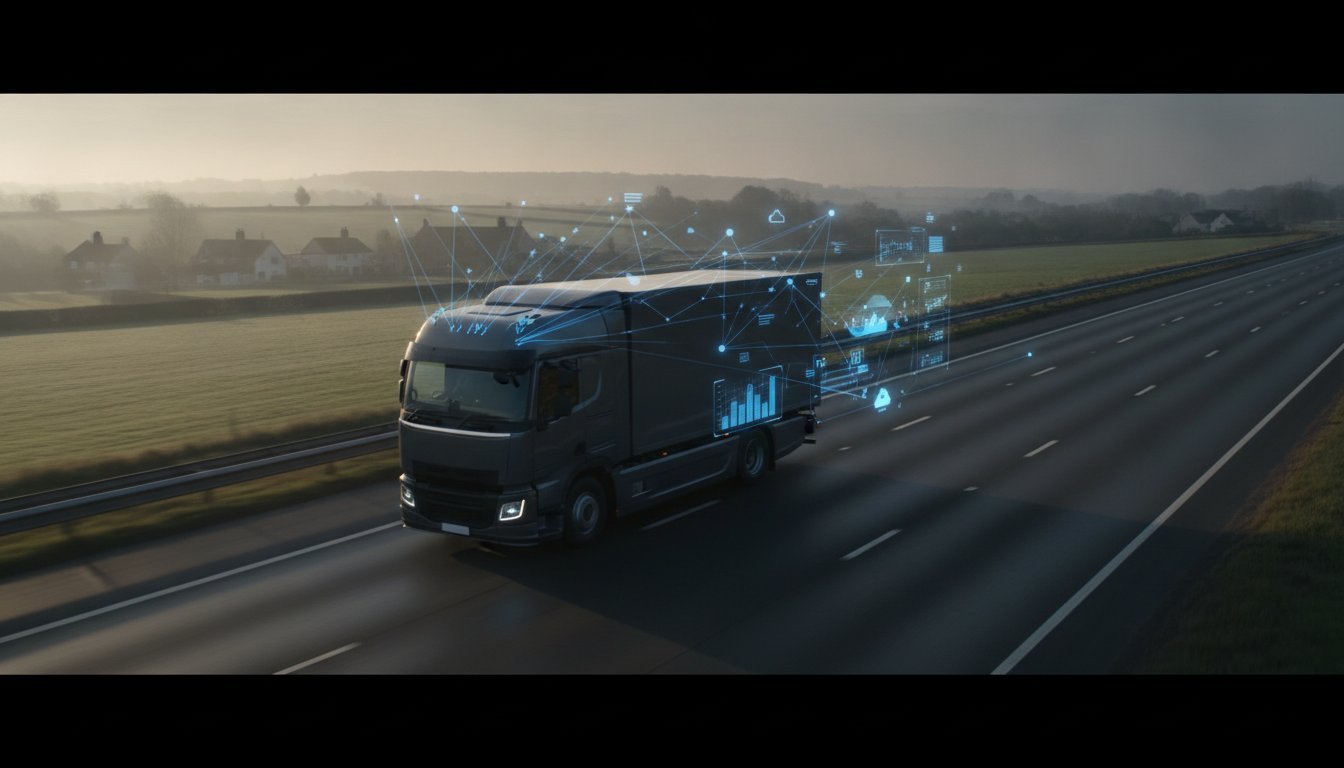
Chasing drivers across multiple depots to manually download tachograph data isn't just an administrative drain; it's a direct threat to your Operator Licence. You likely feel the pressure of tracking down vehicles that have been on the road for weeks just to meet a strict compliance deadline. With the July 2026 regulations now requiring Smart Tachograph 2 (Gen2v2) for many light commercial vehicles, the complexity of staying legal has reached a new peak. An automated remote tachograph download solution eliminates this risk by pulling data directly from the vehicle, regardless of its location in the UK or abroad.
It's frustrating when manual errors or missed mileage leads to avoidable infringements and DVSA scrutiny. You need a system that works silently in the background so you can focus on moving goods rather than managing paperwork. This guide explains how to transition to 100% remote data retrieval and produce audit-ready reports automatically. We'll look at how integrating these systems with live driver hours creates a practical, seamless compliance framework that protects your reputation and your fleet.
Key Takeaways
- Understand how the 2026 mandate for Gen2v2 smart tachographs affects your fleet and why automation is essential for international LCV operations.
- Discover how an automated remote tachograph download system securely transfers .ddd files to the cloud, removing the logistical burden of manual card reading.
- Learn to align your data retrieval with the DVSA "Guide to Maintaining Roadworthiness" to protect your Operator Licence and qualify for Earned Recognition.
- Quantify the administrative time savings and financial gains achieved by replacing manual downloads with a streamlined digital workflow.
- Explore how integrating live driver hours with your analysis tools provides a transparent view of fleet behaviour to help prevent costly infringements.
The Evolution of Fleet Compliance: Why Manual Tachograph Downloads are Obsolete
Compliance in the UK transport sector has undergone a fundamental shift. It is no longer a matter of simply keeping records; it is about the speed and accuracy of your data. For years, operators relied on manual processes that were slow and prone to human error. Today, an automated remote tachograph download is the baseline for any professional fleet. Within the 2026 UK regulatory framework, manual data retrieval is becoming a liability. With the July 1, 2026, mandate requiring Smart Tachograph 2 (Gen2v2) for international LCVs between 2.5 and 3.5 tonnes, the volume of data to manage is increasing. The transition from physical media to The Mechanics of Remote Tachograph Download (RTD) Technology has changed what the DVSA expects from a responsible operator.
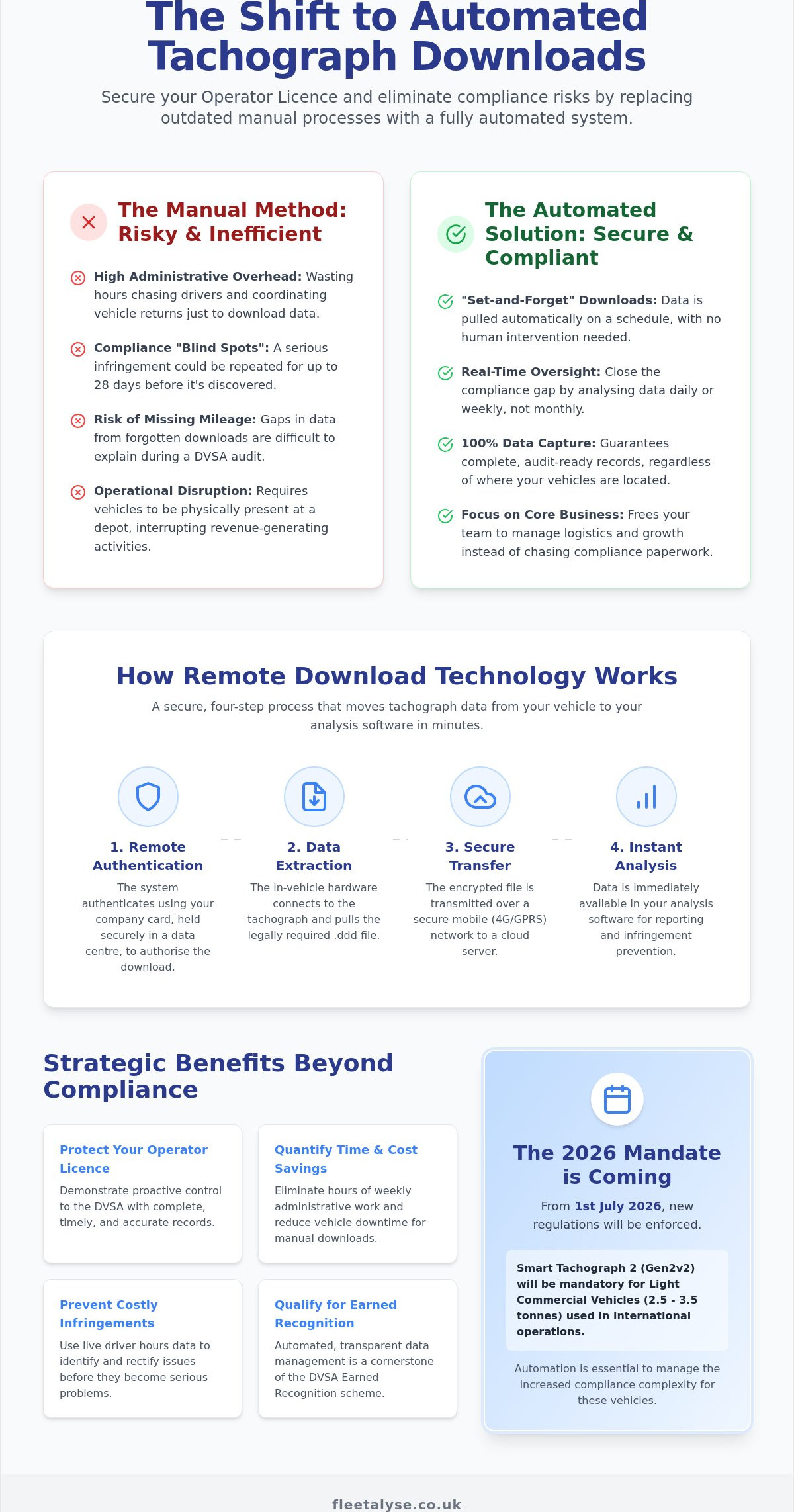
Manual data collection creates a dangerous "compliance gap". This is the period between a driver committing an infringement and the transport manager actually seeing the data. If you only download cards every 28 days, a driver could repeat a serious rest-period error for weeks before you can intervene. Automation closes this gap. It protects the professional competence of transport managers by providing the live oversight required to manage a modern fleet safely. It's about having the right information at the right time to make informed decisions.
The Hidden Costs of Manual Data Collection
Chasing drivers for card downloads is a drain on skilled administrative time. For a fleet of 20 vehicles, a transport office can lose several hours every week coordinating vehicle returns and card swipes. These costs add up quickly. Beyond the wages, there is the persistent risk of "missing mileage" reports. If a vehicle unit isn't downloaded on time, or a driver forgets to swipe their card, your records show gaps that are difficult to explain during an audit. Manual data retrieval creates a systemic lag that leaves transport managers blind to infringements until it's too late to rectify them. This administrative burden distracts from core operational tasks and increases the likelihood of missing a critical deadline.
Automation as a Requirement for Modern Fleet Management
The DVSA prioritises fleets that demonstrate proactive control. During roadside inspections or full office audits, having "set-and-forget" technology in place shows you take roadworthiness and driver hours seriously. The UK's most efficient hauliers have already moved to digital-first compliance. They don't wait for the 28-day or 90-day deadlines; they pull data daily or weekly automatically. This level of transparency is a core component for schemes like DVSA Earned Recognition. By removing the human element from data retrieval, you ensure your records are always complete and audit-ready. Transitioning to an automated system with Fleetalyse ensures your Operator Licence remains secure while your team focuses on growth rather than paperwork.
The Mechanics of Remote Tachograph Download (RTD) Technology
Understanding how an automated remote tachograph download works is essential for any operator looking to modernise their fleet. The process isn't just about moving files; it's a coordinated technical handshake between the vehicle, a remote server, and your office. Traditionally, downloading required a physical company card and a download key. RTD technology replaces this manual step by using a Remote Download Unit (RDU) that stays permanently connected to the vehicle. This hardware acts as a bridge, allowing the transport office to authenticate and pull data without the vehicle ever returning to base.
Security is the foundation of this process. Every time a download is initiated, the system performs a remote authentication using your company card, which is securely hosted in a card reader at a data centre or your office. This ensures that the data remains encrypted and legally valid. Once authenticated, the RDU extracts the .ddd file, which is the standard format for digital tachograph data across Europe. This file contains everything from driver activity to vehicle speed and technical faults. It travels via 4G or GPRS networks, moving from the vehicle unit to the cloud in a matter of minutes. This journey is protected by secure protocols to ensure sensitive driver information is never exposed.
Hardware Integration: The Remote Download Unit
The RDU is a compact device that interfaces directly with the tachograph head. It typically connects to the rear CAN-bus or the 6-pin front port. Reliability depends on the quality of this hardware. Modern units are designed for broad compatibility, working seamlessly with both VDO and Stoneridge models, including the latest Gen2v2 variants. Intelligent RDUs manage their own download schedules. They don't require a manual prompt; they check for new data and transmit it based on your specific compliance requirements. This "active" hardware approach ensures that your 28-day and 90-day deadlines are met without fail. Choosing robust hardware is the first step toward a resilient compliance strategy.
Software Analysis: Turning Raw Data into Insights
Raw .ddd files are encrypted and difficult to read without specialised tools. An automated remote tachograph download system doesn't just archive these files; it sends them to an analysis engine that decrypts and interprets the data. This is where raw numbers become actionable insights. The software identifies infringements, calculates remaining driver hours, and highlights missing mileage instantly. Cloud-based platforms centralise this data, allowing transport managers to oversee multiple depots and hundreds of vehicles from a single, unified dashboard. This transition from simple file storage to active monitoring is what protects your Operator Licence. To find the right setup for your fleet, you can view our available hardware and subscription options to get started.
Ensuring DVSA Compliance and Operator Licence Security
Protecting your Operator Licence is the most critical responsibility of any transport manager. The DVSA "Guide to Maintaining Roadworthiness" makes it clear that operators must have effective systems for monitoring driver hours and vehicle data. Relying on manual downloads creates a reactive environment where you only discover problems weeks after they occur. An automated remote tachograph download shifts your operation into a proactive stance. It provides the continuous oversight the DVSA expects, ensuring that your records are always complete, accurate, and ready for inspection at a moment's notice.
For fleets aiming for the highest standards, automation is the only viable path to the DVSA Earned Recognition scheme. This voluntary scheme requires operators to share performance KPIs with the DVSA in exchange for a "light touch" regulatory approach. Manual data retrieval is simply too slow and fragmented to meet these reporting requirements. By using Fleetalyse to automate your data flow, you can demonstrate a level of transparency and control that positions your business as a low-risk operator. This digital trail is searchable and tamper-proof, which is exactly what an examiner looks for during a full office audit.
Effective management requires prioritisation. Modern analysis software uses a "Traffic Light" system to rank infringements based on severity. Instead of wading through hundreds of uneventful driving logs, you can focus immediately on "Red" alerts. These represent the most serious violations that could trigger a public inquiry or lead to the suspension of your licence. By addressing these high-risk areas first, you demonstrate professional competence and a commitment to road safety.
Managing Driver Infringements Automatically
Identifying a violation is only half the battle. The DVSA also looks for evidence of prompt driver debriefing. When an automated remote tachograph download flags a breach of EU drivers' hours rules, you can act immediately. This proactive monitoring helps prevent repeat offences and significantly reduces the likelihood of costly roadside fines. Fixed penalties for tachograph and hours violations typically range from £50 to over £300. Stopping these errors at the source protects your bottom line and your reputation.
GDPR and UK Data Retention Requirements
UK law requires you to store driver card data for at least 12 months and vehicle unit data for 90 days. However, if you use this data for Working Time Directive compliance, you must keep it for 24 months. Moving this data to a secure cloud environment ensures you meet these retention periods without filling filing cabinets with paper.
- Access Control: Ensure only authorised staff can view sensitive driver records to maintain GDPR compliance.
- Automated Backups: Protect your fleet against data loss caused by hardware failure or office-based disasters.
- Searchability: Locate specific files in seconds during a spot check rather than searching through physical folders.
Strategic Benefits: Beyond Basic Regulatory Compliance
Investing in an automated remote tachograph download system isn't just about avoiding the DVSA's bad books. It's a strategic move that delivers a tangible return on investment. When you eliminate the need for drivers to return to base specifically for a data download, you save on fuel, vehicle wear, and driver wages. Administrative efficiency improves when your transport office stops chasing cards and starts managing performance. Catching small errors through live monitoring prevents them from becoming £300 penalties at a roadside check. These savings often cover the cost of the subscription within the first few months of operation.
Transparency also drives better driver behaviour. When drivers know their hours are monitored in real-time, compliance becomes a shared responsibility rather than a management headache. This visibility reduces the temptation to "stretch" hours or skip rest breaks, which directly improves road safety. By using automated remote tachograph download technology, you create a culture of professional accountability. You're no longer just collecting data; you're using it to build a safer, more efficient fleet that clients can trust with their most valuable loads.
Operational Efficiency and Dispatch Planning
Live data is a game-changer for dispatchers. Knowing exactly who has legal driving hours remaining before assigning a load prevents accidental infringements and service failures. It stops the guesswork that often leads to drivers being forced to stop just short of a delivery point. You can reduce vehicle downtime significantly by removing the logistical hurdle of base-return downloads. Accurate delivery scheduling becomes much easier when your office has a live view of every driver's remaining duty time, ensuring your promises to customers are always grounded in legal reality.
Asset Security and GPS Integration
Total asset visibility comes from cross-referencing tachograph activity with real-time GPS locations. If a vehicle unit shows movement without a driver card inserted, your system can flag it as an unauthorised use or potential theft immediately. Integrating GPS fleet tracking with your compliance data allows you to see not just where the truck is, but exactly what the driver is doing on their tachograph at that location. Streamlining your fleet management into a single platform for tracking and compliance reduces software fatigue and ensures your data is always synchronised. To secure your fleet and simplify your workflow, you can select your hardware and start your subscription today.
Implementing Automated Analysis with Fleetalyse
Transitioning from a manual system to an automated remote tachograph download workflow is a straightforward process when managed by a specialist partner. Many operators hesitate because they fear a complex technical overhaul. In reality, the shift is pragmatic and designed to slot into your existing daily operations. Fleetalyse works as your localised expert, ensuring that the hardware integration is seamless and your team is ready to use the data from day one. We focus on removing the administrative friction that holds regional hauliers back.
Reliability is built on transparency. Unlike generic global providers with distant support centres, we provide a UK-based partnership grounded in the specific rigours of domestic transport regulations. Our approach is built for real-world application. We provide clear, upfront pricing and straightforward contracts because we know that hidden complexities are a major pain point for fleet owners. You get a system that works silently in the background, allowing you to focus on your core business of moving freight. Having a partner that understands UK-specific infrastructure and DVSA expectations is essential for long-term Operator Licence security.
The Step-by-Step Transition Plan
Moving to automation follows a logical progression. We start by auditing your current fleet to confirm hardware compatibility across your vehicle units. Whether you run the latest Gen2v2 smart tachographs or older digital models, we identify the right RDU for every truck. Once the hardware is installed and connected to the Fleetalyse analysis platform, we focus on your team. Training your transport managers to interpret automated reports and manage driver debriefs is the final step in closing the compliance gap. This structured approach ensures no data is lost during the switch and that your office remains audit-ready throughout the process.
Why Fleetalyse is the Choice for UK Hauliers
We understand the daily struggles of UK-based HGV and van operators. Our service is built to be efficient and deeply practical, prioritising functional utility over flashy, unnecessary features. By integrating your automated remote tachograph download with live driver hours and GPS tracking, you gain a unified view of your entire operation. This localised expertise means we're always available to help you navigate DVSA requirements. We don't just provide software; we act as a reliable ally for your business. Secure your fleet compliance and book your automated setup today.
Future-Proof Your Fleet Compliance Strategy
The July 2026 regulatory shift is a clear signal that manual data retrieval is no longer sustainable for a professional operation. Adopting an automated remote tachograph download system removes the administrative friction that slows down your transport office. This technology ensures your fleet meets the latest Gen2v2 standards whilst providing the audit-ready reporting required for DVSA standards. You gain total visibility over driver hours and vehicle activity, which directly protects your Operator Licence from avoidable infringements and costly fines.
Fleetalyse provides the specialist UK compliance expertise needed to manage this transition successfully. Our seamless remote download hardware integration and transparent approach give you the confidence to focus on your core logistics. You don't have to chase cards across multiple depots anymore. Instead, you can rely on a system built specifically for the rigours of the UK haulage industry. Our pragmatic solutions ensure your data is always secure, accurate, and ready for inspection.
Automate your tachograph compliance-get started here.
Your fleet deserves a reliable partner to navigate these regulatory changes. We are ready to help you streamline your administration and secure your professional reputation.
Frequently Asked Questions
What is automated remote tachograph download and how does it work?
An automated remote tachograph download system uses a small device connected to the vehicle unit to transmit data wirelessly. It uses a remote company card hosted in a secure server to authenticate the connection. Once authorised, the system pulls the encrypted .ddd files via 4G or GPRS networks. This removes the need for physical card readers or download keys; it centralises all your fleet data in one cloud-based platform.
Do I still need to manually download driver cards if I have an automated system?
No, you don't need to manually swipe cards once the system is active. The hardware retrieves the driver card data directly through the tachograph head whilst the driver is working. This eliminates the logistical headache of drivers having to return to a specific depot just to download their data. It ensures you never miss the mandatory 28-day deadline, regardless of where the vehicle is located in the UK or abroad.
Is automated tachograph analysis compatible with older HGV and PSV models?
Most digital tachographs manufactured after 2009 are compatible with remote downloading. This includes VDO versions 1.3 and above, as well as Stoneridge versions 7.1 and later. If you operate an older fleet, we can help you identify if your vehicle units support a hardware upgrade. Modern RDUs are designed to work across a mix of vehicle ages, providing a unified solution for HGVs and PSVs alike.
How often does the automated system retrieve data from the vehicle unit?
You can customise the frequency to suit your fleet’s needs, though most operators choose daily downloads. Whilst the law requires vehicle unit data every 90 days and driver cards every 28 days, automation allows for much more frequent retrieval. Pulling data every 24 hours provides a live view of driver hours. This helps you identify infringements and manage duty time before they become a serious compliance risk.
Can automated tachograph analysis help my fleet achieve DVSA Earned Recognition?
Automation is a fundamental requirement for the DVSA Earned Recognition scheme. To qualify, you must share periodic compliance reports and meet specific KPIs regarding driver hours and vehicle maintenance. An automated remote tachograph download system provides the digital accuracy and transparency the DVSA demands. It proves you have robust, proactive systems in place to manage roadworthiness and driver conduct without the need for manual intervention.
What happens to my data if the vehicle loses its 4G or GPRS connection?
The Remote Download Unit (RDU) includes internal memory to handle signal blackspots. If a vehicle enters an area without 4G or GPRS coverage, the data remains stored securely on the device. As soon as the connection is re-established, the unit automatically transmits the queued files to the analysis server. This ensures your records remain continuous and complete even during long-distance or international journeys where signal may be intermittent.
Is the data from an automated system legally admissible during a DVSA audit?
Yes, the data is fully compliant and legally identical to a manual download. The .ddd files retrieved remotely carry the same digital signatures and encryption required by UK law. DVSA examiners and traffic commissioners accept these digital records during audits and roadside checks. Because the process is automated, it also reduces the risk of data tampering or loss, which actually improves the integrity of your evidence during a formal inspection.
How much time can a transport manager save by switching to automated analysis?
Transport managers can save significant administrative time, often equivalent to several days of work per month for larger fleets. You stop spending hours chasing drivers, swiping cards, and manually uploading files to analysis software. This efficiency allows your team to focus on proactive driver debriefs and operational planning. It turns a time-consuming manual chore into a "set-and-forget" process that runs silently in the background of your daily operations.
Frequently asked questions
What is automated remote tachograph download and how does it work?
An automated remote tachograph download system uses a small device connected to the vehicle unit to transmit data wirelessly. It uses a remote company card hosted in a secure server to authenticate the connection. Once authorised, the system pulls the encrypted .ddd files via 4G or GPRS networks. This removes the need for physical card readers or download keys; it centralises all your fleet data in one cloud-based platform.
Do I still need to manually download driver cards if I have an automated system?
No, you don't need to manually swipe cards once the system is active. The hardware retrieves the driver card data directly through the tachograph head whilst the driver is working. This eliminates the logistical headache of drivers having to return to a specific depot just to download their data. It ensures you never miss the mandatory 28-day deadline, regardless of where the vehicle is located in the UK or abroad.
Is automated tachograph analysis compatible with older HGV and PSV models?
Most digital tachographs manufactured after 2009 are compatible with remote downloading. This includes VDO versions 1.3 and above, as well as Stoneridge versions 7.1 and later. If you operate an older fleet, we can help you identify if your vehicle units support a hardware upgrade. Modern RDUs are designed to work across a mix of vehicle ages, providing a unified solution for HGVs and PSVs alike.
How often does the automated system retrieve data from the vehicle unit?
You can customise the frequency to suit your fleet’s needs, though most operators choose daily downloads. Whilst the law requires vehicle unit data every 90 days and driver cards every 28 days, automation allows for much more frequent retrieval. Pulling data every 24 hours provides a live view of driver hours. This helps you identify infringements and manage duty time before they become a serious compliance risk.
Can automated tachograph analysis help my fleet achieve DVSA Earned Recognition?
Automation is a fundamental requirement for the DVSA Earned Recognition scheme. To qualify, you must share periodic compliance reports and meet specific KPIs regarding driver hours and vehicle maintenance. An automated remote tachograph download system provides the digital accuracy and transparency the DVSA demands. It proves you have robust, proactive systems in place to manage roadworthiness and driver conduct without the need for manual intervention.
What happens to my data if the vehicle loses its 4G or GPRS connection?
The Remote Download Unit (RDU) includes internal memory to handle signal blackspots. If a vehicle enters an area without 4G or GPRS coverage, the data remains stored securely on the device. As soon as the connection is re-established, the unit automatically transmits the queued files to the analysis server. This ensures your records remain continuous and complete even during long-distance or international journeys where signal may be intermittent.
Is the data from an automated system legally admissible during a DVSA audit?
Yes, the data is fully compliant and legally identical to a manual download. The .ddd files retrieved remotely carry the same digital signatures and encryption required by UK law. DVSA examiners and traffic commissioners accept these digital records during audits and roadside checks. Because the process is automated, it also reduces the risk of data tampering or loss, which actually improves the integrity of your evidence during a formal inspection.
How much time can a transport manager save by switching to automated analysis?
Transport managers can save significant administrative time, often equivalent to several days of work per month for larger fleets. You stop spending hours chasing drivers, swiping cards, and manually uploading files to analysis software. This efficiency allows your team to focus on proactive driver debriefs and operational planning. It turns a time-consuming manual chore into a "set-and-forget" process that runs silently in the background of your daily operations.