

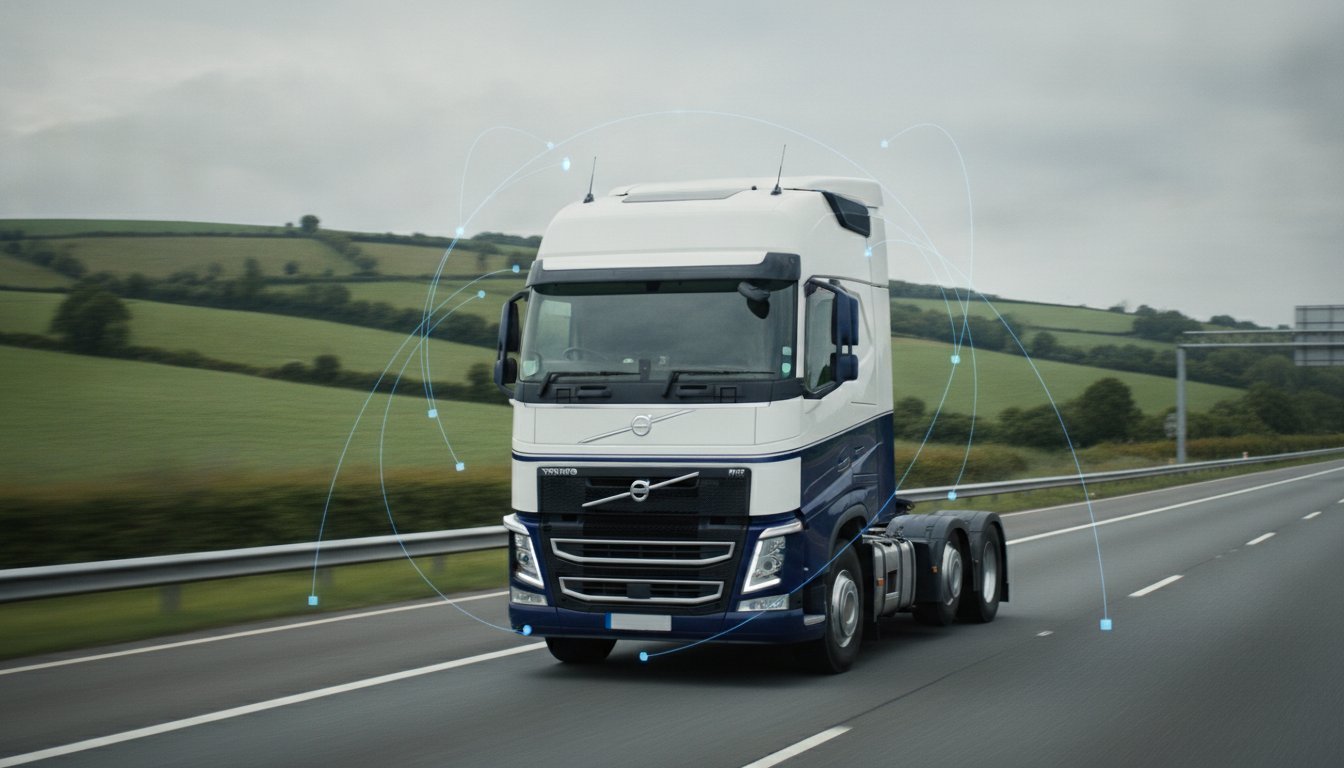
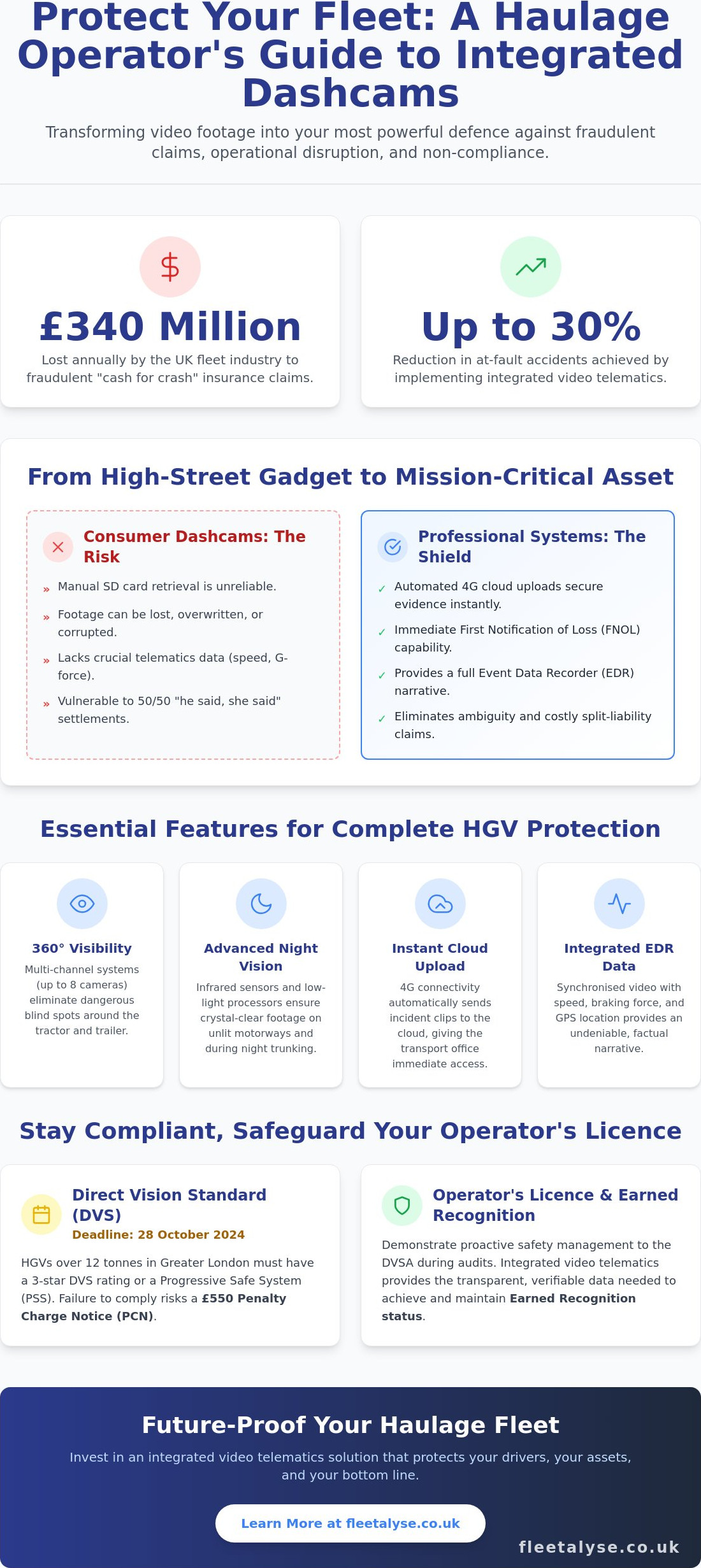
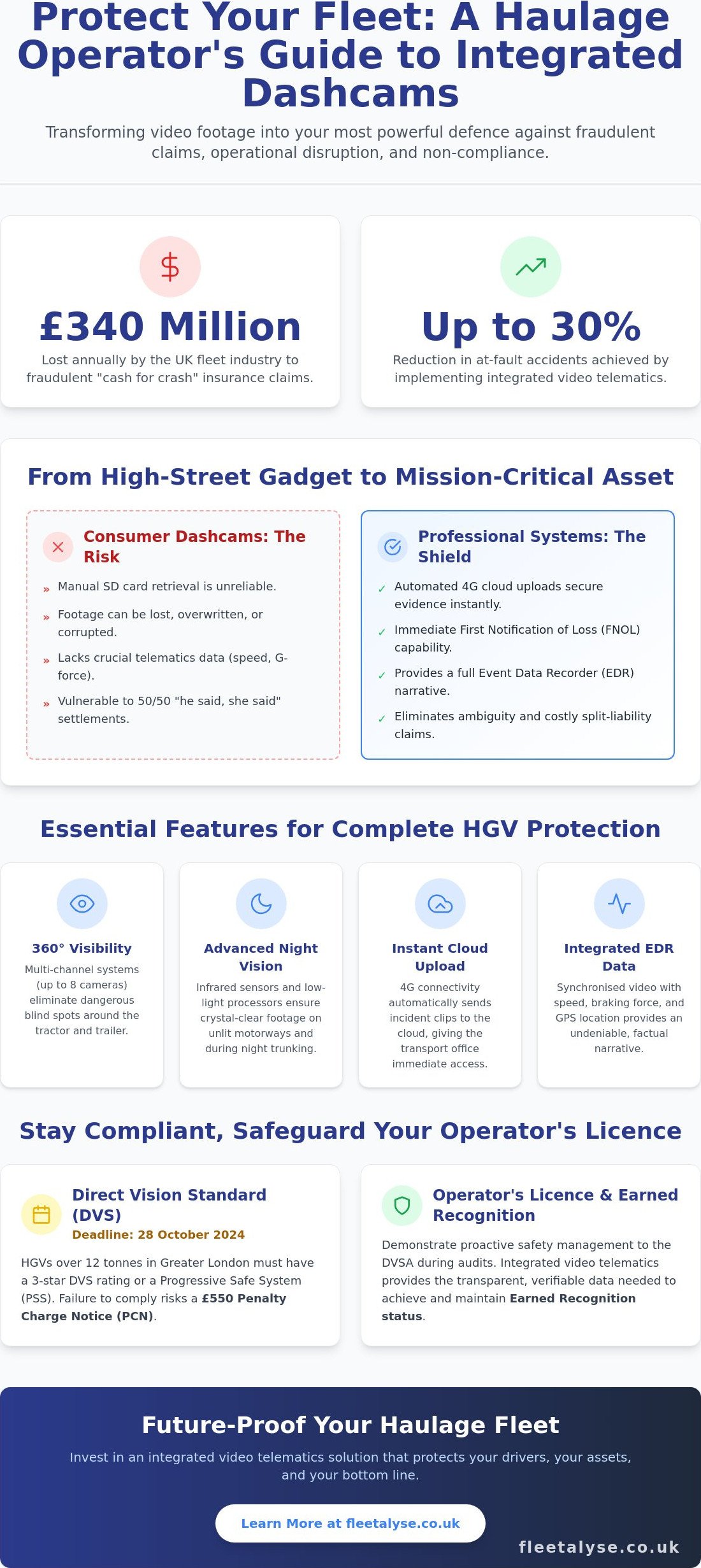
Did you know the UK fleet industry loses an estimated £340 million every year to fraudulent insurance claims? For a regional operator, a single "cash for crash" incident doesn't just damage a vehicle; it sends premiums spiralling and disrupts your entire delivery schedule. Finding the right fleet dashcams for haulage companies is no longer about just recording the road. It's about building a solid wall of evidence that protects your drivers and your bottom line from rising operational costs.
We understand that managing long-haul routes is difficult enough without toggling between multiple disconnected software platforms to check driver behaviour or download footage. You need a system that works as hard as your HGVs do. This guide will show you how to choose integrated dashcam technology that simplifies compliance and can lead to a 30% reduction in at-fault accidents. We'll explore the latest AI-powered features, mandatory Direct Vision Standard (DVS) requirements, and the specific hardware that turns raw video into a tool for total fleet protection.
Key Takeaways
- Identify why enterprise-grade hardware outperforms consumer cameras in defending against sophisticated insurance fraud on UK motorways.
- Explore how multi-channel camera systems provide the 360-degree visibility necessary for urban safety and regulatory compliance.
- Learn how to select fleet dashcams for haulage companies that integrate with your existing GPS tracking and tachograph analysis.
- Discover the best practices for introducing vehicle cameras to your team whilst maintaining strict adherence to GDPR and privacy laws.
- Understand the value of synchronising video evidence with live driver hours to streamline incident investigation and transport office efficiency.
Beyond Basic Recording: Why Haulage Companies Need Specialist Fleet Dashcams
A consumer dashcam bought from a high-street retailer is a gadget. A professional system designed for a 44-tonne HGV is a mission-critical safety asset. For regional operators, the distinction between these two categories is the difference between a dismissed insurance claim and a five-figure payout. High-quality fleet dashcams for haulage companies function as a sophisticated Event Data Recorder (EDR). They don't just capture video; they provide a factual narrative of speed, braking force, and GPS location that protects your business from external threats.
The industry has moved beyond the era of manual SD-card retrieval. Relying on a driver to hand over a physical card after an incident is a major operational risk. Cards get corrupted, lost, or overwritten at the exact moment you need them most. Modern enterprise systems utilise 4G cloud connectivity to upload incident footage instantly. This shift ensures that the transport office has eyes on the scene within seconds of a G-force trigger, allowing for immediate decision-making and factual reporting.
Protecting Your Business from False Insurance Claims
Haulage operators are frequent targets for "cash for crash" scams on UK motorways. Without objective proof, insurers often default to 50/50 settlements to close files quickly. These split-liability decisions are disastrous for your premiums and your claims history. By implementing First Notification of Loss (FNOL) protocols, you can send high-definition footage to your broker before the third party has even filed a report. Video evidence provides an objective account of road positioning and third-party behaviour, effectively eliminating the ambiguity that leads to costly 50/50 liability splits. This proactive approach turns a potential legal battle into a straightforward, evidence-led resolution.
Supporting the UK Operator Licence Standards
Your Operator Licence is your most valuable asset. The DVSA increasingly looks for technology-led safety interventions during fleet audits to ensure you're meeting your statutory obligations. Demonstrating that you use fleet dashcams for haulage companies to monitor and improve road safety shows a level of professional competence that auditors respect. It moves your business from a reactive stance to a proactive one.
For those aiming for or maintaining Earned Recognition status, integrated video data is a powerful tool. It provides a transparent trail of how you manage road safety incidents and driver coaching. Keeping your fleet audit-ready requires more than just paper records; it requires a digital safety ecosystem. Systems that integrate with fleetalyse.co.uk help bridge the gap between raw video and actionable compliance data, ensuring your safety standards are always visible and verifiable.
Essential Features for HGV Safety and 360-Degree Visibility
For Heavy Goods Vehicles, a single front-facing lens is rarely sufficient. Complex urban environments and tight loading bays demand a multi-channel approach to eliminate blind spots entirely. Modern video telematics solutions now support up to eight camera inputs, providing a complete 360-degree view around the tractor and trailer units. This comprehensive coverage is vital for protecting vulnerable road users and defending drivers against claims of side-swipe incidents during lane changes.
Night vision capability is another non-negotiable requirement for long-haul night trunking. High-specification fleet dashcams for haulage companies must use infrared sensors or advanced low-light processors to maintain clarity on unlit motorways. Without this technical precision, footage captured at 2:00 am becomes a grainy liability rather than a useful asset. When you invest in professional-grade hardware, you ensure that every frame is admissible and clear, regardless of the time or weather conditions.
Meeting Direct Vision Standard (DVS) and FORS Requirements
Compliance is a primary driver for hardware upgrades. As of 28 October 2024, HGVs over 12 tonnes operating in Greater London must have a minimum three-star DVS rating or be equipped with a Progressive Safe System (PSS). Failure to comply risks a Penalty Charge Notice (PCN) of up to £550. Specialist dashcams integrate directly with side-scan sensors and left-turn audible alarms to satisfy these mandates. These systems often include in-cab monitors that automatically switch to the relevant side-view camera when a driver indicates, assisting with complex manoeuvres in congested city centres. This level of integration is also essential for achieving FORS Silver or Gold accreditation, which is frequently a prerequisite for major construction and infrastructure contracts.
AI and Edge Computing in Modern Dashcams
The latest generation of cameras uses edge computing to process data locally on the device. This allows for real-time driver coaching through AI-detected triggers such as fatigue, distraction, or mobile phone use. Instead of waiting for a manual review, the system provides an immediate in-cab alert to the driver, preventing an incident before it occurs. AI reduces the "noise" for fleet managers by only flagging critical incidents. By distinguishing between a minor pothole and a genuine harsh-braking event, the software ensures your transport office only spends time reviewing footage that actually requires intervention. This efficiency is what separates specialised fleet dashcams for haulage companies from generic, event-only recorders that lack the intelligence to filter out irrelevant data.
The ROI of Integrated Telematics: Dashcams vs Standalone Systems
Many haulage operators make the mistake of purchasing standalone cameras that don't communicate with their tracking software. This creates "siloed" data. Your transport manager ends up wasting hours matching timestamps from a dashcam portal with GPS coordinates from a separate tracking app. It's an administrative bottleneck that costs money. Professional fleet dashcams for haulage companies should be part of a unified telematics ecosystem. By having a single source of truth, you reduce the time spent on incident investigation and improve the accuracy of your compliance records.
The financial return on investment (ROI) is clear and measurable. Industry data shows that fleets using integrated video telematics can see insurance premium reductions of between 5% and 15%. Beyond insurance, these systems contribute to a typical 30% reduction in at-fault accidents. When you consider the cost of vehicle downtime, repairs, and missed delivery slots, the hardware often pays for itself within three to eight months. Moving away from disconnected gadgets to an integrated platform is a strategic move for any regional operator looking to protect their margins.
Combining Video with Remote Tachograph Downloads
A harsh braking event on a tachograph chart only tells half the story. Without visual context, it's impossible to know if the driver was distracted or if they performed a life-saving emergency stop. Integrating your camera system with remote tachograph download technology allows you to overlay video footage with tacho data. This provides the necessary context to tacho infringements and streamlines the disciplinary process. If a driver is forced to break their hours due to an unforeseen road closure, the video evidence provides an indisputable record that protects your Operator Licence during a DVSA audit.
Fuel Efficiency and Driver Behaviour
Dashcams have a significant psychological effect on driving standards. When drivers know their behaviour is being monitored by high-specification fleet dashcams for haulage companies, they're less likely to engage in aggressive acceleration or excessive idling. This shift in behaviour directly impacts your fuel bill. You can use video data to validate "harsh driving" alerts from your GPS tracking. If the telematics system flags a sharp turn, the video might show it was a necessary manoeuvre to avoid a hazard. This allows you to create fair, holistic driver incentive programmes that reward genuine skill rather than just chasing data points on a spreadsheet.
Best Practices for Implementing Dashcams and Managing Driver Behaviour
Introducing fleet dashcams for haulage companies often meets resistance from drivers who fear constant surveillance. Overcoming this "Big Brother" stigma requires a shift in narrative. You must position the technology as a "silent witness" that exists primarily for driver exoneration. In an industry where HGVs are often blamed by default, a high-definition video is the only tool that can prove your driver was not at fault. Clear communication about when the cameras record and who has access to the footage is essential for maintaining morale and trust within your organisation.
Your transport managers should transition from being monitors to acting as professional coaches. Using video data to "catch someone doing something right" is far more effective than only using it for disciplinary measures. When you highlight a "good save" during a briefing, you reinforce high standards and show the team that the system is there to support their skills. This cultural shift turns a perceived threat into a valuable safety asset that drivers eventually appreciate.
Legal Compliance and Data Privacy
Operating a camera-equipped fleet brings significant data responsibilities. Under the Data (Use and Access) Act 2026, you must have a clear policy for data management and register with the Information Commissioner's Office (ICO), which typically costs £52 annually for small businesses. You must also manage strict retention periods; keeping footage longer than necessary for insurance or safety purposes can lead to legal complications.
Drivers and the public have the right to submit Subject Access Requests (SARs) for footage they appear in. Your transport office needs a defined process to handle these requests promptly. Ensuring your GPS fleet tracking and video storage solutions are fully GDPR-compliant is not just a legal hurdle; it's a fundamental part of your business's risk management strategy. Incorrect dashcam placement can also lead to a £100 fine and three penalty points if the device protrudes more than 40mm into the swept area of the windscreen.
Effective Driver Coaching Techniques
Data is useless without a structured coaching programme. Use real-world footage from your own fleet to conduct "toolbox talks" that address specific regional challenges, such as tight urban junctions or notorious motorway blackspots. This makes the training relevant and practical. Develop a transparent escalation process for repeated safety violations, but always start with a conversation. By using fleet dashcams for haulage companies to validate telematics data, you ensure that every coaching session is based on objective facts rather than assumptions.
If you're ready to protect your drivers and simplify your compliance, you can view our integrated hardware options here to find the right fit for your fleet.
Future-Proofing Your Haulage Fleet with Fleetalyse Solutions
Choosing the right technology partner is a strategic decision that affects your operational longevity. Fleetalyse operates as a pragmatic expert partner rather than just a software vendor. We understand the specific pressures of the UK transport sector, from fluctuating fuel costs to the rigours of regulatory adherence. By selecting fleet dashcams for haulage companies that are built for real-world application, you ensure your business remains resilient as the industry evolves. We prioritise functional utility over flashy features, focusing on the tools that actually protect your assets and your licence.
Transparency is a core pillar of our service. Many global providers hide their true costs behind complex contracts and tiered pricing. We take a different approach. We provide straightforward financial details upfront, allowing you to plan your budget with confidence. Whether you're managing a small regional fleet or a larger national operation, our solutions scale with you. You can start by integrating dashcams with your van tracking and expand to full HGV trailer tracking as your requirements grow, all within a single, efficient platform.
Seamless Integration with Tachograph Analysis
The most significant gain for any transport office is the move toward a unified compliance stack. Fleetalyse specialises in tachograph analysis integration, which bridges the gap between video evidence and live driver hours. This integration is vital for Ipswich-based operators and national fleets alike who need to maintain strict DVSA standards. Instead of checking three different screens to understand why a driver is late or why an incident occurred, you get a clear, real-time overview. This visibility is essential in a fast-paced logistics environment where every minute of downtime impacts your profitability.
Get Started with a Haulage Tech Audit
Before investing in new hardware, it's important to understand where your current system is failing you. A tech audit helps identify gaps in your safety and compliance stack, whether it's disconnected GPS tracking or a lack of side-view visibility. We help you customise a solution that fits your specific asset mix, including:
- Integrated fleet dashcams for haulage companies with 4G cloud uploads.
- Live driver hours monitoring to prevent tacho infringements.
- Robust trailer and asset tracking for improved yard management.
- Remote tachograph downloads that save hours of manual labour.
Efficiency is the key to a successful haulage business. Stop managing multiple disconnected platforms and start using a system designed for the realities of the UK road network. Contact Fleetalyse for a transparent quote on integrated fleet solutions and take the first step toward a more secure, compliant future.
Secure Your Fleet’s Future with Integrated Video Telematics
Protecting a haulage business in the UK requires more than just a recording device on the windscreen. You need a system that acts as a silent witness and a compliance catalyst. By choosing fleet dashcams for haulage companies that integrate directly with your operational data, you eliminate the administrative burden of managing disconnected platforms. You gain the evidence needed to exonerate drivers and the visibility required to meet stringent DVS and FORS standards. This proactive approach transforms video from a simple record into a powerful asset for risk management.
Fleetalyse provides the expertise of UK-based compliance specialists who understand your daily operational struggles. We offer seamless tachograph analysis integration and pragmatic, transparent pricing that removes the hidden complexities common in the telematics sector. Transitioning to a unified safety ecosystem doesn't just reduce insurance premiums; it builds a more resilient, professional fleet culture. Don't leave your reputation to chance on the motorway. Optimise your fleet compliance with Fleetalyse today and take control of your road safety data. Your business is built on reliability, and your technology should be too.
Frequently Asked Questions
Are dashcams legal in UK commercial vehicles?
Yes, dashcams are entirely legal in UK commercial vehicles. You must ensure the device does not obstruct the driver's line of sight or protrude more than 40mm into the windscreen's wiper-swept area. Incorrect placement can result in a £100 fine and three penalty points. Additionally, you must inform drivers they are being recorded and register with the Information Commissioner’s Office (ICO) to remain compliant with UK data protection laws.
Do dashcams reduce insurance premiums for haulage companies?
Yes, installing fleet dashcams for haulage companies can lead to insurance premium reductions of between 5% and 15%. Insurers value the ability to settle claims quickly through First Notification of Loss (FNOL). By providing clear video evidence, you prevent costly 50/50 liability splits and protect your claims history. Some brokers may even make high-specification camera systems a condition of coverage for high-risk routes or specific vehicle types.
How long do fleet dashcams keep footage?
Retention periods vary based on your hardware and storage settings. Most systems loop-record onto an internal card, keeping between 24 and 72 hours of driving footage before overwriting the oldest data. However, integrated cloud-based systems automatically upload incident-triggered clips to a secure server. These event clips are typically stored for 30 days or longer, ensuring your transport office has time to download and archive evidence for insurance or disciplinary purposes.
Can drivers turn off fleet dashcams?
No, professional-grade fleet dashcams are hardwired into the vehicle's ignition system and cannot be easily switched off by the driver. Tamper-proof covers usually protect the SD card and power cables to prevent unauthorised interference. If a unit loses power or the lens is obscured, modern telematics platforms will trigger an immediate alert to the transport manager. This ensures the system remains a reliable safety asset throughout every journey.
What is the difference between a dashcam and vehicle telematics?
A dashcam captures visual evidence of the road or driver, whilst vehicle telematics records data such as GPS location, speed, and engine diagnostics. Standalone cameras provide the "what," but telematics provides the "where" and "how." The most effective solutions for regional operators combine both. Integrating video with telematics allows you to see the exact context behind a harsh braking event or a sudden change in route.
How do dashcams help with DVSA compliance?
Dashcams assist with DVSA compliance by providing an objective audit trail of how you manage road safety. During a fleet audit, being able to show documented incident reviews and subsequent driver coaching proves you are a proactive operator. This transparency is particularly beneficial for those in the Earned Recognition scheme. It demonstrates that your safety standards meet the professional competence requirements necessary to maintain a clean Operator Licence.
What happens if a dashcam fails during an accident?
If a dashcam fails during an accident, you lose your primary source of exoneration evidence. This is why investing in enterprise-grade hardware is critical for hauliers. Professional systems include "health check" features that notify the transport office if a camera stops recording or a fault is detected. Relying on cheap, unmonitored gadgets often leads to the discovery of a failure only after an incident has already occurred.
Do I need a dashcam policy for my drivers?
Yes, a written dashcam policy is essential for legal protection and driver relations. This document must outline why the cameras are installed, how the data is used, and who is authorised to view the footage. It's a requirement under GDPR and the Data (Use and Access) Act 2026. A clear policy helps reduce driver anxiety by confirming the system's role in exoneration rather than just constant surveillance.
Frequently asked questions
Protecting Your Business from False Insurance Claims
Haulage operators are frequent targets for "cash for crash" scams on UK motorways. Without objective proof, insurers often default to 50/50 settlements to close files quickly. These split-liability decisions are disastrous for your premiums and your claims history. By implementing First Notification of Loss (FNOL) protocols, you can send high-definition footage to your broker before the third party has even filed a report. Video evidence provides an objective account of road positioning and third-party behaviour, effectively eliminating the ambiguity that leads to costly 50/50 liability splits. This proactive approach turns a potential legal battle into a straightforward, evidence-led resolution.
Supporting the UK Operator Licence Standards
Your Operator Licence is your most valuable asset. The DVSA increasingly looks for technology-led safety interventions during fleet audits to ensure you're meeting your statutory obligations. Demonstrating that you use fleet dashcams for haulage companies to monitor and improve road safety shows a level of professional competence that auditors respect. It moves your business from a reactive stance to a proactive one. For those aiming for or maintaining Earned Recognition status, integrated video data is a powerful tool. It provides a transparent trail of how you manage road safety incidents and driver coaching. Keeping your fleet audit-ready requires more than just paper records; it requires a digital safety ecosystem. Systems that integrate with fleetalyse.co.uk help bridge the gap between raw video and actionable compliance data, ensuring your safety standards are always visible and verifiable. For Heavy Goods Vehicles, a single front-facing lens is rarely sufficient. Complex urban environments and tight loading bays demand a multi-channel approach to eliminate blind spots entirely. Modern video telematics solutions now support up to eight camera inputs, providing a complete 360-degree view around the tractor and trailer units. This comprehensive coverage is vital for protecting vulnerable road users and defending drivers against claims of side-swipe incidents during lane changes. Night vision capability is another non-negotiable requirement for long-haul night trunking. High-specification fleet dashcams for haulage companies must use infrared sensors or advanced low-light processors to maintain clarity on unlit motorways. Without this technical precision, footage captured at 2:00 am becomes a grainy liability rather than a useful asset. When you invest in professional-grade hardware, you ensure that every frame is admissible and clear, regardless of the time or weather conditions.
Meeting Direct Vision Standard (DVS) and FORS Requirements
Compliance is a primary driver for hardware upgrades. As of 28 October 2024, HGVs over 12 tonnes operating in Greater London must have a minimum three-star DVS rating or be equipped with a Progressive Safe System (PSS). Failure to comply risks a Penalty Charge Notice (PCN) of up to £550. Specialist dashcams integrate directly with side-scan sensors and left-turn audible alarms to satisfy these mandates. These systems often include in-cab monitors that automatically switch to the relevant side-view camera when a driver indicates, assisting with complex manoeuvres in congested city centres. This level of integration is also essential for achieving FORS Silver or Gold accreditation, which is frequently a prerequisite for major construction and infrastructure contracts.
AI and Edge Computing in Modern Dashcams
The latest generation of cameras uses edge computing to process data locally on the device. This allows for real-time driver coaching through AI-detected triggers such as fatigue, distraction, or mobile phone use. Instead of waiting for a manual review, the system provides an immediate in-cab alert to the driver, preventing an incident before it occurs. AI reduces the "noise" for fleet managers by only flagging critical incidents. By distinguishing between a minor pothole and a genuine harsh-braking event, the software ensures your transport office only spends time reviewing footage that actually requires intervention. This efficiency is what separates specialised fleet dashcams for haulage companies from generic, event-only recorders that lack the intelligence to filter out irrelevant data. Many haulage operators make the mistake of purchasing standalone cameras that don't communicate with their tracking software. This creates "siloed" data. Your transport manager ends up wasting hours matching timestamps from a dashcam portal with GPS coordinates from a separate tracking app. It's an administrative bottleneck that costs money. Professional fleet dashcams for haulage companies should be part of a unified telematics ecosystem. By having a single source of truth, you reduce the time spent on incident investigation and improve the accuracy of your compliance records. The financial return on investment (ROI) is clear and measurable. Industry data shows that fleets using integrated video telematics can see insurance premium reductions of between 5% and 15%. Beyond insurance, these systems contribute to a typical 30% reduction in at-fault accidents. When you consider the cost of vehicle downtime, repairs, and missed delivery slots, the hardware often pays for itself within three to eight months. Moving away from disconnected gadgets to an integrated platform is a strategic move for any regional operator looking to protect their margins.
Combining Video with Remote Tachograph Downloads
A harsh braking event on a tachograph chart only tells half the story. Without visual context, it's impossible to know if the driver was distracted or if they performed a life-saving emergency stop. Integrating your camera system with remote tachograph download technology allows you to overlay video footage with tacho data. This provides the necessary context to tacho infringements and streamlines the disciplinary process. If a driver is forced to break their hours due to an unforeseen road closure, the video evidence provides an indisputable record that protects your Operator Licence during a DVSA audit.
Fuel Efficiency and Driver Behaviour
Dashcams have a significant psychological effect on driving standards. When drivers know their behaviour is being monitored by high-specification fleet dashcams for haulage companies, they're less likely to engage in aggressive acceleration or excessive idling. This shift in behaviour directly impacts your fuel bill. You can use video data to validate "harsh driving" alerts from your GPS tracking. If the telematics system flags a sharp turn, the video might show it was a necessary manoeuvre to avoid a hazard. This allows you to create fair, holistic driver incentive programmes that reward genuine skill rather than just chasing data points on a spreadsheet. Introducing fleet dashcams for haulage companies often meets resistance from drivers who fear constant surveillance. Overcoming this "Big Brother" stigma requires a shift in narrative. You must position the technology as a "silent witness" that exists primarily for driver exoneration. In an industry where HGVs are often blamed by default, a high-definition video is the only tool that can prove your driver was not at fault. Clear communication about when the cameras record and who has access to the footage is essential for maintaining morale and trust within your organisation. Your transport managers should transition from being monitors to acting as professional coaches. Using video data to "catch someone doing something right" is far more effective than only using it for disciplinary measures. When you highlight a "good save" during a briefing, you reinforce high standards and show the team that the system is there to support their skills. This cultural shift turns a perceived threat into a valuable safety asset that drivers eventually appreciate.
Legal Compliance and Data Privacy
Operating a camera-equipped fleet brings significant data responsibilities. Under the Data (Use and Access) Act 2026, you must have a clear policy for data management and register with the Information Commissioner's Office (ICO), which typically costs £52 annually for small businesses. You must also manage strict retention periods; keeping footage longer than necessary for insurance or safety purposes can lead to legal complications. Drivers and the public have the right to submit Subject Access Requests (SARs) for footage they appear in. Your transport office needs a defined process to handle these requests promptly. Ensuring your GPS fleet tracking and video storage solutions are fully GDPR-compliant is not just a legal hurdle; it's a fundamental part of your business's risk management strategy. Incorrect dashcam placement can also lead to a £100 fine and three penalty points if the device protrudes more than 40mm into the swept area of the windscreen.
Effective Driver Coaching Techniques
Data is useless without a structured coaching programme. Use real-world footage from your own fleet to conduct "toolbox talks" that address specific regional challenges, such as tight urban junctions or notorious motorway blackspots. This makes the training relevant and practical. Develop a transparent escalation process for repeated safety violations, but always start with a conversation. By using fleet dashcams for haulage companies to validate telematics data, you ensure that every coaching session is based on objective facts rather than assumptions. If you're ready to protect your drivers and simplify your compliance, you can view our integrated hardware options here to find the right fit for your fleet. Choosing the right technology partner is a strategic decision that affects your operational longevity. Fleetalyse operates as a pragmatic expert partner rather than just a software vendor. We understand the specific pressures of the UK transport sector, from fluctuating fuel costs to the rigours of regulatory adherence. By selecting fleet dashcams for haulage companies that are built for real-world application, you ensure your business remains resilient as the industry evolves. We prioritise functional utility over flashy features, focusing on the tools that actually protect your assets and your licence. Transparency is a core pillar of our service. Many global providers hide their true costs behind complex contracts and tiered pricing. We take a different approach. We provide straightforward financial details upfront, allowing you to plan your budget with confidence. Whether you're managing a small regional fleet or a larger national operation, our solutions scale with you. You can start by integrating dashcams with your van tracking and expand to full HGV trailer tracking as your requirements grow, all within a single, efficient platform.
Seamless Integration with Tachograph Analysis
The most significant gain for any transport office is the move toward a unified compliance stack. Fleetalyse specialises in tachograph analysis integration, which bridges the gap between video evidence and live driver hours. This integration is vital for Ipswich-based operators and national fleets alike who need to maintain strict DVSA standards. Instead of checking three different screens to understand why a driver is late or why an incident occurred, you get a clear, real-time overview. This visibility is essential in a fast-paced logistics environment where every minute of downtime impacts your profitability.
Get Started with a Haulage Tech Audit
Before investing in new hardware, it's important to understand where your current system is failing you. A tech audit helps identify gaps in your safety and compliance stack, whether it's disconnected GPS tracking or a lack of side-view visibility. We help you customise a solution that fits your specific asset mix, including: Efficiency is the key to a successful haulage business. Stop managing multiple disconnected platforms and start using a system designed for the realities of the UK road network. Contact Fleetalyse for a transparent quote on integrated fleet solutions and take the first step toward a more secure, compliant future. Protecting a haulage business in the UK requires more than just a recording device on the windscreen. You need a system that acts as a silent witness and a compliance catalyst. By choosing fleet dashcams for haulage companies that integrate directly with your operational data, you eliminate the administrative burden of managing disconnected platforms. You gain the evidence needed to exonerate drivers and the visibility required to meet stringent DVS and FORS standards. This proactive approach transforms video from a simple record into a powerful asset for risk management. Fleetalyse provides the expertise of UK-based compliance specialists who understand your daily operational struggles. We offer seamless tachograph analysis integration and pragmatic, transparent pricing that removes the hidden complexities common in the telematics sector. Transitioning to a unified safety ecosystem doesn't just reduce insurance premiums; it builds a more resilient, professional fleet culture. Don't leave your reputation to chance on the motorway. Optimise your fleet compliance with Fleetalyse today and take control of your road safety data. Your business is built on reliability, and your technology should be too.
Are dashcams legal in UK commercial vehicles?
Yes, dashcams are entirely legal in UK commercial vehicles. You must ensure the device does not obstruct the driver's line of sight or protrude more than 40mm into the windscreen's wiper-swept area. Incorrect placement can result in a £100 fine and three penalty points. Additionally, you must inform drivers they are being recorded and register with the Information Commissioner’s Office (ICO) to remain compliant with UK data protection laws.
Do dashcams reduce insurance premiums for haulage companies?
Yes, installing fleet dashcams for haulage companies can lead to insurance premium reductions of between 5% and 15%. Insurers value the ability to settle claims quickly through First Notification of Loss (FNOL). By providing clear video evidence, you prevent costly 50/50 liability splits and protect your claims history. Some brokers may even make high-specification camera systems a condition of coverage for high-risk routes or specific vehicle types.
How long do fleet dashcams keep footage?
Retention periods vary based on your hardware and storage settings. Most systems loop-record onto an internal card, keeping between 24 and 72 hours of driving footage before overwriting the oldest data. However, integrated cloud-based systems automatically upload incident-triggered clips to a secure server. These event clips are typically stored for 30 days or longer, ensuring your transport office has time to download and archive evidence for insurance or disciplinary purposes.
Can drivers turn off fleet dashcams?
No, professional-grade fleet dashcams are hardwired into the vehicle's ignition system and cannot be easily switched off by the driver. Tamper-proof covers usually protect the SD card and power cables to prevent unauthorised interference. If a unit loses power or the lens is obscured, modern telematics platforms will trigger an immediate alert to the transport manager. This ensures the system remains a reliable safety asset throughout every journey.
What is the difference between a dashcam and vehicle telematics?
A dashcam captures visual evidence of the road or driver, whilst vehicle telematics records data such as GPS location, speed, and engine diagnostics. Standalone cameras provide the "what," but telematics provides the "where" and "how." The most effective solutions for regional operators combine both. Integrating video with telematics allows you to see the exact context behind a harsh braking event or a sudden change in route.
How do dashcams help with DVSA compliance?
Dashcams assist with DVSA compliance by providing an objective audit trail of how you manage road safety. During a fleet audit, being able to show documented incident reviews and subsequent driver coaching proves you are a proactive operator. This transparency is particularly beneficial for those in the Earned Recognition scheme. It demonstrates that your safety standards meet the professional competence requirements necessary to maintain a clean Operator Licence.
What happens if a dashcam fails during an accident?
If a dashcam fails during an accident, you lose your primary source of exoneration evidence. This is why investing in enterprise-grade hardware is critical for hauliers. Professional systems include "health check" features that notify the transport office if a camera stops recording or a fault is detected. Relying on cheap, unmonitored gadgets often leads to the discovery of a failure only after an incident has already occurred.
Do I need a dashcam policy for my drivers?
Yes, a written dashcam policy is essential for legal protection and driver relations. This document must outline why the cameras are installed, how the data is used, and who is authorised to view the footage. It's a requirement under GDPR and the Data (Use and Access) Act 2026. A clear policy helps reduce driver anxiety by confirming the system's role in exoneration rather than just constant surveillance.