

How much time did your office staff waste this week chasing drivers for manual tachograph downloads? For many regional operators, the 28-day driver card and 90-day vehicle unit deadlines feel like a constant race against the clock. You likely feel that compliance is a heavy administrative burden that pulls your team away from actual logistics. We understand that manual data collection is an inefficient use of your resources and a constant risk to your O-licence.
The right tachograph software for transport fleets changes this dynamic entirely. Discover how modern software automates remote downloads and ensures your fleet remains DVSA-compliant with zero administrative friction. As the DVSA moves towards remote enforcement and the Smart Tachograph 2 mandate takes effect for LCVs in July 2026, automation is no longer optional; it's a practical necessity for fleet survival.
This article examines the shift towards full automation and real-time driver hour monitoring. We will explore how these tools provide total visibility of remaining hours, giving you total peace of mind during a DVSA roadside check or a full office audit.
Key Takeaways
- Eliminate manual data collection by switching to remote download technology that handles legal deadlines automatically.
- Discover how the best tachograph software for transport fleets integrates live driver hours with GPS tracking for a unified operational view.
- Reduce administrative friction using automated infringement reporting and digital driver debriefing modules.
- Maintain a constant state of audit-readiness to protect your operator licence during DVSA roadside checks and office inspections.
- Partner with a specialist UK provider to navigate regional regulations and infrastructure with practical, transparent expertise.
The Evolution of Tachograph Software for UK Transport Fleets
Compliance in the UK transport sector was once a paper-heavy, reactive process. You likely remember the days of collecting wax discs, posting them to a bureau, and waiting weeks for an infringement report. By the time you saw the data, the mistakes were long in the past. Modern tachograph software for transport fleets has replaced this outdated method with a proactive, live ecosystem. It's no longer just a digital filing cabinet; it's a dynamic tool that protects your Operator Licence in real-time.
The shift towards digital monitoring allows you to move from "managing by exception" to "managing with total visibility." You don't have to wait for a month-end summary to discover a driver has exceeded their daily limit. The software bridges the gap between the cab and the back office, providing a constant stream of accurate data. This connectivity is essential as the DVSA moves towards a data-driven, remote enforcement model. If your records aren't digital and accessible, you're at a disadvantage during any roadside inspection.
From Paper Discs to Digital Data Streams
The UK transport industry has a long history of recording driver activity to ensure road safety. The Evolution of Tachograph technology moved from analogue charts to the digital files (.ddd) we use today. This transition eliminated the errors associated with manual chart reading but introduced new complexities in data storage. Modern tachograph software acts as the central hub for HGV and LGV data management, ensuring every second of driving time is accounted for and securely stored. With the Smart Tachograph 2 mandate arriving in July 2026 for LCVs over 2.5 tonnes on international work, your software must be capable of handling more sophisticated data than ever before.
The True Cost of Manual Tachograph Management
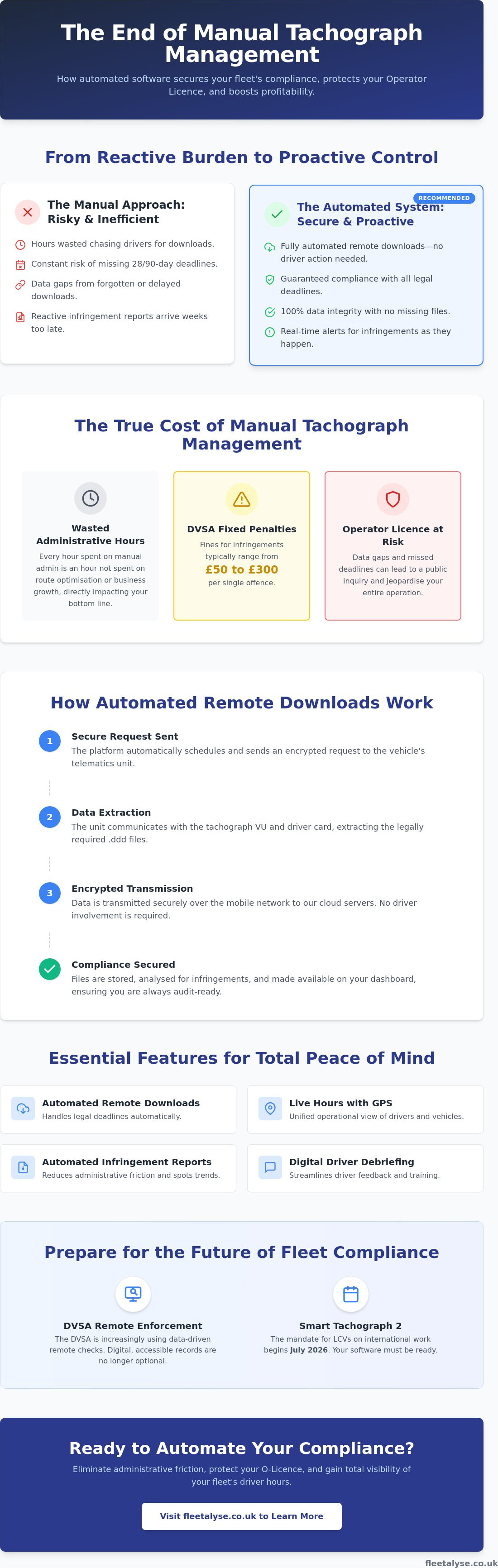
Managing card downloads manually is a hidden drain on your profitability. Think about the hours your transport manager spends chasing drivers or physically plugging cards into a reader. If you miss the 28-day driver card or 90-day vehicle unit deadlines, you're at risk. The DVSA issues graduated fixed penalties for infringements, often ranging from £50 to £300 per offence.
Manual systems are prone to data gaps. A driver forgets to download, or a vehicle is out on a long-distance run, and suddenly your compliance record has a hole in it. For regional hauliers, these administrative hours represent a significant overhead. Every hour spent on manual admin is an hour not spent on route optimisation or business growth. Automated tachograph software for transport fleets removes this friction, allowing your team to focus on moving freight rather than shuffling files.
How Remote Tachograph Software Streamlines Fleet Compliance
Remote is more than just a convenient buzzword. In the context of tachograph software for transport fleets, it represents a fundamental shift in how data moves from the vehicle to your desk. Traditionally, you needed the vehicle and the driver card present at the depot to perform a download. Remote technology removes this physical constraint by using a telematics unit to bridge the gap between the tachograph head and the cloud.
This hardware-software synergy ensures that your fleet remains compliant without disrupting operational flow. As the industry prepares for the 2026 standards, which move towards 24-hour automated data retrieval for international LCVs, the ability to collect data silently in the background becomes a major competitive advantage. You no longer have to plan routes around download schedules or worry about missing the 28-day deadline because a driver is on a long-distance run. By automating this process, you eliminate the risk of human error and ensure that your records are always ready for potential DVSA Audits.
The Mechanics of Remote Data Downloading
The process starts with a secure request from the software to the vehicle's tracking unit. This unit communicates with the tachograph vehicle unit (VU) and the inserted driver card. The data is then encrypted and transmitted via the cellular network to a secure cloud server. This transmission maintains the integrity of the original .ddd files, ensuring they are legally valid for analysis. It's a hands-off process that requires no input from the driver, allowing them to focus entirely on the road. This level of automation is why many operators are now choosing to upgrade their compliance systems to avoid manual friction.
Real-Time Visibility of Driver Hours
One of the most significant benefits of modern tachograph software for transport fleets is the "Live Driver Hours" feature. Instead of looking at yesterday's data, transport managers can see exactly how much driving time, rest, and break periods each driver has remaining right now. This live visibility allows dispatchers to make informed decisions about load assignments without risking a breach of the Working Time Directive or drivers' hours regulations.
- Prevent Infringements: Receive alerts before a driver reaches their limit.
- Optimise Dispatch: Assign jobs based on actual remaining hours rather than guesswork.
- Reduce Stress: Drivers feel more supported when the office has an accurate view of their legal limits.
Having this data at your fingertips transforms compliance from a back-office chore into a live operational asset. It provides a level of certainty that manual systems simply cannot match.
Essential Features of a Modern Tachograph Analysis Platform
A modern analysis platform must do more than simply house .ddd files. It should act as a proactive filter, identifying risks before they become legal liabilities. High-quality tachograph software for transport fleets provides a user-friendly dashboard that highlights urgent compliance issues, such as missing downloads or imminent driving limit breaches. Secure cloud storage is a baseline requirement. It ensures you meet the legal mandate to store data for at least 12 months in a format that is readily available for inspection.
The best tools prioritise operational clarity. You need to see at a glance which vehicles are due for a 90-day download and which drivers are approaching their 28-day card limit. This prevents the "compliance panic" that often occurs when deadlines are tracked on spreadsheets or wall calendars. By moving to a dedicated platform, you ensure that every byte of data is accounted for and analysed against current regulations.
Seamless Integration with Fleet Tracking
Siloed data is a major enemy of fleet efficiency. When your tachograph data exists in a vacuum, you lose the operational context provided by location. By combining tacho data with GPS location, you can see exactly where an infringement occurred or verify why a driver was delayed. This unified view simplifies asset management and improves the accuracy of your records. You can explore integrated fleet tracking solutions that bring these data streams together for both HGV and van fleets. This integration is particularly important under the EU Regulation on Tachographs, which sets strict standards for how data is recorded and managed across borders.
Automated Reporting and Driver Debriefing Tools
Manual analysis is slow and prone to oversight. Modern platforms generate "Audit-Ready" reports at the touch of a button, covering everything from missing mileage to specific driver infringements. These reports are essential for maintaining a clean compliance record. The driver debriefing process is often the most difficult part of a transport manager's job. Using visual tools and clear infringement data makes these conversations objective rather than confrontational.
- Visual Timelines: Show drivers exactly where their rest periods were insufficient or where breaks were missed.
- Behaviour Tracking: Monitor improvements in driver compliance over weeks or months to identify training needs.
- Digital Sign-offs: Maintain a digital paper trail of every corrective conversation to satisfy DVSA requirements.
Effective tachograph software for transport fleets turns raw data into actionable insights. It allows you to track behaviour trends and implement training where it is needed most. This precision saves time and builds a culture of compliance within your team. Instead of guessing which drivers need support, you have the data to back up every operational decision.
Preparing for DVSA Audits with Advanced Software Solutions
Your Operator Licence is the lifeblood of your business. If you lose it, your fleet stops moving. Advanced tachograph software for transport fleets acts as your primary digital defence during a DVSA inspection or a remote desk-based audit. The DVSA is increasingly moving towards data-led enforcement, using digital records to identify operators who fail to manage driver fatigue. In the 2024-2025 period, the DVSA conducted 31,824 risk-based targeted checks, exceeding their own targets. This increase proves that the agency is looking closer than ever at fleet data.
Software allows you to demonstrate proactive management. You aren't just storing data; you're using it to improve safety. When an auditor sees a clean, organised dashboard with 100% download completion and documented driver debriefs, it builds immediate trust. It shows you have a system in place to catch errors before they escalate into serious safety breaches. This proactive stance is the difference between a routine check and a costly public inquiry.
Maintaining an Audit-Ready State
Compliance shouldn't be a last-minute scramble before an inspection. It's a daily habit. You need to establish a routine for reviewing weekly infringement reports and ensuring all 90-day vehicle and 28-day driver downloads are accounted for. If a spot-check happens tomorrow, you should be able to produce the following records instantly:
- Missing Mileage Reports: Prove that no vehicle moved without a card inserted.
- Infringement Summaries: Show a clear list of all breaches and the corrective actions taken.
- Download History: Demonstrate that every legal deadline was met without exception.
- Driver Debrief Logs: Provide a digital paper trail of every training conversation held with your team.
To prepare for a spot-check using your software, start by filtering for "Red" alerts on your main dashboard. Address any missing downloads immediately. Next, generate an infringement report for the last 28 days and verify that every entry has a signed digital debrief attached. Finally, run a vehicle movement report to cross-reference GPS data with tachograph records. This ensures no "ghost driving" has occurred.
Reducing Human Error in Compliance
Human error is the single biggest risk to your compliance record. Automation removes the danger of a transport manager forgetting a download or a driver losing track of their hours. By standardising the debrief process across multiple depots, you ensure that every driver is held to the same high standard. This transparency has a psychological benefit. Drivers perform better when they know their hours are monitored accurately, and managers feel more confident knowing the data is beyond reproach.
Don't wait for a roadside stop to find the gaps in your data. You can secure your fleet's compliance today and ensure you are always audit-ready.
Choosing Fleetalyse for Your Fleet’s Compliance Journey
Selecting the right partner for your compliance needs is a critical business decision. Many providers offer generic tools, but regional operators require a specialist who understands the specific pressures of the UK transport industry. Fleetalyse provides a pragmatic, expert partnership that goes beyond simple data collection. We don't present ourselves as a distant software provider; we are a localised specialist focused on your operational reality. Our tachograph software for transport fleets is designed to be a reliable ally, prioritising functional utility over flashy, unnecessary features.
We believe that compliance should be transparent and frictionless. By choosing a partner that values honesty and operational clarity, you ensure that your fleet management is grounded in real-world application. Our approach is built on quiet confidence and reliability, giving you the tools to manage your assets without the stress of hidden complexities. We speak directly to your practical needs, ensuring your fleet remains a productive asset rather than an administrative burden.
Why a Dedicated UK Partner Matters
Navigating UK-specific regulations requires local expertise. The DVSA's shift towards data-driven enforcement means you need a partner who understands the nuances of domestic road transport law. We focus exclusively on the domestic market and its commercial fleets, which allows us to offer a deeper level of industry insight than global competitors. We don't hide behind complex jargon or vague service claims. Instead, we provide straightforward communication regarding costs and regulatory requirements. Supporting the UK transport industry means providing technology that actually works in the rigours of the British logistics landscape. We understand the regional infrastructure and the specific challenges faced by hauliers operating across the country.
Transparent Implementation and Ongoing Support
Hidden fees and complex contracts are common pain points in the telematics industry. Fleetalyse takes a different approach. We are committed to transparency, providing clear contractual terms and upfront financial details. This commitment is a tangible manifestation of our fairness. When you decide to implement our remote tachograph download platform, we organise the setup process to minimise fleet downtime. We handle the hardware installation and provide comprehensive software training to ensure your team is confident from day one.
- No Hidden Costs: We provide clear rates and terms from the start of our partnership.
- Efficient Setup: Our team works around your schedule to get your vehicles equipped.
- Expert Training: We ensure your transport managers know exactly how to use our live driver hours and reporting tools.
- Ongoing Reliability: Our support is grounded in industry expertise, not a generic call centre script.
Getting started is a logical, structured progression. We move quickly from identifying your fleet's specific needs to offering a detailed solution that integrates seamlessly with your existing operations. This ensures a steady stream of information that leads to a clear, frictionless decision. Request a demo of our platform today and see how we can turn your tachograph data into a live operational asset.
Future-Proof Your Fleet Compliance
Compliance is no longer an administrative burden to be managed at the end of the month; it's a live operational asset. By automating remote downloads and integrating live driver hours, you protect your business from the risks of manual error and DVSA penalties. This proactive approach ensures your records are always audit-ready, allowing your team to focus on logistics rather than paperwork.
Choosing the right tachograph software for transport fleets is about finding a partner that understands the UK's regional infrastructure and regulatory landscape. Fleetalyse offers a transparent, reliable solution built for the rigours of real-world application. We provide UK-based expert support and seamless integration with live driver hours tracking, all backed by transparent pricing and zero hidden complexities.
Take the first step toward a more efficient, frictionless operation today. Automate your fleet compliance with Fleetalyse remote tachograph downloads and secure the future of your Operator Licence.
Frequently Asked Questions
How often should tachograph data be downloaded in the UK?
You must download data from driver cards at least every 28 days and from the vehicle unit at least every 90 days. These are the legal maximum intervals. Most operators prefer more frequent downloads to ensure data safety and better visibility. Remote tachograph software for transport fleets automates this process, ensuring you never miss a deadline or risk a DVSA penalty.
Can tachograph software help my fleet achieve Earned Recognition?
Yes, the software provides the validated data and reporting required by the DVSA for the Earned Recognition scheme. It allows you to share performance indicators automatically, proving your fleet consistently meets compliance standards. This level of transparency demonstrates proactive management. It can significantly reduce the frequency of roadside stops for your vehicles.
Do I need special hardware for remote tachograph downloads?
You need a telematics unit connected to the tachograph head to enable remote data retrieval. This hardware acts as a bridge between the vehicle and the cloud, allowing for silent, background downloads. Once installed, the system requires no physical interaction from the driver. It eliminates the need for manual card readers or office-based download stations.
Is remote tachograph software compatible with all HGV models?
Most modern HGVs equipped with digital tachographs are compatible with remote download technology. Compatibility generally depends on the version of the tachograph head installed in the vehicle. You should verify that your specific vehicle units support the remote download protocol. Most digital units manufactured after 2010 support this functionality with the correct telematics hardware.
How does tachograph software handle driver rest period infringements?
The software automatically flags any breaches of rest or break requirements as soon as the data is processed. It generates a detailed infringement report that includes the specific time, date, and nature of the offence. This allows transport managers to conduct objective debriefs. You can use these reports to implement corrective training and maintain a digital audit trail.
What happens if a driver loses their digital tachograph card?
The driver must apply for a replacement within seven days and cannot drive for more than 15 calendar days without a card. During this time, they must produce daily printouts from the vehicle unit and sign them manually. Your tachograph software for transport fleets helps you track these manual entries. This ensures you maintain a complete and continuous record of the driver's activity.
How long must I legally store digital tachograph data?
You are legally required to store tachograph data for a minimum of 12 months. This data must be kept in its raw, original format and be readily available for inspection by the DVSA. Secure cloud-based platforms ensure these records are backed up and protected against local data loss. This provides peace of mind during a full office audit or a remote check.
Can I integrate tachograph software with my existing GPS trackers?
Integration is often possible depending on the software's API capabilities and the hardware already in place. Combining these streams provides a unified view of location and compliance data. It's a practical way to streamline your fleet management without switching between multiple disconnected systems. This integration provides better context for infringements by showing exactly where they occurred.
Frequently asked questions
From Paper Discs to Digital Data Streams
The UK transport industry has a long history of recording driver activity to ensure road safety. The Evolution of Tachograph technology moved from analogue charts to the digital files (.ddd) we use today. This transition eliminated the errors associated with manual chart reading but introduced new complexities in data storage. Modern tachograph software acts as the central hub for HGV and LGV data management, ensuring every second of driving time is accounted for and securely stored. With the Smart Tachograph 2 mandate arriving in July 2026 for LCVs over 2.5 tonnes on international work, your software must be capable of handling more sophisticated data than ever before.
The True Cost of Manual Tachograph Management
Managing card downloads manually is a hidden drain on your profitability. Think about the hours your transport manager spends chasing drivers or physically plugging cards into a reader. If you miss the 28-day driver card or 90-day vehicle unit deadlines, you're at risk. The DVSA issues graduated fixed penalties for infringements, often ranging from £50 to £300 per offence. Manual systems are prone to data gaps. A driver forgets to download, or a vehicle is out on a long-distance run, and suddenly your compliance record has a hole in it. For regional hauliers, these administrative hours represent a significant overhead. Every hour spent on manual admin is an hour not spent on route optimisation or business growth. Automated tachograph software for transport fleets removes this friction, allowing your team to focus on moving freight rather than shuffling files. Remote is more than just a convenient buzzword. In the context of tachograph software for transport fleets, it represents a fundamental shift in how data moves from the vehicle to your desk. Traditionally, you needed the vehicle and the driver card present at the depot to perform a download. Remote technology removes this physical constraint by using a telematics unit to bridge the gap between the tachograph head and the cloud. This hardware-software synergy ensures that your fleet remains compliant without disrupting operational flow. As the industry prepares for the 2026 standards, which move towards 24-hour automated data retrieval for international LCVs, the ability to collect data silently in the background becomes a major competitive advantage. You no longer have to plan routes around download schedules or worry about missing the 28-day deadline because a driver is on a long-distance run. By automating this process, you eliminate the risk of human error and ensure that your records are always ready for potential DVSA Audits.
The Mechanics of Remote Data Downloading
The process starts with a secure request from the software to the vehicle's tracking unit. This unit communicates with the tachograph vehicle unit (VU) and the inserted driver card. The data is then encrypted and transmitted via the cellular network to a secure cloud server. This transmission maintains the integrity of the original .ddd files, ensuring they are legally valid for analysis. It's a hands-off process that requires no input from the driver, allowing them to focus entirely on the road. This level of automation is why many operators are now choosing to upgrade their compliance systems to avoid manual friction.
Real-Time Visibility of Driver Hours
One of the most significant benefits of modern tachograph software for transport fleets is the "Live Driver Hours" feature. Instead of looking at yesterday's data, transport managers can see exactly how much driving time, rest, and break periods each driver has remaining right now. This live visibility allows dispatchers to make informed decisions about load assignments without risking a breach of the Working Time Directive or drivers' hours regulations. Having this data at your fingertips transforms compliance from a back-office chore into a live operational asset. It provides a level of certainty that manual systems simply cannot match. A modern analysis platform must do more than simply house .ddd files. It should act as a proactive filter, identifying risks before they become legal liabilities. High-quality tachograph software for transport fleets provides a user-friendly dashboard that highlights urgent compliance issues, such as missing downloads or imminent driving limit breaches. Secure cloud storage is a baseline requirement. It ensures you meet the legal mandate to store data for at least 12 months in a format that is readily available for inspection. The best tools prioritise operational clarity. You need to see at a glance which vehicles are due for a 90-day download and which drivers are approaching their 28-day card limit. This prevents the "compliance panic" that often occurs when deadlines are tracked on spreadsheets or wall calendars. By moving to a dedicated platform, you ensure that every byte of data is accounted for and analysed against current regulations.
Seamless Integration with Fleet Tracking
Siloed data is a major enemy of fleet efficiency. When your tachograph data exists in a vacuum, you lose the operational context provided by location. By combining tacho data with GPS location, you can see exactly where an infringement occurred or verify why a driver was delayed. This unified view simplifies asset management and improves the accuracy of your records. You can explore integrated fleet tracking solutions that bring these data streams together for both HGV and van fleets. This integration is particularly important under the EU Regulation on Tachographs, which sets strict standards for how data is recorded and managed across borders.
Automated Reporting and Driver Debriefing Tools
Manual analysis is slow and prone to oversight. Modern platforms generate "Audit-Ready" reports at the touch of a button, covering everything from missing mileage to specific driver infringements. These reports are essential for maintaining a clean compliance record. The driver debriefing process is often the most difficult part of a transport manager's job. Using visual tools and clear infringement data makes these conversations objective rather than confrontational. Effective tachograph software for transport fleets turns raw data into actionable insights. It allows you to track behaviour trends and implement training where it is needed most. This precision saves time and builds a culture of compliance within your team. Instead of guessing which drivers need support, you have the data to back up every operational decision. Your Operator Licence is the lifeblood of your business. If you lose it, your fleet stops moving. Advanced tachograph software for transport fleets acts as your primary digital defence during a DVSA inspection or a remote desk-based audit. The DVSA is increasingly moving towards data-led enforcement, using digital records to identify operators who fail to manage driver fatigue. In the 2024-2025 period, the DVSA conducted 31,824 risk-based targeted checks, exceeding their own targets. This increase proves that the agency is looking closer than ever at fleet data. Software allows you to demonstrate proactive management. You aren't just storing data; you're using it to improve safety. When an auditor sees a clean, organised dashboard with 100% download completion and documented driver debriefs, it builds immediate trust. It shows you have a system in place to catch errors before they escalate into serious safety breaches. This proactive stance is the difference between a routine check and a costly public inquiry.
Maintaining an Audit-Ready State
Compliance shouldn't be a last-minute scramble before an inspection. It's a daily habit. You need to establish a routine for reviewing weekly infringement reports and ensuring all 90-day vehicle and 28-day driver downloads are accounted for. If a spot-check happens tomorrow, you should be able to produce the following records instantly: To prepare for a spot-check using your software, start by filtering for "Red" alerts on your main dashboard. Address any missing downloads immediately. Next, generate an infringement report for the last 28 days and verify that every entry has a signed digital debrief attached. Finally, run a vehicle movement report to cross-reference GPS data with tachograph records. This ensures no "ghost driving" has occurred.
Reducing Human Error in Compliance
Human error is the single biggest risk to your compliance record. Automation removes the danger of a transport manager forgetting a download or a driver losing track of their hours. By standardising the debrief process across multiple depots, you ensure that every driver is held to the same high standard. This transparency has a psychological benefit. Drivers perform better when they know their hours are monitored accurately, and managers feel more confident knowing the data is beyond reproach. Don't wait for a roadside stop to find the gaps in your data. You can secure your fleet's compliance today and ensure you are always audit-ready. Selecting the right partner for your compliance needs is a critical business decision. Many providers offer generic tools, but regional operators require a specialist who understands the specific pressures of the UK transport industry. Fleetalyse provides a pragmatic, expert partnership that goes beyond simple data collection. We don't present ourselves as a distant software provider; we are a localised specialist focused on your operational reality. Our tachograph software for transport fleets is designed to be a reliable ally, prioritising functional utility over flashy, unnecessary features. We believe that compliance should be transparent and frictionless. By choosing a partner that values honesty and operational clarity, you ensure that your fleet management is grounded in real-world application. Our approach is built on quiet confidence and reliability, giving you the tools to manage your assets without the stress of hidden complexities. We speak directly to your practical needs, ensuring your fleet remains a productive asset rather than an administrative burden.
Why a Dedicated UK Partner Matters
Navigating UK-specific regulations requires local expertise. The DVSA's shift towards data-driven enforcement means you need a partner who understands the nuances of domestic road transport law. We focus exclusively on the domestic market and its commercial fleets, which allows us to offer a deeper level of industry insight than global competitors. We don't hide behind complex jargon or vague service claims. Instead, we provide straightforward communication regarding costs and regulatory requirements. Supporting the UK transport industry means providing technology that actually works in the rigours of the British logistics landscape. We understand the regional infrastructure and the specific challenges faced by hauliers operating across the country.
Transparent Implementation and Ongoing Support
Hidden fees and complex contracts are common pain points in the telematics industry. Fleetalyse takes a different approach. We are committed to transparency, providing clear contractual terms and upfront financial details. This commitment is a tangible manifestation of our fairness. When you decide to implement our remote tachograph download platform, we organise the setup process to minimise fleet downtime. We handle the hardware installation and provide comprehensive software training to ensure your team is confident from day one. Getting started is a logical, structured progression. We move quickly from identifying your fleet's specific needs to offering a detailed solution that integrates seamlessly with your existing operations. This ensures a steady stream of information that leads to a clear, frictionless decision. Request a demo of our platform today and see how we can turn your tachograph data into a live operational asset. Compliance is no longer an administrative burden to be managed at the end of the month; it's a live operational asset. By automating remote downloads and integrating live driver hours, you protect your business from the risks of manual error and DVSA penalties. This proactive approach ensures your records are always audit-ready, allowing your team to focus on logistics rather than paperwork. Choosing the right tachograph software for transport fleets is about finding a partner that understands the UK's regional infrastructure and regulatory landscape. Fleetalyse offers a transparent, reliable solution built for the rigours of real-world application. We provide UK-based expert support and seamless integration with live driver hours tracking, all backed by transparent pricing and zero hidden complexities. Take the first step toward a more efficient, frictionless operation today. Automate your fleet compliance with Fleetalyse remote tachograph downloads and secure the future of your Operator Licence.
How often should tachograph data be downloaded in the UK?
You must download data from driver cards at least every 28 days and from the vehicle unit at least every 90 days. These are the legal maximum intervals. Most operators prefer more frequent downloads to ensure data safety and better visibility. Remote tachograph software for transport fleets automates this process, ensuring you never miss a deadline or risk a DVSA penalty.
Can tachograph software help my fleet achieve Earned Recognition?
Yes, the software provides the validated data and reporting required by the DVSA for the Earned Recognition scheme. It allows you to share performance indicators automatically, proving your fleet consistently meets compliance standards. This level of transparency demonstrates proactive management. It can significantly reduce the frequency of roadside stops for your vehicles.
Do I need special hardware for remote tachograph downloads?
You need a telematics unit connected to the tachograph head to enable remote data retrieval. This hardware acts as a bridge between the vehicle and the cloud, allowing for silent, background downloads. Once installed, the system requires no physical interaction from the driver. It eliminates the need for manual card readers or office-based download stations.
Is remote tachograph software compatible with all HGV models?
Most modern HGVs equipped with digital tachographs are compatible with remote download technology. Compatibility generally depends on the version of the tachograph head installed in the vehicle. You should verify that your specific vehicle units support the remote download protocol. Most digital units manufactured after 2010 support this functionality with the correct telematics hardware.
How does tachograph software handle driver rest period infringements?
The software automatically flags any breaches of rest or break requirements as soon as the data is processed. It generates a detailed infringement report that includes the specific time, date, and nature of the offence. This allows transport managers to conduct objective debriefs. You can use these reports to implement corrective training and maintain a digital audit trail.
What happens if a driver loses their digital tachograph card?
The driver must apply for a replacement within seven days and cannot drive for more than 15 calendar days without a card. During this time, they must produce daily printouts from the vehicle unit and sign them manually. Your tachograph software for transport fleets helps you track these manual entries. This ensures you maintain a complete and continuous record of the driver's activity.
How long must I legally store digital tachograph data?
You are legally required to store tachograph data for a minimum of 12 months. This data must be kept in its raw, original format and be readily available for inspection by the DVSA. Secure cloud-based platforms ensure these records are backed up and protected against local data loss. This provides peace of mind during a full office audit or a remote check.
Can I integrate tachograph software with my existing GPS trackers?
Integration is often possible depending on the software's API capabilities and the hardware already in place. Combining these streams provides a unified view of location and compliance data. It's a practical way to streamline your fleet management without switching between multiple disconnected systems. This integration provides better context for infringements by showing exactly where they occurred.