

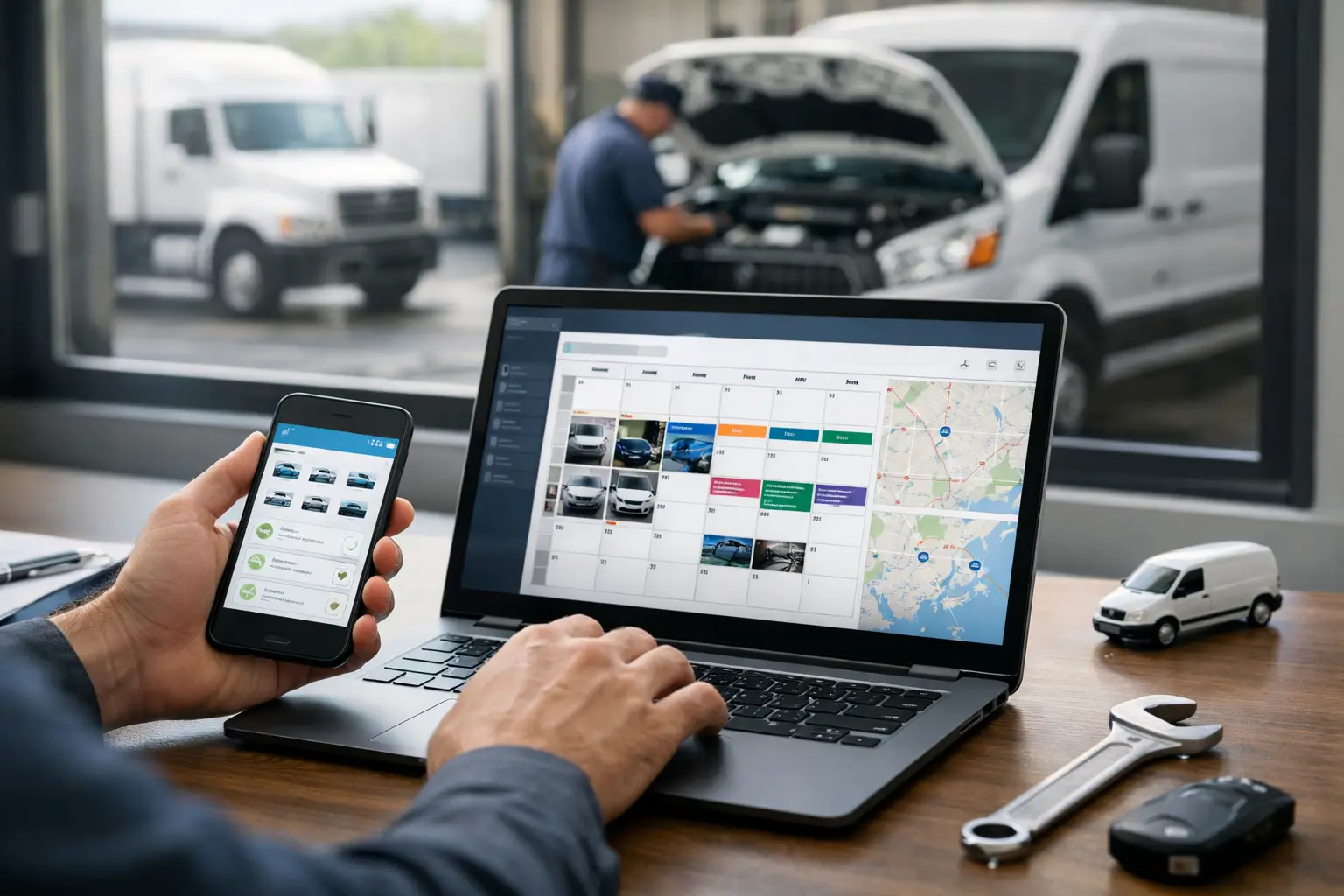

Missed inspections rarely happen because a transport team does not care. They happen because the workshop whiteboard is out of date, the spreadsheet sits on one person’s desktop, and service intervals shift once vehicles are worked harder than planned. A fleet maintenance reminder system gives operators a more reliable way to stay ahead of inspections, servicing and defect follow-up before small gaps turn into downtime or compliance risk.
For UK operators, that matters well beyond basic vehicle upkeep. Maintenance touches operator licence protection, daily vehicle availability, workshop planning and customer service. If a unit is off the road unexpectedly because a safety inspection was missed or a defect was not escalated properly, the impact spreads quickly across dispatch, drivers and delivery commitments.
What a fleet maintenance reminder system should actually solve
At its core, the system should reduce reliance on memory, paper diaries and disconnected admin. That sounds simple, but the difference between a useful system and another dashboard no one trusts usually comes down to whether it fits the way a real fleet runs.
A transport office does not work in neat monthly blocks. Vehicles move between depots, trailers are swapped, mileage changes, and workshop capacity is rarely predictable for long. A fleet maintenance reminder system should account for that by giving clear, timely prompts based on the intervals that matter to your operation, whether that is date-based, mileage-based, engine hours or a combination.
Just as importantly, it should show what action is required and when. A reminder on its own is only half the job. Teams need visibility of upcoming services, overdue inspections, booked work and assets that may need pulling from service. If the platform cannot turn reminder data into day-to-day action, admin still ends up back in a spreadsheet.
Why spreadsheets fall short
Spreadsheets are common because they are cheap, familiar and easy to start with. For a very small fleet, they may be workable for a while. The problem is not that spreadsheets hold bad information. The problem is that they depend on perfect manual discipline.
Once a fleet grows, or even when a small fleet gets busy, the cracks show. Service dates are updated late, mileage inputs are missed, one depot uses a different file version, and no one is fully sure whether a trailer inspection was completed or merely booked. That uncertainty creates risk.
There is also a labour issue. Every hour spent chasing workshop dates, updating records and sending reminder emails is an hour not spent on planning, driver support or compliance checks. A proper fleet maintenance reminder system cuts that repetitive admin by bringing alerts, records and operational visibility into one place.
The features that make a real difference
Not every business needs the same level of maintenance control. A mixed fleet with HGVs, vans and trailers will need more structure than a small van-only operation. Even so, a few capabilities make the biggest practical difference.
The first is automated reminders tied to real usage. Date-based reminders are useful, but mileage or hours-based triggers are often what stop assets slipping outside planned service windows. If a vehicle is covering far more miles than expected, the schedule needs to move with it.
The second is asset-level visibility. You should be able to see each vehicle or trailer’s maintenance status, upcoming events and history without pulling records from separate systems. That helps transport managers, workshop teams and planners work from the same information.
The third is exception visibility. It should be obvious which assets are overdue, which are due soon and which have unresolved defects. Good systems do not bury urgent issues in a long report.
Finally, there is the wider operational context. A reminder system is far more useful when it sits alongside vehicle tracking, compliance data and driver information. If a planner can see where an asset is, when it can come off the road and whether it is due inspection, decision-making becomes faster and more accurate.
Fleet maintenance reminder system benefits for UK operators
For UK commercial fleets, the value is not just fewer missed services. The bigger benefit is control. When reminders are automated and records are visible, operators can plan maintenance around the work instead of reacting after something has been missed.
That improves vehicle uptime, but it also supports compliance. Safety inspections, preventative maintenance and defect management all feed into the standard expected of a professionally run fleet. While software does not replace proper maintenance processes, it makes it easier to prove those processes are being managed consistently.
There is a financial benefit too. Preventative scheduling is almost always cheaper than dealing with roadside issues, cancelled jobs or avoidable workshop downtime. The savings may not always appear as one large line item, but they build across labour, utilisation and reduced disruption.
For depot teams, the operational gain is often immediate. Instead of working from calls, emails and memory, they can prioritise around upcoming due dates and known exceptions. That means less firefighting and fewer last-minute movements.
What to check before you choose a system
The first question is whether the system reflects your fleet structure. Can it handle trailers as well as powered vehicles? Can it support mixed asset types across multiple sites? Generic fleet software often claims broad coverage, but transport operators need detail that fits real workshop and compliance routines.
The second question is how reminders are triggered. If the platform only sends a fixed date alert, that may be too limited for high-utilisation fleets. A better approach usually combines time-based scheduling with live operational data where relevant.
The third is ease of use. If the system takes too long to update or requires constant manual correction, adoption will drop. The best platforms reduce admin rather than shifting it from paper to screen.
You should also look at reporting. Can you quickly show upcoming due items, overdue assets and completed maintenance history? If a report takes too much effort to produce, teams will stop using it until there is a problem.
One more point matters in practice: does the maintenance function sit in isolation, or is it part of a wider operational platform? For many operators, the real efficiency comes from combining reminders with telematics, tracking and compliance monitoring rather than buying separate tools for each task.
Why integration matters more than another standalone app
A standalone maintenance product can work, but it often creates another information gap. The transport manager has one screen for servicing, another for vehicle tracking, another for tachograph data, and separate records for defects. That setup usually leads to duplicate admin and slower decisions.
An integrated platform is not automatically better in every case. If you already have a workshop management system that works well, replacing it may not be necessary. But for operators still juggling disconnected tools, combining maintenance reminders with live fleet visibility can remove a lot of avoidable friction.
That is where businesses often see the difference between software that looks good in a demo and software that helps on a Wednesday afternoon when three vehicles need re-planning. If your maintenance reminder sits alongside asset location, utilisation and compliance data, you have a clearer picture of what can be moved, booked or held back.
For operators using a platform built around UK fleet control, such as Fleetalyse, that joined-up view can be especially useful because maintenance is managed in the same environment as tracking, tachograph compliance and day-to-day transport decisions.
Implementation should not become its own project
One of the most common reasons systems underperform is that setup drags on. Data imports are delayed, teams are not trained properly, and no one fully trusts the reminders once they go live. That leads people back to manual workarounds.
A practical rollout starts with clean asset data, realistic intervals and clear responsibility for who acts on each alert. It also helps to avoid overcomplicating the first phase. You do not need every possible workflow on day one. You need reminders that are accurate, visible and simple enough for teams to use consistently.
It is also worth checking how quickly hardware and connected services can be deployed if the system depends on telematics inputs. Fast installation and straightforward onboarding matter because delayed implementation delays value.
The right system is the one your team will trust
A fleet maintenance reminder system should make the working day simpler, not more technical. If it helps you spot what is due, act before assets become overdue and keep maintenance tied to the reality of fleet use, it is doing its job.
The strongest systems are not necessarily the ones with the longest feature list. They are the ones that give transport teams reliable prompts, clear records and enough operational context to make sensible decisions quickly. When maintenance reminders become part of everyday fleet control rather than a separate admin task, the whole operation runs with fewer surprises.