
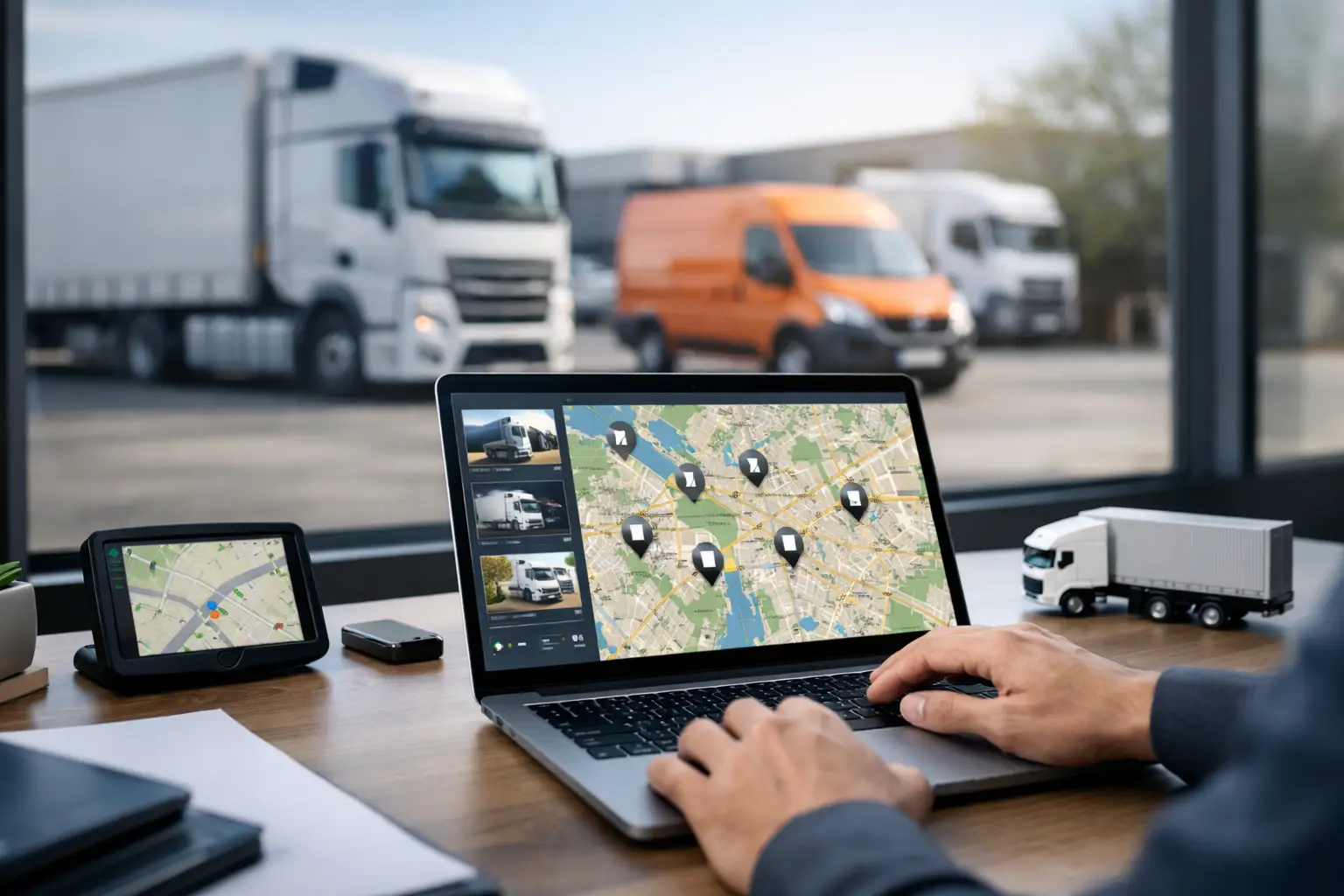
A transport manager should not have to ring three drivers to find out whether a vehicle is still on site, heading to a delivery, or sitting unexpectedly at the roadside. Commercial vehicle tracking software gives the office a live, reliable view of fleet activity, but its value is far greater when that visibility is tied to driver hours, compliance tasks, maintenance and day-to-day dispatch decisions.
For UK operators, tracking is not simply about placing a vehicle on a map. It is about knowing whether work can be allocated safely, whether a driver has enough time to complete it, whether a trailer is where it should be and whether an issue needs attention before it affects service or compliance.
What commercial vehicle tracking software should do
At a basic level, vehicle tracking records location, speed, routes and journey history through GPS hardware installed in a van, lorry or other fleet asset. That information helps teams answer immediate operational questions: where is the vehicle, how long has it been stopped, which route did it take and when is it expected back?
For a professional transport operation, the platform needs to go further. A map alone does not reduce the burden on a transport office. The useful system connects live location with the information managers already need to act on, including driver activity, tachograph data, vehicle utilisation, maintenance requirements and driving behaviour.
That changes the conversation from “Where is vehicle 42?” to “Can this driver legally take the next job, does the vehicle need a check, and what is the most practical allocation for the rest of the shift?”
Live visibility for dispatch decisions
Live tracking makes planning less dependent on assumptions. Dispatch teams can see which vehicle is closest to a collection, whether a driver has been delayed at a customer site and whether a job is likely to run late. This is particularly useful for multi-drop work, time-sensitive collections and mixed fleets where HGVs, vans and trailers move between depots and customer locations.
Journey history also gives managers facts when a customer queries an arrival time or a driver reports a delay. Instead of piecing together phone calls and paper records, the office can review the route, stops and timings in one place.
Live visibility is not a reason to micromanage drivers. Used properly, it gives drivers clearer work allocation, helps planners respond earlier to disruption and reduces the number of avoidable calls made while someone is driving.
Tracking that supports compliance
For operators running under an O-licence, compliance cannot sit in a separate system that is checked only at the end of the week. Driver hours, working time, vehicle defects and maintenance actions all need consistent attention. A tracking platform that operates separately from tachograph management creates another gap for someone to manage.
Integrated commercial vehicle tracking software can bring remote tachograph downloads, driver hours monitoring and vehicle location into the same operational view. This helps a manager spot a potential issue before allocating work, rather than discovering an infringement after the fact.
There is still no substitute for proper compliance processes and informed review. Software does not remove an operator’s responsibility. It does, however, reduce the reliance on manual card downloads, spreadsheets and memory. That means more time can be spent resolving genuine risks rather than chasing data.
The operational gains are often in the detail
The most meaningful return from tracking usually comes from small, repeated improvements. Reduced empty running, fewer unplanned calls, better use of available vehicles and earlier intervention on excessive idling can all add up across a working month.
Fuel reporting is a good example. A single harsh acceleration event may not be a major concern, but repeated speeding, idling and inefficient route choices can increase fuel use and vehicle wear. When driver behaviour data is reviewed fairly and in context, it gives managers a basis for coaching rather than relying on anecdotal feedback.
Utilisation reporting can also expose expensive habits. A vehicle that appears busy may spend long periods parked, waiting or covering work that could be planned more efficiently. Conversely, a lightly used vehicle may be essential capacity for a particular contract. The data informs the question, but operational knowledge determines the right decision.
Trailer tracking closes a common visibility gap
Trailers are easy to overlook because they do not have a driver attached to them all day. Yet a missing, misplaced or underused trailer can disrupt a whole schedule. Trailer tracking helps depot teams confirm where assets are, understand how long they have remained at a site and reduce time spent searching yards or contacting customers.
This matters most where trailers are swapped between units, parked at multiple locations or used across different contracts. Vehicle tracking on its own can show where the tractor unit has gone. It cannot always tell you where the trailer was left.
Maintenance should not be managed from memory
Tracking data is also useful when it supports planned maintenance. Mileage-based reminders make it easier to schedule inspections and servicing before a vehicle becomes overdue. Combined with defect reporting and a clear maintenance process, this creates a more dependable record of what needs attention and when.
The objective is not to turn the system into another admin task. The objective is to make due dates visible to the people who need to act, with enough notice to plan workshop time and avoid unnecessary downtime.
What to look for when choosing a platform
Many tracking systems appear similar in a product demonstration. The difference becomes clear during a busy week, when a planner needs a current answer, a compliance manager needs reliable records and a driver cannot spend an hour dealing with hardware or an app.
Start with the operational problems that need solving. If manual tachograph downloads are consuming time, look for remote download capability and clear driver hours visibility. If dispatch is reactive, prioritise accurate live tracking, status information and route history. If fuel costs are rising, ensure the reporting is practical enough to identify recurring behaviours and underused assets.
A suitable platform should also make implementation straightforward. Plug-and-play hardware can reduce vehicle downtime and avoid the cost and disruption of complex installations. It is worth checking how trailers, mixed vehicle types and new starters are handled, not just how the system works for a single vehicle.
Pricing deserves the same scrutiny. Low headline rates can become less attractive once installation, hardware, reporting modules or support are added. Transparent monthly pricing makes it easier to budget and assess whether the features being used genuinely justify the cost.
Avoid creating another disconnected system
A common problem is buying tracking software to fix visibility, then retaining separate tools for tachographs, compliance records, maintenance schedules and driver performance. Each tool may work on its own, but the office is left exporting data, reconciling records and asking which version is current.
A single platform will not eliminate every process, and specialist systems may still be appropriate for larger or unusual operations. But for many fleets, bringing core telematics and compliance activity together reduces duplicate admin and makes reporting easier to trust.
Fleetalyse is designed around this practical requirement: live vehicle and trailer tracking, driver hours monitoring, remote tachograph downloads, smart dashcam insight and maintenance reminders in one platform for UK commercial operators.
Make the data part of the daily routine
The best results come when tracking data is used at the right moments. Dispatch checks availability before allocating work. Compliance reviews driver hours before a shift becomes a problem. Managers look at exceptions and trends, rather than expecting someone to analyse every journey manually.
Set sensible rules for who sees what and why. Drivers should understand that tracking supports safety, planning and fair performance conversations. Managers should avoid treating every alert as proof of poor conduct, because road conditions, customer delays and route constraints matter. Context protects trust and leads to better decisions.
Commercial vehicle tracking software earns its place when it removes uncertainty from the working day. Choose a system that gives your team usable information, connects it to compliance responsibilities and helps them act before a minor issue becomes a missed job, avoidable cost or licence risk.