

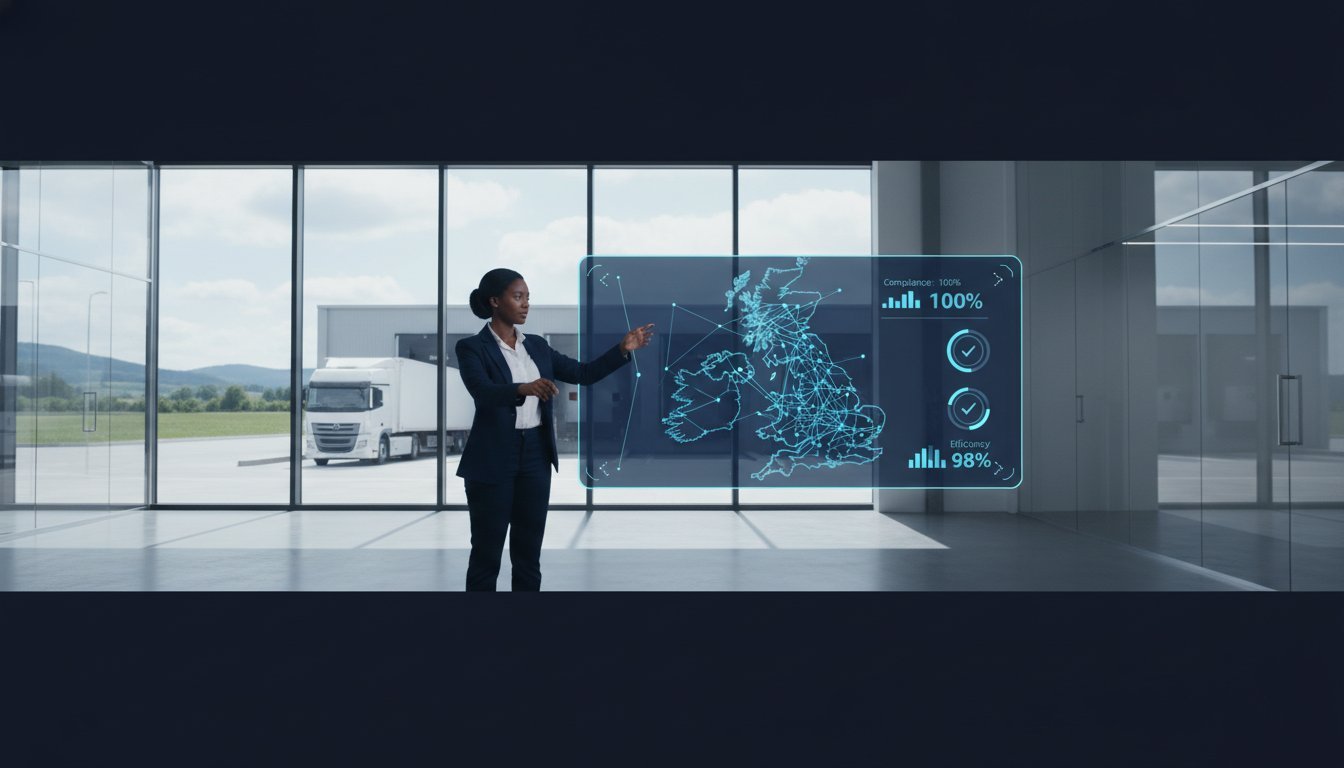
A commercial vehicle tracking system is no longer just a dot on a map; it is your primary defence against a DVSA infringement. With the July 2026 deadline for second-generation smart tachographs fast approaching, the gap between compliant operators and those at risk is widening. Manual tachograph downloads and the constant threat of audits create a heavy administrative burden that pulls you away from the road. You need total visibility over your trailers and assets without the daily headache of chasing drivers for data.
We understand that regional operators value transparency and practical utility over flashy features. It’s about turning data into a tool for operational improvement. This guide will show you how to master commercial vehicle tracking systems to automate your compliance data and reduce administrative overheads. We will examine how live driver hours and remote tachograph downloads provide the operational clarity needed to improve fuel efficiency and secure your assets. You will learn exactly how to bridge the gap between the vehicle and the transport office whilst maintaining strict regulatory standards.
Key Takeaways
- Automate your Operator Licence requirements by using live driver hours to prevent road safety infringements and eliminate manual errors.
- Discover how modern commercial vehicle tracking systems provide total visibility across HGVs, vans, and trailers to improve route efficiency and fuel economy.
- Identify the essential hardware reliability and software features needed to ensure your tracking platform remains a practical tool rather than an administrative burden.
- Streamline your transport office by integrating remote tachograph downloads and analysis to reduce time-consuming manual data collection.
- Move beyond simple GPS "dots" by turning your telematics into a centralised operational hub that bridges the gap between the vehicle and the office.
What are Commercial Vehicle Tracking Systems?
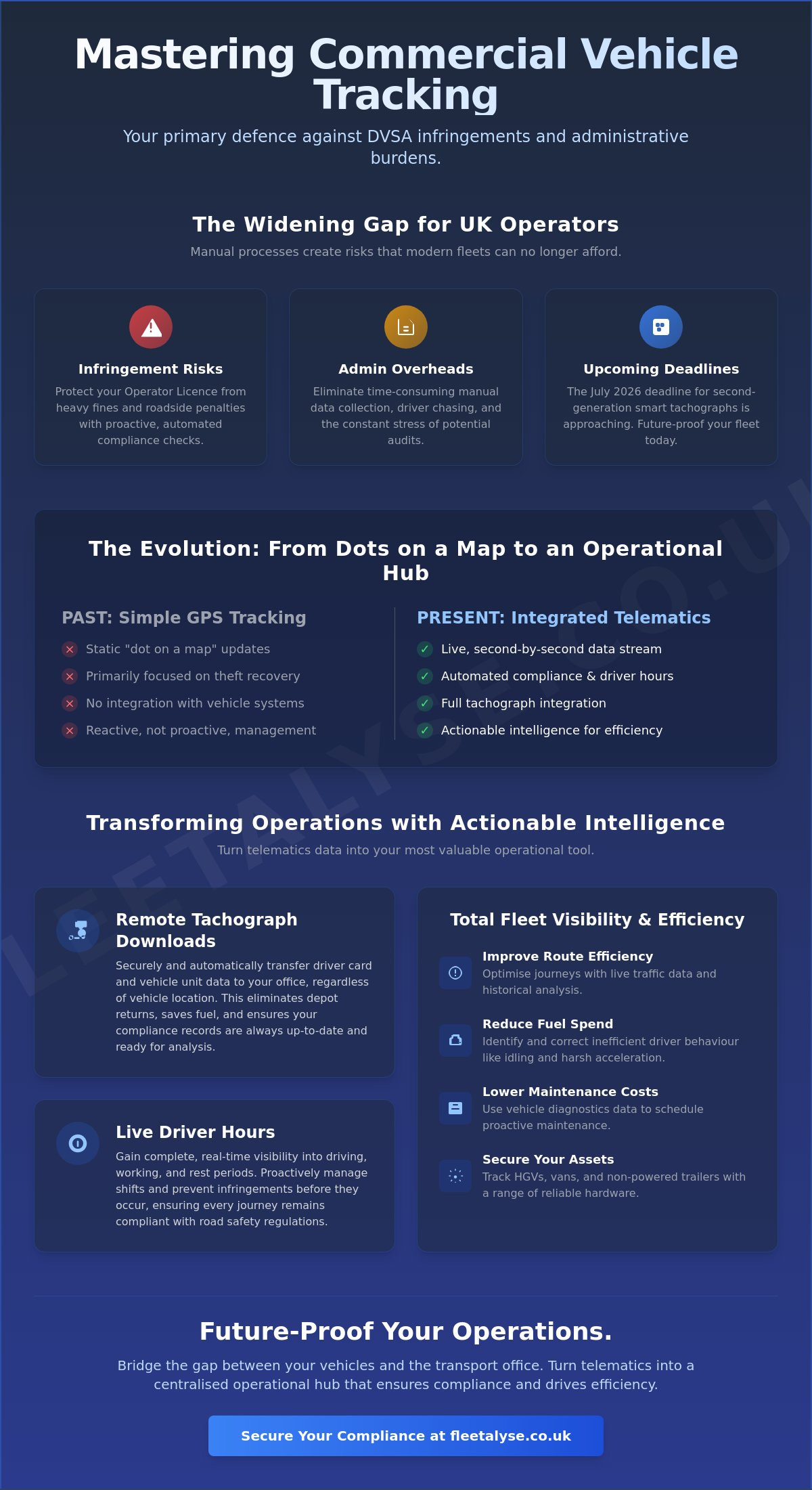
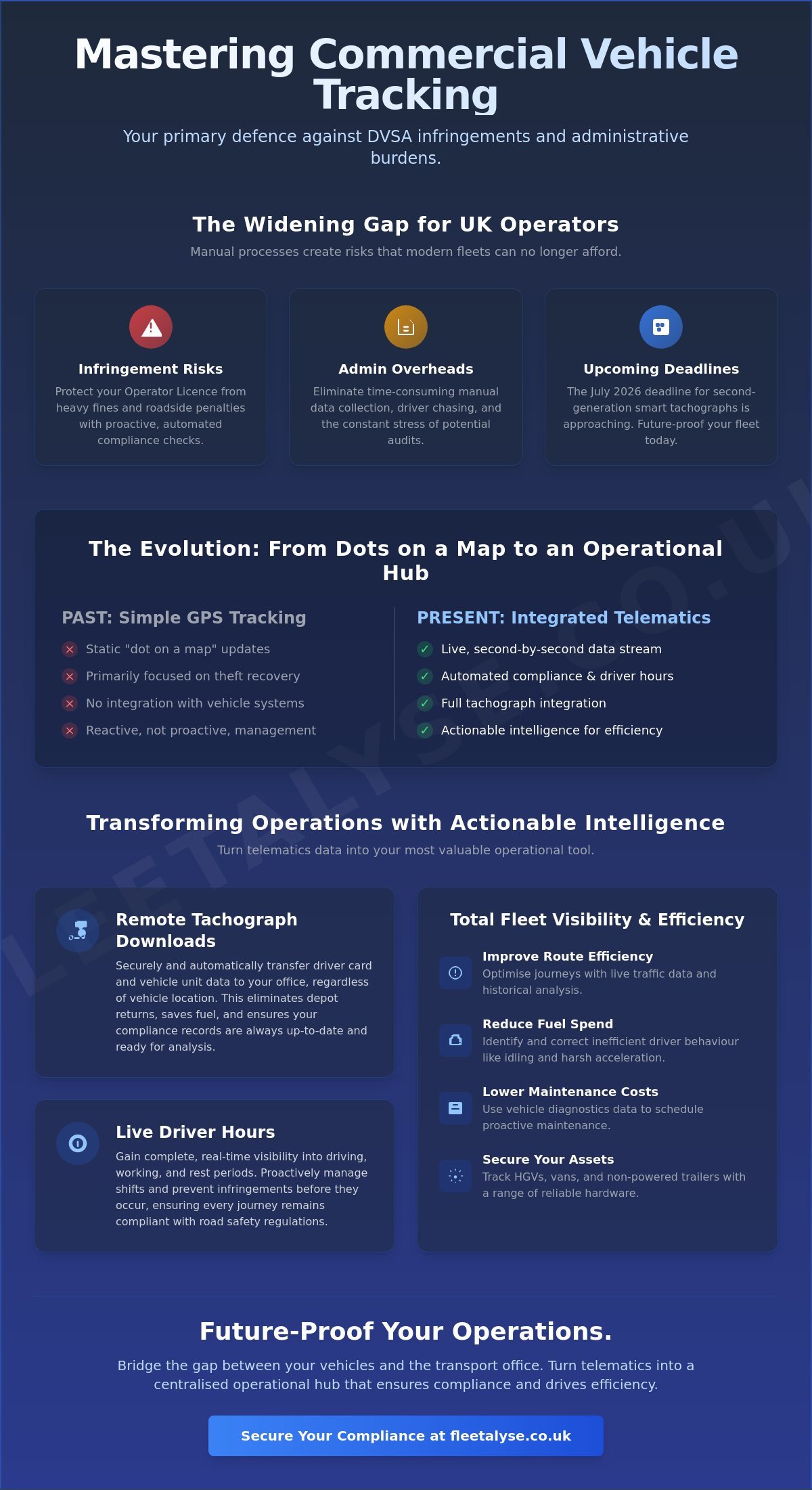
A Vehicle tracking system designed for business use is no longer a luxury. It is a telematics-driven operational hub. Historically, tracking meant seeing a static "dot" on a map every few minutes. Today, modern commercial vehicle tracking systems function as integrated data management platforms. They bridge the gap between the vehicle and the transport office by providing a constant stream of actionable intelligence. For UK operators, this technology is essential for managing complex regulatory requirements and tight margins. Consumer-grade trackers might tell you where a van is parked, but they won't help you defend your Operator Licence during a DVSA audit. Active tracking provides live, second-by-second reporting. This ensures you know exactly how many hours a driver has left on their shift before a legal breach occurs.
The Components of a Professional Tracking Setup
Professional setups rely on a combination of robust hardware and sophisticated software. Hardwired units are the standard for HGVs. They offer the most secure connection to the vehicle’s internal systems. OBD-II plug-in devices provide a flexible alternative for smaller vans. For non-powered equipment, battery-powered asset trackers ensure you never lose sight of a trailer. All this hardware feeds into cloud-based dashboards. These platforms allow transport managers to view historical reports or real-time movements from any device. Connectivity is maintained through a blend of GPRS and satellite technology. This setup guarantees national coverage across the UK. It ensures your data remains consistent even in signal-poor regions.
Key Differences Between Fleet and Personal Tracking
Personal tracking focuses almost entirely on theft recovery. Fleet tracking focuses on operational utility. It monitors driver behaviour metrics such as harsh acceleration, idling, and braking patterns whilst providing the detail needed to reduce fuel spend. This data is vital for lowering maintenance costs across the fleet. The most significant distinction is tachograph integration. Professional commercial vehicle tracking systems link directly to the vehicle's digital tachograph. This allows for the remote download of driver cards and vehicle units. It removes the need for manual intervention. Hierarchical reporting also allows larger fleets to organise data by region or department. It provides multi-user access so that different team members can focus on the metrics that matter most to their specific roles.
Compliance: The Heart of Commercial Vehicle Tracking
Compliance isn't a box-ticking exercise. It's the foundation of your business. For those holding a UK Operator Licence, the DVSA requires clear evidence of proactive management and road safety. Commercial vehicle tracking systems provide this evidence by automating the collection of critical safety data. You don't just see where a vehicle is; you see how it's being operated in real-time. This transparency significantly reduces the risk of heavy fines and protects your business from the severe consequences of accidental infringements. It’s about building a culture of safety that stands up to scrutiny during any roadside check or office audit.
The global shift towards digital enforcement is undeniable. For instance, the Electronic Logging Device (ELD) rule in the US demonstrates how regulatory bodies now favour automated, tamper-proof records over manual logs. In the UK, integrating your tracking with tachograph analysis creates a seamless audit trail. It moves compliance from a reactive office chore to a live, manageable process that protects your reputation. It’s an essential step for any operator looking to future-proof their fleet against tightening regulations.
Remote Tachograph Downloads Explained
Manual downloads are a significant drain on office resources. They usually require vehicles to return to a specific depot, which often disrupts tight delivery schedules and increases fuel costs. Remote tachograph download technology eliminates this friction entirely. Data is encrypted and transferred securely from the vehicle’s head unit directly to your office, regardless of where the driver is located. This ensures your records are always current and ready for analysis. It allows you to identify and rectify potential issues long before they escalate into legal problems.
Monitoring Live Driver Hours
Real-time visibility into driving, working, and rest periods is a vital tool for the modern transport manager. Your dashboard displays exactly how many hours each driver has remaining in their shift at any given moment. This live data is the most effective way to prevent accidental breaches of driving time regulations. By using commercial vehicle tracking systems, you can plan more efficient delivery routes based on actual availability. If a driver is nearing their legal limit, you can reassign a job or adjust a schedule before a violation occurs. It keeps your drivers safe and ensures your fleet remains on the right side of the law.
Staying compliant shouldn't be a daily struggle for your team. You can explore professional tracking options to start automating your fleet's data collection and securing your Operator Licence today.
Tracking Across the Fleet: HGVs, Vans, and Trailers
Every vehicle in your fleet serves a distinct purpose. Consequently, the tracking technology you deploy must be fit for that specific application. Commercial vehicle tracking systems provide the granular detail required to manage a diverse range of assets under one roof. It's not just about location; it's about the unique operational data each asset generates. Whether you're managing a 44-tonne artic or a transit van, the objective remains the same: maximise utility whilst minimising risk. Understanding these differences ensures you don't overspend on unnecessary features or miss out on critical data.
Specialised Solutions for Heavy Goods Vehicles
HGVs require a deeper level of integration than light vehicles. The industry has seen a massive shift towards connected truck telematics because it addresses the high costs associated with heavy haulage. HGV-specific routing is a prime example. It ensures drivers avoid low bridges and weight restrictions that could lead to costly delays or structural damage. Integration with the vehicle's CANbus allows for engine diagnostics and preventative maintenance. You can monitor axle load sensors to ensure safety compliance and prevent overloading. This proactive approach keeps your vehicles on the road and out of the workshop.
Van tracking focuses on the fast-paced nature of multi-drop deliveries. Optimising these routes is essential for maintaining fuel efficiency and meeting customer expectations. Monitoring driver behaviour is equally important in this sector. Harsh braking, speeding, or excessive idling directly impacts your bottom line. By tracking these metrics, you can implement driver coaching that reduces wear and tear. It turns your van fleet into a more predictable, cost-effective operation that values driver safety as much as delivery speed.
Securing Trailers and Non-Powered Assets
Unpowered assets present a unique challenge for any transport manager. Trailers often spend days uncoupled in remote yards or at customer sites where visibility is limited. Professional trailer tracking solutions use long-life battery trackers to maintain visibility without a constant power source. These devices are designed for durability and can last for years on a single charge. Geofencing alerts notify you immediately if a trailer leaves a designated area without authorisation. This layer of security is vital for protecting high-value cargo and reducing the costs associated with "lost" or underutilised assets in your yard.
Plant and asset tracking extends this protection to expensive machinery. Excavators, generators, and other site equipment are prime targets for theft. A dedicated tracker allows for rapid recovery and provides the peace of mind that your investment is secure. It ensures that every part of your operation, from the road to the building site, is visible and protected. By centralising these different asset types into one of your commercial vehicle tracking systems, you gain a complete overview of your entire operational footprint.
Choosing the Right Commercial Tracking Provider
Selecting a provider for your fleet is a decision that impacts your operational overhead for years. It's not just about the software; it's about finding a pragmatic partner that understands the UK transport industry. Many global providers offer flashy interfaces but fail when it comes to the rigours of real-world application. You need hardware that's built to last and professional installation that ensures data integrity. Tamper-proof, hardwired units are essential for HGVs, whilst flexible plug-and-play options often suit smaller van fleets. Reliability is the priority here. If the hardware fails, your compliance trail disappears with it.
Transparency in pricing remains a significant pain point in this sector. You should avoid providers that insist on long, restrictive contracts or hide costs behind complex "tier" systems. A trustworthy partner offers clear monthly rates and straightforward terms. This honesty reflects how they'll handle your account and technical support. UK-based support is non-negotiable. When a driver has an issue at a roadside check, you can't afford to wait for a global call centre to open in a different time zone. You need an expert who understands DVSA regulations and can provide immediate assistance.
Key Features Every Commercial System Needs
Your dashboard must provide more than just location. Professional commercial vehicle tracking systems should offer real-time GPS updates every 30 to 60 seconds. This frequency is vital for live visibility and accurate route planning. A comprehensive reporting suite is equally important. You need to pull data on idling, fuel consumption, and driver performance at the click of a button. Automated alerts for speeding or harsh braking allow you to manage by exception. This means you only intervene when the data shows a potential safety or efficiency issue.
Integration and Scalability
A system that operates in a vacuum is an administrative burden. The most effective commercial vehicle tracking systems integrate directly with your existing tachograph analysis software. This connection automates the flow of data and ensures your compliance records are always current. As your business grows, your platform must scale with you. Whether you're adding more vans, HGVs, or trailers, the transition should be frictionless. Check for API availability if you plan to link tracking data with your internal management systems or customer portals in the future.
If you're ready to move away from restrictive contracts and hidden fees, you can view our transparent pricing and plans to find a solution built for your specific fleet needs.
Future-Proof Your Operations with Fleetalyse
Fleet management is about more than just moving goods from point A to point B. It's about protecting your profit margins and your legal standing in an increasingly regulated environment. Fleetalyse builds commercial vehicle tracking systems that address the specific, daily pressures of UK logistics. We don't offer flashy, unnecessary features that clutter your dashboard. We provide functional utility. By combining GPS fleet tracking with live compliance data, we remove the guesswork from your transport office. This integration ensures that every decision you make is backed by real-time facts rather than estimations.
Transitioning from manual processes to digital management often feels daunting for regional operators. Many worry about the time required to learn new software or the disruption of installation. We simplify this journey. Our platform is designed to be intuitive and focused on the metrics that actually matter to a transport manager. We replace piles of paperwork with automated digital records. This shift reduces your administrative overhead and allows your team to focus on growth rather than data entry. Our commitment to transparent pricing means you always know your costs upfront. No hidden fees. No restrictive surprises. Just a reliable tool for a demanding industry.
Why Fleetalyse is the Preferred Partner for UK Fleets
We position ourselves as a pragmatic expert partner rather than a distant software provider. Our specialised focus on remote tachograph downloads and live driver hours ensures you stay ahead of DVSA requirements. We provide reliable hardware designed specifically for the rigours of the UK transport sector. This means your tracking remains consistent through harsh weather and long hours on the road. Our platform is built by industry experts who understand that a tracking system must be a catalyst for improvement, not another chore for your staff to manage.
- Automated remote tachograph downloads that keep your office records current without driver intervention.
- Live visibility into driver hours to prevent infringements before they happen.
- Integrated tachograph analysis that provides a clear audit trail for your Operator Licence.
- Specialised tracking for HGVs, vans, and trailers in one centralised dashboard.
Getting Started with a Modern Tracking Solution
Moving to a more efficient system is a straightforward process. We start by organising a demonstration and a site survey to understand the specific needs of your fleet. This allows us to recommend the right hardware mix, whether you need hardwired units for HGVs or battery-powered trackers for your trailers. We handle the installation process professionally to minimise your fleet downtime. Our goal is to get your commercial vehicle tracking systems operational with zero fuss. You can Contact Fleetalyse to discuss your fleet requirements and take the first step toward a more transparent, compliant, and efficient operation today.
Secure Your Fleet's Future with Integrated Compliance
Operating a fleet in the UK requires more than just knowing where your vehicles are. It demands a proactive approach to road safety and regulatory standards. By adopting commercial vehicle tracking systems, you turn compliance from a manual burden into an automated asset. You gain the ability to monitor live driver hours and manage remote tachograph downloads without vehicles ever needing to return to the depot. This transition reduces administrative overhead and protects your Operator Licence from the risk of DVSA infringements.
Focus on practical utility and transparent pricing to ensure your technology investment delivers real-world results. We are specialists in remote tachograph downloads and provide real-time visibility of live driver hours to keep your operations moving. Our expert UK-based support team is ready to help you navigate the complexities of fleet management with confidence. It is time to build a more efficient, compliant, and profitable transport office.
Optimise your fleet compliance with Fleetalyse today. Take control of your data and secure your operations for the road ahead.
Frequently Asked Questions
Is a commercial vehicle tracking system a legal requirement in the UK?
No, there is no blanket law requiring every van or truck to have a tracker. However, vehicles over 3.5 tonnes must use digital tachographs to record driver hours. By July 2026, light commercial vehicles over 2.5 tonnes involved in international transport must also be fitted with smart tachographs. Integrating these with commercial vehicle tracking systems is the most reliable way to meet these strict data collection and storage laws.
Can tracking systems help with my Operator Licence compliance?
Yes. They provide the proactive monitoring the DVSA expects from licence holders. By automating the collection of driver hours and tachograph data, you eliminate the risk of manual errors and missing records. This ensures you have a robust audit trail ready for any inspection. It demonstrates that you are actively managing road safety and driver behaviour as required by your licence undertakings.
What is the difference between a car tracker and a commercial HGV tracker?
Car trackers are primarily designed for theft recovery and insurance purposes. Commercial HGV trackers are operational tools that link directly to the vehicle’s tachograph and CANbus system. They provide technical data like axle weights, fuel levels, and live driver hours. These systems are built for the rigours of heavy-duty use and offer much deeper integration than a standard consumer device.
How does remote tachograph download work with a tracking system?
The tracking unit connects directly to the digital tachograph head in the vehicle. At scheduled intervals, it securely transmits driver card and vehicle unit data over the mobile network to your office software. This removes the need for drivers to return to the depot just to download their cards. It saves significant time and ensures your compliance records are always current.
Can I track trailers that are not connected to a vehicle power source?
Yes. We use specialised trailer tracking units equipped with long-life internal batteries. These devices are designed to remain active even when uncoupled for weeks or months at a time. They provide regular location updates and geofencing alerts. This ensures your unpowered assets remain secure and visible even when they are left at remote sites or customer yards.
Will a tracking system help me reduce my fleet fuel costs?
Yes. You can identify and reduce excessive idling, which is a significant source of fuel waste in many fleets. Better route planning ensures drivers take the most efficient paths to their destinations. Monitoring driver behaviour also helps curb fuel-heavy habits like harsh acceleration and speeding, leading to a more economical operation overall.
How long does it take to install a commercial tracker in a van or HGV?
A professional installation typically takes between one and two hours per vehicle. This timeframe ensures the hardware is securely hardwired and fully tested. We organise these sessions to minimise your fleet downtime. This ensures the commercial vehicle tracking systems are operational without disrupting your daily delivery schedules or vehicle availability.
Can I monitor driver behaviour like harsh braking and speeding?
Yes. The system records G-force events to identify harsh braking, cornering, and acceleration in real-time. You receive immediate alerts and detailed reports on speeding incidents. This data allows you to implement targeted driver coaching. It reduces vehicle wear and tear whilst significantly improving the safety profile of your entire fleet.
Frequently asked questions
The Components of a Professional Tracking Setup
Professional setups rely on a combination of robust hardware and sophisticated software. Hardwired units are the standard for HGVs. They offer the most secure connection to the vehicle’s internal systems. OBD-II plug-in devices provide a flexible alternative for smaller vans. For non-powered equipment, battery-powered asset trackers ensure you never lose sight of a trailer. All this hardware feeds into cloud-based dashboards. These platforms allow transport managers to view historical reports or real-time movements from any device. Connectivity is maintained through a blend of GPRS and satellite technology. This setup guarantees national coverage across the UK. It ensures your data remains consistent even in signal-poor regions.
Key Differences Between Fleet and Personal Tracking
Personal tracking focuses almost entirely on theft recovery. Fleet tracking focuses on operational utility. It monitors driver behaviour metrics such as harsh acceleration, idling, and braking patterns whilst providing the detail needed to reduce fuel spend. This data is vital for lowering maintenance costs across the fleet. The most significant distinction is tachograph integration. Professional commercial vehicle tracking systems link directly to the vehicle's digital tachograph. This allows for the remote download of driver cards and vehicle units. It removes the need for manual intervention. Hierarchical reporting also allows larger fleets to organise data by region or department. It provides multi-user access so that different team members can focus on the metrics that matter most to their specific roles. Compliance isn't a box-ticking exercise. It's the foundation of your business. For those holding a UK Operator Licence, the DVSA requires clear evidence of proactive management and road safety. Commercial vehicle tracking systems provide this evidence by automating the collection of critical safety data. You don't just see where a vehicle is; you see how it's being operated in real-time. This transparency significantly reduces the risk of heavy fines and protects your business from the severe consequences of accidental infringements. It’s about building a culture of safety that stands up to scrutiny during any roadside check or office audit. The global shift towards digital enforcement is undeniable. For instance, the Electronic Logging Device (ELD) rule in the US demonstrates how regulatory bodies now favour automated, tamper-proof records over manual logs. In the UK, integrating your tracking with tachograph analysis creates a seamless audit trail. It moves compliance from a reactive office chore to a live, manageable process that protects your reputation. It’s an essential step for any operator looking to future-proof their fleet against tightening regulations.
Remote Tachograph Downloads Explained
Manual downloads are a significant drain on office resources. They usually require vehicles to return to a specific depot, which often disrupts tight delivery schedules and increases fuel costs. Remote tachograph download technology eliminates this friction entirely. Data is encrypted and transferred securely from the vehicle’s head unit directly to your office, regardless of where the driver is located. This ensures your records are always current and ready for analysis. It allows you to identify and rectify potential issues long before they escalate into legal problems.
Monitoring Live Driver Hours
Real-time visibility into driving, working, and rest periods is a vital tool for the modern transport manager. Your dashboard displays exactly how many hours each driver has remaining in their shift at any given moment. This live data is the most effective way to prevent accidental breaches of driving time regulations. By using commercial vehicle tracking systems, you can plan more efficient delivery routes based on actual availability. If a driver is nearing their legal limit, you can reassign a job or adjust a schedule before a violation occurs. It keeps your drivers safe and ensures your fleet remains on the right side of the law. Staying compliant shouldn't be a daily struggle for your team. You can explore professional tracking options to start automating your fleet's data collection and securing your Operator Licence today. Every vehicle in your fleet serves a distinct purpose. Consequently, the tracking technology you deploy must be fit for that specific application. Commercial vehicle tracking systems provide the granular detail required to manage a diverse range of assets under one roof. It's not just about location; it's about the unique operational data each asset generates. Whether you're managing a 44-tonne artic or a transit van, the objective remains the same: maximise utility whilst minimising risk. Understanding these differences ensures you don't overspend on unnecessary features or miss out on critical data.
Specialised Solutions for Heavy Goods Vehicles
HGVs require a deeper level of integration than light vehicles. The industry has seen a massive shift towards connected truck telematics because it addresses the high costs associated with heavy haulage. HGV-specific routing is a prime example. It ensures drivers avoid low bridges and weight restrictions that could lead to costly delays or structural damage. Integration with the vehicle's CANbus allows for engine diagnostics and preventative maintenance. You can monitor axle load sensors to ensure safety compliance and prevent overloading. This proactive approach keeps your vehicles on the road and out of the workshop. Van tracking focuses on the fast-paced nature of multi-drop deliveries. Optimising these routes is essential for maintaining fuel efficiency and meeting customer expectations. Monitoring driver behaviour is equally important in this sector. Harsh braking, speeding, or excessive idling directly impacts your bottom line. By tracking these metrics, you can implement driver coaching that reduces wear and tear. It turns your van fleet into a more predictable, cost-effective operation that values driver safety as much as delivery speed.
Securing Trailers and Non-Powered Assets
Unpowered assets present a unique challenge for any transport manager. Trailers often spend days uncoupled in remote yards or at customer sites where visibility is limited. Professional trailer tracking solutions use long-life battery trackers to maintain visibility without a constant power source. These devices are designed for durability and can last for years on a single charge. Geofencing alerts notify you immediately if a trailer leaves a designated area without authorisation. This layer of security is vital for protecting high-value cargo and reducing the costs associated with "lost" or underutilised assets in your yard. Plant and asset tracking extends this protection to expensive machinery. Excavators, generators, and other site equipment are prime targets for theft. A dedicated tracker allows for rapid recovery and provides the peace of mind that your investment is secure. It ensures that every part of your operation, from the road to the building site, is visible and protected. By centralising these different asset types into one of your commercial vehicle tracking systems, you gain a complete overview of your entire operational footprint. Selecting a provider for your fleet is a decision that impacts your operational overhead for years. It's not just about the software; it's about finding a pragmatic partner that understands the UK transport industry. Many global providers offer flashy interfaces but fail when it comes to the rigours of real-world application. You need hardware that's built to last and professional installation that ensures data integrity. Tamper-proof, hardwired units are essential for HGVs, whilst flexible plug-and-play options often suit smaller van fleets. Reliability is the priority here. If the hardware fails, your compliance trail disappears with it. Transparency in pricing remains a significant pain point in this sector. You should avoid providers that insist on long, restrictive contracts or hide costs behind complex "tier" systems. A trustworthy partner offers clear monthly rates and straightforward terms. This honesty reflects how they'll handle your account and technical support. UK-based support is non-negotiable. When a driver has an issue at a roadside check, you can't afford to wait for a global call centre to open in a different time zone. You need an expert who understands DVSA regulations and can provide immediate assistance.
Key Features Every Commercial System Needs
Your dashboard must provide more than just location. Professional commercial vehicle tracking systems should offer real-time GPS updates every 30 to 60 seconds. This frequency is vital for live visibility and accurate route planning. A comprehensive reporting suite is equally important. You need to pull data on idling, fuel consumption, and driver performance at the click of a button. Automated alerts for speeding or harsh braking allow you to manage by exception. This means you only intervene when the data shows a potential safety or efficiency issue.
Integration and Scalability
A system that operates in a vacuum is an administrative burden. The most effective commercial vehicle tracking systems integrate directly with your existing tachograph analysis software. This connection automates the flow of data and ensures your compliance records are always current. As your business grows, your platform must scale with you. Whether you're adding more vans, HGVs, or trailers, the transition should be frictionless. Check for API availability if you plan to link tracking data with your internal management systems or customer portals in the future. If you're ready to move away from restrictive contracts and hidden fees, you can view our transparent pricing and plans to find a solution built for your specific fleet needs. Fleet management is about more than just moving goods from point A to point B. It's about protecting your profit margins and your legal standing in an increasingly regulated environment. Fleetalyse builds commercial vehicle tracking systems that address the specific, daily pressures of UK logistics. We don't offer flashy, unnecessary features that clutter your dashboard. We provide functional utility. By combining GPS fleet tracking with live compliance data, we remove the guesswork from your transport office. This integration ensures that every decision you make is backed by real-time facts rather than estimations. Transitioning from manual processes to digital management often feels daunting for regional operators. Many worry about the time required to learn new software or the disruption of installation. We simplify this journey. Our platform is designed to be intuitive and focused on the metrics that actually matter to a transport manager. We replace piles of paperwork with automated digital records. This shift reduces your administrative overhead and allows your team to focus on growth rather than data entry. Our commitment to transparent pricing means you always know your costs upfront. No hidden fees. No restrictive surprises. Just a reliable tool for a demanding industry.
Why Fleetalyse is the Preferred Partner for UK Fleets
We position ourselves as a pragmatic expert partner rather than a distant software provider. Our specialised focus on remote tachograph downloads and live driver hours ensures you stay ahead of DVSA requirements. We provide reliable hardware designed specifically for the rigours of the UK transport sector. This means your tracking remains consistent through harsh weather and long hours on the road. Our platform is built by industry experts who understand that a tracking system must be a catalyst for improvement, not another chore for your staff to manage.
Getting Started with a Modern Tracking Solution
Moving to a more efficient system is a straightforward process. We start by organising a demonstration and a site survey to understand the specific needs of your fleet. This allows us to recommend the right hardware mix, whether you need hardwired units for HGVs or battery-powered trackers for your trailers. We handle the installation process professionally to minimise your fleet downtime. Our goal is to get your commercial vehicle tracking systems operational with zero fuss. You can Contact Fleetalyse to discuss your fleet requirements and take the first step toward a more transparent, compliant, and efficient operation today. Operating a fleet in the UK requires more than just knowing where your vehicles are. It demands a proactive approach to road safety and regulatory standards. By adopting commercial vehicle tracking systems, you turn compliance from a manual burden into an automated asset. You gain the ability to monitor live driver hours and manage remote tachograph downloads without vehicles ever needing to return to the depot. This transition reduces administrative overhead and protects your Operator Licence from the risk of DVSA infringements. Focus on practical utility and transparent pricing to ensure your technology investment delivers real-world results. We are specialists in remote tachograph downloads and provide real-time visibility of live driver hours to keep your operations moving. Our expert UK-based support team is ready to help you navigate the complexities of fleet management with confidence. It is time to build a more efficient, compliant, and profitable transport office. Optimise your fleet compliance with Fleetalyse today. Take control of your data and secure your operations for the road ahead.
Is a commercial vehicle tracking system a legal requirement in the UK?
No, there is no blanket law requiring every van or truck to have a tracker. However, vehicles over 3.5 tonnes must use digital tachographs to record driver hours. By July 2026, light commercial vehicles over 2.5 tonnes involved in international transport must also be fitted with smart tachographs. Integrating these with commercial vehicle tracking systems is the most reliable way to meet these strict data collection and storage laws.
Can tracking systems help with my Operator Licence compliance?
Yes. They provide the proactive monitoring the DVSA expects from licence holders. By automating the collection of driver hours and tachograph data, you eliminate the risk of manual errors and missing records. This ensures you have a robust audit trail ready for any inspection. It demonstrates that you are actively managing road safety and driver behaviour as required by your licence undertakings.
What is the difference between a car tracker and a commercial HGV tracker?
Car trackers are primarily designed for theft recovery and insurance purposes. Commercial HGV trackers are operational tools that link directly to the vehicle’s tachograph and CANbus system. They provide technical data like axle weights, fuel levels, and live driver hours. These systems are built for the rigours of heavy-duty use and offer much deeper integration than a standard consumer device.
How does remote tachograph download work with a tracking system?
The tracking unit connects directly to the digital tachograph head in the vehicle. At scheduled intervals, it securely transmits driver card and vehicle unit data over the mobile network to your office software. This removes the need for drivers to return to the depot just to download their cards. It saves significant time and ensures your compliance records are always current.
Can I track trailers that are not connected to a vehicle power source?
Yes. We use specialised trailer tracking units equipped with long-life internal batteries. These devices are designed to remain active even when uncoupled for weeks or months at a time. They provide regular location updates and geofencing alerts. This ensures your unpowered assets remain secure and visible even when they are left at remote sites or customer yards.
Will a tracking system help me reduce my fleet fuel costs?
Yes. You can identify and reduce excessive idling, which is a significant source of fuel waste in many fleets. Better route planning ensures drivers take the most efficient paths to their destinations. Monitoring driver behaviour also helps curb fuel-heavy habits like harsh acceleration and speeding, leading to a more economical operation overall.
How long does it take to install a commercial tracker in a van or HGV?
A professional installation typically takes between one and two hours per vehicle. This timeframe ensures the hardware is securely hardwired and fully tested. We organise these sessions to minimise your fleet downtime. This ensures the commercial vehicle tracking systems are operational without disrupting your daily delivery schedules or vehicle availability.
Can I monitor driver behaviour like harsh braking and speeding?
Yes. The system records G-force events to identify harsh braking, cornering, and acceleration in real-time. You receive immediate alerts and detailed reports on speeding incidents. This data allows you to implement targeted driver coaching. It reduces vehicle wear and tear whilst significantly improving the safety profile of your entire fleet.