

Examples of fleet automation tools for UK fleet managers

Fleet automation tools are software and hardware systems that automate complex fleet management tasks through data integration, AI, and telematics. The industry term for this category is fleet telematics automation, and it covers everything from GPS vehicle tracking and driver behaviour monitoring to predictive maintenance and compliance documentation. The best examples of fleet automation tools combine real-time data capture with AI-driven analysis, replacing manual processes that slow operations and create compliance risk. Fleetalyse sits at the centre of this for UK operators, delivering automated tachograph downloads, driver hours monitoring, and GPS tracking under DVSA and Operator Licence requirements.
What are the top examples of fleet automation tools?
Fleet automation tools fall into five practical categories, each solving a distinct operational problem.
-
GPS tracking and telematics hardware. Plug-and-play units fitted to HGVs, vans, and trailers transmit live location, speed, and engine data. Basic GPS tracking costs around £22 per vehicle per month and serves as the entry point for most fleets. The data feeds every other automation layer above it.
-
AI-powered dispatch and routing platforms. These tools pull GPS data, load assignments, and traffic conditions into a single workflow. AI dispatch automation integrates GPS data, load assignments, paperwork verification, and invoicing into a continuous process, removing manual steps for dispatchers.
-
Predictive maintenance software. Rather than waiting for a warning light, predictive tools analyse engine data, mileage patterns, and fault codes to forecast failures before they happen. This shifts maintenance from reactive to planned, cutting unplanned downtime.
-
Driver behaviour monitoring tools. These systems score events such as harsh braking, rapid acceleration, and speeding in real time. Anomaly detection platforms flag speed, idle time, and off-route events with severity levels and pattern analysis every minute, giving fleet managers a continuous safety picture.
-
Compliance and documentation automation. For UK operators, this means automated tachograph downloads, digital driver hours records, and DVSA-ready reports. Fleetalyse automates this layer directly, removing the administrative burden of manual record retrieval.
Pro Tip: Start with GPS tracking hardware before adding AI layers. Clean, consistent location data is the foundation every other automation tool depends on.
How do AI and predictive analytics enhance fleet automation tools?
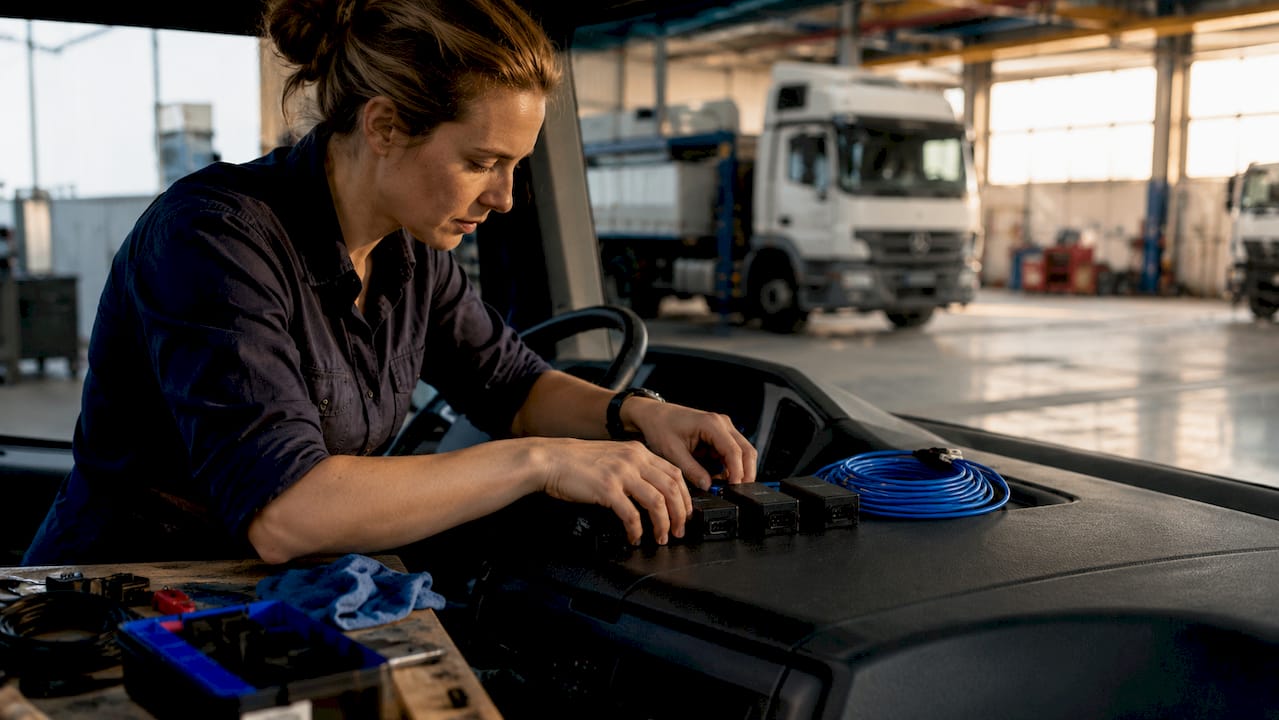
AI transforms fleet automation from a monitoring function into a decision-making engine. Traditional telematics gives you dots on a map. AI-driven tools tell you what those dots mean and what to do next.
The most significant shift is from reactive alerts to predictive forecasting. Predictive maintenance models and route optimisation algorithms improve operational efficiency by anticipating problems rather than responding to them. A vehicle flagged for bearing wear before a long-haul run avoids a breakdown on the motorway, not just a repair bill.
“Fleet automation has evolved to agentic AI systems that produce actionable summaries, reducing information overload for managers. Modern platforms apply LLM-based reasoning to highlight critical events from raw telematics data, rather than overwhelming operators with unprocessed logs.”
Large language models now sit inside fleet platforms to make telematics data readable. LLM-based reasoning generates human-readable summaries from raw data streams, so a fleet manager sees “three vehicles due for service this week” rather than thousands of rows of sensor output. That shift in presentation alone changes how quickly decisions get made.
Route optimisation is another area where AI adds measurable value. Algorithms process traffic data, delivery windows, vehicle load capacity, and driver hours simultaneously to produce routes that a human dispatcher could not calculate manually at scale.
How does data integration affect fleet automation effectiveness?
Data integration is the single biggest factor separating effective fleet automation from expensive fragmentation. Most fleets run hardware from multiple telematics providers, each outputting data in a different format. Without a unified structure, AI tools cannot analyse across the fleet consistently.
Canonical schema solutions unify multiple telematics sources into a structured event stream, enabling consistent AI analysis across all vehicles. The practical effect is that a fleet manager sees one dashboard rather than three separate portals with incompatible data.
| Integration challenge | Impact without normalisation | Impact with canonical schema |
|---|---|---|
| Multiple telematics providers | Fragmented dashboards, manual reconciliation | Single unified data stream |
| Varied data formats | AI analysis limited to one source | Consistent cross-fleet AI insights |
| Legacy hardware | Gaps in historical data | Structured event history for trend analysis |
| Compliance reporting | Manual data extraction | Automated, audit-ready reports |
Enterprise fleet management systems benefit most from this approach. When telematics data, maintenance records, driver hours, and fuel consumption all share a common schema, the AI layer can identify patterns that span departments. A spike in fuel consumption that correlates with a specific driver’s route and vehicle age becomes visible only when all three data sources speak the same language.
Real-time depot inventory tracking is one area where integrated data schemas extend automation beyond the vehicle itself, connecting fleet activity to warehouse and logistics operations for a complete operational picture.
What are the pricing considerations for fleet automation tools?
Fleet automation tools span a wide price range, and the gap between entry-level and enterprise reflects a genuine difference in capability, not just branding.
-
Entry-level GPS tracking: Around £22 per vehicle per month. Provides live location, basic trip history, and speed data. No AI analysis, no predictive features, no compliance automation.
-
Mid-tier telematics platforms: Typically include driver behaviour scoring, maintenance alerts, and basic reporting. Suitable for fleets of 10–50 vehicles that need more than location data but are not yet running complex dispatch operations.
-
Enterprise AI dispatch platforms: Enterprise AI dispatch starts at approximately £499 per month for smaller fleets and scales to £999 for medium fleets. These platforms automate the full booking-to-invoice workflow and integrate with transport management systems.
-
Compliance-focused platforms: UK-specific tools covering tachograph automation, DVSA reporting, and Operator Licence management sit between mid-tier and enterprise pricing. Fleetalyse operates in this space, with PAYG options that make compliance automation accessible without long-term contracts.
The key trade-off is not price versus features. It is price versus the cost of the problem you are solving. An unplanned HGV breakdown costs far more than a month of predictive maintenance software. A DVSA infringement carries penalties that dwarf the annual cost of compliance automation.
Pro Tip: Calculate your current cost of manual compliance administration before comparing platform prices. The admin hours alone often justify the switch to automated tools.
How to choose the best fleet automation tools for your fleet size
Fleet size and operational complexity determine which tools deliver the most value. A one-size-fits-all approach wastes budget on features you will not use.
| Fleet size | Priority features | Recommended tool category |
|---|---|---|
| Small (1–10 vehicles) | Live tracking, basic driver scoring | Entry-level GPS with behaviour monitoring |
| Medium (11–50 vehicles) | Maintenance alerts, compliance reporting, route planning | Mid-tier telematics platform with compliance module |
| Large (50+ vehicles) | AI dispatch, predictive analytics, full data integration | Enterprise platform with canonical data schema |
| HGV and mixed assets | Tachograph automation, DVSA compliance, trailer tracking | Compliance-focused platform such as Fleetalyse |
Small fleets should prioritise GPS tracking hardware and driver behaviour monitoring before adding complexity. The data quality built at this stage determines how well AI tools perform later. Medium fleets benefit most from compliance automation, where the administrative saving is immediate and measurable. Large fleets and HGV operators need the full stack: predictive maintenance, AI dispatch, integrated compliance, and unified data schemas.
Customisation requirements matter too. A fleet running mixed assets including HGVs, vans, and trailers needs a platform that handles each asset type differently. Fleetalyse supports this directly, with trailer GPS trackers and vehicle-specific telematics units that feed into a single compliance dashboard.
Key takeaways
The most effective fleet automation tools combine real-time telematics hardware with AI-driven analytics and a unified data schema to deliver compliance, safety, and operational efficiency from a single platform.
| Point | Details |
|---|---|
| Start with clean data | GPS tracking hardware must be in place before AI tools can deliver reliable insights. |
| AI shifts maintenance from reactive to predictive | Predictive models forecast failures before they occur, cutting unplanned downtime and costs. |
| Data normalisation is non-negotiable | Canonical schemas unify multiple telematics sources, enabling consistent AI analysis across the fleet. |
| Pricing reflects capability | Entry-level tracking costs around £22 per vehicle per month; enterprise AI dispatch starts at £499 per month. |
| Match tools to fleet size and compliance needs | HGV and mixed-asset operators need compliance-focused platforms covering tachograph automation and DVSA reporting. |
What I have learned from deploying fleet automation in real operations
The biggest mistake I see fleet managers make is buying the most sophisticated platform before their data is ready for it. AI tools are only as good as the data they consume. If your telematics hardware is inconsistent, your GPS coverage has gaps, or your driver records are manually entered, the AI layer will produce unreliable outputs. The technology gets blamed, but the problem is the foundation.
The second lesson is that training matters as much as the software itself. Drivers who understand why behaviour monitoring exists tend to improve their scores voluntarily. Managers who know how to read predictive maintenance alerts act on them before failures occur. Automation reduces workload, but it does not remove the need for human judgement at the decision point.
The trend I am watching most closely is the move toward agentic AI systems that do not just report data but take actions. Platforms that can automatically schedule a maintenance appointment when a fault code crosses a threshold, or reroute a driver when traffic data changes, are already in production. For UK operators under DVSA scrutiny, the compliance applications of this are significant.
My honest recommendation: start with compliance automation and GPS tracking, get your data quality right, then layer in predictive analytics. That sequence delivers measurable ROI at each stage rather than a large upfront investment with a long payback period.
— Vytautas
Fleetalyse: fleet automation built for UK operators
Fleetalyse brings together GPS tracking, tachograph automation, driver behaviour monitoring, and DVSA compliance reporting in one platform built specifically for UK transport operators.
The Teltonika FMC650 HGV GPS tracker integrates directly with the Fleetalyse PAYG platform, giving HGV operators live tracking, automated compliance data, and driver hours monitoring without long-term contracts. For mixed fleets, the Fleetalyse solutions range covers vehicles, trailers, and assets with plug-and-play hardware and UK-based support. Whether you are running five vans or fifty HGVs, Fleetalyse scales to your operation without the enterprise price tag.
FAQ
What are fleet automation tools?
Fleet automation tools are software and hardware systems that automate vehicle tracking, driver monitoring, maintenance scheduling, and compliance reporting. They replace manual processes with data-driven workflows, reducing administrative workload and operational risk.
What is the difference between basic GPS tracking and enterprise fleet automation?
Basic GPS tracking provides live location and trip history at around £22 per vehicle per month. Enterprise platforms add AI dispatch, predictive maintenance, and full compliance automation, starting at approximately £499 per month for smaller fleets.
How does predictive maintenance work in fleet automation?
Predictive maintenance software analyses engine data, fault codes, and mileage patterns to forecast vehicle failures before they occur. This allows fleet managers to schedule repairs during planned downtime rather than responding to breakdowns on the road.
Why does data normalisation matter for fleet automation tools?
Multiple telematics providers output data in different formats, which prevents AI tools from analysing the full fleet consistently. A canonical schema unifies these sources into a single structured stream, enabling reliable cross-fleet insights and automated reporting.
Which fleet automation tools are best for UK compliance?
UK operators under DVSA and Operator Licence requirements need platforms that automate tachograph downloads, driver hours records, and compliance reporting. Fleetalyse specialises in this area, combining GPS tracking hardware with automated compliance tools built around UK transport regulations.