

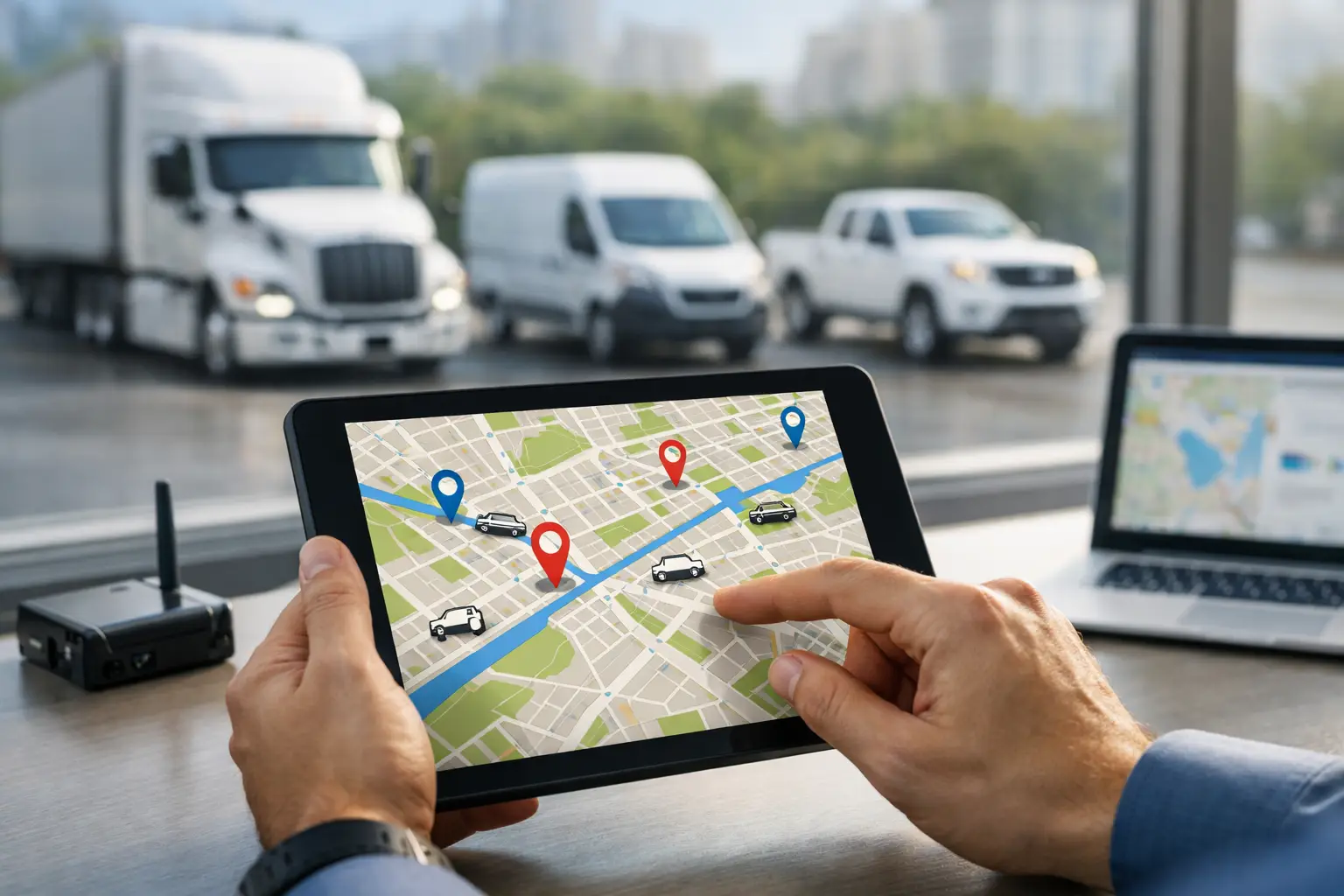

At 16:45 on a Friday, when a customer wants an ETA, a driver is close to hours, and a trailer is not where the depot thought it was, fleet tracking stops being a nice-to-have. It becomes the difference between controlled operations and avoidable disruption. For UK fleet operators, the value is not simply knowing where a vehicle is on a map. It is having live operational data that helps transport teams dispatch properly, protect compliance, reduce admin and make faster decisions under pressure.
Generic tracking systems often promise visibility but leave transport teams doing the hard work elsewhere. One platform for vehicles, another for cameras, another for tachograph downloads, then spreadsheets to stitch the gaps together. That is where many operators lose time and control. Good fleet tracking should reduce moving parts, not add to them.
What fleet tracking should do in a real operation
At its most basic, fleet tracking uses GPS and telematics data to show the live location and movement of vehicles and assets. In practice, commercial operators need far more than dots on a screen. They need to know which vehicles are moving, which are idle, which are due back, which drivers are nearing limits, and which assets are underused or off plan.
That matters across the working day. Dispatch planners need live positions to allocate work sensibly. Transport managers need visibility to respond to delays before they become service failures. Compliance teams need confidence that vehicle usage, driver activity and tachograph data are not drifting out of view. Directors want fewer wasted miles, lower fuel spend and a clearer picture of utilisation.
If a system cannot support those outcomes, it may be tracking, but it is not giving proper operational control.
Why fleet tracking matters beyond location
The biggest gains usually come from the areas operators already struggle with. One is admin. When teams rely on manual check-ins, paper records and spreadsheet updates, information is always slightly behind reality. That creates unnecessary calls to drivers, slower planning and more room for mistakes.
Another is compliance risk. For HGV operators especially, tracking works best when it sits alongside remote tachograph downloads and live driver hours monitoring. Location data on its own tells you where a vehicle is. Combined with compliance data, it tells you whether that vehicle can realistically take another job, return to base on time, or needs planning around legal limits. That is a different level of usefulness.
There is also the issue of asset visibility. Many fleets are not just managing powered vehicles. They are managing trailers, mixed van and lorry fleets, and vehicles that move between depots or subcontracted work. If trailers disappear into the background or unpowered assets are tracked separately, utilisation suffers and time is wasted searching for equipment the business already owns.
The difference between tracking and integrated control
This is where many buying decisions go wrong. Operators compare fleet tracking products on map screens and monthly price, then find the real cost sits elsewhere. Installation becomes more involved than expected. Reporting needs manual handling. Compliance still happens outside the system. The team ends up with a tracking tool rather than a working control platform.
Integrated control means the same platform supports vehicle tracking, trailer visibility, driver behaviour, tachograph data, maintenance prompts and operational reporting. It does not mean every fleet needs every feature switched on from day one. It means the system should fit the reality of transport operations, where planning, compliance and cost control overlap all the time.
For example, if a vehicle shows repeated idling at customer sites, that is not only a fuel issue. It may point to poor route planning, loading delays or a customer-side process problem. If one trailer is constantly used while another sits still for weeks, that is not only a visibility issue. It affects utilisation, maintenance planning and capital decisions. Integrated tracking helps operators see those patterns without digging through disconnected reports.
What UK operators should look for in fleet tracking
The best starting point is not feature volume. It is the day-to-day problems you need to solve.
If driver hours and tachograph management are consuming admin time, then tracking should work alongside remote downloads and live hours visibility. If dispatch teams are struggling to answer customer ETA queries, live maps and journey status matter more than novelty features. If fuel costs are rising, you need reporting that shows idling, harsh driving, route inefficiency and vehicle utilisation in a way managers can act on.
Ease of rollout also matters more than many suppliers admit. Long installation lead times and engineer dependency can slow down implementation across a fleet, especially for mixed assets. Plug-and-play hardware and straightforward setup reduce downtime and make it easier to scale. For busy operators, simplicity is not a bonus. It is part of the return on investment.
Pricing should be equally clear. Hidden charges for reports, downloads, support or extra modules are a common frustration. A monthly subscription only helps if operators can see exactly what is included and what they will need as the fleet grows.
Fleet tracking and operator licence protection
For UK transport businesses, operator licence protection is never far from the conversation. That is one reason generic fleet tracking often falls short. Visibility alone does not cover the compliance responsibilities that sit behind every vehicle movement.
A practical system helps reduce the chance of things being missed. Remote tachograph downloads remove the dependence on manual card and vehicle unit collection. Live driver hours information helps planners avoid avoidable infringements. Maintenance reminders support timely action before inspections and service intervals are missed. When these elements sit together, managers can act earlier instead of discovering problems after the event.
That does not mean software replaces management discipline. It does mean the right platform makes discipline easier to maintain. In transport, that difference matters.
The operational gains teams notice first
Most operators do not talk about telematics in abstract terms once it is working properly. They talk about fewer phone calls, quicker job allocation, less time chasing downloads and better answers when customers ask where a vehicle is.
Dispatchers notice that they can see the nearest available vehicle instead of guessing. Depot teams notice they spend less time hunting for trailers or checking whether a driver has returned. Compliance managers notice less manual handling of tachograph data. Business owners notice that reporting is faster and there is less dependency on one person keeping spreadsheets up to date.
Fuel savings and driver behaviour improvements are real, but they tend to build over time. The immediate benefit is usually control. Once that is in place, decisions get better and waste becomes easier to spot.
Where fleet tracking can disappoint
It is worth being honest about the trade-offs. Fleet tracking does not fix weak processes on its own. If planning is inconsistent, vehicle data may simply expose the inconsistency more clearly. If managers are overloaded and no one reviews alerts or reports, the system can become another stream of ignored information.
There is also a balance to strike with alerts and reporting. Too little data leaves blind spots. Too much data creates noise. The right setup depends on fleet type, operating hours, compliance exposure and the people using the platform day to day.
This is why purpose-built systems tend to outperform broad software. A transport operation needs information that leads to action, not dashboards for their own sake.
A better standard for fleet tracking
For commercial operators, fleet tracking should not be bought as an isolated map feature. It should be judged on whether it reduces admin, improves planning, strengthens compliance control and gives the business a clearer view of how vehicles, trailers and drivers are actually being used.
That is the thinking behind platforms such as Fleetalyse, where telematics, GPS tracking, smart dashcams and tachograph compliance are brought into one operational view. The point is not more technology. The point is less friction for transport teams that already have enough to manage.
If your current setup still relies on separate systems, manual downloads and too much guesswork between depot, dispatch and compliance, the issue is probably not a lack of data. It is that the data is not working together. Fleet tracking earns its place when it turns that gap into day-to-day control.