

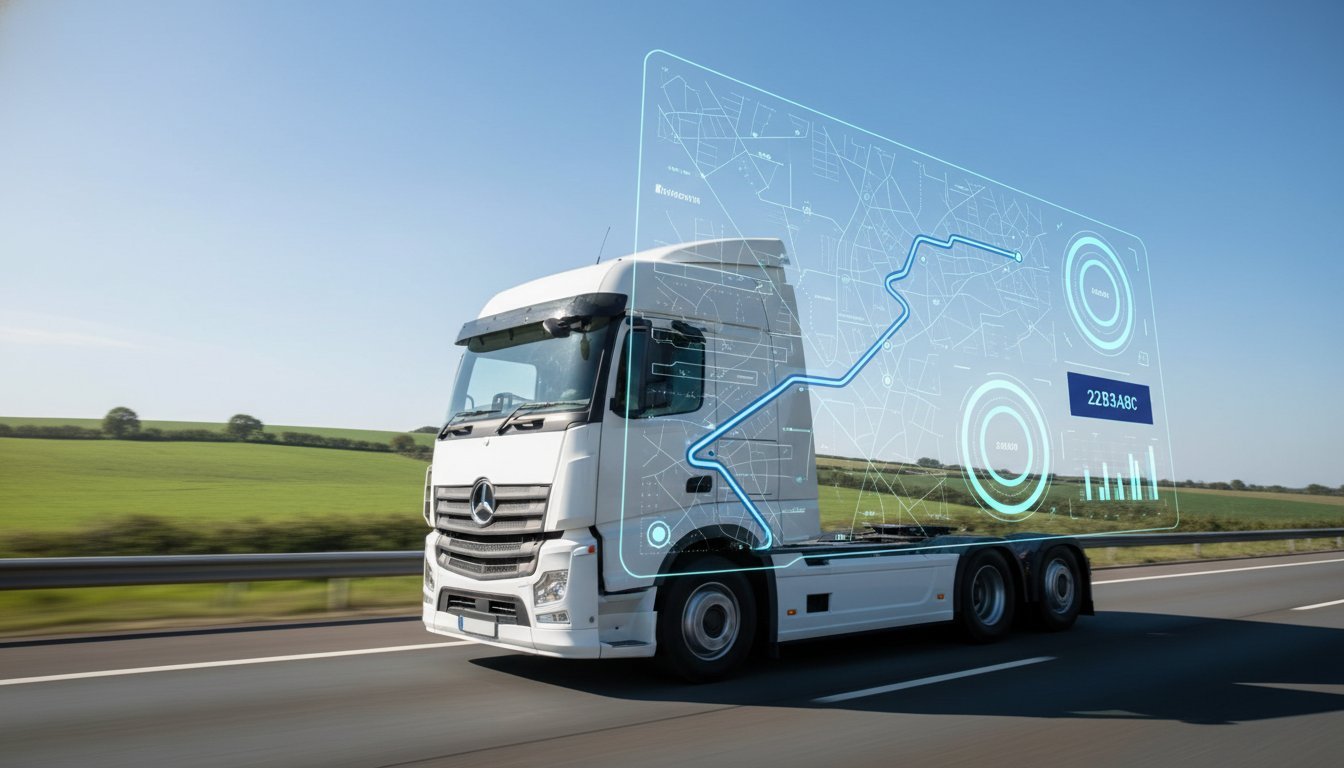
Your operator licence is the most valuable asset you own, but it is also the most vulnerable. With the July 2026 deadline for Smart Tachograph 2 installation in light commercial vehicles fast approaching, the margin for regulatory error has disappeared. You are likely juggling complex DVSA requirements whilst trying to contain spiralling fuel and maintenance costs. It is a relentless balancing act. Effective gps fleet tracking is no longer an optional luxury for the few. It is the essential data foundation required to protect your business from fixed penalties and vehicle immobilisation.
We understand that managing a regional fleet is increasingly difficult. You need full visibility of your HGVs and trailers without the constant headache of manual paperwork. This guide explains how to integrate modern tracking with UK compliance standards to safeguard your licence and improve efficiency. You will discover how automated reporting and live driver hours can reduce your administrative burden and put you back in control of your fleet's performance.
Key Takeaways
- Modern gps fleet tracking has evolved into a vital data ecosystem, moving far beyond simple map locations to protect your operator licence.
- High-frequency data acquisition from the CAN bus system provides the real-time visibility required to manage complex urban fleet movements.
- Integrating location data with live driver hours allows you to identify missing mileage and maintain strict DVSA compliance.
- Hardware requirements vary between HGVs and trailers. Always prioritise providers who offer transparent contract terms without hidden fees.
- Combining real-time GPS with tachograph analysis reduces your administrative burden and secures your fleet's operational future.
What is GPS Fleet Tracking in the 2026 UK Transport Landscape?
A modern Vehicle tracking system is no longer just a security tool for recovering stolen assets. In 2026, gps fleet tracking has evolved into a comprehensive management ecosystem that combines rugged hardware, Global Navigation Satellite System (GNSS) data, and sophisticated telematics software. It provides the real-time visibility required to run a profitable transport operation in an increasingly regulated environment. For UK operators, this technology is the primary source of truth for every HGV, van, and trailer in their fleet.
The transition from simple location pings to deep data integration is now complete. Modern systems don't just tell you where a vehicle is; they tell you how it’s being driven and whether it’s compliant with the latest UK standards. This shift is essential for long-term business sustainability. Without precise data, you cannot defend your operator licence or manage the rising costs of fuel and maintenance. It's the difference between proactive management and constant firefighting.
The Core Components of a Modern Tracking System
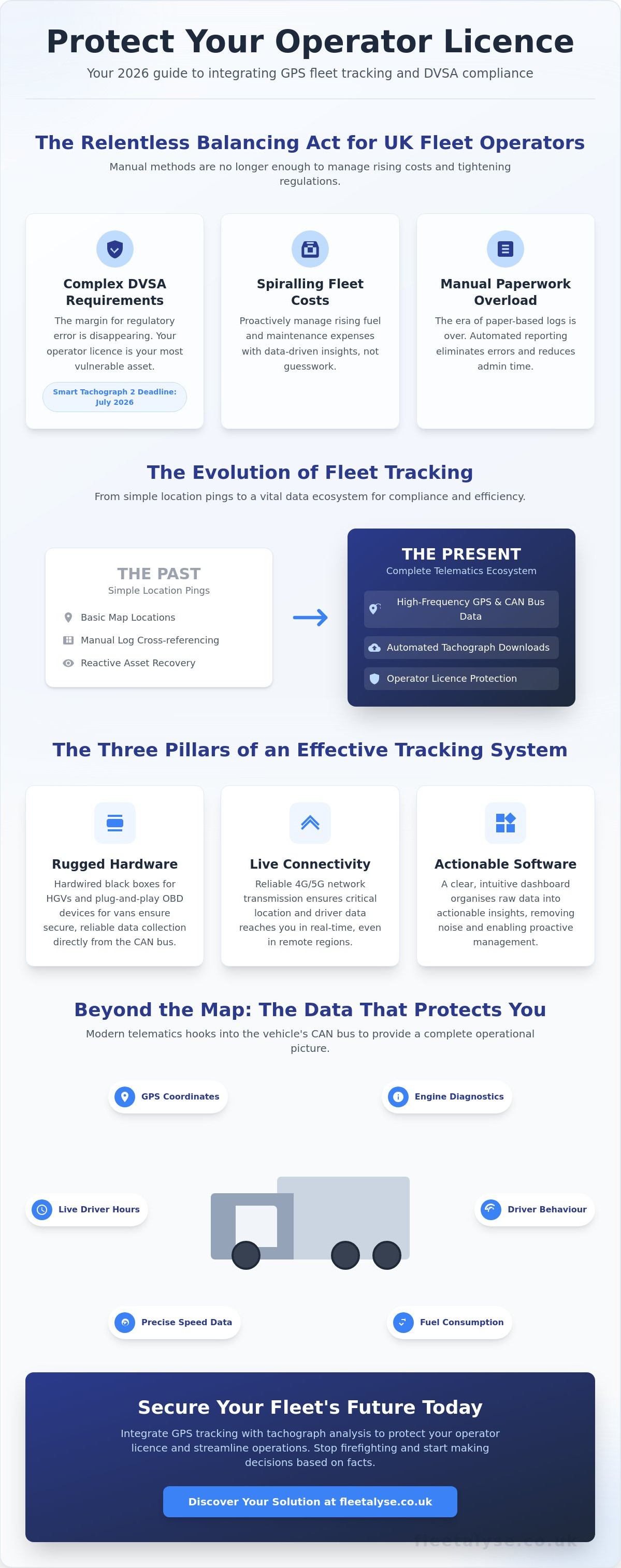
Every effective system relies on three pillars. First is the hardware. For vans, this often involves simple plug-and-play OBD devices. For HGVs, hardwired black boxes are the standard, offering more secure data collection from the vehicle’s internal systems. Second is connectivity. Reliable 4G and 5G networks ensure that critical location and behaviour data reaches your office whilst vehicles are in transit, even in remote regions.
Finally, the software acts as the brain of the operation. A well-designed dashboard at Fleetalyse focuses on organising raw data into actionable insights. It removes the noise, allowing you to see exactly which assets are performing and which require attention. This clarity is vital for regional operators who don't have time to sift through endless spreadsheets. It helps you make decisions based on facts rather than guesswork.
Why UK Operators Can No Longer Rely on Manual Logs
The era of paper-based records is over. With the July 1, 2026, deadline for Smart Tachograph 2 installation in vans over 2.5 tonnes used for international transport, the DVSA and HMRC now expect a digital-first approach to compliance. Manual logs are prone to error and open to challenge during audits. Digital gps fleet tracking removes this risk by providing an immutable record of vehicle movement. It validates driver hours and rest periods, ensuring your team stays within legal limits without the administrative burden of manual cross-referencing.
Accuracy also impacts your bottom line through improved customer service. In a market where delivery windows are shrinking, providing customers with precise ETAs is a competitive necessity. Reliable tracking data allows you to manage expectations and prove your reliability, which is the foundation of any successful transport business.
Beyond the Map: How GPS Telematics Actually Works
Understanding how gps fleet tracking functions under the bonnet is key to choosing the right hardware for your operation. It isn't just about seeing dots on a map. It's about the constant, secure flow of data from the vehicle's internal systems to your office. This technical foundation supports wider strategic goals, as highlighted by Forbes on fleet management, transforming raw signals into operational intelligence that protects your licence.
Modern trackers hook directly into the vehicle's Controller Area Network (CAN bus). This allows the device to read engine diagnostics, fuel levels, and precise speed data directly from the vehicle's own computer. For urban fleets, the frequency of "pings" is critical. A vehicle navigating London or Birmingham needs high-frequency updates to provide accurate location data amongst dense traffic and complex turnings. Low-frequency systems might only update every few minutes, leaving you blind to significant movements or idling events.
All gathered data is transmitted via a secure SIM card across the UK cellular network to cloud-based storage. This creates a permanent, tamper-proof historical record. When the DVSA requests an audit or a customer disputes a delivery time, you have the data to prove exactly what happened. If you are ready to secure your assets with reliable hardware, you can view our tracking options to get started today.
Data Acquisition and Real-Time Transmission
Trackers collect a wealth of information beyond simple coordinates. They monitor engine health indicators, fuel consumption, and harsh braking events. SIM cards act as the bridge, pushing this information to your dashboard in real-time. Telematics is the integration of telecommunications and informatics for vehicle monitoring. This combination ensures that you see what the driver sees, often before they even report an issue.
Geofencing and Asset Security
Geofencing is a virtual perimeter around a physical geographic area. It's a powerful tool for depot security and client site management. Alerts are triggered instantly when a vehicle enters or leaves a designated zone. This is particularly vital for trailer tracking. If a trailer is moved from your yard without authorisation, you receive an immediate notification. It prevents unauthorised asset movement and ensures your high-value equipment stays within your control, reducing the risk of theft or misuse.
The Compliance Advantage: Integrating GPS with Tachograph Data
Location data tells you where your asset is, but it doesn't tell the whole story. For a UK transport manager, a map coordinate is incomplete without the context of driver hours. Relying on separate silos for vehicle location and tachograph records creates dangerous blind spots that the DVSA will eventually find. Integrating gps fleet tracking with tachograph data transforms your compliance strategy from reactive to proactive. It creates a single source of truth that protects your reputation and your operator licence.
One of the most common issues during an audit is "missing mileage." This occurs when a vehicle moves without a driver card inserted, often during yard shunting or unauthorised use. GPS tracking identifies these movements instantly. It allows you to cross-reference vehicle location with tachograph records to account for every mile. Whether it’s legitimate "out of scope" driving or a genuine error, you have the data to explain the discrepancy before an inspector asks the question.
Live driver hours provide a real-time safeguard against infringements. Instead of discovering a rest-period violation days after it happened, you can see exactly how much driving time is remaining for every operator on the road. This visibility allows you to plan routes more effectively and intervene before a breach occurs. It moves the conversation from discipline to prevention, ensuring your fleet stays on the right side of the law whilst maintaining peak operational efficiency.
Remote Tachograph Downloads and GPS Synergy
The manual collection of tachograph data is a significant drain on resources. Modern GPS hardware facilitates remote tachograph downloads by pulling data directly from the vehicle unit and driver card wirelessly. The vehicle doesn't need to return to base, which is a major advantage for regional operators with drivers who live away from the depot. This integration reduces administrative time and eliminates the risk of manual data collection errors. Remote downloads ensure you never miss a legal deadline for driver card or vehicle unit data, keeping your records pristine for any potential inspection.
Monitoring Driver Behaviour for Safety and Compliance
Compliance also extends to how your vehicles are handled on the road. Integrated tracking identifies patterns of harsh braking, speeding, and excessive idling. These aren't just safety concerns; they are direct contributors to your bottom line. There is a proven link between smoother driving behaviour and reduced wear, tear, and fuel consumption. Using this data allows you to coach drivers based on facts rather than simply "policing" their movements. It fosters a culture of professional accountability where drivers understand that their performance is being monitored for the benefit of the whole business.
Choosing the Right GPS Fleet Tracking System: A UK Checklist
Choosing a provider is a high-stakes decision for any transport operator. Many global software companies offer flashy interfaces but lack a deep understanding of the UK regulatory framework. You need a system that isn't just a generic map tool; it must be a dedicated compliance partner. When evaluating gps fleet tracking options, prioritise transparency. Avoid contracts with hidden "per-user" fees or complex tiered pricing that inflates your monthly overheads. A reliable provider offers clear, upfront costs that reflect the practical needs of your operation.
Integration is another non-negotiable factor. Your tracking software should talk to your existing tachograph analysis tools. This creates a unified workflow for your transport manager, reducing the need to jump between different platforms. Localised, UK-based support is equally vital. When a device fails or a compliance report is unclear, you need to speak with an expert who understands DVSA standards, not a distant call centre. Reliable support ensures that technical issues don't become compliance failures.
Hardware Reliability and Installation
The physical device you choose depends on the asset. For vans, a self-fit tracker might suffice for basic location data. However, for HGVs, professional installation is often the better choice. Hardwired units are more secure and less prone to driver tampering. If you are investing in trailer tracking, ensure the hardware is IP-rated. Waterproof and dustproof casing is essential for equipment exposed to the British weather. Finally, confirm that any device you install is compatible with current 4G and 5G network standards to prevent future connectivity issues as older networks are phased out.
Software Usability and Reporting
A powerful dashboard should simplify your day, not complicate it. Look for platforms that allow you to customise reports for different stakeholders. Your transport manager might need granular data on driver hours, whilst your accountant requires high-level fuel consumption summaries. Mobile app functionality is also a priority. You shouldn't be tethered to a desk to see where your vehicles are or receive alerts. Automated notifications for maintenance and compliance events allow you to manage by exception, only intervening when the system identifies a potential problem.
If you are looking for a system built specifically for the UK market, you can order your hardware and subscriptions online to begin protecting your operator licence immediately.
Fleetalyse: Streamlining Your Fleet with Integrated Tracking
Fleetalyse is a UK specialist dedicated to transport compliance and asset management. We provide the technical infrastructure regional operators need to thrive in a high-pressure industry. Unlike generic global providers, our platform is built specifically for the rigours of the British transport landscape. We combine robust gps fleet tracking with live driver hours to offer a complete picture of your operational health. This integrated approach ensures you aren't just moving goods; you are protecting your operator licence with every mile.
Choosing a single partner for both your tracking hardware and compliance software eliminates the friction of managing multiple vendors. It simplifies your workflow. It reduces the risk of data gaps. At Fleetalyse, we act as a pragmatic ally, prioritising functional utility over flashy, unnecessary features. Our focus remains on providing the tools you need to stay compliant, efficient, and profitable through advanced gps fleet tracking.
Unified Visibility for HGVs, Vans, and Trailers
Managing a mixed fleet often leads to fragmented data. You might have one system for your HGVs and another for your light commercials or trailers. Fleetalyse provides a "helicopter view" of your entire operation through a single, intuitive interface. This unified visibility allows you to monitor asset locations and driver availability simultaneously. Whether you are tracking a long-haul tractor unit or a local delivery van, the data is presented with consistent clarity. Operators looking to consolidate their systems and remove operational silos can visit the Fleetalyse homepage to explore our full range of services.
The Fleetalyse Commitment to Transparency
We believe in straightforward pricing and honest partnerships. Hidden fees and "per-user" charges have no place in a professional transport environment. Our commitment to transparency extends beyond our rates to our expert UK-based support. When you have a question about a report or a device, you speak to a specialist who understands your daily struggles. We don't offer theoretical data; we offer practical solutions built for the real world.
Fleetalyse helps you stay audit-ready with minimal manual intervention. By automating the collection of location and tachograph data, we reduce the administrative burden on your transport manager. This pragmatic approach ensures your records are always accurate and accessible. We don't just provide a service; we offer the reliability and operational clarity required to run a modern, compliant fleet. Trust a partner that values your time and resources as much as you do.
Secure Your Fleet's Compliance for 2026
The 2026 transport landscape leaves no room for manual errors or fragmented data. Protecting your operator licence requires more than just a map; it demands the seamless integration of vehicle location with driver hours. By moving away from paper logs and adopting a system that facilitates remote tachograph downloads, you eliminate administrative friction and stay audit-ready. Reliable gps fleet tracking is the foundation of this proactive approach. It provides the visibility you need to manage mixed fleets of HGVs, vans, and trailers efficiently.
Don't leave your compliance to chance with generic software providers. Fleetalyse offers specialised HGV and trailer tracking solutions backed by UK-based industry experts who understand your daily operational challenges. Our platform ensures seamless remote tachograph download integration to keep your data current and your business protected. Optimise your fleet and secure your compliance with Fleetalyse today. We're ready to help you build a more resilient and profitable transport operation.
Frequently Asked Questions
Is GPS fleet tracking legal for UK businesses?
Yes, it is entirely legal provided you comply with UK GDPR and the Data Protection Act 2018. You must have a legitimate business reason for monitoring, such as ensuring driver safety or protecting high-value assets. It is essential to have a clear policy in place that outlines what data is being collected and how it is used to maintain transparency within your operation.
How much does a GPS fleet tracking system cost per vehicle?
Total costs depend on the hardware type and the depth of reporting your business requires. You will usually pay an upfront fee for the tracking device and installation, followed by a monthly subscription for the software platform. We recommend looking for providers who offer transparent, fixed pricing structures to avoid hidden "per-user" fees or unexpected data overage charges that can inflate your overheads.
Can GPS tracking help my fleet achieve DVSA Earned Recognition?
Yes, it is a fundamental tool for meeting the IT system standards required for the scheme. To qualify for Earned Recognition, you must share performance data with the DVSA to prove you are managing your fleet effectively. Integrating gps fleet tracking with your tachograph records provides the automated, verifiable data needed to demonstrate high levels of compliance and safety.
Do I need to inform my drivers if I install GPS trackers?
Yes, you are legally required to inform your drivers if you are using tracking technology. You should update your employee handbook or provide a separate privacy notice that explains the purpose of the tracking. Transparency is vital for maintaining a professional relationship with your team and ensures your business stays on the right side of UK data protection laws.
Will GPS tracking work for trailers and non-powered assets?
Yes, specialised trailer tracking units are designed specifically for assets that don't have their own power source. These devices use long-life internal batteries or solar panels to provide location data even when a trailer is uncoupled. This ensures you maintain full visibility of your equipment in third-party yards and can respond quickly if an asset is moved without authorisation.
Can I integrate my existing tachograph analysis software with GPS tracking?
Many professional systems allow for tachograph analysis integration to create a more efficient compliance workflow. This allows you to view driver hours alongside real-time location data in a single dashboard. It is an effective way to identify missing mileage and ensure that all vehicle movements are accounted for, which is a key requirement during DVSA audits.
How often is the vehicle location updated on the map?
Update frequencies vary based on your specific operational needs and the hardware you choose. For urban fleets navigating complex city streets, high-frequency updates every few seconds are often necessary for accuracy. For long-haul operations, updates might occur every few minutes to provide a reliable overview of progress whilst managing data transmission across the network.
What happens if a vehicle enters an area with poor mobile signal?
Modern gps fleet tracking devices are equipped with internal memory to store data when a cellular connection is unavailable. The unit continues to record coordinates, speed, and behaviour data as the vehicle moves. Once the vehicle returns to an area with 4G or 5G coverage, all stored information is automatically uploaded to the cloud to ensure your historical records are complete.
Frequently asked questions
The Core Components of a Modern Tracking System
Every effective system relies on three pillars. First is the hardware. For vans, this often involves simple plug-and-play OBD devices. For HGVs, hardwired black boxes are the standard, offering more secure data collection from the vehicle’s internal systems. Second is connectivity. Reliable 4G and 5G networks ensure that critical location and behaviour data reaches your office whilst vehicles are in transit, even in remote regions. Finally, the software acts as the brain of the operation. A well-designed dashboard at Fleetalyse focuses on organising raw data into actionable insights. It removes the noise, allowing you to see exactly which assets are performing and which require attention. This clarity is vital for regional operators who don't have time to sift through endless spreadsheets. It helps you make decisions based on facts rather than guesswork.
Why UK Operators Can No Longer Rely on Manual Logs
The era of paper-based records is over. With the July 1, 2026, deadline for Smart Tachograph 2 installation in vans over 2.5 tonnes used for international transport, the DVSA and HMRC now expect a digital-first approach to compliance. Manual logs are prone to error and open to challenge during audits. Digital gps fleet tracking removes this risk by providing an immutable record of vehicle movement. It validates driver hours and rest periods, ensuring your team stays within legal limits without the administrative burden of manual cross-referencing. Accuracy also impacts your bottom line through improved customer service. In a market where delivery windows are shrinking, providing customers with precise ETAs is a competitive necessity. Reliable tracking data allows you to manage expectations and prove your reliability, which is the foundation of any successful transport business. Understanding how gps fleet tracking functions under the bonnet is key to choosing the right hardware for your operation. It isn't just about seeing dots on a map. It's about the constant, secure flow of data from the vehicle's internal systems to your office. This technical foundation supports wider strategic goals, as highlighted by Forbes on fleet management, transforming raw signals into operational intelligence that protects your licence. Modern trackers hook directly into the vehicle's Controller Area Network (CAN bus). This allows the device to read engine diagnostics, fuel levels, and precise speed data directly from the vehicle's own computer. For urban fleets, the frequency of "pings" is critical. A vehicle navigating London or Birmingham needs high-frequency updates to provide accurate location data amongst dense traffic and complex turnings. Low-frequency systems might only update every few minutes, leaving you blind to significant movements or idling events. All gathered data is transmitted via a secure SIM card across the UK cellular network to cloud-based storage. This creates a permanent, tamper-proof historical record. When the DVSA requests an audit or a customer disputes a delivery time, you have the data to prove exactly what happened. If you are ready to secure your assets with reliable hardware, you can view our tracking options to get started today.
Data Acquisition and Real-Time Transmission
Trackers collect a wealth of information beyond simple coordinates. They monitor engine health indicators, fuel consumption, and harsh braking events. SIM cards act as the bridge, pushing this information to your dashboard in real-time. Telematics is the integration of telecommunications and informatics for vehicle monitoring. This combination ensures that you see what the driver sees, often before they even report an issue.
Geofencing and Asset Security
Geofencing is a virtual perimeter around a physical geographic area. It's a powerful tool for depot security and client site management. Alerts are triggered instantly when a vehicle enters or leaves a designated zone. This is particularly vital for trailer tracking. If a trailer is moved from your yard without authorisation, you receive an immediate notification. It prevents unauthorised asset movement and ensures your high-value equipment stays within your control, reducing the risk of theft or misuse. Location data tells you where your asset is, but it doesn't tell the whole story. For a UK transport manager, a map coordinate is incomplete without the context of driver hours. Relying on separate silos for vehicle location and tachograph records creates dangerous blind spots that the DVSA will eventually find. Integrating gps fleet tracking with tachograph data transforms your compliance strategy from reactive to proactive. It creates a single source of truth that protects your reputation and your operator licence. One of the most common issues during an audit is "missing mileage." This occurs when a vehicle moves without a driver card inserted, often during yard shunting or unauthorised use. GPS tracking identifies these movements instantly. It allows you to cross-reference vehicle location with tachograph records to account for every mile. Whether it’s legitimate "out of scope" driving or a genuine error, you have the data to explain the discrepancy before an inspector asks the question. Live driver hours provide a real-time safeguard against infringements. Instead of discovering a rest-period violation days after it happened, you can see exactly how much driving time is remaining for every operator on the road. This visibility allows you to plan routes more effectively and intervene before a breach occurs. It moves the conversation from discipline to prevention, ensuring your fleet stays on the right side of the law whilst maintaining peak operational efficiency.
Remote Tachograph Downloads and GPS Synergy
The manual collection of tachograph data is a significant drain on resources. Modern GPS hardware facilitates remote tachograph downloads by pulling data directly from the vehicle unit and driver card wirelessly. The vehicle doesn't need to return to base, which is a major advantage for regional operators with drivers who live away from the depot. This integration reduces administrative time and eliminates the risk of manual data collection errors. Remote downloads ensure you never miss a legal deadline for driver card or vehicle unit data, keeping your records pristine for any potential inspection.
Monitoring Driver Behaviour for Safety and Compliance
Compliance also extends to how your vehicles are handled on the road. Integrated tracking identifies patterns of harsh braking, speeding, and excessive idling. These aren't just safety concerns; they are direct contributors to your bottom line. There is a proven link between smoother driving behaviour and reduced wear, tear, and fuel consumption. Using this data allows you to coach drivers based on facts rather than simply "policing" their movements. It fosters a culture of professional accountability where drivers understand that their performance is being monitored for the benefit of the whole business. Choosing a provider is a high-stakes decision for any transport operator. Many global software companies offer flashy interfaces but lack a deep understanding of the UK regulatory framework. You need a system that isn't just a generic map tool; it must be a dedicated compliance partner. When evaluating gps fleet tracking options, prioritise transparency. Avoid contracts with hidden "per-user" fees or complex tiered pricing that inflates your monthly overheads. A reliable provider offers clear, upfront costs that reflect the practical needs of your operation. Integration is another non-negotiable factor. Your tracking software should talk to your existing tachograph analysis tools. This creates a unified workflow for your transport manager, reducing the need to jump between different platforms. Localised, UK-based support is equally vital. When a device fails or a compliance report is unclear, you need to speak with an expert who understands DVSA standards, not a distant call centre. Reliable support ensures that technical issues don't become compliance failures.
Hardware Reliability and Installation
The physical device you choose depends on the asset. For vans, a self-fit tracker might suffice for basic location data. However, for HGVs, professional installation is often the better choice. Hardwired units are more secure and less prone to driver tampering. If you are investing in trailer tracking, ensure the hardware is IP-rated. Waterproof and dustproof casing is essential for equipment exposed to the British weather. Finally, confirm that any device you install is compatible with current 4G and 5G network standards to prevent future connectivity issues as older networks are phased out.
Software Usability and Reporting
A powerful dashboard should simplify your day, not complicate it. Look for platforms that allow you to customise reports for different stakeholders. Your transport manager might need granular data on driver hours, whilst your accountant requires high-level fuel consumption summaries. Mobile app functionality is also a priority. You shouldn't be tethered to a desk to see where your vehicles are or receive alerts. Automated notifications for maintenance and compliance events allow you to manage by exception, only intervening when the system identifies a potential problem. If you are looking for a system built specifically for the UK market, you can order your hardware and subscriptions online to begin protecting your operator licence immediately. Fleetalyse is a UK specialist dedicated to transport compliance and asset management. We provide the technical infrastructure regional operators need to thrive in a high-pressure industry. Unlike generic global providers, our platform is built specifically for the rigours of the British transport landscape. We combine robust gps fleet tracking with live driver hours to offer a complete picture of your operational health. This integrated approach ensures you aren't just moving goods; you are protecting your operator licence with every mile. Choosing a single partner for both your tracking hardware and compliance software eliminates the friction of managing multiple vendors. It simplifies your workflow. It reduces the risk of data gaps. At Fleetalyse, we act as a pragmatic ally, prioritising functional utility over flashy, unnecessary features. Our focus remains on providing the tools you need to stay compliant, efficient, and profitable through advanced gps fleet tracking.
Unified Visibility for HGVs, Vans, and Trailers
Managing a mixed fleet often leads to fragmented data. You might have one system for your HGVs and another for your light commercials or trailers. Fleetalyse provides a "helicopter view" of your entire operation through a single, intuitive interface. This unified visibility allows you to monitor asset locations and driver availability simultaneously. Whether you are tracking a long-haul tractor unit or a local delivery van, the data is presented with consistent clarity. Operators looking to consolidate their systems and remove operational silos can visit the Fleetalyse homepage to explore our full range of services.
The Fleetalyse Commitment to Transparency
We believe in straightforward pricing and honest partnerships. Hidden fees and "per-user" charges have no place in a professional transport environment. Our commitment to transparency extends beyond our rates to our expert UK-based support. When you have a question about a report or a device, you speak to a specialist who understands your daily struggles. We don't offer theoretical data; we offer practical solutions built for the real world. Fleetalyse helps you stay audit-ready with minimal manual intervention. By automating the collection of location and tachograph data, we reduce the administrative burden on your transport manager. This pragmatic approach ensures your records are always accurate and accessible. We don't just provide a service; we offer the reliability and operational clarity required to run a modern, compliant fleet. Trust a partner that values your time and resources as much as you do. The 2026 transport landscape leaves no room for manual errors or fragmented data. Protecting your operator licence requires more than just a map; it demands the seamless integration of vehicle location with driver hours. By moving away from paper logs and adopting a system that facilitates remote tachograph downloads, you eliminate administrative friction and stay audit-ready. Reliable gps fleet tracking is the foundation of this proactive approach. It provides the visibility you need to manage mixed fleets of HGVs, vans, and trailers efficiently. Don't leave your compliance to chance with generic software providers. Fleetalyse offers specialised HGV and trailer tracking solutions backed by UK-based industry experts who understand your daily operational challenges. Our platform ensures seamless remote tachograph download integration to keep your data current and your business protected. Optimise your fleet and secure your compliance with Fleetalyse today. We're ready to help you build a more resilient and profitable transport operation.
Is GPS fleet tracking legal for UK businesses?
Yes, it is entirely legal provided you comply with UK GDPR and the Data Protection Act 2018. You must have a legitimate business reason for monitoring, such as ensuring driver safety or protecting high-value assets. It is essential to have a clear policy in place that outlines what data is being collected and how it is used to maintain transparency within your operation.
How much does a GPS fleet tracking system cost per vehicle?
Total costs depend on the hardware type and the depth of reporting your business requires. You will usually pay an upfront fee for the tracking device and installation, followed by a monthly subscription for the software platform. We recommend looking for providers who offer transparent, fixed pricing structures to avoid hidden "per-user" fees or unexpected data overage charges that can inflate your overheads.
Can GPS tracking help my fleet achieve DVSA Earned Recognition?
Yes, it is a fundamental tool for meeting the IT system standards required for the scheme. To qualify for Earned Recognition, you must share performance data with the DVSA to prove you are managing your fleet effectively. Integrating gps fleet tracking with your tachograph records provides the automated, verifiable data needed to demonstrate high levels of compliance and safety.
Do I need to inform my drivers if I install GPS trackers?
Yes, you are legally required to inform your drivers if you are using tracking technology. You should update your employee handbook or provide a separate privacy notice that explains the purpose of the tracking. Transparency is vital for maintaining a professional relationship with your team and ensures your business stays on the right side of UK data protection laws.
Will GPS tracking work for trailers and non-powered assets?
Yes, specialised trailer tracking units are designed specifically for assets that don't have their own power source. These devices use long-life internal batteries or solar panels to provide location data even when a trailer is uncoupled. This ensures you maintain full visibility of your equipment in third-party yards and can respond quickly if an asset is moved without authorisation.
Can I integrate my existing tachograph analysis software with GPS tracking?
Many professional systems allow for tachograph analysis integration to create a more efficient compliance workflow. This allows you to view driver hours alongside real-time location data in a single dashboard. It is an effective way to identify missing mileage and ensure that all vehicle movements are accounted for, which is a key requirement during DVSA audits.
How often is the vehicle location updated on the map?
Update frequencies vary based on your specific operational needs and the hardware you choose. For urban fleets navigating complex city streets, high-frequency updates every few seconds are often necessary for accuracy. For long-haul operations, updates might occur every few minutes to provide a reliable overview of progress whilst managing data transmission across the network.
What happens if a vehicle enters an area with poor mobile signal?
Modern gps fleet tracking devices are equipped with internal memory to store data when a cellular connection is unavailable. The unit continues to record coordinates, speed, and behaviour data as the vehicle moves. Once the vehicle returns to an area with 4G or 5G coverage, all stored information is automatically uploaded to the cloud to ensure your historical records are complete.