

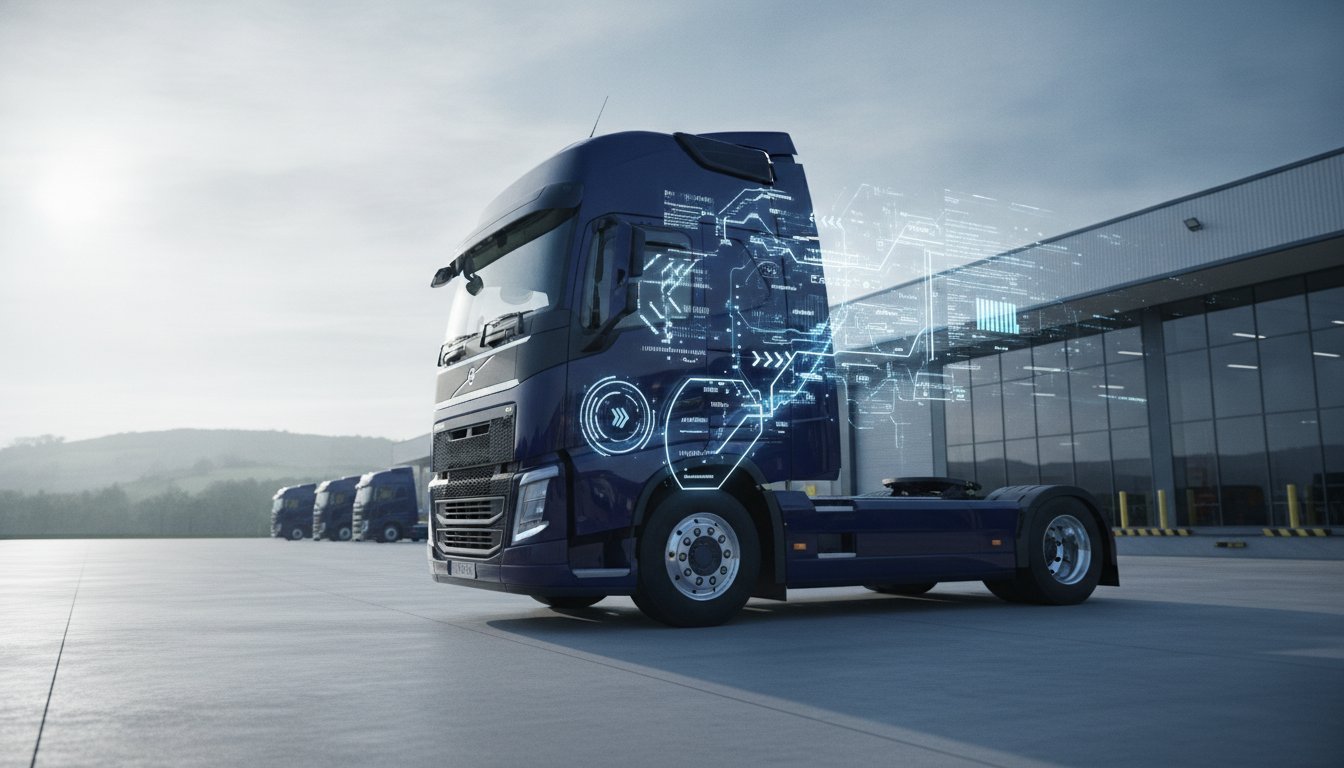
Chasing drivers for their cards and manually downloading vehicle units isn't just an administrative chore; it's a direct risk to your O-licence that your business cannot afford to take. You likely recognise the logistical headache of tracking down every vehicle in your fleet before the 28-day or 90-day deadlines expire. Managing separate tracking and compliance systems often creates more work than it solves, leaving you with fragmented data and the constant fear of a DVSA infringement.
By investing in a high-quality HGV GPS tracker with tachograph download, you can transform this burden into a 'touch-free' automated process. This guide will show you how to eliminate manual errors and ensure total compliance whilst saving hours of office time every week. We'll examine the essential features of remote data collection, the implications of the July 2026 smart tachograph 2 regulations, and how to gain real-time visibility of driver hours to keep your operation running smoothly. Discover how a single source of truth for location and compliance can provide the quiet confidence you need to manage your fleet effectively.
Key Takeaways
- Understand how an HGV GPS tracker with tachograph download bridges the gap between vehicle location and driver activity to create a single source of truth.
- Discover how to automate your 28-day driver card and 90-day vehicle unit downloads to ensure total DVSA compliance without manual intervention.
- Learn the mechanics of remote authentication, allowing your company card to remain securely in the office whilst data is pulled from vehicles on the road.
- Identify key criteria for selecting a provider, including how to spot hidden costs like roaming charges or per-download fees that inflate your budget.
- Gain real-time visibility of driver hours to prevent infringements and streamline your administrative workload for a more efficient regional operation.
What is an HGV GPS Tracker with Remote Tachograph Download?
An HGV GPS tracker with tachograph download is a unified telematics solution that merges vehicle location data with legal driver compliance. Historically, transport managers had to treat these as two separate tasks. You'd track the vehicle's location on one screen and chase the driver for their card on another. This combined system bridges that gap. It creates a single stream of data that flows directly from the vehicle's cab to your office computer. It's no longer just about knowing where a truck is; it's about knowing exactly how much driving time that driver has left whilst seeing their real-time position on a map.
The industry has shifted away from the logistical burden of manual, physical downloads. In the past, you'd wait for the vehicle to return to the depot, then use a download tool to pull the data. This often led to missed deadlines and administrative bottlenecks. Modern systems use 'over-the-air' (OTA) transfers. This means the data is pulled automatically on a schedule you define. For UK fleets in 2026, this technology is the standard. With the DVSA increasing its focus on data integrity, having an automated system is the only way to guarantee you never miss a 28-day or 90-day deadline.
The Evolution of Digital and Smart Tachographs
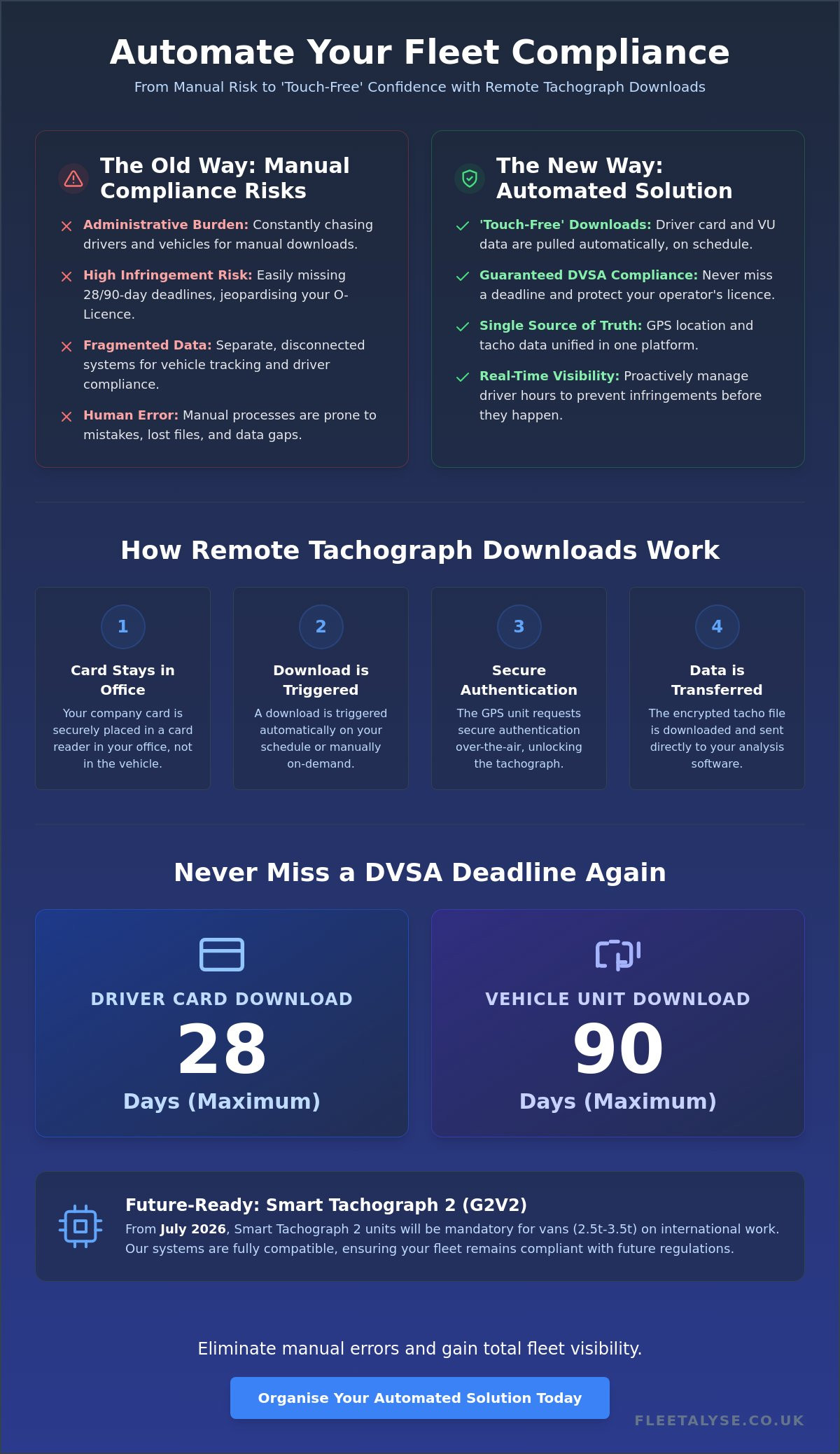
Tachograph technology has evolved rapidly to support better connectivity. We've moved from basic Gen 1 units to the sophisticated Smart Tachograph Version 2 (G2V2). You can find a detailed Digital Tachograph Explained to see how these units have changed over the decades. These latest G2V2 units are built for remote authentication. They include internal GPS modules that automatically record border crossings and load locations. This is vital for operators undertaking international work. From July 1, 2026, even vans between 2.5 and 3.5 tonnes used for international freight must be fitted with these smart units. A modern HGV GPS tracker with tachograph download acts as the gateway for this data, ensuring it reaches your analysis software without human intervention.
Why GPS Tracking and Tacho Data Belong Together
Consolidating your hardware makes practical sense. You don't need two separate devices cluttering the dashboard or two different SIM card subscriptions. When GPS and tacho data live in the same system, you gain a 'single source of truth' for your fleet. You can use location history to verify tacho entries; for example, confirming that a shift started exactly where the driver claimed. This level of transparency protects your business during audits. It simplifies the administrative dashboard for transport managers, allowing them to manage GPS Fleet Tracking and compliance in one place. It's a pragmatic approach that saves time and reduces the risk of human error.
The Technical Synergy: How Remote Downloads Actually Work
The HGV GPS tracker with tachograph download serves as a secure bridge between the vehicle and your office. It functions as a communication hub rather than a simple location device. Remote authentication is the core of this technical synergy. You no longer need a physical company card present at the vehicle to unlock the data. Instead, your company card remains in a card reader in your office or a secure data centre. When a download begins, the tracker requests authentication over the mobile network. The system verifies the card remotely, unlocking the vehicle unit (VU) for data transfer. This allows you to pull files whilst the vehicle is on the road, anywhere in the UK or Europe.
Security is handled through high-level encrypted protocols. This ensures that sensitive driver and vehicle files remain tamper-proof during transit. Operators typically use automatic triggers to maintain compliance. You can set the system to download driver cards every week and vehicle units every month. This proactive schedule ensures you never fall foul of the law. On-demand downloads are also available for immediate needs. If a driver leaves the company or a vehicle is sold, you can pull the data instantly to ensure your records are complete.
Hardware Integration with VDO and Stoneridge Units
The tracker connects to the tachograph's Remote Download (RDL) port, typically using the CAN bus. This physical connection allows the tracker to communicate with both VDO and Stoneridge units seamlessly. Most HGVs manufactured after 2006 are compatible with the correct interface. These European Tachograph Regulations have standardised how data is accessed, ensuring that modern telematics can pull accurate information without interfering with the vehicle's operation. It's a clean, reliable way to bridge the gap between heavy hardware and cloud-based software.
Live Driver Hours: Beyond Historical Records
Live data streaming is the real operational game-changer for regional fleets. The tracker sends real-time updates on driving, rest, and POA periods directly to your dashboard. This visibility helps you prevent 'over-hours' infringements before they occur. If a driver is nearing their 4.5-hour limit, you can act immediately to find a safe stopping point. You can also view our live hours hardware to see how this integrates with your current planning tools. This live insight ensures your dispatching is based on legal reality, not guesswork, making your entire operation more efficient and compliant.
Ensuring DVSA Compliance: The 28-Day and 90-Day Challenge
Managing a commercial fleet involves staying on top of strict legal deadlines. Missing a single download window can lead to heavy fines or even a public inquiry. The law is clear: driver card data must be downloaded every 28 days, and vehicle unit (VU) data every 90 days. However, waiting until day 27 or day 89 is a high-risk strategy. Implementing a robust HGV GPS tracker with tachograph download removes the human element from this equation. It ensures you maintain DVSA compliance with tachograph regulations without constant manual checks.
Automation provides more than just convenience; it builds a foolproof audit trail. When the DVSA inspects your records, they look for a consistent system of data management. An automated solution proves that you have proactive controls in place. These systems also handle the long-term archiving of your files. You are legally required to store tachograph data for a minimum of 12 months for enforcement, but many operators keep records for up to 6 years to support tax and employment evidence. A cloud-based tracker ensures these files are backed up and accessible instantly during an inspection.
Driver Card vs. Vehicle Unit: Different Rules, One System
Whilst the legal minimums are 28 and 90 days, most efficient operators choose a more frequent schedule. Weekly downloads for driver cards are common amongst well-managed fleets. This provides better visibility of driver hours and allows you to spot infringements early. A combined HGV GPS tracker with tachograph download also helps identify 'missing mileage'. This occurs when a vehicle is moved without a driver card inserted. By comparing GPS location data with tacho activity, the system flags these gaps immediately. You can then account for every mile the vehicle has travelled, closing compliance loopholes that manual systems often miss.
Tachograph Analysis Integration
The real value of remote downloading is found in how the data is processed. Raw tacho files are difficult to interpret without specialist tools. Modern trackers send data from the vehicle directly to the cloud, where it then flows into your chosen analysis platform. This seamless transfer reduces the risk of data corruption that can occur with manual USB uploads. It also saves significant administrative time. You can learn how Fleetalyse integrates with analysis software to streamline your entire compliance workflow. This integration ensures that by the time you sit down at your desk, the data is already analysed, infringements are flagged, and your reports are ready for review.
Selecting and Implementing a Remote Download Solution
Choosing the right HGV GPS tracker with tachograph download requires looking beyond the initial purchase price. Reliability and ongoing support are the pillars of a successful implementation. You need a provider that understands the practicalities of the UK transport sector. Transparency in costs is equally vital. Many operators find themselves trapped by hidden fees that weren't clear at the start. Watch out for roaming charges if your fleet crosses borders, or 'per-download' fees that penalise you for staying compliant. Avoid long-term, restrictive contracts that don't offer the flexibility your business needs as your fleet size fluctuates.
Preparation is key to a smooth transition. Start by gathering your vehicle details and ensuring your company card is ready for remote authentication. You should also inform your team about the change. Drivers often worry about 'big brother' technology; explain that this is a 'silent' download designed to help them. It removes their need to visit the office for manual downloads, giving them more time on the road or at home. A successful rollout depends on clear communication and a structured approach to hardware installation.
Assessing Your Current Fleet Infrastructure
Not every vehicle requires a full hardware overhaul. Some newer units may only need a simple software activation to begin remote transfers. However, older HGVs might need a specific HGV GPS tracker with tachograph download installed. This is also the ideal time to consider your wider asset management. You can often integrate Trailer Tracking or asset tracking into the same platform. A unified rollout ensures your entire fleet is visible on one screen, reducing the complexity of managing multiple vendors and logins.
The ROI of Automation
The financial benefits of automation are immediate and measurable. Consider the fuel used for vehicles to return to base solely for downloads. Factor in the driver's time and the administrative hours spent chasing cards amongst a busy workforce. Remote downloads can save an average of 2 hours per vehicle per month. This adds up quickly across a regional fleet. Most importantly, you reduce the risk of heavy fines and points on your Operator Licence. You can configure your remote download solution today to start seeing these returns and protecting your business's future.
Optimising Fleet Compliance with Fleetalyse Remote Solutions
Fleetalyse provides a pragmatic approach to UK transport compliance. We understand that regional operators don't need flashy, unnecessary features. You need a system that works reliably every single day. Our HGV GPS tracker with tachograph download is built for the rigours of real-world application. We prioritise functional utility and operational clarity. Unlike generic global software providers, we act as a localised specialist. We understand the specific challenges of UK infrastructure and DVSA regulations. Our service is designed to be the central nervous system of your compliant transport operation.
Transparency is the foundation of our service. We provide clear financial and contractual detail upfront. You won't find hidden complexities or unexpected costs here. We believe in honesty and fairness. This commitment differentiates us from competitors who often obscure their rates. We position ourselves as your pragmatic expert partner. Our goal is to save your time and resources through efficient, automated data management. We don't just sell software; we provide a reliable ally for your daily asset management struggles.
Our Combined GPS and Tacho Solution
Our system integrates real-time GPS tracking with live driver hours. This provides a single source of truth for your entire fleet. You can monitor vehicle locations whilst simultaneously tracking driving, rest, and POA periods. The data transfers are automated and secure. They occur in the background without ever interrupting your daily operations. Our hardware supports all major tachograph brands and offers seamless tachograph analysis integration. This ensures your data flows directly into your chosen analysis platform without any manual file handling or risk of data corruption.
Getting Started with Fleetalyse
We organise the setup and installation to minimise your vehicle downtime. Our team works quickly to get your fleet connected and compliant. You won't be left to figure out complex software on your own. We provide ongoing support from our UK-based team of experts who speak your language. We value your resources and aim for a frictionless transition to automated compliance. Our support is grounded in industry expertise and a genuine understanding of your operational needs. We move quickly from identifying your compliance gaps to offering a transparently detailed solution.
Contact Fleetalyse today to automate your HGV compliance. Take the first step toward a more efficient, 'touch-free' compliance workflow. Stop chasing cards and start focusing on your core business operations with total confidence in your DVSA standing.
Secure Your Operator Licence with Automated Compliance
Manual tachograph management is a legacy process that introduces unnecessary risk to your transport business. By implementing a high-quality HGV GPS tracker with tachograph download, you eliminate the logistical headache of chasing driver cards and the constant fear of missing vehicle unit deadlines. You've seen how this technology bridges the gap between live vehicle location and legal driver hours, providing the real-time visibility needed to prevent infringements before they occur.
Transitioning to an automated system is a pragmatic step for any regional operator looking to protect their O-licence whilst saving significant administrative hours. Fleetalyse offers a transparent solution backed by expert UK-based support and seamless tacho analysis integration. We don't believe in hidden download fees or complex contracts; we provide the reliable tools you need for a more efficient, compliant operation. It's time to move away from fragmented data and embrace a single source of truth for your fleet.
Book a demo of our remote tacho solution to start automating your compliance today. You'll soon wonder how your office managed without it.
Frequently Asked Questions
Do I still need to use my company card with remote tachograph downloads?
Yes, you still need your company card, but it no longer needs to travel to the vehicle. You place the card in a card reader connected to your office computer or a secure server. The system uses this card to authenticate the download request remotely. This process unlocks the vehicle unit data over the air, allowing you to pull files whilst the truck remains on the road.
How often does the remote system download the driver card data?
You can configure the download frequency to suit your operational needs. Whilst the legal limit is 28 days for driver cards, most operators set an automated schedule for every seven days. This provides more frequent visibility of driver hours and ensures you remain well within DVSA limits. The vehicle unit is typically set to download every 30 to 90 days automatically without manual intervention.
Will remote tachograph download work if the vehicle is out of the country?
Remote downloads work seamlessly across Europe and beyond, provided the vehicle has a mobile data connection. The HGV GPS tracker with tachograph download uses a roaming SIM card to transmit data back to your office. This is particularly useful for international hauliers who may not see their vehicles for several weeks at a time, ensuring deadlines are never missed due to the vehicle's location.
Can the DVSA see my live driver hours remotely?
No, the DVSA does not have live, remote access to your private telematics or tacho data. They can only view your records during a roadside stop or a formal premises audit. However, using a remote system helps you ensure that the records you present to them are accurate and complete. This prevents common infringements found in manual systems that often lead to fines during inspections.
What happens if the GPS tracker loses signal during a tacho download?
If the signal is lost, the system simply pauses the transfer and resumes once a connection is re-established. Modern hardware includes internal memory to buffer data, so no information is lost during the interruption. The software manages the handshake between the vehicle and the server, ensuring the final file is complete and uncorrupted before it reaches your analysis platform for processing.
Is the hardware difficult to install in older HGVs?
Most HGVs manufactured after 2006 are compatible with remote download technology. The installation typically involves connecting the tracker to the tachograph's rear ports via the CAN bus. For older vehicles, we assess the specific vehicle unit version to ensure it supports remote data transfer. Our team handles the technical setup to ensure the hardware communicates correctly with your existing vehicle infrastructure without causing downtime.
How much does a remote tachograph download system cost per vehicle?
Pricing typically consists of an upfront hardware cost and a monthly subscription fee. We avoid hidden per-download charges or roaming fees that can unexpectedly inflate your budget. The investment usually pays for itself through reduced fuel costs and administrative time savings. We provide full financial clarity upfront so you can calculate the exact return on investment for your specific fleet size and operational requirements.
Does the system work with both VDO and Stoneridge tachographs?
Yes, the system is fully compatible with both VDO and Stoneridge tachograph units. It's designed to work with all digital and smart tachograph versions, including the latest G2V2 units required for international work. This cross-brand compatibility ensures you can manage a mixed fleet through a single HGV GPS tracker with tachograph download interface, simplifying your overall compliance management and data analysis workflow.
Frequently asked questions
The Evolution of Digital and Smart Tachographs
Tachograph technology has evolved rapidly to support better connectivity. We've moved from basic Gen 1 units to the sophisticated Smart Tachograph Version 2 (G2V2). You can find a detailed Digital Tachograph Explained to see how these units have changed over the decades. These latest G2V2 units are built for remote authentication. They include internal GPS modules that automatically record border crossings and load locations. This is vital for operators undertaking international work. From July 1, 2026, even vans between 2.5 and 3.5 tonnes used for international freight must be fitted with these smart units. A modern HGV GPS tracker with tachograph download acts as the gateway for this data, ensuring it reaches your analysis software without human intervention.
Why GPS Tracking and Tacho Data Belong Together
Consolidating your hardware makes practical sense. You don't need two separate devices cluttering the dashboard or two different SIM card subscriptions. When GPS and tacho data live in the same system, you gain a 'single source of truth' for your fleet. You can use location history to verify tacho entries; for example, confirming that a shift started exactly where the driver claimed. This level of transparency protects your business during audits. It simplifies the administrative dashboard for transport managers, allowing them to manage GPS Fleet Tracking and compliance in one place. It's a pragmatic approach that saves time and reduces the risk of human error. The HGV GPS tracker with tachograph download serves as a secure bridge between the vehicle and your office. It functions as a communication hub rather than a simple location device. Remote authentication is the core of this technical synergy. You no longer need a physical company card present at the vehicle to unlock the data. Instead, your company card remains in a card reader in your office or a secure data centre. When a download begins, the tracker requests authentication over the mobile network. The system verifies the card remotely, unlocking the vehicle unit (VU) for data transfer. This allows you to pull files whilst the vehicle is on the road, anywhere in the UK or Europe. Security is handled through high-level encrypted protocols. This ensures that sensitive driver and vehicle files remain tamper-proof during transit. Operators typically use automatic triggers to maintain compliance. You can set the system to download driver cards every week and vehicle units every month. This proactive schedule ensures you never fall foul of the law. On-demand downloads are also available for immediate needs. If a driver leaves the company or a vehicle is sold, you can pull the data instantly to ensure your records are complete.
Hardware Integration with VDO and Stoneridge Units
The tracker connects to the tachograph's Remote Download (RDL) port, typically using the CAN bus. This physical connection allows the tracker to communicate with both VDO and Stoneridge units seamlessly. Most HGVs manufactured after 2006 are compatible with the correct interface. These European Tachograph Regulations have standardised how data is accessed, ensuring that modern telematics can pull accurate information without interfering with the vehicle's operation. It's a clean, reliable way to bridge the gap between heavy hardware and cloud-based software.
Live Driver Hours: Beyond Historical Records
Live data streaming is the real operational game-changer for regional fleets. The tracker sends real-time updates on driving, rest, and POA periods directly to your dashboard. This visibility helps you prevent 'over-hours' infringements before they occur. If a driver is nearing their 4.5-hour limit, you can act immediately to find a safe stopping point. You can also view our live hours hardware to see how this integrates with your current planning tools. This live insight ensures your dispatching is based on legal reality, not guesswork, making your entire operation more efficient and compliant. Managing a commercial fleet involves staying on top of strict legal deadlines. Missing a single download window can lead to heavy fines or even a public inquiry. The law is clear: driver card data must be downloaded every 28 days, and vehicle unit (VU) data every 90 days. However, waiting until day 27 or day 89 is a high-risk strategy. Implementing a robust HGV GPS tracker with tachograph download removes the human element from this equation. It ensures you maintain DVSA compliance with tachograph regulations without constant manual checks. Automation provides more than just convenience; it builds a foolproof audit trail. When the DVSA inspects your records, they look for a consistent system of data management. An automated solution proves that you have proactive controls in place. These systems also handle the long-term archiving of your files. You are legally required to store tachograph data for a minimum of 12 months for enforcement, but many operators keep records for up to 6 years to support tax and employment evidence. A cloud-based tracker ensures these files are backed up and accessible instantly during an inspection.
Driver Card vs. Vehicle Unit: Different Rules, One System
Whilst the legal minimums are 28 and 90 days, most efficient operators choose a more frequent schedule. Weekly downloads for driver cards are common amongst well-managed fleets. This provides better visibility of driver hours and allows you to spot infringements early. A combined HGV GPS tracker with tachograph download also helps identify 'missing mileage'. This occurs when a vehicle is moved without a driver card inserted. By comparing GPS location data with tacho activity, the system flags these gaps immediately. You can then account for every mile the vehicle has travelled, closing compliance loopholes that manual systems often miss.
Tachograph Analysis Integration
The real value of remote downloading is found in how the data is processed. Raw tacho files are difficult to interpret without specialist tools. Modern trackers send data from the vehicle directly to the cloud, where it then flows into your chosen analysis platform. This seamless transfer reduces the risk of data corruption that can occur with manual USB uploads. It also saves significant administrative time. You can learn how Fleetalyse integrates with analysis software to streamline your entire compliance workflow. This integration ensures that by the time you sit down at your desk, the data is already analysed, infringements are flagged, and your reports are ready for review. Choosing the right HGV GPS tracker with tachograph download requires looking beyond the initial purchase price. Reliability and ongoing support are the pillars of a successful implementation. You need a provider that understands the practicalities of the UK transport sector. Transparency in costs is equally vital. Many operators find themselves trapped by hidden fees that weren't clear at the start. Watch out for roaming charges if your fleet crosses borders, or 'per-download' fees that penalise you for staying compliant. Avoid long-term, restrictive contracts that don't offer the flexibility your business needs as your fleet size fluctuates. Preparation is key to a smooth transition. Start by gathering your vehicle details and ensuring your company card is ready for remote authentication. You should also inform your team about the change. Drivers often worry about 'big brother' technology; explain that this is a 'silent' download designed to help them. It removes their need to visit the office for manual downloads, giving them more time on the road or at home. A successful rollout depends on clear communication and a structured approach to hardware installation.
Assessing Your Current Fleet Infrastructure
Not every vehicle requires a full hardware overhaul. Some newer units may only need a simple software activation to begin remote transfers. However, older HGVs might need a specific HGV GPS tracker with tachograph download installed. This is also the ideal time to consider your wider asset management. You can often integrate Trailer Tracking or asset tracking into the same platform. A unified rollout ensures your entire fleet is visible on one screen, reducing the complexity of managing multiple vendors and logins.
The ROI of Automation
The financial benefits of automation are immediate and measurable. Consider the fuel used for vehicles to return to base solely for downloads. Factor in the driver's time and the administrative hours spent chasing cards amongst a busy workforce. Remote downloads can save an average of 2 hours per vehicle per month. This adds up quickly across a regional fleet. Most importantly, you reduce the risk of heavy fines and points on your Operator Licence. You can configure your remote download solution today to start seeing these returns and protecting your business's future. Fleetalyse provides a pragmatic approach to UK transport compliance. We understand that regional operators don't need flashy, unnecessary features. You need a system that works reliably every single day. Our HGV GPS tracker with tachograph download is built for the rigours of real-world application. We prioritise functional utility and operational clarity. Unlike generic global software providers, we act as a localised specialist. We understand the specific challenges of UK infrastructure and DVSA regulations. Our service is designed to be the central nervous system of your compliant transport operation. Transparency is the foundation of our service. We provide clear financial and contractual detail upfront. You won't find hidden complexities or unexpected costs here. We believe in honesty and fairness. This commitment differentiates us from competitors who often obscure their rates. We position ourselves as your pragmatic expert partner. Our goal is to save your time and resources through efficient, automated data management. We don't just sell software; we provide a reliable ally for your daily asset management struggles.
Our Combined GPS and Tacho Solution
Our system integrates real-time GPS tracking with live driver hours. This provides a single source of truth for your entire fleet. You can monitor vehicle locations whilst simultaneously tracking driving, rest, and POA periods. The data transfers are automated and secure. They occur in the background without ever interrupting your daily operations. Our hardware supports all major tachograph brands and offers seamless tachograph analysis integration. This ensures your data flows directly into your chosen analysis platform without any manual file handling or risk of data corruption.
Getting Started with Fleetalyse
We organise the setup and installation to minimise your vehicle downtime. Our team works quickly to get your fleet connected and compliant. You won't be left to figure out complex software on your own. We provide ongoing support from our UK-based team of experts who speak your language. We value your resources and aim for a frictionless transition to automated compliance. Our support is grounded in industry expertise and a genuine understanding of your operational needs. We move quickly from identifying your compliance gaps to offering a transparently detailed solution. Contact Fleetalyse today to automate your HGV compliance. Take the first step toward a more efficient, 'touch-free' compliance workflow. Stop chasing cards and start focusing on your core business operations with total confidence in your DVSA standing. Manual tachograph management is a legacy process that introduces unnecessary risk to your transport business. By implementing a high-quality HGV GPS tracker with tachograph download, you eliminate the logistical headache of chasing driver cards and the constant fear of missing vehicle unit deadlines. You've seen how this technology bridges the gap between live vehicle location and legal driver hours, providing the real-time visibility needed to prevent infringements before they occur. Transitioning to an automated system is a pragmatic step for any regional operator looking to protect their O-licence whilst saving significant administrative hours. Fleetalyse offers a transparent solution backed by expert UK-based support and seamless tacho analysis integration. We don't believe in hidden download fees or complex contracts; we provide the reliable tools you need for a more efficient, compliant operation. It's time to move away from fragmented data and embrace a single source of truth for your fleet. Book a demo of our remote tacho solution to start automating your compliance today. You'll soon wonder how your office managed without it.
Do I still need to use my company card with remote tachograph downloads?
Yes, you still need your company card, but it no longer needs to travel to the vehicle. You place the card in a card reader connected to your office computer or a secure server. The system uses this card to authenticate the download request remotely. This process unlocks the vehicle unit data over the air, allowing you to pull files whilst the truck remains on the road.
How often does the remote system download the driver card data?
You can configure the download frequency to suit your operational needs. Whilst the legal limit is 28 days for driver cards, most operators set an automated schedule for every seven days. This provides more frequent visibility of driver hours and ensures you remain well within DVSA limits. The vehicle unit is typically set to download every 30 to 90 days automatically without manual intervention.
Will remote tachograph download work if the vehicle is out of the country?
Remote downloads work seamlessly across Europe and beyond, provided the vehicle has a mobile data connection. The HGV GPS tracker with tachograph download uses a roaming SIM card to transmit data back to your office. This is particularly useful for international hauliers who may not see their vehicles for several weeks at a time, ensuring deadlines are never missed due to the vehicle's location.
Can the DVSA see my live driver hours remotely?
No, the DVSA does not have live, remote access to your private telematics or tacho data. They can only view your records during a roadside stop or a formal premises audit. However, using a remote system helps you ensure that the records you present to them are accurate and complete. This prevents common infringements found in manual systems that often lead to fines during inspections.
What happens if the GPS tracker loses signal during a tacho download?
If the signal is lost, the system simply pauses the transfer and resumes once a connection is re-established. Modern hardware includes internal memory to buffer data, so no information is lost during the interruption. The software manages the handshake between the vehicle and the server, ensuring the final file is complete and uncorrupted before it reaches your analysis platform for processing.
Is the hardware difficult to install in older HGVs?
Most HGVs manufactured after 2006 are compatible with remote download technology. The installation typically involves connecting the tracker to the tachograph's rear ports via the CAN bus. For older vehicles, we assess the specific vehicle unit version to ensure it supports remote data transfer. Our team handles the technical setup to ensure the hardware communicates correctly with your existing vehicle infrastructure without causing downtime.
How much does a remote tachograph download system cost per vehicle?
Pricing typically consists of an upfront hardware cost and a monthly subscription fee. We avoid hidden per-download charges or roaming fees that can unexpectedly inflate your budget. The investment usually pays for itself through reduced fuel costs and administrative time savings. We provide full financial clarity upfront so you can calculate the exact return on investment for your specific fleet size and operational requirements.
Does the system work with both VDO and Stoneridge tachographs?
Yes, the system is fully compatible with both VDO and Stoneridge tachograph units. It's designed to work with all digital and smart tachograph versions, including the latest G2V2 units required for international work. This cross-brand compatibility ensures you can manage a mixed fleet through a single HGV GPS tracker with tachograph download interface, simplifying your overall compliance management and data analysis workflow.