

How many hours did you lose last week chasing drivers across the yard to retrieve tachograph cards? It's a common frustration for fleet operators who still rely on manual data collection. Between tracking down vehicle units and fixing manual entry errors, the administrative burden is relentless. You're likely already aware that missing a DVSA deadline isn't just an inconvenience; it's a risk to your operator licence that could result in fines of up to £5,000.
The good news is that you can save admin time tachograph downloads by moving to a fully automated system. We understand the pressure of regional logistics and the need for tools that actually work in the real world. This article explains how to transition to a "set and forget" compliance model that offers real-time visibility of driver hours without the paperwork. We will look at how remote technology removes the manual chase, keeps you ahead of the July 2026 Smart Tachograph 2 requirements, and gives you back the hours you currently spend on data entry.
Key Takeaways
- Learn how to save admin time tachograph downloads by replacing manual data retrieval with a wireless, automated system.
- Identify the hidden costs of manual collection, including vehicle downtime and the labour required to chase drivers for card downloads.
- Discover how Live Driver Hours provide real-time visibility into remaining drive time and break status to prevent infringements before they occur.
- Understand how automated hardware integrates with your current analysis software to ensure constant compliance without manual intervention.
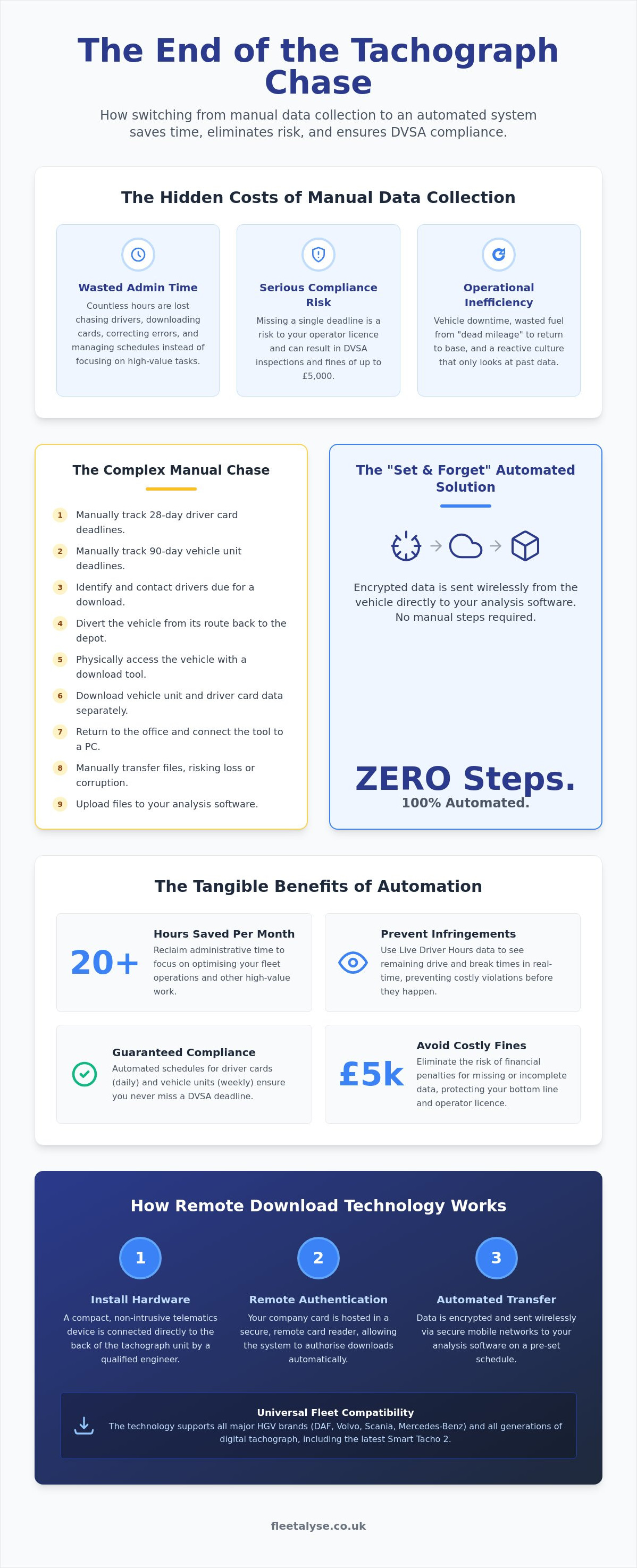
- Compare the 12-step manual download process with a 0-step remote solution to reclaim up to 20 hours of administrative time every month.
The True Cost of Manual Tachograph Data Collection
Manual data collection is more than a nuisance. It acts as a constant drain on your operational resources while increasing your exposure to regulatory risk. A remote tachograph download is the encrypted, wireless transfer of vehicle unit (VU) and driver card data directly to your analysis platform. It removes the need for physical contact with the vehicle. For many regional operators, the administrative burden of handling this manually is the primary bottleneck in modern fleet compliance.
The true cost of manual systems isn't found on a single invoice. It's hidden in vehicle downtime, wasted fuel, and expensive manager labour. Understanding what is a tachograph and its strict data requirements is essential. Driver cards must be downloaded every 28 days, and vehicle units every 90 days. Staying on top of these deadlines manually requires constant vigilance. If you want to save admin time tachograph downloads, you must first acknowledge how much time your current "chase" consumes.
The "Chase" Factor: Why Manual Systems Fail
Coordinating driver schedules for physical card downloads is a logistical nightmare. Drivers are often on the road or at remote sites when their 28-day limit approaches. This leads to a frantic rush to get them back to base. Manual transfers to a PC also carry significant risks. Files can easily be corrupted or lost during the move from a download tool to an office computer. If these deadlines are consistently missed, the impact on your Operator Licence is severe. The DVSA views missing data as a sign of poor management, which can lead to increased inspections or even public inquiries.
Impact on Operational Efficiency
Manual admin prevents transport managers from focusing on high-value tasks like route optimisation or fuel management. Instead of improving the business, they spend hours filing data and checking calendars. There is also the literal cost of "dead mileage". Sending a vehicle back to the yard specifically for a download wastes fuel and driver hours. This manual approach creates a reactive compliance culture. You're always looking at what happened weeks ago rather than managing your fleet in real time. Moving to an automated solution through Fleetalyse shifts this dynamic. It turns a chaotic manual process into a background task that requires zero daily input from your team.
How Remote Tachograph Download Technology Automates Compliance
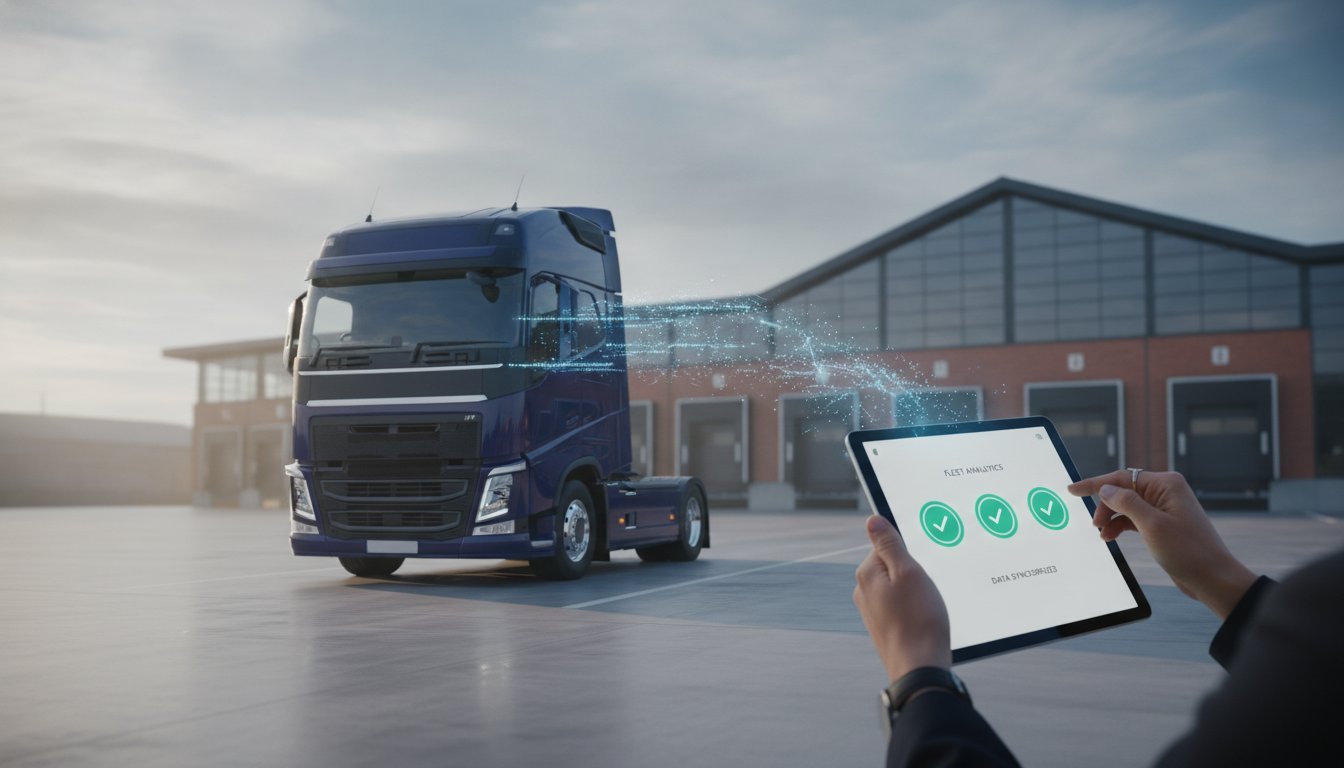
Remote tachograph technology is built on a straightforward hardware foundation. A small telematics device connects directly to the rear of the digital tachograph unit. Once installed, it functions as an invisible bridge between the vehicle and your analysis software. It uses encrypted GPRS or 4G networks to transmit data securely. This encryption ensures that sensitive driver information remains protected, meeting all modern data security and GDPR standards. By automating this transfer, you can finally save admin time tachograph downloads and stop worrying about physical data retrieval.
Data security is paramount when handling driver records. The transmission process uses high-level encryption protocols to ensure that data cannot be intercepted during transit. Once the data reaches the analysis server, it's stored in a secure environment that complies with all UK GDPR requirements. This gives both operators and drivers peace of mind that their personal information is handled with the highest level of care. It's a professional solution for a serious regulatory requirement.
Automated Schedules: Removing Human Error
The real power of this system lies in its scheduling. You can configure the hardware to download driver cards every 24 hours and vehicle units weekly. This is far more frequent than the legal minimums of 28 and 90 days. To facilitate this, your company card is hosted in a secure remote card rack. When the schedule triggers, the system authenticates using the remote card and pulls the data wirelessly. This "set and forget" approach ensures you never miss a deadline set by EU tachograph regulations or DVSA standards. It eliminates the risk of human error where a manager simply forgets to check the calendar.
Universal Compatibility with UK Fleets
Modern fleets are often a mix of different brands and ages. Our technology is designed for universal application. It supports older digital units as well as the latest Smart Tacho 1 and 2 (Gen 1 and Gen 2) systems. Whether you operate DAF, Volvo, Scania, or Mercedes-Benz HGVs, the hardware provides consistent performance across the board. This compatibility is vital for future-proofing your operations. With the 2G network shutdown approaching across the UK and Europe, choosing a 4G-enabled solution ensures your equipment remains functional for the long term. If you're ready to modernise your compliance, you can explore our remote download solutions to see how they fit your fleet.
Manual vs. Remote Downloads: A Time and Cost Comparison
The difference between manual and remote systems is the difference between a 12-step chore and a zero-step background process. Manual downloading requires a manager to locate the driver, retrieve the card, find the vehicle, and use a physical download tool. They must then walk to a PC, upload the files, and manually check for errors. This cycle repeats for every driver and every vehicle unit. When you switch to automation, these steps vanish. You save admin time tachograph downloads by letting the hardware handle the heavy lifting while you focus on moving freight.
Most operators don't realise how much they spend on "compliance labour" until they see it written down. Manual systems are inherently inefficient because they rely on the physical presence of both the vehicle and the manager. Remote technology breaks this link. It allows data to flow from any location at any time. This shift from manual to digital is the most effective way to streamline a modern transport office.
The 10-Vehicle Fleet Case Study
Consider a typical fleet of 10 vehicles. To maintain compliance manually, a transport manager spends roughly 1.5 to 2 hours per vehicle every month. This includes the "chase time" spent coordinating with drivers and the technical time spent processing data. Across 10 vehicles, that totals 15 to 20 hours of administrative labour every month. If you value manager time at even £25 per hour, you're losing up to £500 monthly just on data retrieval. A remote download subscription typically costs less than one hour of a manager's time. The return on investment is immediate and measurable.
Automation also acts as a form of compliance insurance. It removes the variability of human schedules. Whether a driver is on a long-haul route or taking their rest period, the data flows consistently. You pay a small, fixed monthly fee to reclaim half a working week of your time. This isn't just about convenience; it's about making your operation more profitable by reducing unnecessary overheads.
Reducing the Risk of DVSA Fines
Instant data access transforms how you handle infringements. With manual systems, you might only discover a driving hour violation 28 days after it happened. By then, the driver may have repeated the mistake multiple times. Remote downloads allow for immediate corrective training. This proactive approach is essential for operators aiming for Earned Recognition status. It builds a robust, digital audit trail that proves you are in control of your fleet.
The financial stakes are high. A single "missing data" fine can reach £5,000 per offence. Roadside fines for drivers can hit £300 on the spot. Compared to these costs, the price of an automated system is negligible. You aren't just buying software; you're protecting your Operator Licence and your bottom line from avoidable penalties.
Beyond Downloads: Using Live Driver Hours to Prevent Infringements
Remote downloads solve the problem of historical compliance, but Live Driver Hours manage your operational future. This technology provides a real-time window into your drivers' current status, including remaining drive time, break durations, and weekly limits. By seeing this data as it happens, dispatchers can intervene before a mistake occurs. It's a proactive shield that complements the way you save admin time tachograph downloads by removing the need for constant phone calls to check how much time a driver has left on their shift.
Managing infringements after they happen is a significant drain on resources. Every time a driver exceeds their hours, it triggers a chain of administrative tasks, including disciplinary meetings and manual record-keeping. Live data cuts this cycle short. It transforms compliance from a retrospective filing exercise into a live operational tool. This ensures that the data you eventually download is clean and free from avoidable violations, further reducing the labour required for analysis.
Proactive Infringement Management
Accidental infringements often happen because of poor visibility during unexpected delays. A driver might be nearing their 4.5-hour limit whilst stuck in a motorway diversion. With live data, your office team sees the countdown on their screen in real time. They can direct the driver to the nearest safe parking spot before the violation is recorded. This also helps manage customer expectations. You can justify delivery delays to clients using verified data without distracting the driver with a phone call. It reduces the psychological pressure on your team and ensures your fleet stays on the right side of the law.
Optimising Dispatch with Real-Time Data
Operational efficiency depends on knowing exactly who is available for work. When a last-minute job comes in, you shouldn't have to guess which driver has the legal capacity to take it. Live hours allow you to select the person with the most available time, ensuring the job is completed without breaking rest rules. This system also monitors daily and weekly rest compliance. You'll know exactly when a driver is ready to start their next shift, allowing for tighter scheduling and better fleet readiness.
Integrating these insights with GPS fleet tracking gives you total asset visibility. You see where your vehicles are and exactly how much work they can legally perform in one unified interface. This combined data allows for better route planning and more accurate ETAs for your customers. To stop guessing and start managing your compliance with precision, get live visibility for your fleet today.
Implementing an Automated Tachograph Solution for Your Fleet
Implementing an automated solution is a straightforward process that respects your operational schedule. You don't need to take vehicles off the road for extended periods or hire specialised fitters for complex rewiring. Most hardware installations are completed in minutes using a simple connection to the rear of the digital tachograph. This practical design is the first step to help you save admin time tachograph downloads from the moment the device is plugged in. We focus on providing a transparent service with a clear pricing model. You won't find hidden fees or long-term contractual traps here. We simply provide the tools you need to stay compliant.
Our approach is built on quiet confidence and reliability. We understand that regional operators need equipment that works in the rigours of the real world. Every feature we offer is designed for functional utility rather than flashy, unnecessary extras. If you're tired of the manual chase, we invite you to a no-obligation demo. It is the best way to see the time-savings in action and understand how the system fits your specific fleet requirements.
Seamless Analysis Integration
A common concern for fleet operators is how new hardware will talk to their current systems. This is a significant gap in many generic solutions, but Fleetalyse handles it directly. Our technology integrates with your existing tachograph analysis software. Data flows automatically from the vehicle unit to your analysis platform without any manual intervention. This ensures that your compliance reports are ready for review the moment a driver's shift ends. Having a single partner for both tracking and compliance simplifies your operational landscape. It removes the friction of managing multiple vendors and ensures your data is always where you need it.
Getting Started with Fleetalyse
Setting up the system follows a logical three-step process. First, connect the hardware to the digital tachograph. Second, register your company card in our secure remote card rack. Finally, activate your automated download schedule. This structured approach ensures a smooth transition from manual chasing to automated compliance. Our commitment to UK-based support means you can speak to an expert who understands local regulations whenever you need assistance. We value your resources and prioritise a fair, straightforward partnership. You can Contact Fleetalyse today to save admin time on tachograph downloads to begin your transition to a more efficient and proactive fleet management model.
Take Control of Your Fleet Compliance
Transitioning from manual to automated data collection is a strategic move for any regional operator. It eliminates the logistical headache of chasing driver cards and ensures your vehicle units are always downloaded on time. By integrating live driver hours with your analysis platform, you move from reactive filing to proactive management. This technology doesn't just store data; it provides the visibility needed to prevent infringements before they occur.
This is the most effective way to save admin time tachograph downloads and protect your Operator Licence from avoidable DVSA fines. Fleetalyse offers a reliable partnership built on UK-based expert support and seamless integration with all major analysis platforms. Our transparent pricing model ensures there are no hidden costs or complex contracts to navigate. You get a practical tool built for the rigours of real-world logistics.
Book a demo with Fleetalyse to automate your compliance and reclaim your administrative hours today. Modernise your operations and focus on moving your business forward whilst the technology handles the paperwork.
Frequently Asked Questions
Do I still need to use my company card for remote downloads?
Yes, you still need a company card, but it no longer needs to be physically present at the vehicle. Your card is hosted in a secure remote card rack at a central data centre. This allows the system to authenticate the request and pull data from your tachograph units wirelessly, regardless of where the vehicle is located.
How often should I schedule remote tachograph downloads for my fleet?
We recommend scheduling driver card downloads every 24 hours and vehicle unit (VU) downloads every week. Whilst the legal requirements are every 28 and 90 days, frequent automation provides better visibility. This proactive schedule helps you save admin time tachograph downloads by ensuring your records are always current and infringements are caught immediately.
Will remote download hardware work with older HGV models?
Remote download hardware is compatible with the vast majority of digital tachographs manufactured since 2006. This includes older units from VDO and Stoneridge found in many UK fleets. As long as the vehicle has a digital tachograph with a rear data port, the system can be installed and activated quickly.
Is remote tachograph downloading legal and DVSA-approved?
Yes, remote downloading is a fully legal and DVSA-approved method for data collection. The hardware retrieves the original, encrypted .ddd files required by law. These files are identical to those collected via manual tools, ensuring you remain compliant with all UK and EU road transport regulations.
What happens if a vehicle is in a "dead zone" with no mobile signal?
The telematics device will store the data locally if it cannot find a mobile signal. It won't lose any information. As soon as the vehicle moves back into an area with GPRS or 4G coverage, the hardware automatically transmits the stored files to the analysis server without any manual intervention.
Can I use remote downloads if I already have a tachograph analysis provider?
Absolutely. Our system is designed to integrate with most major tachograph analysis platforms. You can continue using your preferred analysis software whilst using our hardware to automate the data collection. This is one of the easiest ways to save admin time tachograph downloads without disrupting your established office workflows.
How much time can a transport manager realistically save with automation?
A transport manager can save approximately 15 to 20 hours of administrative labour every month for a 10-vehicle fleet. This saving comes from removing the need to coordinate driver schedules, physically retrieve cards, and manually upload data to a PC. It allows the manager to focus on more productive operational tasks.
What is the difference between a VU download and a driver card download?
A driver card download specifically retrieves the individual driver's activity, such as driving time and rest periods. A VU (Vehicle Unit) download pulls data from the tachograph itself, including technical faults, over-speeding incidents, and vehicle-specific activity. You are legally required to download both to maintain a complete and compliant audit trail.
Frequently asked questions
The "Chase" Factor: Why Manual Systems Fail
Coordinating driver schedules for physical card downloads is a logistical nightmare. Drivers are often on the road or at remote sites when their 28-day limit approaches. This leads to a frantic rush to get them back to base. Manual transfers to a PC also carry significant risks. Files can easily be corrupted or lost during the move from a download tool to an office computer. If these deadlines are consistently missed, the impact on your Operator Licence is severe. The DVSA views missing data as a sign of poor management, which can lead to increased inspections or even public inquiries.
Impact on Operational Efficiency
Manual admin prevents transport managers from focusing on high-value tasks like route optimisation or fuel management. Instead of improving the business, they spend hours filing data and checking calendars. There is also the literal cost of "dead mileage". Sending a vehicle back to the yard specifically for a download wastes fuel and driver hours. This manual approach creates a reactive compliance culture. You're always looking at what happened weeks ago rather than managing your fleet in real time. Moving to an automated solution through Fleetalyse shifts this dynamic. It turns a chaotic manual process into a background task that requires zero daily input from your team. Remote tachograph technology is built on a straightforward hardware foundation. A small telematics device connects directly to the rear of the digital tachograph unit. Once installed, it functions as an invisible bridge between the vehicle and your analysis software. It uses encrypted GPRS or 4G networks to transmit data securely. This encryption ensures that sensitive driver information remains protected, meeting all modern data security and GDPR standards. By automating this transfer, you can finally save admin time tachograph downloads and stop worrying about physical data retrieval. Data security is paramount when handling driver records. The transmission process uses high-level encryption protocols to ensure that data cannot be intercepted during transit. Once the data reaches the analysis server, it's stored in a secure environment that complies with all UK GDPR requirements. This gives both operators and drivers peace of mind that their personal information is handled with the highest level of care. It's a professional solution for a serious regulatory requirement.
Automated Schedules: Removing Human Error
The real power of this system lies in its scheduling. You can configure the hardware to download driver cards every 24 hours and vehicle units weekly. This is far more frequent than the legal minimums of 28 and 90 days. To facilitate this, your company card is hosted in a secure remote card rack. When the schedule triggers, the system authenticates using the remote card and pulls the data wirelessly. This "set and forget" approach ensures you never miss a deadline set by EU tachograph regulations or DVSA standards. It eliminates the risk of human error where a manager simply forgets to check the calendar.
Universal Compatibility with UK Fleets
Modern fleets are often a mix of different brands and ages. Our technology is designed for universal application. It supports older digital units as well as the latest Smart Tacho 1 and 2 (Gen 1 and Gen 2) systems. Whether you operate DAF, Volvo, Scania, or Mercedes-Benz HGVs, the hardware provides consistent performance across the board. This compatibility is vital for future-proofing your operations. With the 2G network shutdown approaching across the UK and Europe, choosing a 4G-enabled solution ensures your equipment remains functional for the long term. If you're ready to modernise your compliance, you can explore our remote download solutions to see how they fit your fleet. The difference between manual and remote systems is the difference between a 12-step chore and a zero-step background process. Manual downloading requires a manager to locate the driver, retrieve the card, find the vehicle, and use a physical download tool. They must then walk to a PC, upload the files, and manually check for errors. This cycle repeats for every driver and every vehicle unit. When you switch to automation, these steps vanish. You save admin time tachograph downloads by letting the hardware handle the heavy lifting while you focus on moving freight. Most operators don't realise how much they spend on "compliance labour" until they see it written down. Manual systems are inherently inefficient because they rely on the physical presence of both the vehicle and the manager. Remote technology breaks this link. It allows data to flow from any location at any time. This shift from manual to digital is the most effective way to streamline a modern transport office.
The 10-Vehicle Fleet Case Study
Consider a typical fleet of 10 vehicles. To maintain compliance manually, a transport manager spends roughly 1.5 to 2 hours per vehicle every month. This includes the "chase time" spent coordinating with drivers and the technical time spent processing data. Across 10 vehicles, that totals 15 to 20 hours of administrative labour every month. If you value manager time at even £25 per hour, you're losing up to £500 monthly just on data retrieval. A remote download subscription typically costs less than one hour of a manager's time. The return on investment is immediate and measurable. Automation also acts as a form of compliance insurance. It removes the variability of human schedules. Whether a driver is on a long-haul route or taking their rest period, the data flows consistently. You pay a small, fixed monthly fee to reclaim half a working week of your time. This isn't just about convenience; it's about making your operation more profitable by reducing unnecessary overheads.
Reducing the Risk of DVSA Fines
Instant data access transforms how you handle infringements. With manual systems, you might only discover a driving hour violation 28 days after it happened. By then, the driver may have repeated the mistake multiple times. Remote downloads allow for immediate corrective training. This proactive approach is essential for operators aiming for Earned Recognition status. It builds a robust, digital audit trail that proves you are in control of your fleet. The financial stakes are high. A single "missing data" fine can reach £5,000 per offence. Roadside fines for drivers can hit £300 on the spot. Compared to these costs, the price of an automated system is negligible. You aren't just buying software; you're protecting your Operator Licence and your bottom line from avoidable penalties. Remote downloads solve the problem of historical compliance, but Live Driver Hours manage your operational future. This technology provides a real-time window into your drivers' current status, including remaining drive time, break durations, and weekly limits. By seeing this data as it happens, dispatchers can intervene before a mistake occurs. It's a proactive shield that complements the way you save admin time tachograph downloads by removing the need for constant phone calls to check how much time a driver has left on their shift. Managing infringements after they happen is a significant drain on resources. Every time a driver exceeds their hours, it triggers a chain of administrative tasks, including disciplinary meetings and manual record-keeping. Live data cuts this cycle short. It transforms compliance from a retrospective filing exercise into a live operational tool. This ensures that the data you eventually download is clean and free from avoidable violations, further reducing the labour required for analysis.
Proactive Infringement Management
Accidental infringements often happen because of poor visibility during unexpected delays. A driver might be nearing their 4.5-hour limit whilst stuck in a motorway diversion. With live data, your office team sees the countdown on their screen in real time. They can direct the driver to the nearest safe parking spot before the violation is recorded. This also helps manage customer expectations. You can justify delivery delays to clients using verified data without distracting the driver with a phone call. It reduces the psychological pressure on your team and ensures your fleet stays on the right side of the law.
Optimising Dispatch with Real-Time Data
Operational efficiency depends on knowing exactly who is available for work. When a last-minute job comes in, you shouldn't have to guess which driver has the legal capacity to take it. Live hours allow you to select the person with the most available time, ensuring the job is completed without breaking rest rules. This system also monitors daily and weekly rest compliance. You'll know exactly when a driver is ready to start their next shift, allowing for tighter scheduling and better fleet readiness. Integrating these insights with GPS fleet tracking gives you total asset visibility. You see where your vehicles are and exactly how much work they can legally perform in one unified interface. This combined data allows for better route planning and more accurate ETAs for your customers. To stop guessing and start managing your compliance with precision, get live visibility for your fleet today. Implementing an automated solution is a straightforward process that respects your operational schedule. You don't need to take vehicles off the road for extended periods or hire specialised fitters for complex rewiring. Most hardware installations are completed in minutes using a simple connection to the rear of the digital tachograph. This practical design is the first step to help you save admin time tachograph downloads from the moment the device is plugged in. We focus on providing a transparent service with a clear pricing model. You won't find hidden fees or long-term contractual traps here. We simply provide the tools you need to stay compliant. Our approach is built on quiet confidence and reliability. We understand that regional operators need equipment that works in the rigours of the real world. Every feature we offer is designed for functional utility rather than flashy, unnecessary extras. If you're tired of the manual chase, we invite you to a no-obligation demo. It is the best way to see the time-savings in action and understand how the system fits your specific fleet requirements.
Seamless Analysis Integration
A common concern for fleet operators is how new hardware will talk to their current systems. This is a significant gap in many generic solutions, but Fleetalyse handles it directly. Our technology integrates with your existing tachograph analysis software. Data flows automatically from the vehicle unit to your analysis platform without any manual intervention. This ensures that your compliance reports are ready for review the moment a driver's shift ends. Having a single partner for both tracking and compliance simplifies your operational landscape. It removes the friction of managing multiple vendors and ensures your data is always where you need it.
Getting Started with Fleetalyse
Setting up the system follows a logical three-step process. First, connect the hardware to the digital tachograph. Second, register your company card in our secure remote card rack. Finally, activate your automated download schedule. This structured approach ensures a smooth transition from manual chasing to automated compliance. Our commitment to UK-based support means you can speak to an expert who understands local regulations whenever you need assistance. We value your resources and prioritise a fair, straightforward partnership. You can Contact Fleetalyse today to save admin time on tachograph downloads to begin your transition to a more efficient and proactive fleet management model. Transitioning from manual to automated data collection is a strategic move for any regional operator. It eliminates the logistical headache of chasing driver cards and ensures your vehicle units are always downloaded on time. By integrating live driver hours with your analysis platform, you move from reactive filing to proactive management. This technology doesn't just store data; it provides the visibility needed to prevent infringements before they occur. This is the most effective way to save admin time tachograph downloads and protect your Operator Licence from avoidable DVSA fines. Fleetalyse offers a reliable partnership built on UK-based expert support and seamless integration with all major analysis platforms. Our transparent pricing model ensures there are no hidden costs or complex contracts to navigate. You get a practical tool built for the rigours of real-world logistics. Book a demo with Fleetalyse to automate your compliance and reclaim your administrative hours today. Modernise your operations and focus on moving your business forward whilst the technology handles the paperwork.
Do I still need to use my company card for remote downloads?
Yes, you still need a company card, but it no longer needs to be physically present at the vehicle. Your card is hosted in a secure remote card rack at a central data centre. This allows the system to authenticate the request and pull data from your tachograph units wirelessly, regardless of where the vehicle is located.
How often should I schedule remote tachograph downloads for my fleet?
We recommend scheduling driver card downloads every 24 hours and vehicle unit (VU) downloads every week. Whilst the legal requirements are every 28 and 90 days, frequent automation provides better visibility. This proactive schedule helps you save admin time tachograph downloads by ensuring your records are always current and infringements are caught immediately.
Will remote download hardware work with older HGV models?
Remote download hardware is compatible with the vast majority of digital tachographs manufactured since 2006. This includes older units from VDO and Stoneridge found in many UK fleets. As long as the vehicle has a digital tachograph with a rear data port, the system can be installed and activated quickly.
Is remote tachograph downloading legal and DVSA-approved?
Yes, remote downloading is a fully legal and DVSA-approved method for data collection. The hardware retrieves the original, encrypted .ddd files required by law. These files are identical to those collected via manual tools, ensuring you remain compliant with all UK and EU road transport regulations.
What happens if a vehicle is in a "dead zone" with no mobile signal?
The telematics device will store the data locally if it cannot find a mobile signal. It won't lose any information. As soon as the vehicle moves back into an area with GPRS or 4G coverage, the hardware automatically transmits the stored files to the analysis server without any manual intervention.
Can I use remote downloads if I already have a tachograph analysis provider?
Absolutely. Our system is designed to integrate with most major tachograph analysis platforms. You can continue using your preferred analysis software whilst using our hardware to automate the data collection. This is one of the easiest ways to save admin time tachograph downloads without disrupting your established office workflows.
How much time can a transport manager realistically save with automation?
A transport manager can save approximately 15 to 20 hours of administrative labour every month for a 10-vehicle fleet. This saving comes from removing the need to coordinate driver schedules, physically retrieve cards, and manually upload data to a PC. It allows the manager to focus on more productive operational tasks.
What is the difference between a VU download and a driver card download?
A driver card download specifically retrieves the individual driver's activity, such as driving time and rest periods. A VU (Vehicle Unit) download pulls data from the tachograph itself, including technical faults, over-speeding incidents, and vehicle-specific activity. You are legally required to download both to maintain a complete and compliant audit trail.