

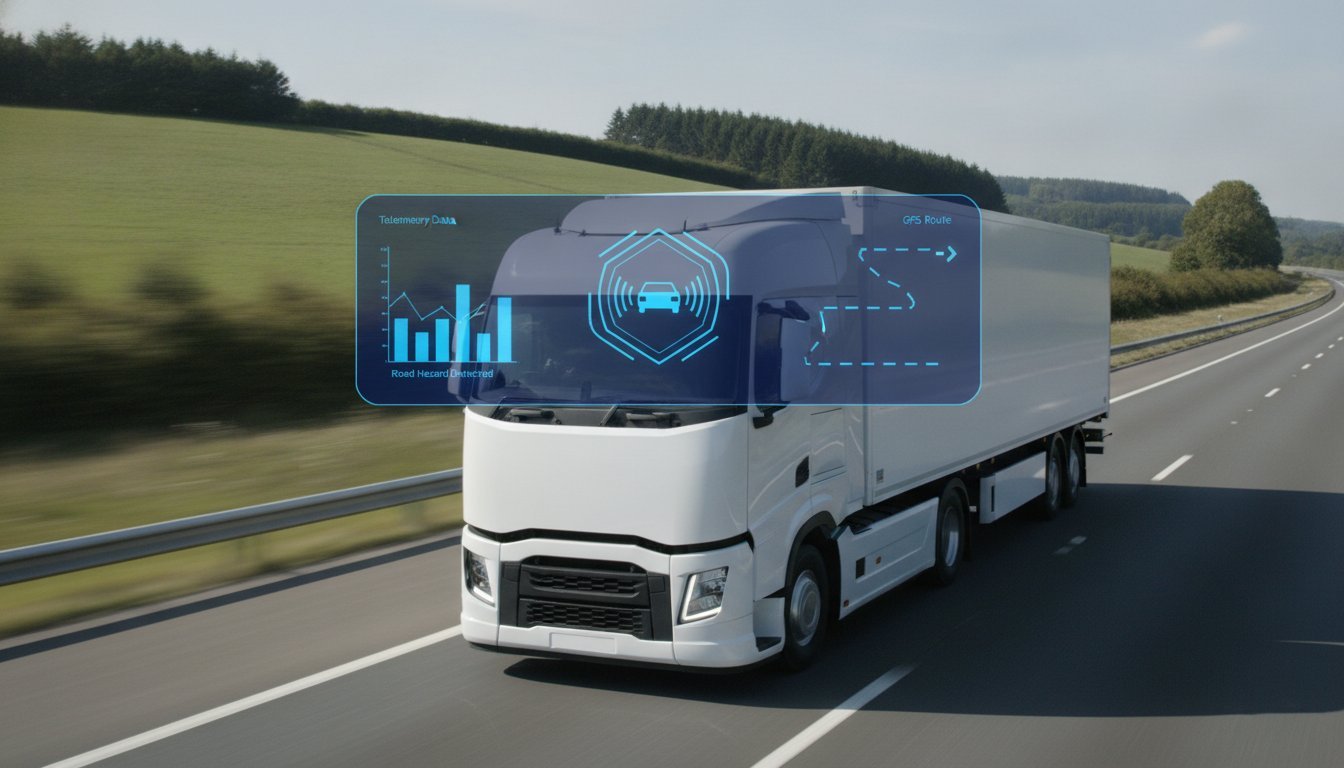
How much of your annual profit vanishes into a single "crash for cash" claim that you simply cannot disprove? For many regional operators, the answer is enough to threaten the viability of the business. You already know that managing a modern fleet in 2026 is a complex balancing act of rising insurance costs, driver retention, and strict DVSA compliance. It's frustrating to manage separate silos for tracking, tachograph data, and video, especially when your drivers view new tech as a "spy in the cab."
Investing in Vehicle Cameras for Transport Fleets is no longer an optional extra; it's a vital compliance anchor. We promise to show you how to select and integrate camera systems that protect your drivers, your operator licence, and your bottom line. You will discover how to turn raw footage into clear evidence for First Notification of Loss (FNOL) and how to link video with your existing GPS tracking for a seamless, professional operation. We will also look at navigating the latest July 2026 safety mandates without overwhelming your administrative team.
Key Takeaways
- Learn how video evidence safeguards your Operator Licence and supports DVSA compliance by providing a defensible record for every road incident.
- Understand the shift towards proactive safety with AI-powered dash cams that detect driver fatigue and distraction before a collision occurs.
- Identify the optimal camera configurations for HGVs and trailers to eliminate blind spots and ensure your Vehicle Cameras for Transport Fleets provide total visibility.
- Navigate the legal complexities of UK data protection by implementing robust, ICO-compliant policies for video and audio recording in the cab.
- Discover why linking video events with live driver hours and tachograph data reduces administrative overhead and improves driver behaviour records.
The Role of Vehicle Cameras in UK Transport Compliance
Your Operator Licence is the lifeblood of your transport business. Risking it through a lack of evidence is a gamble you don't need to take. Historically, cameras were viewed as a safety luxury. By 2026, they have become a fundamental compliance anchor. The industry has moved beyond basic Dashcam technology to sophisticated video telematics. This shift provides a transparent record that protects you against regulatory scrutiny and unfair litigation. It's about more than just seeing the road; it's about defending your right to operate.
Modern Vehicle Cameras for Transport Fleets act as a silent witness in the cab. They bridge the gap between what your telematics data says and what actually happened on the tarmac. Instead of reacting to incidents after they occur, operators now use video to prove they are meeting their duty of care. This proactive stance is exactly what the DVSA and insurance providers look for when assessing a fleet's risk profile.
Protecting Your Operator Licence with Evidence
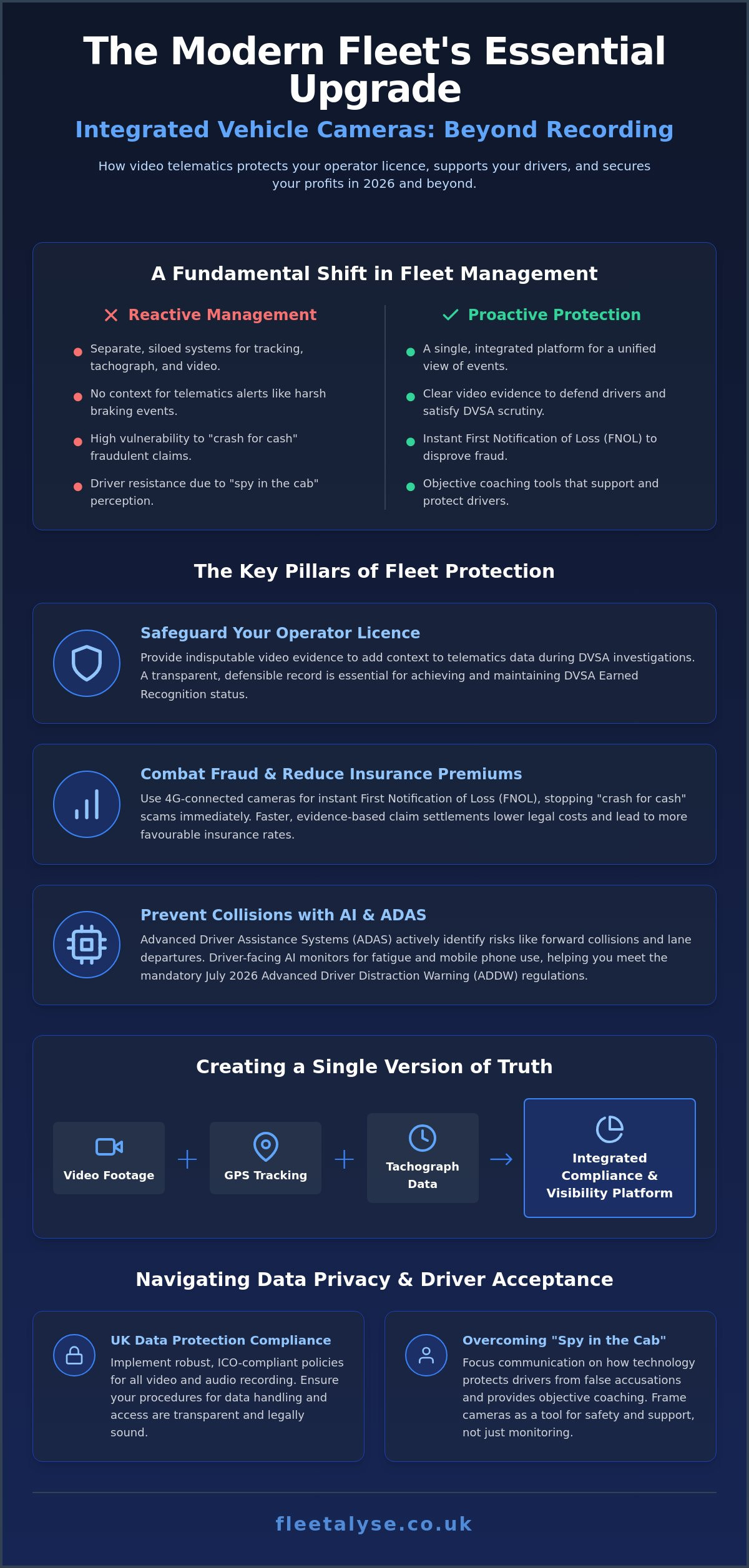
A single public complaint or a recurring harsh braking alert can trigger a DVSA investigation. Without context, you are at the mercy of the raw data. Video footage provides that missing context immediately. When a driver is forced to brake suddenly to avoid a third-party error, the video proves it wasn't a result of poor driving behaviour. This level of detail is essential for operators aiming for DVSA Earned Recognition status. Integrating video with live driver hours and tacho data creates a single version of truth for your fleet. It demonstrates that you aren't just tracking assets; you're actively managing compliance risks and protecting your professional standing.
Insurance and the Cost of False Claims
Insurance premiums continue to rise, driven partly by the persistence of "crash for cash" scams. These staged accidents often target commercial vehicles because scammers assume the operator will lack the evidence to fight back in court. 4G-connected Vehicle Cameras for Transport Fleets change this dynamic. They allow for instant First Notification of Loss (FNOL). Your office receives the footage before the driver has even returned to the yard. This speed is vital for several reasons:
- It stops fraudulent claims in their tracks by providing immediate visual proof.
- It allows your insurer to settle legitimate claims faster, reducing legal costs.
- It provides objective material for driver coaching, which lowers your fleet's overall risk profile.
Insurers now prioritise fleets that use integrated camera systems. By proving you have a handle on road risk, you position your business for more favourable rates and fewer administrative headaches during renewal periods.
Understanding AI Dash Cams and ADAS Technology
AI is no longer a futuristic concept. It's a practical tool for daily fleet management. Advanced Driver Assistance Systems (ADAS) use intelligent algorithms to interpret the road environment in real-time. Unlike standard cameras that simply record, AI-equipped Vehicle Cameras for Transport Fleets actively prevent accidents. They identify hazards like lane departure or forward collisions before the driver has time to react. It's about proactive prevention, not just reactive recording.
The real value lies in the mechanics of detection. Modern systems monitor for fatigue, mobile phone use, and general distraction. As of July 2026, Advanced Driver Distraction Warning (ADDW) systems are mandatory for all newly sold vehicles in the EU and UK. This highlights the regulatory push for this technology. By distinguishing between road-facing sensors that analyse traffic and driver-facing sensors that analyse behaviour, you gain a comprehensive view of operational risk. Balancing this technology with driver privacy is key. Clear communication about how the data is used to protect the driver often settles "spy in the cab" concerns.
Real-Time Driver Coaching and Feedback
In-cab voice alerts provide immediate feedback amongst the noise of heavy traffic. This allows drivers to correct their behaviour instantly. They don't have to wait for a weekly debrief to learn they were tailgating or distracted. It's the difference between preventing an incident now and discussing a near-miss after the fact. This immediate feedback loop builds a self-correcting safety culture. If you're ready to implement integrated safety technology, focusing on real-time coaching is the most efficient way to lower your insurance risk and improve safety records.
Technical Specifications for 2026
Reliability depends on hardware quality. For footage to stand up as legal evidence, 1080p HD resolution is the minimum standard. Lower quality often fails to capture clear number plates or facial details in low light. Connectivity is equally vital. 4G or 5G connectivity ensures that critical event clips are uploaded to the cloud instantly. This is particularly important given the 2026 mandate for Event Data Recorders (EDRs) in newly manufactured heavy vehicles.
Night vision and infrared filters are essential for 24/7 transport operations. They ensure that driver monitoring remains effective whilst operating in total darkness. You need a system that works as hard at 3 am as it does at noon. High-quality sensors ensure that environmental factors like heavy rain or fog don't compromise the clarity of your evidence or the accuracy of the AI alerts.
Evaluating Camera Configurations for HGVs, Vans, and Trailers
A single forward-facing camera is rarely enough for a modern commercial operation. Whilst a standard dash cam might suffice for a small car, it leaves massive blind spots on a 44-tonne articulated lorry. Effective Vehicle Cameras for Transport Fleets must be tailored to the specific dimensions and operational risks of each asset. For HGVs, this means moving beyond the windscreen and looking at the sides and rear of the vehicle.
Vans and heavy goods vehicles present different challenges. A van operator might prioritise rear-view cameras to prevent low-speed reversing incidents in residential areas. In contrast, an HGV operator needs a multi-channel system that provides a 360-degree view. This isn't just about safety; it's about operational efficiency. Reducing the time spent on minor insurance claims for scuffed wings or broken mirrors keeps your fleet on the road and your premiums stable.
Eliminating Blind Spots with 360-Degree Systems
Urban safety regulations, such as the Direct Vision Standard (DVS) in London, have made side-view cameras a necessity rather than an option. These systems use external sensors and cameras to alert the driver to vulnerable road users, such as cyclists, who may be hidden from view. Integrating high-definition monitors in the cab assists with difficult manoeuvring in tight spaces. It gives the driver the confidence to navigate narrow streets without relying solely on mirrors that have inherent physical limitations.
- Side-view cameras: Essential for detecting cyclists and pedestrians at junctions.
- Rear-view cameras: Vital for safe reversing and protecting loading bay infrastructure.
- In-cab monitors: Provide real-time visual aids that reduce driver stress and fatigue.
Trailer and Asset Camera Integration
Managing video data from trailers is notoriously difficult. Trailers are frequently switched amongst different prime movers, which can lead to data gaps if your system isn't integrated correctly. You have the choice between ruggedised wired connections or wireless options that transmit footage directly to the cab. The best results come from linking your camera footage directly to your trailer tracking system. This ensures you have complete visibility of the asset, regardless of which tractor unit is pulling it.
When selecting Vehicle Cameras for Transport Fleets, consider the environment of the asset. Mobile plant and trailers often operate in harsh conditions. You need hardware with a high IP rating to withstand jet washing, road salt, and extreme vibrations. Investing in durable, asset-specific hardware ensures your evidence is available when you actually need it, not just when the weather is clear. This pragmatic approach to hardware selection prevents data silos and ensures your trailer tracking data is always supported by visual proof.
Managing Video Data: Privacy, GDPR, and Driver Behaviour
Handling the data generated by Vehicle Cameras for Transport Fleets requires more than just a large hard drive. It requires a legal framework that protects both the company and the individual. Any business in the UK operating these systems must register with the Information Commissioner's Office (ICO) and pay the annual data protection fee. For most small businesses, this fee is £52 as of July 2026. This isn't just a box-ticking exercise. It's about ensuring your evidence is legally admissible and your drivers feel respected. Clear signage on vehicles is a mandatory requirement to inform the public and staff that recording is in progress.
The transition from "surveillance" to "support" is the most critical hurdle for fleet managers. Drivers often view in-cab technology with suspicion. You must change this narrative by demonstrating how video acts as a digital shield. It's a tool for positive reinforcement. When a driver handles a difficult situation correctly, the footage should be used to praise them. This builds a culture of transparency and trust that legacy "spy in the cab" systems failed to achieve.
GDPR Compliance for Transport Operators
Data must be encrypted both at rest and during transmission. Secure cloud storage is the industry standard for 2026. It prevents unauthorised tampering and ensures a clear audit trail. Access should be restricted to specific compliance officers or transport managers. You must also have a clear policy for managing Subject Access Requests (SARs). If a driver or a member of the public asks to see footage where they are identifiable, you are legally obligated to provide it within a specific timeframe. Having an organised, searchable video database makes this process frictionless rather than a legal headache.
Improving Driver Behaviour Through Transparency
A "Fair Culture" policy is the foundation of successful video telematics. It ensures that footage is used to exonerate drivers just as often as it's used for coaching. Use "near-miss" clips as educational tools during team briefings. Showing real-world examples from your own fleet is far more effective than generic training videos. Gamification also plays a significant role. By rewarding the safest drivers based on AI-generated safety scores, you turn compliance into a competition. This proactive approach reduces the likelihood of accidents and lowers your long-term operational costs.
Managing this level of data shouldn't be a manual chore. To protect your drivers and your business with a professional, legal framework, order your integrated camera system today. It's the most straightforward way to ensure your fleet remains both safe and compliant.
The Fleetalyse Approach: Integrated Compliance and Visibility
Data silos are the enemy of an efficient transport office. If your video footage exists in one system whilst your tracking and tacho data live in another, you're wasting valuable time. Vehicle Cameras for Transport Fleets should never be a standalone purchase. They must function as a integrated layer of your compliance strategy. When an incident occurs, you need to see the video evidence alongside the vehicle's speed, location, and the driver's current status. This unified view provides the "why" behind the "what," allowing for faster investigations and fairer outcomes.
The Fleetalyse philosophy is built on pragmatic, transparent solutions for UK hauliers. We don't believe in over-complicating your workflow with unnecessary features that your team will eventually ignore. Instead, we focus on linking video events directly to live driver hours and tachograph data. This integration allows you to manage your entire fleet from a single compliance dashboard. It reduces administrative overhead and ensures that every piece of data serves a clear operational purpose.
Unified Data for Better Decision Making
Seeing video footage next to GPS tracking data transforms how you manage road risk. If a harsh braking alert is triggered, you can immediately view the clip to see if it was a result of poor driving or a necessary emergency manoeuvre. This saves hours of manual investigation. Integrating a remote tachograph download system with your cameras ensures that your compliance records are always complete. You no longer have to chase drivers for cards or manually cross-reference video timestamps with tacho charts. The system does the heavy lifting for you.
- Eliminate manual data entry by synchronising video and tacho alerts.
- Identify training needs accurately by reviewing real-world driving clips.
- Support DVSA Earned Recognition standing with a transparent, digital audit trail.
Choosing a Pragmatic Partner for 2026
Reliability is the most important metric for any fleet technology. You need a system that works consistently in the rigours of the UK transport industry. We avoid the trap of "feature creep" by focusing on the tools that deliver a clear ROI for regional and national fleets. Our approach is grounded in the practical needs of operators who face rising costs and tightening regulations. We don't just provide hardware; we provide a compliance anchor that protects your bottom line.
Effective management of Vehicle Cameras for Transport Fleets starts with understanding your specific asset requirements. Whether you operate a small van fleet or a large HGV operation, the goal remains the same: total visibility and total compliance. Your next step should be a thorough assessment of your current data gaps. An expert audit can help you identify where integration will deliver the most significant time savings and risk reduction for your business.
Secure Your Fleet's Future with Integrated Video
Protecting your transport business requires a move from reactive recording to proactive compliance management. You've seen how video evidence safeguards your Operator Licence and how AI-powered alerts can prevent costly incidents before they occur. Integrating Vehicle Cameras for Transport Fleets with your existing data streams isn't just about safety; it's about building a defensible, transparent operation that withstands DVSA scrutiny. By 2026, standalone systems will be a liability. You need a unified view that connects video directly to your driver's tachograph records.
Fleetalyse provides no-nonsense, pragmatic fleet tracking solutions designed for the rigours of the UK road network. As specialists in UK transport operator compliance, we ensure your technology works for you, not against you. Our systems offer seamless integration with tachograph analysis, removing the administrative burden of manual cross-referencing. Don't leave your reputation to chance when a single integrated dashboard can provide the clarity you need. Optimise your fleet compliance with Fleetalyse today and give your drivers the protection they deserve. It's time to turn your data into a strategic asset.
Frequently Asked Questions
Do vehicle cameras reduce insurance premiums for UK fleets?
Yes, most UK insurers look favourably on fleets that use integrated video evidence. By providing clear proof for First Notification of Loss (FNOL), you reduce the time and legal costs associated with claims. Insurers often offer lower premiums or better renewal terms for operators who can prove they are actively managing road risk. It's a pragmatic way to lower your overheads whilst protecting your drivers from fraudulent "crash for cash" scams.
Are driver-facing cameras legal under UK GDPR and privacy laws?
Yes, driver-facing cameras are legal as long as you have a clear lawful basis for recording and follow UK GDPR guidelines. You must register with the ICO and pay the data protection fee, which is £52 per year for most small firms as of July 2026. Transparency is key. You need clear signage on the vehicle and a robust data retention policy that explains how and why footage is stored and who can access it.
What is the difference between a dash cam and a full video telematics system?
A standard dash cam usually records to an SD card and requires manual retrieval of the footage. In contrast, a full video telematics system is 4G-connected and transmits incident clips to the cloud automatically. These advanced Vehicle Cameras for Transport Fleets integrate with GPS tracking and engine data. This gives you a complete picture of an event, including speed, location, and driver behaviour, rather than just a standalone video file.
Can vehicle cameras help with DVSA Earned Recognition?
Yes, cameras are a powerful tool for operators aiming for DVSA Earned Recognition status. The scheme requires high standards of driver management and safety. Video evidence provides the context needed to explain harsh braking or acceleration events. It demonstrates that you have a proactive approach to road safety and compliance. This digital audit trail is exactly what the DVSA expects from top-tier, compliant operators who prioritise functional utility over basic tracking.
How much data do 4G connected vehicle cameras use per month?
Typical data usage ranges from 1GB to 3GB per month for each camera, depending on how many safety "events" are triggered. The system doesn't stream 24/7; it only uploads short clips when the AI detects an incident like harsh braking or a collision. This keeps your data costs manageable whilst ensuring that critical evidence is always available in the cloud when you need to review it for insurance or training purposes.
Do I need different cameras for HGVs compared to light commercial vans?
Yes, the hardware requirements differ based on the asset size and operational risk. A light commercial van might only need a forward-facing camera and a reversing aid. However, Vehicle Cameras for Transport Fleets used on HGVs require multi-channel systems to eliminate significant blind spots along the sides and rear. These HGV systems often include in-cab monitors to help drivers navigate tight urban environments and comply with regulations like London’s Direct Vision Standard.
What happens to the footage if a vehicle is involved in a serious collision?
If the vehicle has a 4G-connected system, the incident footage is uploaded to the cloud immediately upon impact. This ensures the evidence is safe even if the hardware is damaged during the accident. Additionally, as of January 2026, newly manufactured heavy vehicles must be fitted with Event Data Recorders (EDRs). These store technical data leading up to the crash, which works alongside your video footage to provide a comprehensive post-accident analysis for investigators.
Can cameras be integrated with existing tachograph and tracking software?
Yes, integration is the most efficient way to manage a busy transport office. You can link video events directly to your GPS tracking and tachograph analysis software. This allows you to see the video clip alongside the driver’s live hours and tacho status. It removes the need for multiple data silos and provides a single version of the truth, making it much easier to manage daily compliance and conduct meaningful driver debriefs.
Frequently asked questions
Protecting Your Operator Licence with Evidence
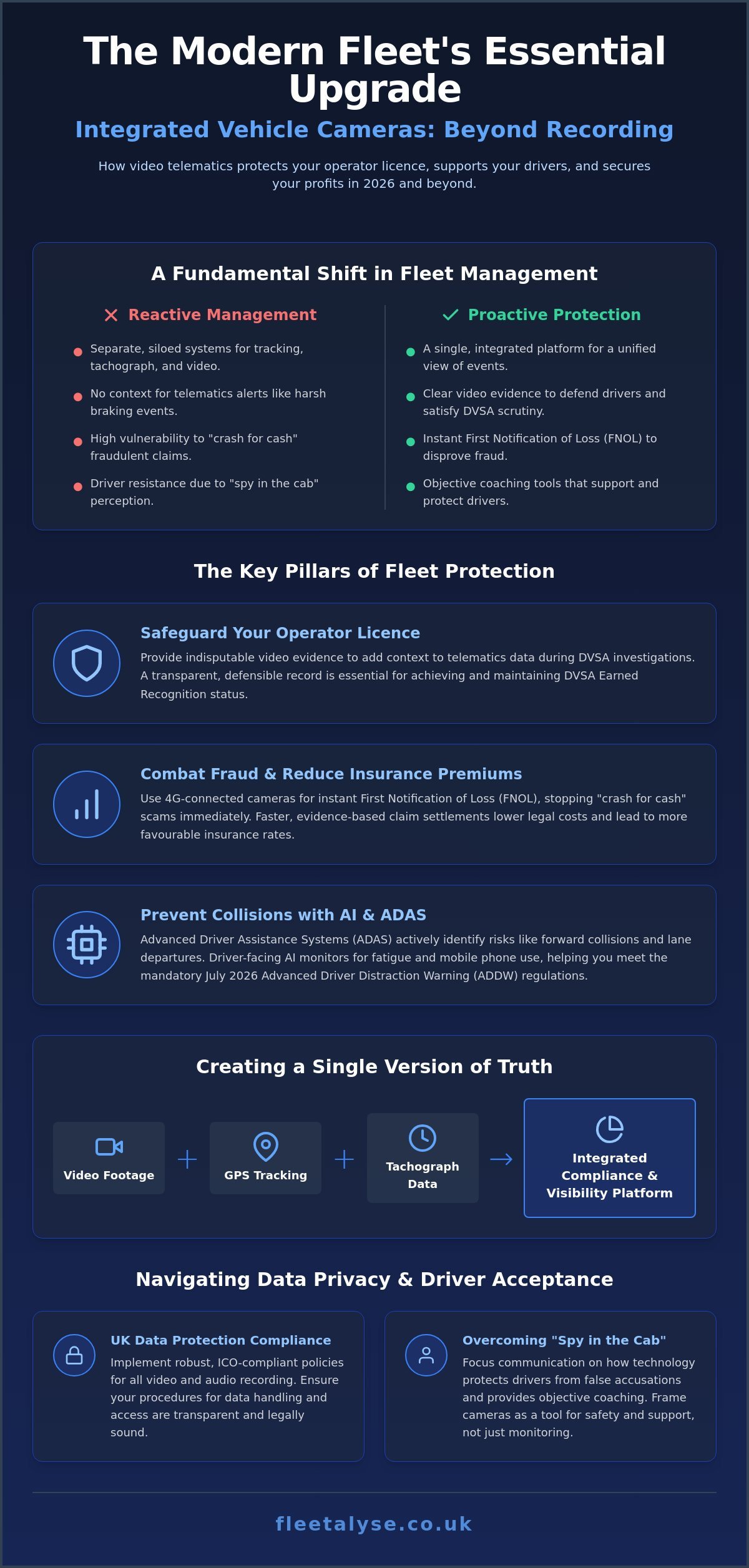
A single public complaint or a recurring harsh braking alert can trigger a DVSA investigation. Without context, you are at the mercy of the raw data. Video footage provides that missing context immediately. When a driver is forced to brake suddenly to avoid a third-party error, the video proves it wasn't a result of poor driving behaviour. This level of detail is essential for operators aiming for DVSA Earned Recognition status. Integrating video with live driver hours and tacho data creates a single version of truth for your fleet. It demonstrates that you aren't just tracking assets; you're actively managing compliance risks and protecting your professional standing.
Insurance and the Cost of False Claims
Insurance premiums continue to rise, driven partly by the persistence of "crash for cash" scams. These staged accidents often target commercial vehicles because scammers assume the operator will lack the evidence to fight back in court. 4G-connected Vehicle Cameras for Transport Fleets change this dynamic. They allow for instant First Notification of Loss (FNOL). Your office receives the footage before the driver has even returned to the yard. This speed is vital for several reasons: Insurers now prioritise fleets that use integrated camera systems. By proving you have a handle on road risk, you position your business for more favourable rates and fewer administrative headaches during renewal periods. AI is no longer a futuristic concept. It's a practical tool for daily fleet management. Advanced Driver Assistance Systems (ADAS) use intelligent algorithms to interpret the road environment in real-time. Unlike standard cameras that simply record, AI-equipped Vehicle Cameras for Transport Fleets actively prevent accidents. They identify hazards like lane departure or forward collisions before the driver has time to react. It's about proactive prevention, not just reactive recording. The real value lies in the mechanics of detection. Modern systems monitor for fatigue, mobile phone use, and general distraction. As of July 2026, Advanced Driver Distraction Warning (ADDW) systems are mandatory for all newly sold vehicles in the EU and UK. This highlights the regulatory push for this technology. By distinguishing between road-facing sensors that analyse traffic and driver-facing sensors that analyse behaviour, you gain a comprehensive view of operational risk. Balancing this technology with driver privacy is key. Clear communication about how the data is used to protect the driver often settles "spy in the cab" concerns.
Real-Time Driver Coaching and Feedback
In-cab voice alerts provide immediate feedback amongst the noise of heavy traffic. This allows drivers to correct their behaviour instantly. They don't have to wait for a weekly debrief to learn they were tailgating or distracted. It's the difference between preventing an incident now and discussing a near-miss after the fact. This immediate feedback loop builds a self-correcting safety culture. If you're ready to implement integrated safety technology, focusing on real-time coaching is the most efficient way to lower your insurance risk and improve safety records.
Technical Specifications for 2026
Reliability depends on hardware quality. For footage to stand up as legal evidence, 1080p HD resolution is the minimum standard. Lower quality often fails to capture clear number plates or facial details in low light. Connectivity is equally vital. 4G or 5G connectivity ensures that critical event clips are uploaded to the cloud instantly. This is particularly important given the 2026 mandate for Event Data Recorders (EDRs) in newly manufactured heavy vehicles. Night vision and infrared filters are essential for 24/7 transport operations. They ensure that driver monitoring remains effective whilst operating in total darkness. You need a system that works as hard at 3 am as it does at noon. High-quality sensors ensure that environmental factors like heavy rain or fog don't compromise the clarity of your evidence or the accuracy of the AI alerts. A single forward-facing camera is rarely enough for a modern commercial operation. Whilst a standard dash cam might suffice for a small car, it leaves massive blind spots on a 44-tonne articulated lorry. Effective Vehicle Cameras for Transport Fleets must be tailored to the specific dimensions and operational risks of each asset. For HGVs, this means moving beyond the windscreen and looking at the sides and rear of the vehicle. Vans and heavy goods vehicles present different challenges. A van operator might prioritise rear-view cameras to prevent low-speed reversing incidents in residential areas. In contrast, an HGV operator needs a multi-channel system that provides a 360-degree view. This isn't just about safety; it's about operational efficiency. Reducing the time spent on minor insurance claims for scuffed wings or broken mirrors keeps your fleet on the road and your premiums stable.
Eliminating Blind Spots with 360-Degree Systems
Urban safety regulations, such as the Direct Vision Standard (DVS) in London, have made side-view cameras a necessity rather than an option. These systems use external sensors and cameras to alert the driver to vulnerable road users, such as cyclists, who may be hidden from view. Integrating high-definition monitors in the cab assists with difficult manoeuvring in tight spaces. It gives the driver the confidence to navigate narrow streets without relying solely on mirrors that have inherent physical limitations.
Trailer and Asset Camera Integration
Managing video data from trailers is notoriously difficult. Trailers are frequently switched amongst different prime movers, which can lead to data gaps if your system isn't integrated correctly. You have the choice between ruggedised wired connections or wireless options that transmit footage directly to the cab. The best results come from linking your camera footage directly to your trailer tracking system. This ensures you have complete visibility of the asset, regardless of which tractor unit is pulling it. When selecting Vehicle Cameras for Transport Fleets, consider the environment of the asset. Mobile plant and trailers often operate in harsh conditions. You need hardware with a high IP rating to withstand jet washing, road salt, and extreme vibrations. Investing in durable, asset-specific hardware ensures your evidence is available when you actually need it, not just when the weather is clear. This pragmatic approach to hardware selection prevents data silos and ensures your trailer tracking data is always supported by visual proof. Handling the data generated by Vehicle Cameras for Transport Fleets requires more than just a large hard drive. It requires a legal framework that protects both the company and the individual. Any business in the UK operating these systems must register with the Information Commissioner's Office (ICO) and pay the annual data protection fee. For most small businesses, this fee is £52 as of July 2026. This isn't just a box-ticking exercise. It's about ensuring your evidence is legally admissible and your drivers feel respected. Clear signage on vehicles is a mandatory requirement to inform the public and staff that recording is in progress. The transition from "surveillance" to "support" is the most critical hurdle for fleet managers. Drivers often view in-cab technology with suspicion. You must change this narrative by demonstrating how video acts as a digital shield. It's a tool for positive reinforcement. When a driver handles a difficult situation correctly, the footage should be used to praise them. This builds a culture of transparency and trust that legacy "spy in the cab" systems failed to achieve.
GDPR Compliance for Transport Operators
Data must be encrypted both at rest and during transmission. Secure cloud storage is the industry standard for 2026. It prevents unauthorised tampering and ensures a clear audit trail. Access should be restricted to specific compliance officers or transport managers. You must also have a clear policy for managing Subject Access Requests (SARs). If a driver or a member of the public asks to see footage where they are identifiable, you are legally obligated to provide it within a specific timeframe. Having an organised, searchable video database makes this process frictionless rather than a legal headache.
Improving Driver Behaviour Through Transparency
A "Fair Culture" policy is the foundation of successful video telematics. It ensures that footage is used to exonerate drivers just as often as it's used for coaching. Use "near-miss" clips as educational tools during team briefings. Showing real-world examples from your own fleet is far more effective than generic training videos. Gamification also plays a significant role. By rewarding the safest drivers based on AI-generated safety scores, you turn compliance into a competition. This proactive approach reduces the likelihood of accidents and lowers your long-term operational costs. Managing this level of data shouldn't be a manual chore. To protect your drivers and your business with a professional, legal framework, order your integrated camera system today. It's the most straightforward way to ensure your fleet remains both safe and compliant. Data silos are the enemy of an efficient transport office. If your video footage exists in one system whilst your tracking and tacho data live in another, you're wasting valuable time. Vehicle Cameras for Transport Fleets should never be a standalone purchase. They must function as a integrated layer of your compliance strategy. When an incident occurs, you need to see the video evidence alongside the vehicle's speed, location, and the driver's current status. This unified view provides the "why" behind the "what," allowing for faster investigations and fairer outcomes. The Fleetalyse philosophy is built on pragmatic, transparent solutions for UK hauliers. We don't believe in over-complicating your workflow with unnecessary features that your team will eventually ignore. Instead, we focus on linking video events directly to live driver hours and tachograph data. This integration allows you to manage your entire fleet from a single compliance dashboard. It reduces administrative overhead and ensures that every piece of data serves a clear operational purpose.
Unified Data for Better Decision Making
Seeing video footage next to GPS tracking data transforms how you manage road risk. If a harsh braking alert is triggered, you can immediately view the clip to see if it was a result of poor driving or a necessary emergency manoeuvre. This saves hours of manual investigation. Integrating a remote tachograph download system with your cameras ensures that your compliance records are always complete. You no longer have to chase drivers for cards or manually cross-reference video timestamps with tacho charts. The system does the heavy lifting for you.
Choosing a Pragmatic Partner for 2026
Reliability is the most important metric for any fleet technology. You need a system that works consistently in the rigours of the UK transport industry. We avoid the trap of "feature creep" by focusing on the tools that deliver a clear ROI for regional and national fleets. Our approach is grounded in the practical needs of operators who face rising costs and tightening regulations. We don't just provide hardware; we provide a compliance anchor that protects your bottom line. Effective management of Vehicle Cameras for Transport Fleets starts with understanding your specific asset requirements. Whether you operate a small van fleet or a large HGV operation, the goal remains the same: total visibility and total compliance. Your next step should be a thorough assessment of your current data gaps. An expert audit can help you identify where integration will deliver the most significant time savings and risk reduction for your business. Protecting your transport business requires a move from reactive recording to proactive compliance management. You've seen how video evidence safeguards your Operator Licence and how AI-powered alerts can prevent costly incidents before they occur. Integrating Vehicle Cameras for Transport Fleets with your existing data streams isn't just about safety; it's about building a defensible, transparent operation that withstands DVSA scrutiny. By 2026, standalone systems will be a liability. You need a unified view that connects video directly to your driver's tachograph records. Fleetalyse provides no-nonsense, pragmatic fleet tracking solutions designed for the rigours of the UK road network. As specialists in UK transport operator compliance, we ensure your technology works for you, not against you. Our systems offer seamless integration with tachograph analysis, removing the administrative burden of manual cross-referencing. Don't leave your reputation to chance when a single integrated dashboard can provide the clarity you need. Optimise your fleet compliance with Fleetalyse today and give your drivers the protection they deserve. It's time to turn your data into a strategic asset.
Do vehicle cameras reduce insurance premiums for UK fleets?
Yes, most UK insurers look favourably on fleets that use integrated video evidence. By providing clear proof for First Notification of Loss (FNOL), you reduce the time and legal costs associated with claims. Insurers often offer lower premiums or better renewal terms for operators who can prove they are actively managing road risk. It's a pragmatic way to lower your overheads whilst protecting your drivers from fraudulent "crash for cash" scams.
Are driver-facing cameras legal under UK GDPR and privacy laws?
Yes, driver-facing cameras are legal as long as you have a clear lawful basis for recording and follow UK GDPR guidelines. You must register with the ICO and pay the data protection fee, which is £52 per year for most small firms as of July 2026. Transparency is key. You need clear signage on the vehicle and a robust data retention policy that explains how and why footage is stored and who can access it.
What is the difference between a dash cam and a full video telematics system?
A standard dash cam usually records to an SD card and requires manual retrieval of the footage. In contrast, a full video telematics system is 4G-connected and transmits incident clips to the cloud automatically. These advanced Vehicle Cameras for Transport Fleets integrate with GPS tracking and engine data. This gives you a complete picture of an event, including speed, location, and driver behaviour, rather than just a standalone video file.
Can vehicle cameras help with DVSA Earned Recognition?
Yes, cameras are a powerful tool for operators aiming for DVSA Earned Recognition status. The scheme requires high standards of driver management and safety. Video evidence provides the context needed to explain harsh braking or acceleration events. It demonstrates that you have a proactive approach to road safety and compliance. This digital audit trail is exactly what the DVSA expects from top-tier, compliant operators who prioritise functional utility over basic tracking.
How much data do 4G connected vehicle cameras use per month?
Typical data usage ranges from 1GB to 3GB per month for each camera, depending on how many safety "events" are triggered. The system doesn't stream 24/7; it only uploads short clips when the AI detects an incident like harsh braking or a collision. This keeps your data costs manageable whilst ensuring that critical evidence is always available in the cloud when you need to review it for insurance or training purposes.
Do I need different cameras for HGVs compared to light commercial vans?
Yes, the hardware requirements differ based on the asset size and operational risk. A light commercial van might only need a forward-facing camera and a reversing aid. However, Vehicle Cameras for Transport Fleets used on HGVs require multi-channel systems to eliminate significant blind spots along the sides and rear. These HGV systems often include in-cab monitors to help drivers navigate tight urban environments and comply with regulations like London’s Direct Vision Standard.
What happens to the footage if a vehicle is involved in a serious collision?
If the vehicle has a 4G-connected system, the incident footage is uploaded to the cloud immediately upon impact. This ensures the evidence is safe even if the hardware is damaged during the accident. Additionally, as of January 2026, newly manufactured heavy vehicles must be fitted with Event Data Recorders (EDRs). These store technical data leading up to the crash, which works alongside your video footage to provide a comprehensive post-accident analysis for investigators.
Can cameras be integrated with existing tachograph and tracking software?
Yes, integration is the most efficient way to manage a busy transport office. You can link video events directly to your GPS tracking and tachograph analysis software. This allows you to see the video clip alongside the driver’s live hours and tacho status. It removes the need for multiple data silos and provides a single version of the truth, making it much easier to manage daily compliance and conduct meaningful driver debriefs.