


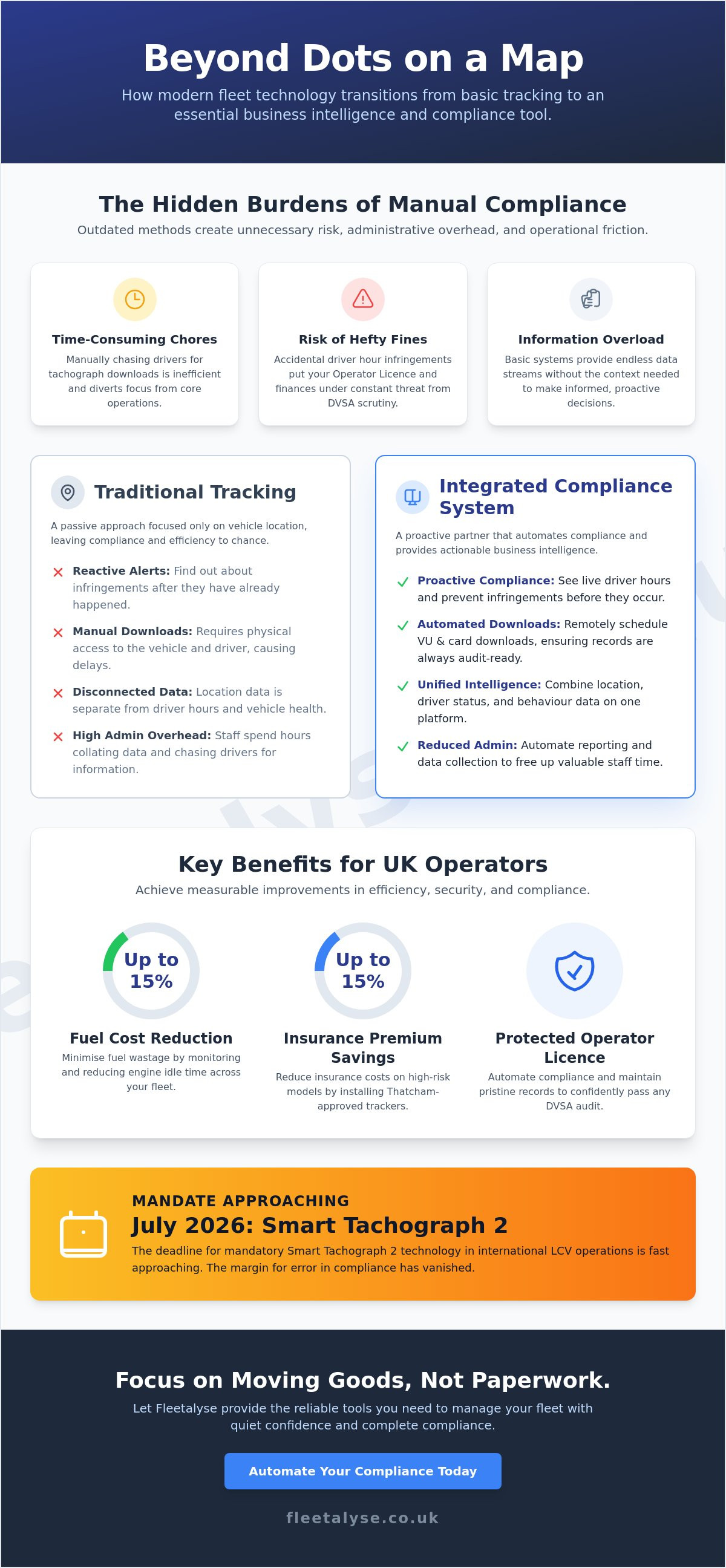
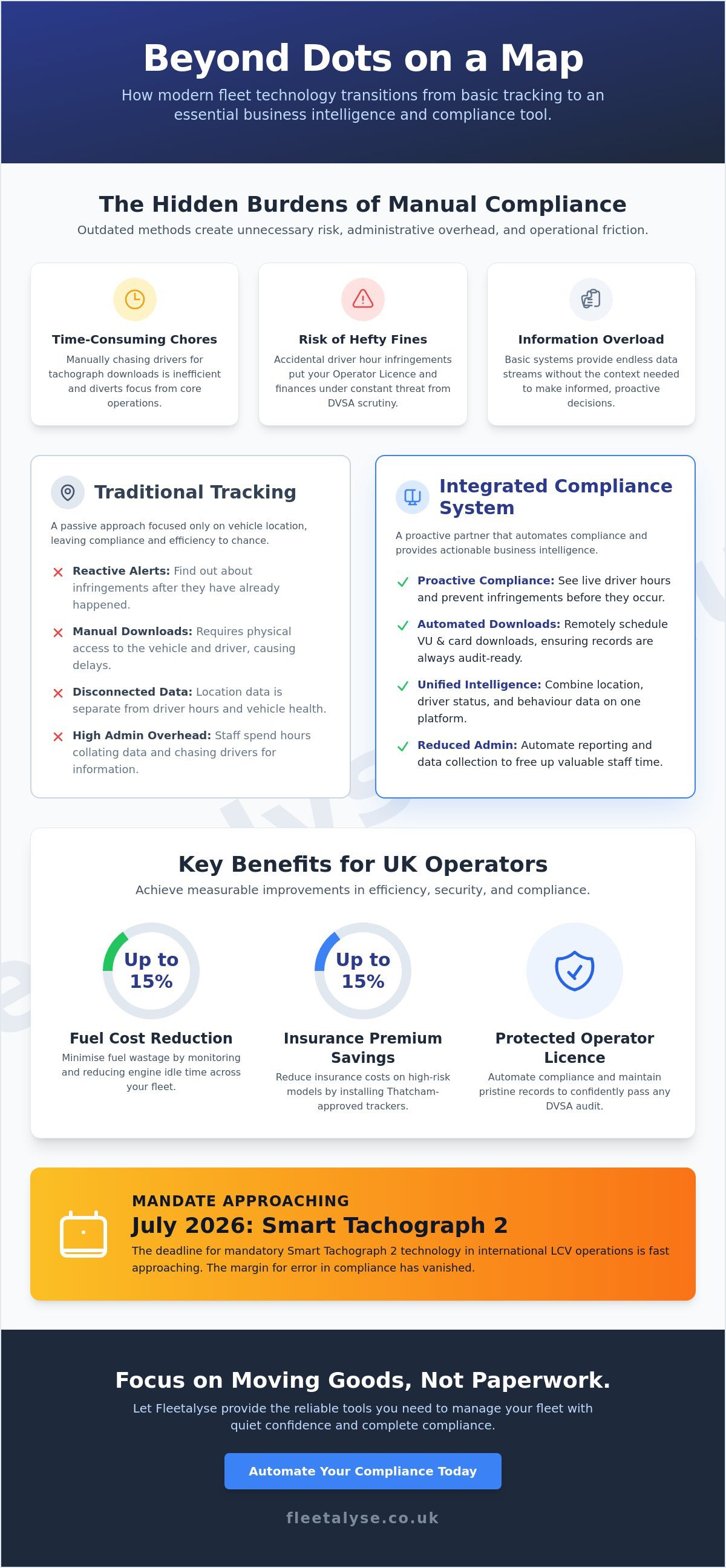
Your fleet GPS tracking system is a compliance tool first and a location tool second. If you're still viewing it as just a way to see dots on a map, you're missing the most critical layer of protection for your Operator Licence. With the July 2026 mandate for Smart Tachograph 2 technology in international LCV operations fast approaching, the margin for error in record-keeping has vanished.
We understand that chasing drivers for manual tachograph downloads is a repetitive, time-consuming chore. The risk of a hefty fine for an accidental driver hour infringement is a constant pressure that regional operators simply don't need. You want to focus on moving goods, not shuffling paperwork or worrying about the next DVSA check. You need a solution that works for the rigours of the real world.
This article explains how to automate your compliance and slash administrative overhead using integrated technology. You'll discover how live driver hours and remote tachograph downloads provide total visibility. We'll show you how to ensure your fleet stays legal and your assets remain secure whilst you focus on driving operational efficiency.
Key Takeaways
- Transition from basic vehicle location to comprehensive business intelligence.
- Protect your Operator Licence by automating remote tachograph downloads and monitoring live driver hours.
- Use a fleet GPS tracking system to organise incoming data via exception-based reporting and eliminate information overload.
- Apply our UK compliance checklist to verify hardware compatibility and meet regional regulatory standards.
- Learn why transparent pricing and straightforward contracts are essential for a pragmatic partnership.
What is a Fleet GPS Tracking System in 2026?
A modern Vehicle tracking system is no longer a luxury for UK transport companies. It is a fundamental requirement for survival. In 2026, this technology has evolved into a sophisticated network of GPS hardware and cloud-based software that delivers real-time telematics data directly to your operation. For regional operators, the days of simply seeing "dots on a map" are over. Passive tracking has been replaced by comprehensive business intelligence that integrates directly with vehicle systems to protect your Operator Licence.
UK operators are moving away from basic location tools because they need more than just coordinates. They need a fleet GPS tracking system that acts as a proactive management partner. The core components include high-sensitivity GPS hardware installed in the vehicle, secure cloud software for data processing, and seamless integration with tachograph analysis tools. This combination allows you to see not just where a vehicle is, but exactly how it is being utilised and whether it remains compliant with stringent UK regulations.
The Evolution of Fleet Telematics
Connectivity has undergone a massive shift recently. The widespread adoption of 5G networks means data transmission is now instantaneous. This enables proactive fleet management. You no longer find out about an infringement after the driver returns to the depot. You see it as it happens. While "plug and play" devices work for light vans, they often fall short for heavy goods vehicles. HGVs require deeper integration with the vehicle's CAN bus and tachograph to provide the granular data needed for remote tachograph downloads and live driver hours monitoring.
Key Benefits for UK Transport Operators
Efficiency is the primary goal. Monitoring idle time helps reduce fuel wastage. Industry data shows that businesses using these systems can see fuel cost reductions of up to 15%. Security is another vital pillar. Live alerts and geofencing protect your assets from unauthorised use. Installing a Thatcham-approved tracker can also reduce insurance premiums by up to 15% for high-risk models, providing a tangible return on investment. Finally, accurate ETAs improve your reputation. Providing customers with precise arrival times based on real-time traffic and driver hours builds trust and streamlines your logistics chain.
At Fleetalyse, we focus on the practical needs of the UK transport industry. We don't offer flashy, unnecessary features. Instead, we provide the reliable tools you need to manage your fleet with quiet confidence. Our approach prioritises functional utility and regulatory adherence above all else.
Integrating Live Driver Hours and Tachograph Compliance
For HGV operators, knowing a vehicle's coordinates is only half the battle. Location data tells you where the truck is; it doesn't tell you if the driver is legal. A robust fleet GPS tracking system must bridge this gap by pulling data directly from the digital tachograph head. This integration allows transport managers to view live driver hours alongside real-time location. It's the difference between guessing a driver's availability and knowing exactly how much shift time remains.
Monitoring live driver hours helps prevent infringements before they occur. When you can see a countdown to the next required break or the end of a daily driving limit, you can plan routes with precision. This proactive approach protects your Operator Licence from the scrutiny of the DVSA. It also removes the friction between the office and the cab. Drivers no longer need to provide manual updates over the phone because the office already has the data. Automating this flow into your tachograph analysis software ensures your records are always up to date and audit-ready.
Remote Tachograph Downloads Explained
Manual downloads are a drain on your resources. Chasing drivers with download keys at the end of a long shift is inefficient and prone to error. Remote tachograph download technology eliminates this chore by scheduling automatic data transfers. This process captures both the vehicle unit (VU) and driver card data whilst the vehicle is out on the road. It ensures you never miss a deadline, regardless of where your assets are located. Remote downloading is the gold standard for modern fleet compliance.
Real-Time Visibility of Driver Behaviour
Compliance extends beyond hours; it includes how the vehicle is driven. Integrated systems track instances of harsh braking, rapid acceleration, and speeding. This data isn't about "big brother" style surveillance. It's about safety and cost control. High-risk driving behaviour increases fuel consumption and wear on tyres and brakes. By using these insights to coach drivers, you can foster a culture of professional excellence. Improved safety scores can also lead to more favourable insurance terms, especially when combined with Thatcham-rated security hardware. Balancing this monitoring with transparency helps build trust with your team, showing them that the data is used for their protection as much as for the company’s bottom line.
If you're ready to move beyond basic tracking and start protecting your licence with automated data, you can view our compliance-ready hardware options here.
Overcoming Data Overload: Organising Your Fleet Insights
Managing a fleet of ten or more vehicles generates a staggering amount of data. It's easy to get buried. A basic system that sends constant SMS alerts for every minor movement is unscalable. It leads to notification fatigue. A professional fleet GPS tracking system should filter the noise, not add to it. Use exception-based reporting. This ensures you only see the data that requires action, such as a driver hour infringement or excessive idling. You don't need to see every successful delivery; you only need to see the ones that went wrong.
Your dashboard needs to prioritise urgent compliance risks. If an asset is moved out of hours or a tachograph download is overdue, that information should be front and centre. Customising alerts for your specific operational needs allows you to ignore the routine and manage the exceptions. This pragmatic approach saves hours of manual analysis every week. It lets you focus on the drivers who need coaching and the routes that need fixing. It's about working smarter, not harder.
Automated Reporting for Busy Managers
Busy managers don't have time to dig through raw data every day. Schedule weekly reports to arrive in your inbox automatically. Focus on key performance indicators like total fuel usage, mileage, and driver hours. Heat maps are particularly useful for identifying route inefficiencies. They show where your vehicles are consistently delayed or idling. Use this historical data for long-term planning. It helps you justify fleet expansion or route changes with concrete evidence. Reliable data prevents expensive guesswork in your logistics strategy. You can organise your fleet data more effectively with these automated tools.
Securing Your Assets: Beyond GPS
Protection goes beyond the prime mover. Trailer tracking is essential for hauliers who leave trailers at remote sites. These units require independent power sources to remain active when uncoupled from the tractor unit. For smaller commercial fleets, van tracking provides the same level of visibility and security as HGV systems. It's about protecting the tools of your trade from theft and misuse. Don't overlook your mobile plant or high-value cargo. Asset tracking devices offer a discreet way to monitor equipment that lacks its own power source. This ensures every piece of kit is accounted for at all times. Whether it's a generator on a construction site or a trailer in a layby, you stay in control of your property.
Choosing the Right System: A UK Compliance Checklist
Selecting a fleet GPS tracking system is a decision that impacts your regulatory standing as much as your bottom line. You must look beyond the hardware and evaluate how a provider supports your specific obligations under DVSA standards. A generic solution might track location, but it won't help you during a roadside inspection or a full fleet audit. Use the following checklist to ensure your chosen system is fit for the rigours of the UK transport industry.
- Define your primary objective: Determine if your main priority is asset security, fuel efficiency, or regulatory compliance. For most UK operators, compliance is the non-negotiable foundation.
- Verify hardware compatibility: Ensure the devices can interface with your specific vehicle makes and models. Not all trackers can extract data from every tachograph head or CAN-bus system.
- Integration capabilities: Check if the system offers seamless tachograph analysis integration. Data should flow automatically from the vehicle to your analysis platform without manual intervention.
- Transparent cost structures: Demand a clear breakdown of costs. Avoid providers that hide "activation fees" or "software maintenance" charges in the small print.
- UK-based expertise: Assess the quality of technical support. You need partners who understand UK-specific rules, such as the July 2026 mandate for Smart Tachograph 2 technology in international LCV operations.
HGV vs. Van Tracking Requirements
Different vehicles require different technical approaches. HGVs demand deep CAN-bus integration to provide accurate fuel data and engine diagnostics. This level of detail is essential for identifying inefficiencies and reducing operational costs. For trailers, hardware must be ruggedised and include independent power sources to ensure visibility whilst uncoupled. Van tracking for light commercial vehicle (LCV) service fleets often focuses more on driver behaviour and route optimisation to maintain high service levels. Choose hardware that matches the specific demands of each asset class in your fleet.
Future-Proofing Your Fleet Technology
Your technology must grow with your business. Ensure the platform is scalable and can handle an increasing number of assets without performance lag. API availability is another critical factor. This allows your tracking data to communicate with other business software, such as routing tools or payroll systems. Regular firmware and software updates are essential to keep your system secure and compliant with evolving data protection laws. A pragmatic partner will provide these updates as part of the service, ensuring your equipment never becomes obsolete.
If you are ready to implement a system built for UK compliance, select your fleet tracking hardware here.
The Fleetalyse Approach: Pragmatic Fleet Management
Fleetalyse is not a faceless, global software provider. We are a localised specialist built for the specific challenges of the UK transport industry. Our fleet GPS tracking system is designed with one priority: regulatory adherence. We understand that regional operators don't need flashy, unnecessary features. You need a reliable ally that protects your Operator Licence whilst driving operational efficiency. Our approach is grounded in industry expertise. We offer the quiet confidence that your data is accurate and your fleet is legal.
Transparency is the cornerstone of our business. We provide straightforward contractual terms and clear pricing from the outset. There are no hidden complexities or surprise fees. This honesty is crucial in a sector where hidden costs often inflate budgets. We prioritise functional utility and real-world application. Our tools are built for the rigours of regional logistics. This ensures that your time is spent moving goods, not managing software errors or deciphering confusing invoices.
Our expert support team understands the daily struggles of fleet managers. We know the pressure of a missing driver card download or an unexpected roadside check. We don't just provide software; we provide a partnership. This means being available with practical advice when you need it most. We value your resources and your time. By focusing on the essential tools for compliance and efficiency, we help you maintain a leaner, more resilient operation.
Why Specialisation Matters in Tracking
Generic competitors often offer broad solutions that lack industry depth. They might track a vehicle's location, but they rarely understand the nuance of UK-specific regulations like the Smart Tachograph 2 mandates. Fleetalyse prioritises operational clarity. We focus on the granular details that matter to a transport manager. This includes live driver hours and seamless tachograph analysis integration. This specialisation ensures we remain an active catalyst for your operational improvement. We don't just collect data; we provide the insights needed to maintain a compliant fleet.
Next Steps for Your Fleet
Take control of your compliance today. Evaluate your current tachograph download process to identify where manual tasks are slowing you down. Transitioning to an automated system reduces risk and frees up valuable office time. We recommend booking a demonstration of our live driver hours platform to see how real-time visibility can transform your planning. Don't wait for a DVSA inspection to find the gaps in your record-keeping. You can contact Fleetalyse today to streamline your operations and secure your fleet's future.
Take Control of Your Fleet Compliance
Managing a modern transport operation requires more than just knowing where your vehicles are located. It's about protecting your Operator Licence through automated compliance and intelligent data management. By integrating live driver hours and remote tachograph downloads, you eliminate the risks associated with manual errors and missing deadlines. You move from a reactive stance to a proactive one, where exception-based reporting keeps you focused on what truly matters.
Implementing a robust fleet GPS tracking system is the most effective way to streamline your daily logistics whilst ensuring regulatory adherence. As UK-based compliance specialists, we provide the tools you need for seamless tachograph analysis integration. Our commitment to transparent pricing with no hidden fees ensures you can plan your budget with total certainty. You don't need complex jargon; you need a pragmatic partner that understands the rigours of the road.
We are ready to help you simplify your fleet management and secure your assets. Optimise your fleet with Fleetalyse today and experience the clarity of a system built for the UK transport industry. Your operation deserves the reliability and expertise that only a dedicated specialist can provide.
Frequently Asked Questions
Is a fleet GPS tracking system a legal requirement in the UK?
A fleet GPS tracking system is not a universal legal requirement for all commercial vehicles. However, it's an essential tool for meeting other mandatory obligations, such as the July 2026 mandate for Smart Tachograph 2 technology in international LCV operations. Whilst the tracking itself is optional, maintaining accurate driver records and tacho data is a strict legal necessity that is difficult to manage manually.
How much does a fleet GPS tracking system typically cost per vehicle?
Costs are generally split between an initial hardware investment and an ongoing monthly subscription. The total depends on the sophistication of the device and whether you require advanced features like CAN-bus integration or live driver hours. You should always look for providers that offer transparent contractual terms and avoid those that hide activation fees or maintenance charges in the small print.
Can GPS tracking help with DVSA Earned Recognition?
Yes, integrated tracking systems are a vital component for operators aiming for DVSA Earned Recognition. The system provides the digital data required to monitor key performance indicators for both tachograph compliance and vehicle maintenance. By sharing this data with the DVSA, you prove that your operation meets the highest standards, which reduces the frequency of roadside stops and targeted inspections.
Will a GPS tracker work on trailers without their own power source?
Trailer tracking units are specifically designed to operate on assets that lack a permanent power supply. These devices use high-capacity internal batteries or solar panels to remain active for long periods whilst uncoupled. They provide regular location updates and can trigger alerts if the trailer is moved without authorisation, ensuring your unpowered assets remain secure at remote sites.
How does remote tachograph download integration save money?
Remote tachograph download integration saves money by removing the administrative overhead of manual data collection. It eliminates the need for drivers to return to the depot specifically for card downloads, which reduces fuel wastage and unproductive hours. By automating the flow of data, you also significantly lower the risk of hefty fines resulting from missing download deadlines or accidental infringements.
Can drivers disable the GPS tracking system?
Tampering with a professionally installed, hard-wired system is extremely difficult and usually triggers an immediate alert to the transport manager. Devices are typically hidden behind the dashboard to prevent unauthorised access. If the device loses power or the signal is intentionally blocked, the software records the event, allowing you to address the issue directly with the driver to maintain operational clarity.
What happens to the data if the vehicle loses signal in a remote area?
Data is not lost when a vehicle enters a "dead zone" with no mobile coverage. The tracking hardware contains internal memory that stores all GPS coordinates and telematics data locally. As soon as the vehicle returns to an area with a network signal, the device automatically uploads the stored information to the cloud. This ensures your compliance records remain complete and uninterrupted.
How quickly can a tracking system be installed across a fleet?
The deployment speed for a fleet GPS tracking system depends on the hardware type and the number of vehicles. Hard-wired units for HGVs usually take about an hour per vehicle to install correctly. Professional teams can often complete a regional fleet of twenty vehicles in just a few days. Plug-and-play devices for light vans can be deployed even faster, often being operational within minutes of arrival.
Frequently asked questions
The Evolution of Fleet Telematics
Connectivity has undergone a massive shift recently. The widespread adoption of 5G networks means data transmission is now instantaneous. This enables proactive fleet management. You no longer find out about an infringement after the driver returns to the depot. You see it as it happens. While "plug and play" devices work for light vans, they often fall short for heavy goods vehicles. HGVs require deeper integration with the vehicle's CAN bus and tachograph to provide the granular data needed for remote tachograph downloads and live driver hours monitoring.
Key Benefits for UK Transport Operators
Efficiency is the primary goal. Monitoring idle time helps reduce fuel wastage. Industry data shows that businesses using these systems can see fuel cost reductions of up to 15%. Security is another vital pillar. Live alerts and geofencing protect your assets from unauthorised use. Installing a Thatcham-approved tracker can also reduce insurance premiums by up to 15% for high-risk models, providing a tangible return on investment. Finally, accurate ETAs improve your reputation. Providing customers with precise arrival times based on real-time traffic and driver hours builds trust and streamlines your logistics chain. At Fleetalyse, we focus on the practical needs of the UK transport industry. We don't offer flashy, unnecessary features. Instead, we provide the reliable tools you need to manage your fleet with quiet confidence. Our approach prioritises functional utility and regulatory adherence above all else. For HGV operators, knowing a vehicle's coordinates is only half the battle. Location data tells you where the truck is; it doesn't tell you if the driver is legal. A robust fleet GPS tracking system must bridge this gap by pulling data directly from the digital tachograph head. This integration allows transport managers to view live driver hours alongside real-time location. It's the difference between guessing a driver's availability and knowing exactly how much shift time remains. Monitoring live driver hours helps prevent infringements before they occur. When you can see a countdown to the next required break or the end of a daily driving limit, you can plan routes with precision. This proactive approach protects your Operator Licence from the scrutiny of the DVSA. It also removes the friction between the office and the cab. Drivers no longer need to provide manual updates over the phone because the office already has the data. Automating this flow into your tachograph analysis software ensures your records are always up to date and audit-ready.
Remote Tachograph Downloads Explained
Manual downloads are a drain on your resources. Chasing drivers with download keys at the end of a long shift is inefficient and prone to error. Remote tachograph download technology eliminates this chore by scheduling automatic data transfers. This process captures both the vehicle unit (VU) and driver card data whilst the vehicle is out on the road. It ensures you never miss a deadline, regardless of where your assets are located. Remote downloading is the gold standard for modern fleet compliance.
Real-Time Visibility of Driver Behaviour
Compliance extends beyond hours; it includes how the vehicle is driven. Integrated systems track instances of harsh braking, rapid acceleration, and speeding. This data isn't about "big brother" style surveillance. It's about safety and cost control. High-risk driving behaviour increases fuel consumption and wear on tyres and brakes. By using these insights to coach drivers, you can foster a culture of professional excellence. Improved safety scores can also lead to more favourable insurance terms, especially when combined with Thatcham-rated security hardware. Balancing this monitoring with transparency helps build trust with your team, showing them that the data is used for their protection as much as for the company’s bottom line. If you're ready to move beyond basic tracking and start protecting your licence with automated data, you can view our compliance-ready hardware options here. Managing a fleet of ten or more vehicles generates a staggering amount of data. It's easy to get buried. A basic system that sends constant SMS alerts for every minor movement is unscalable. It leads to notification fatigue. A professional fleet GPS tracking system should filter the noise, not add to it. Use exception-based reporting. This ensures you only see the data that requires action, such as a driver hour infringement or excessive idling. You don't need to see every successful delivery; you only need to see the ones that went wrong. Your dashboard needs to prioritise urgent compliance risks. If an asset is moved out of hours or a tachograph download is overdue, that information should be front and centre. Customising alerts for your specific operational needs allows you to ignore the routine and manage the exceptions. This pragmatic approach saves hours of manual analysis every week. It lets you focus on the drivers who need coaching and the routes that need fixing. It's about working smarter, not harder.
Automated Reporting for Busy Managers
Busy managers don't have time to dig through raw data every day. Schedule weekly reports to arrive in your inbox automatically. Focus on key performance indicators like total fuel usage, mileage, and driver hours. Heat maps are particularly useful for identifying route inefficiencies. They show where your vehicles are consistently delayed or idling. Use this historical data for long-term planning. It helps you justify fleet expansion or route changes with concrete evidence. Reliable data prevents expensive guesswork in your logistics strategy. You can organise your fleet data more effectively with these automated tools.
Securing Your Assets: Beyond GPS
Protection goes beyond the prime mover. Trailer tracking is essential for hauliers who leave trailers at remote sites. These units require independent power sources to remain active when uncoupled from the tractor unit. For smaller commercial fleets, van tracking provides the same level of visibility and security as HGV systems. It's about protecting the tools of your trade from theft and misuse. Don't overlook your mobile plant or high-value cargo. Asset tracking devices offer a discreet way to monitor equipment that lacks its own power source. This ensures every piece of kit is accounted for at all times. Whether it's a generator on a construction site or a trailer in a layby, you stay in control of your property. Selecting a fleet GPS tracking system is a decision that impacts your regulatory standing as much as your bottom line. You must look beyond the hardware and evaluate how a provider supports your specific obligations under DVSA standards. A generic solution might track location, but it won't help you during a roadside inspection or a full fleet audit. Use the following checklist to ensure your chosen system is fit for the rigours of the UK transport industry.
HGV vs. Van Tracking Requirements
Different vehicles require different technical approaches. HGVs demand deep CAN-bus integration to provide accurate fuel data and engine diagnostics. This level of detail is essential for identifying inefficiencies and reducing operational costs. For trailers, hardware must be ruggedised and include independent power sources to ensure visibility whilst uncoupled. Van tracking for light commercial vehicle (LCV) service fleets often focuses more on driver behaviour and route optimisation to maintain high service levels. Choose hardware that matches the specific demands of each asset class in your fleet.
Future-Proofing Your Fleet Technology
Your technology must grow with your business. Ensure the platform is scalable and can handle an increasing number of assets without performance lag. API availability is another critical factor. This allows your tracking data to communicate with other business software, such as routing tools or payroll systems. Regular firmware and software updates are essential to keep your system secure and compliant with evolving data protection laws. A pragmatic partner will provide these updates as part of the service, ensuring your equipment never becomes obsolete. If you are ready to implement a system built for UK compliance, select your fleet tracking hardware here. Fleetalyse is not a faceless, global software provider. We are a localised specialist built for the specific challenges of the UK transport industry. Our fleet GPS tracking system is designed with one priority: regulatory adherence. We understand that regional operators don't need flashy, unnecessary features. You need a reliable ally that protects your Operator Licence whilst driving operational efficiency. Our approach is grounded in industry expertise. We offer the quiet confidence that your data is accurate and your fleet is legal. Transparency is the cornerstone of our business. We provide straightforward contractual terms and clear pricing from the outset. There are no hidden complexities or surprise fees. This honesty is crucial in a sector where hidden costs often inflate budgets. We prioritise functional utility and real-world application. Our tools are built for the rigours of regional logistics. This ensures that your time is spent moving goods, not managing software errors or deciphering confusing invoices. Our expert support team understands the daily struggles of fleet managers. We know the pressure of a missing driver card download or an unexpected roadside check. We don't just provide software; we provide a partnership. This means being available with practical advice when you need it most. We value your resources and your time. By focusing on the essential tools for compliance and efficiency, we help you maintain a leaner, more resilient operation.
Why Specialisation Matters in Tracking
Generic competitors often offer broad solutions that lack industry depth. They might track a vehicle's location, but they rarely understand the nuance of UK-specific regulations like the Smart Tachograph 2 mandates. Fleetalyse prioritises operational clarity. We focus on the granular details that matter to a transport manager. This includes live driver hours and seamless tachograph analysis integration. This specialisation ensures we remain an active catalyst for your operational improvement. We don't just collect data; we provide the insights needed to maintain a compliant fleet.
Next Steps for Your Fleet
Take control of your compliance today. Evaluate your current tachograph download process to identify where manual tasks are slowing you down. Transitioning to an automated system reduces risk and frees up valuable office time. We recommend booking a demonstration of our live driver hours platform to see how real-time visibility can transform your planning. Don't wait for a DVSA inspection to find the gaps in your record-keeping. You can contact Fleetalyse today to streamline your operations and secure your fleet's future. Managing a modern transport operation requires more than just knowing where your vehicles are located. It's about protecting your Operator Licence through automated compliance and intelligent data management. By integrating live driver hours and remote tachograph downloads, you eliminate the risks associated with manual errors and missing deadlines. You move from a reactive stance to a proactive one, where exception-based reporting keeps you focused on what truly matters. Implementing a robust fleet GPS tracking system is the most effective way to streamline your daily logistics whilst ensuring regulatory adherence. As UK-based compliance specialists, we provide the tools you need for seamless tachograph analysis integration. Our commitment to transparent pricing with no hidden fees ensures you can plan your budget with total certainty. You don't need complex jargon; you need a pragmatic partner that understands the rigours of the road. We are ready to help you simplify your fleet management and secure your assets. Optimise your fleet with Fleetalyse today and experience the clarity of a system built for the UK transport industry. Your operation deserves the reliability and expertise that only a dedicated specialist can provide.
Is a fleet GPS tracking system a legal requirement in the UK?
A fleet GPS tracking system is not a universal legal requirement for all commercial vehicles. However, it's an essential tool for meeting other mandatory obligations, such as the July 2026 mandate for Smart Tachograph 2 technology in international LCV operations. Whilst the tracking itself is optional, maintaining accurate driver records and tacho data is a strict legal necessity that is difficult to manage manually.
How much does a fleet GPS tracking system typically cost per vehicle?
Costs are generally split between an initial hardware investment and an ongoing monthly subscription. The total depends on the sophistication of the device and whether you require advanced features like CAN-bus integration or live driver hours. You should always look for providers that offer transparent contractual terms and avoid those that hide activation fees or maintenance charges in the small print.
Can GPS tracking help with DVSA Earned Recognition?
Yes, integrated tracking systems are a vital component for operators aiming for DVSA Earned Recognition. The system provides the digital data required to monitor key performance indicators for both tachograph compliance and vehicle maintenance. By sharing this data with the DVSA, you prove that your operation meets the highest standards, which reduces the frequency of roadside stops and targeted inspections.
Will a GPS tracker work on trailers without their own power source?
Trailer tracking units are specifically designed to operate on assets that lack a permanent power supply. These devices use high-capacity internal batteries or solar panels to remain active for long periods whilst uncoupled. They provide regular location updates and can trigger alerts if the trailer is moved without authorisation, ensuring your unpowered assets remain secure at remote sites.
How does remote tachograph download integration save money?
Remote tachograph download integration saves money by removing the administrative overhead of manual data collection. It eliminates the need for drivers to return to the depot specifically for card downloads, which reduces fuel wastage and unproductive hours. By automating the flow of data, you also significantly lower the risk of hefty fines resulting from missing download deadlines or accidental infringements.
Can drivers disable the GPS tracking system?
Tampering with a professionally installed, hard-wired system is extremely difficult and usually triggers an immediate alert to the transport manager. Devices are typically hidden behind the dashboard to prevent unauthorised access. If the device loses power or the signal is intentionally blocked, the software records the event, allowing you to address the issue directly with the driver to maintain operational clarity.
What happens to the data if the vehicle loses signal in a remote area?
Data is not lost when a vehicle enters a "dead zone" with no mobile coverage. The tracking hardware contains internal memory that stores all GPS coordinates and telematics data locally. As soon as the vehicle returns to an area with a network signal, the device automatically uploads the stored information to the cloud. This ensures your compliance records remain complete and uninterrupted.
How quickly can a tracking system be installed across a fleet?
The deployment speed for a fleet GPS tracking system depends on the hardware type and the number of vehicles. Hard-wired units for HGVs usually take about an hour per vehicle to install correctly. Professional teams can often complete a regional fleet of twenty vehicles in just a few days. Plug-and-play devices for light vans can be deployed even faster, often being operational within minutes of arrival.