

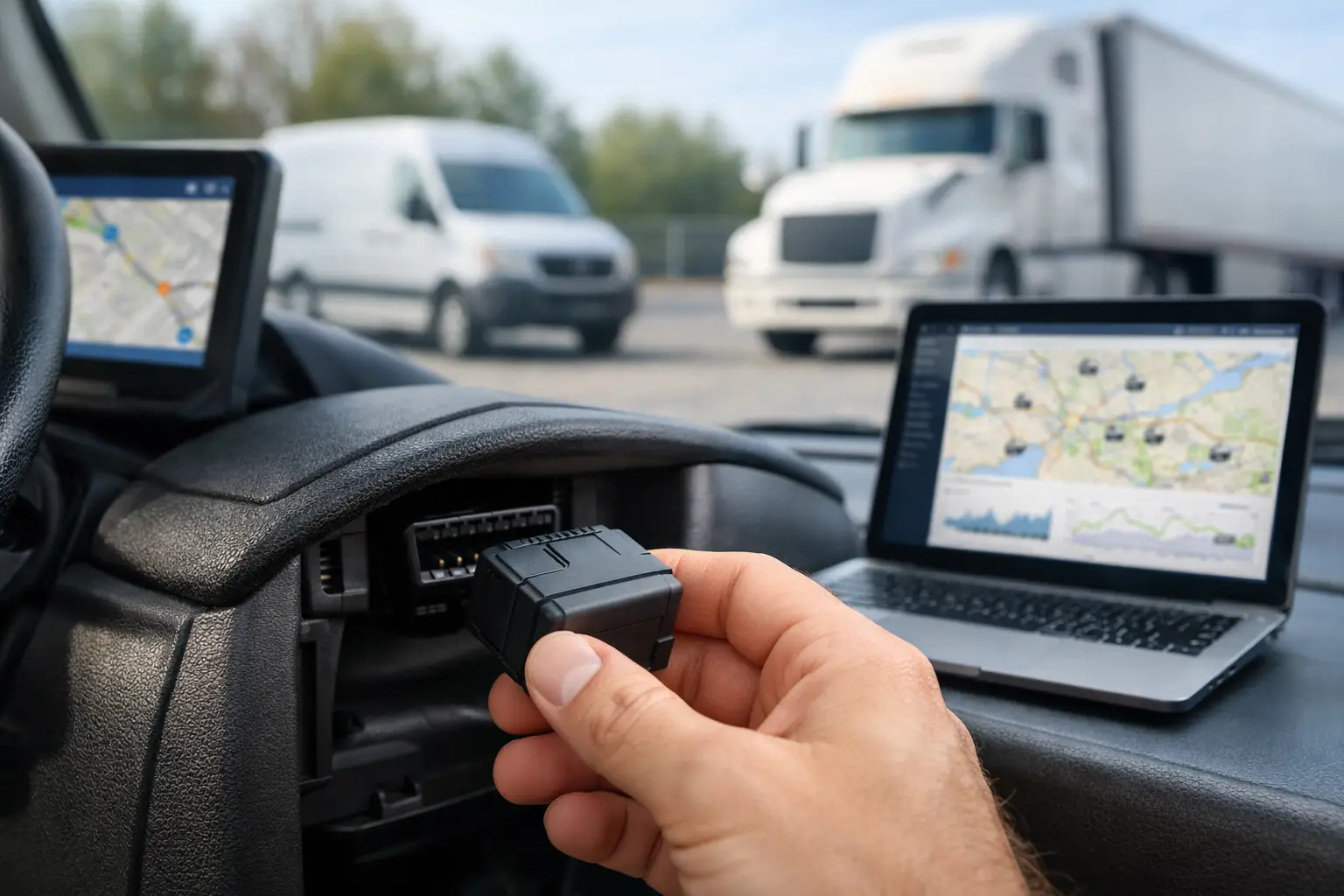

A telematics rollout should not feel like another transport project that drags on for weeks, ties vehicles up in the yard and leaves your team juggling yet another login. That is exactly why plug and play fleet telematics has become so relevant for UK operators running HGVs, vans, trailers or mixed fleets. When the hardware is simple to fit and the platform is built around live visibility, compliance and day-to-day control, you start seeing value far sooner.
What plug and play fleet telematics actually means
At its simplest, plug and play fleet telematics is a system that can be installed quickly without complex workshop time, specialist wiring work or major disruption to vehicle availability. In practical terms, that usually means self-install hardware, straightforward activation and a single platform that starts collecting useful data as soon as the device is connected.
That matters because many operators are not short of technology. They are short of time, depot capacity and administrative headroom. If fitting new devices means taking vehicles off the road, booking engineers, coordinating access and waiting days for data to appear, the project creates friction before it solves anything.
A proper plug and play approach reduces that burden. It lets transport teams get vehicles online quickly, scale across the fleet in manageable stages and avoid turning telematics into a drawn-out implementation exercise.
Why UK fleet operators are moving away from traditional installs
Traditional telematics installations can still have a place, particularly where a fleet needs highly customised hardware setups or has unusual vehicle specifications. But for many operators, the trade-off is no longer worth it.
A haulage business with active delivery schedules cannot easily afford unnecessary downtime. A van fleet spread across several depots does not want to coordinate engineer visits for every unit. And a compliance manager trying to improve tachograph oversight usually needs data now, not after a lengthy install programme.
This is where plug and play fleet telematics stands out. It shortens the gap between deciding to improve fleet control and actually having usable information on screen. That can make a real difference when the immediate goal is reducing admin, tightening driver hours oversight, checking utilisation or improving dispatch decisions.
There is also a cost argument. Complex installs often come with higher upfront charges, hidden scheduling costs and more internal effort than originally expected. A simpler hardware model usually makes pricing easier to understand and budgeting easier to manage.
The value is not the device - it is what the platform lets you control
The phrase plug and play can sometimes make telematics sound basic. In reality, simple installation only matters if the data supports operational decisions.
For UK commercial fleets, vehicle tracking alone is rarely enough. A moving dot on a map does not solve manual tachograph downloads, driver hours uncertainty, missed maintenance actions or poor trailer visibility. Operators need one system that helps them run the fleet, not just locate it.
That is why the better plug and play telematics platforms combine installation simplicity with broader control. You should be able to see where vehicles and trailers are, monitor driving behaviour, review fuel and utilisation trends, manage maintenance reminders and keep a closer eye on compliance from the same environment.
For operators under licence obligations, the compliance side matters just as much as the tracking. If telematics data sits in one system and tachograph management sits elsewhere, your team is still switching screens, exporting data and patching processes together with spreadsheets. That is not efficient, and it leaves room for things to be missed.
Where plug and play fleet telematics delivers the biggest gains
The most obvious benefit is speed. Vehicles can be brought online faster, which means managers and planners get live information without waiting for a full engineering schedule to finish.
The second gain is administrative control. When the same platform supports tracking, compliance data and reporting, depot and office teams spend less time chasing information across separate tools. That helps with routine tasks such as checking available drivers, reviewing route activity, identifying idle vehicles or confirming whether a unit has actually moved that day.
The third gain is consistency. Fleets often grow in uneven stages, with different systems added over time for tracking, dashcams, tachographs or trailer management. The result is fragmented data and inconsistent reporting. A plug and play model makes it easier to standardise the setup across the fleet and keep processes cleaner.
There is also a practical benefit for mixed fleets. If you are managing lorries, vans and trailers together, you need technology that fits around operational reality rather than forcing each asset type into a different process. Simpler deployment makes that far more achievable.
What to look for in a plug and play fleet telematics platform
Ease of installation should be the starting point, not the headline feature. The real question is what happens after the device is fitted.
First, the platform should give clear live visibility across vehicles, drivers and, where relevant, trailers. Dispatch teams need current location data that helps them make decisions quickly, not delayed updates that are only useful for reporting after the fact.
Second, reporting needs to be practical. That means driver behaviour information, fuel trends, utilisation data and maintenance prompts that can be acted on without heavy manual processing. If every report still needs to be rebuilt in a spreadsheet, the system is not saving much time.
Third, compliance capability should be built in where your operation needs it. For many UK operators, remote tachograph downloads and live driver hours monitoring are not optional extras. They are central to protecting the operator licence and reducing the risk of missed actions or avoidable infringements.
Fourth, pricing should be transparent. Low entry costs can look attractive until extra fees appear for support, hardware replacement, reporting modules or contract changes. A dependable supplier should be clear about what is included and what is not.
The trade-offs to think about before choosing a system
Plug and play is not automatically the right answer in every scenario. Some fleets may have specialist vehicles, unusual power arrangements or highly bespoke camera requirements that call for a different hardware approach. Others may already have fixed systems in place and only need to improve part of the estate.
There is also a difference between easy installation and complete operational fit. A device may be quick to install but still fall short if the software only covers basic tracking. That is why procurement decisions should not be driven by hardware alone.
The key is to judge the system against your actual operational pain points. If your biggest issue is tachograph admin, look closely at compliance functionality. If dispatch delays are the main problem, focus on live visibility and driver availability. If cost uncertainty has burned you before, scrutinise the commercial model as carefully as the technology.
Why one integrated system usually works better than stitched-together tools
Many transport businesses have reached the same point through trial and error. They started with vehicle tracking, then added another provider for dashcams, another for tachograph downloads and a manual process for maintenance reminders. Each piece worked in isolation, but the overall process became harder to manage.
That is where an integrated plug and play model has a clear advantage. Instead of asking the office to reconcile multiple systems, it gives the operation one working view of fleet activity and compliance. That improves response times, reduces duplicate admin and makes it easier to spot issues before they become expensive.
For example, if a planner can see vehicle location, driver hours position and trailer status together, they can make better dispatch decisions in the moment. If a compliance manager can rely on remote downloads and central reporting, they spend less time chasing drivers and more time dealing with exceptions.
This is also where providers built for UK transport operations tend to stand apart from generic tracking products. The operational requirement is not simply to know where a vehicle is. It is to run a compliant, efficient fleet with fewer manual interventions.
Making rollout simpler without lowering standards
The best telematics projects are not the ones with the most complicated specification. They are the ones that solve day-to-day problems quickly and keep delivering value after the first month.
That is why plug and play fleet telematics has become such a practical option for commercial operators. It removes unnecessary barriers to adoption while still giving transport teams the control they need over vehicles, drivers, trailers and compliance activity. For businesses that want less admin, clearer visibility and fewer disconnected systems, that matters more than a long list of technical claims.
If your current setup still depends on spreadsheets, manual downloads and too much guesswork between depot and office, simpler hardware is only part of the answer. The real benefit comes when that simplicity is backed by a platform designed for the pressures of running a UK fleet every day.