
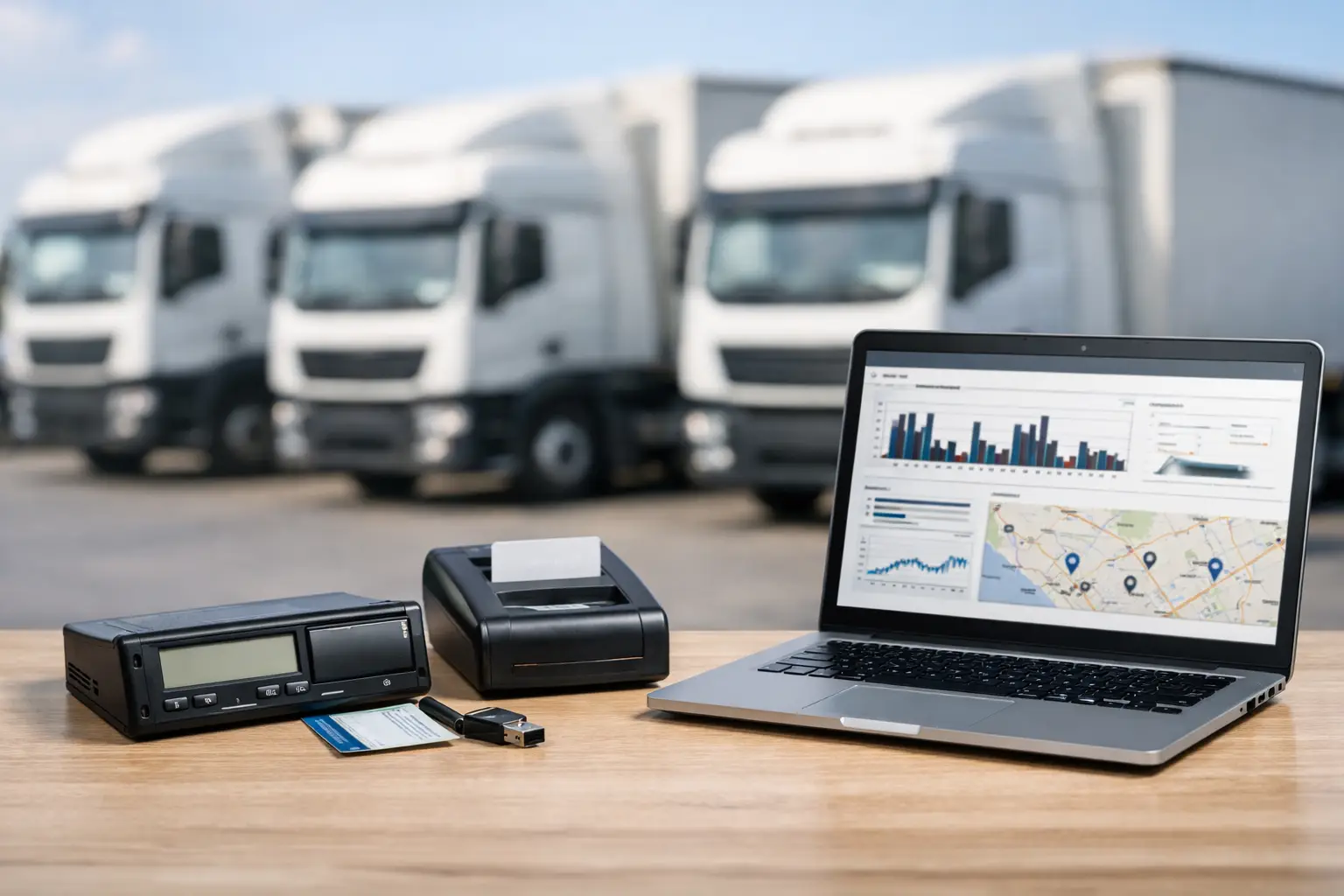
A missed driver card download can look like a minor admin task until it becomes part of an investigation, an infringement pattern or an awkward question at a public inquiry. That is why a proper remote tacho tools review should look beyond whether a system can collect files. UK operators need to know whether it reduces the work around compliance, gives transport teams usable warning time and fits the way their vehicles actually operate.
The right platform can replace depot visits, manual file chasing and spreadsheet checks with scheduled downloads and clear driver-hours visibility. The wrong one can still leave a compliance manager exporting files, checking several screens and relying on drivers to report a problem after the fact.
What remote tacho tools should do
At their most basic, remote tachograph tools download driver card and vehicle unit data without bringing the vehicle back to base. This is valuable for long-distance work, multi-depot fleets and vehicles that spend nights away. It helps operators meet their download policy consistently rather than depending on a vehicle being in the yard at the right time.
That baseline matters, but it is not the full job. A useful system should schedule downloads, show when a download has failed, retain files securely and make data easy to retrieve for analysis or inspection. It should also identify missing driver cards, overdue vehicle unit downloads and data gaps before they become a compliance issue.
For most transport operations, the stronger option goes further. Live or near-live driver hours data lets planners see remaining driving, working and rest time while work is still being allocated. This changes tachograph data from a record of what happened into information that can support a better decision before a driver is sent on another job.
Remote tacho tools review: the checks that matter
A feature list does not reveal how much admin a platform removes. When comparing tools, assess the daily workflow from the perspective of the person responsible for compliance and the person planning tomorrow's work.
Download reliability and exception handling
Automatic scheduling is only useful if exceptions are visible. Mobile coverage, vehicle power, card availability and hardware configuration can all affect a remote download. Look for a clear status view that shows successful downloads, failures and the reason action is needed.
Ask how the system deals with a driver card that has not been read, a vehicle that has not connected for several days or a failed download on an overseas trip. A vague status such as “pending” creates more work. An actionable alert, with the affected driver or registration and the required next step, is far more useful.
Driver hours that support dispatch
Some tools focus heavily on historic analysis. That has a place, particularly when investigating infringements and training drivers. However, a transport office also needs an operational view of the current day.
Check whether the system displays remaining drive time, breaks, daily rest, weekly limits and working time in a format a planner can understand quickly. The objective is not to make dispatch staff into tachograph analysts. It is to give them enough reliable information to avoid assigning a run that cannot be completed legally.
Live figures should be treated with professional judgement. Driver activity can change, data may not update instantly and an operator remains responsible for checking the wider circumstances. Yet a clear live-hours view is still a major improvement on phoning drivers or making plans from yesterday's information.
Compliance reporting and evidence
A remote download is not the same as a compliance process. Operators should be able to review infringements, identify repeat themes and keep an audit trail of actions taken. For example, an occasional missed break may need a conversation, while a recurring issue on one route may point to unrealistic schedules or poor loading arrangements.
The reporting needs to be practical. Compliance managers should be able to filter by driver, vehicle, date and infringement type, then document coaching or investigation. Consider whether reports can be shared internally without repeated manual formatting. A system that produces more data but no clear priorities can add noise rather than control.
One view of vehicles, trailers and drivers
Tachograph compliance is closely connected to vehicle operation. If a vehicle is delayed, diverted, parked unexpectedly or assigned to a different driver, the effect on hours and planning is immediate. That is why disconnected tracking and tachograph systems often create avoidable calls, duplicate records and blind spots.
An integrated platform brings GPS location, driver activity and vehicle information into the same operational picture. For mixed fleets, it should also account for vans, trailers and other assets that may not use tachographs but still affect utilisation, loading and maintenance planning. This is where a platform such as Fleetalyse can be particularly useful: compliance data and live fleet visibility sit together instead of being managed in separate tools.
The trade-offs behind the headline features
There is no single best remote tachograph setup for every operator. A small fleet running regular local work may prioritise simple compliance scheduling and clear monthly costs. A national haulier may need stronger live-hours capability, multi-depot access controls and detailed reporting. The right choice depends on how frequently vehicles are away from base, how many people plan work and where compliance responsibility sits.
Hardware is a key consideration. Some systems need professional installation or additional components, while others are designed for straightforward self-installation. Installation requirements can be justified for complex fleet configurations, but they should be clear before contract signature. Ask what is included, which vehicles are compatible, what happens when a vehicle is replaced and how quickly a failed unit can be resolved.
Pricing also deserves scrutiny. Compare the total monthly cost, not just the advertised rate. Check for hardware lease charges, activation fees, download charges, data retention limits, contract length and fees for adding or removing vehicles. Transparent pricing makes it easier to budget across a changing fleet and avoids the frustration of discovering that a useful compliance report sits behind another charge.
Questions to ask before choosing a provider
Before committing, test the platform against real operational scenarios. Ask a provider to show how a planner identifies a driver approaching a break, how a compliance manager spots an overdue download and how the team investigates a suspected infringement. A generic dashboard demonstration is not enough.
You should also establish who receives alerts, whether notifications can be tailored by depot or role and how quickly data becomes available after vehicle activity. If drivers share vehicles, cover agency work or change depots regularly, ask how the system maintains an accurate driver-vehicle record. These are the details that decide whether the tool saves time or creates another reconciliation task.
Finally, consider implementation. Good technology can still fail if no one owns the download policy, alert response and driver communication. Choose a provider that can explain the practical setup, not only the technical specification. Your team should know what happens on day one, which reports need checking each week and how exceptions are escalated.
A practical standard for UK operators
The most useful remote tachograph tool is not necessarily the one with the longest list of reports. It is the one that helps your team prove downloads are complete, identify risk early and make legal, informed decisions while vehicles are on the road.
Start with your current points of friction. If the problem is missed downloads, measure download completion and exception resolution. If it is last-minute driver-hours calls, prioritise a clear live planning view. If compliance, tracking and maintenance are all held in different places, the greater gain may come from bringing those operational decisions into one platform.
A considered choice now gives your transport team fewer files to chase, clearer evidence to retain and more time to manage the operation rather than administer it.