

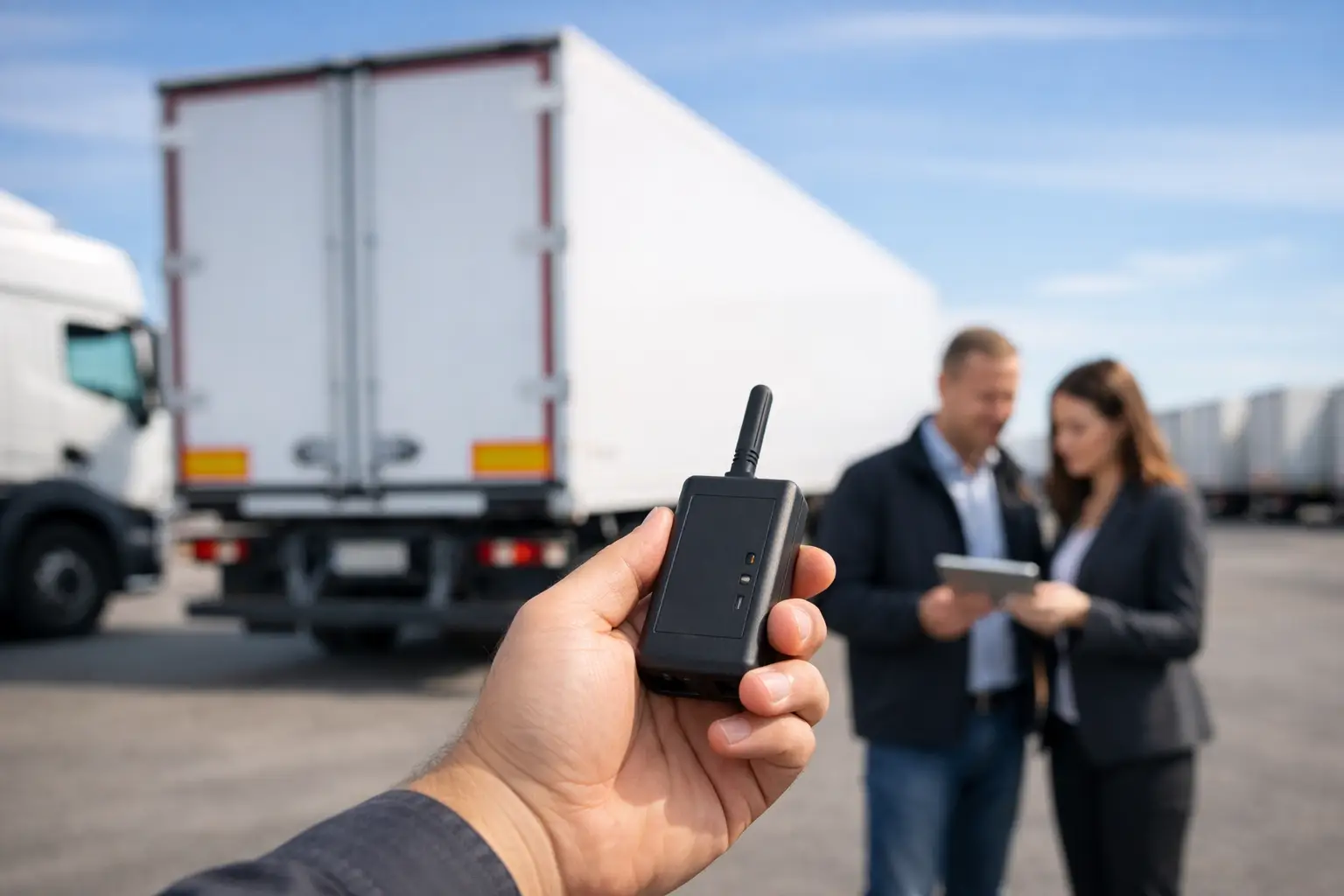

A trailer goes missing for a few hours and the problem is rarely just the trailer. Loads get delayed, planners start ringing round yards, drivers lose time, and someone ends up checking old spreadsheets to work out where that asset was last seen. A good trailer tracking buyer guide should help you avoid that kind of disruption, not just help you compare devices.
For UK operators, trailer tracking is no longer a nice-to-have for high-value assets. It is part of day-to-day fleet control. If your trailers spend time away from the unit, move across customer sites, sit in remote yards, or rotate between depots, you need reliable visibility without adding more admin. The right system should make dispatch easier, improve utilisation, support maintenance planning, and reduce the chances of expensive surprises.
What a trailer tracking buyer guide should focus on
Many buyers start with the hardware. That matters, but it is not the first question to ask. Start with the operational problem you are trying to solve.
If trailers regularly go unaccounted for between jobs, location accuracy and update frequency are the priority. If your issue is underused assets, reporting and utilisation history matter more. If your team loses time chasing service dates, the real value may be in maintenance reminders tied to trailer activity. In other words, the best product on paper is not always the best fit in practice.
This is where some trailer tracking purchases go wrong. A low-cost unit may show a position on a map, but if it does not report often enough, loses signal in difficult locations, or sits in a separate portal from the rest of your fleet data, it creates another layer of work. That defeats the point.
Decide what visibility you actually need
Not every fleet needs second-by-second tracking on every trailer. For many operators, the real requirement is knowing where each trailer is, whether it has moved, how long it has been idle, and when it is due attention.
That means you should ask suppliers practical questions. How often does the unit report when the trailer is moving? How does it behave when stationary? Can you trigger alerts if a trailer leaves a site, enters a region, or starts moving unexpectedly? Can depot teams find the nearest available trailer quickly, without ringing around drivers and subcontractors?
More frequent updates give better visibility, but they can affect battery life and cost. Less frequent updates may be acceptable for low-use assets, but not for time-sensitive operations. It depends on how your trailers are used and how quickly your team needs to act when plans change.
GPS accuracy and real-world coverage
A specification sheet can look fine until a trailer is parked on a customer site with patchy signal. Ask how the device handles weak coverage, whether it stores positions when offline, and how quickly it catches up when signal returns.
UK fleets operating across urban areas, ports, industrial estates and rural routes need consistency more than headline claims. The system should help you locate the asset with enough confidence to make an operational decision, not leave you guessing between two nearby roads or yards.
Battery-powered or wired - choose based on trailer use
Most trailer tracking devices are battery-powered because trailers do not always have a dependable power source. That makes sense for mixed fleets and rotating assets, especially where simple installation matters.
The trade-off is battery management. Some devices last for years under light usage, but battery life changes with reporting frequency, movement levels and temperature. If a supplier quotes long life, ask what assumptions sit behind that claim. A unit reporting once a day is very different from one sending regular live positions across a busy operation.
Wired options can offer more frequent reporting and less concern over battery replacement, but they are not always practical. Installation is more involved, and not every trailer type or operating pattern justifies it. For many operators, plug-and-play battery units are the right balance if the reporting profile is sensible and battery status is visible in the platform.
The platform matters more than the tracker
A trailer tracker on its own solves one problem. A useful fleet platform solves several.
If trailer data sits in a separate system from vehicle tracking, driver information and compliance records, your team still has to piece together the operational picture manually. That is where hidden admin creeps back in. You end up with multiple logins, duplicated reports and slower decisions.
A better approach is to look for trailer tracking inside a platform that supports wider fleet control. That means live maps, asset history, utilisation reporting, maintenance scheduling and alerts in one place. For operators already managing tachograph downloads, driver hours and vehicle visibility, bringing trailers into the same system gives dispatchers and transport managers a clearer view of the whole operation.
This is particularly useful for mixed fleets. When planners can see units, drivers and trailers together, they make faster choices about allocation, reduce empty movements and avoid avoidable delays at the start of a shift.
Questions to ask in any trailer tracking buyer guide
Before you commit, push beyond brochure features and ask how the system works day to day.
How easy is it to install across your trailer fleet? If fitting requires extensive workshop time, rollout can drag on and costs rise quickly. Self-install or straightforward fitting is often a better option for busy operators.
How transparent is the pricing? Subscription telematics can become expensive if hardware, installation, replacement batteries, alerts and reporting are all treated as extras. You want a clear monthly cost and a clear understanding of contract length, support and any replacement charges.
What reports are included as standard? Basic location data is not enough if your aim is better utilisation. You should be able to see dwell time, movement history, site visits and trailer usage trends without exporting everything to spreadsheets.
How do alerts work in practice? Geofence alerts, unauthorised movement notifications and inactivity warnings should be easy to set up and relevant to your operation. Too many alerts create noise. The right alerts help teams act quickly.
Think about utilisation, not just security
Trailer tracking is often bought as a security measure, but the bigger return usually comes from asset use.
Most fleets have a sense that some trailers are overworked while others sit idle, yet few can prove it without reliable data. Tracking changes that. You can see which assets are moving regularly, which have been parked for weeks, and which spend too long in the wrong place. That supports better capital decisions. You may find you need fewer trailers than expected, or that certain depots are carrying spare capacity while others are short.
That also affects maintenance planning. Usage-based insight helps you prioritise inspections and service activity more sensibly. Instead of relying purely on manual records, you can link maintenance decisions to actual trailer movement and time in operation.
Don’t ignore implementation and support
A capable system can still disappoint if rollout is slow or support is poor. Ask what onboarding looks like, how assets are added, and how quickly your team can start using the data.
This matters most for transport teams who do not have time for a long IT project. The value comes from getting trailers visible quickly and making that information useful to planners, depot teams and managers from the start. Good suppliers make setup straightforward and train users around operational tasks, not software theory.
Support also matters after go-live. If a battery status looks wrong, a device stops reporting, or your team wants to adjust alerts, you need quick answers. For UK operators, that usually means choosing a provider that understands the pace and pressures of transport operations rather than offering generic telematics support.
A practical way to compare suppliers
The simplest way to compare trailer tracking options is to score each one against five areas: visibility, battery performance, reporting, ease of rollout and total cost. That keeps the decision grounded in outcomes instead of marketing claims.
Visibility means whether your team can actually find and manage trailers with confidence. Battery performance means realistic life under your operating pattern, not best-case conditions. Reporting means whether you can improve utilisation and planning without extra admin. Ease of rollout covers fitting, setup and day-to-day use. Total cost should include everything needed to get value from the system, not just the entry price.
A platform like Fleetalyse is strongest when trailer tracking sits alongside vehicle visibility, compliance tools and operational reporting in one place. For fleets trying to reduce admin while improving control, that joined-up approach usually delivers more value than another standalone tracking login.
Buy the system that helps your team make quicker, better decisions on a Monday morning, not the one with the longest list of technical features. That is the difference between buying a tracker and improving fleet control.