

Van fleet asset utilisation tracking: a practical guide

Van fleet asset utilisation tracking is the process of measuring productive vehicle use against total available operating hours to reduce costs and right-size your fleet. Most fleet managers know their vehicles are underused, but few have the data to prove it or act on it with confidence. Telematics platforms like Fleetalyse give you the engine-level metrics, GPS location data, and automated reporting needed to move from guesswork to precision. Get this right, and you gain a clear picture of which vans are earning their keep and which are quietly draining your budget.
What metrics and data are used in van fleet asset utilisation tracking?
Utilisation measures productive hours divided by total available operating hours, expressed as a percentage. A van available for 220 hours in a month but deployed for only 143 hours returns a utilisation rate of 65%. That single figure tells you more about fleet efficiency than any mileage report.
The calculation sounds simple, but the data behind it demands precision. Idle time, staging time, and planned downtime must be excluded from productive hours. Including them inflates your figures and masks genuine inefficiency. The denominator, total available hours, must also be defined consistently across all sites and shifts, otherwise comparisons between depots or vehicle types become meaningless.
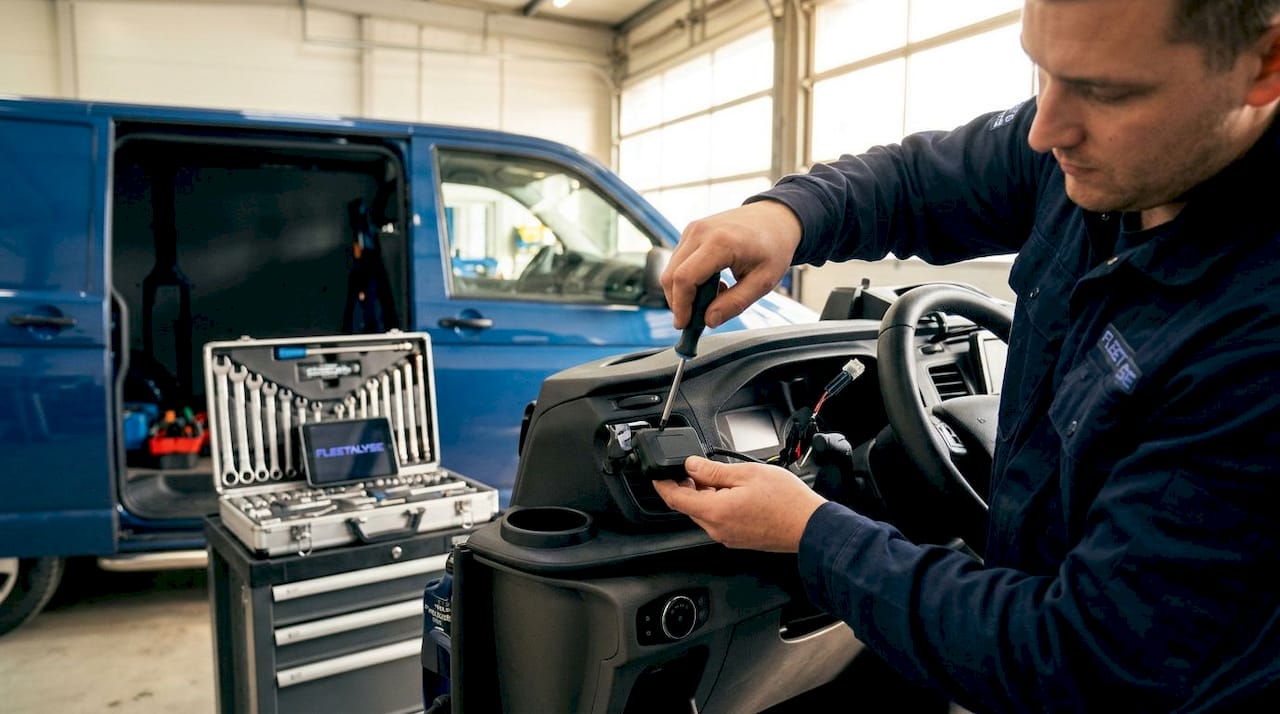
Telematics platforms collect GPS location, engine run time, cumulative idle hours, and duty states, all of which feed directly into utilisation calculations. These data points replace manual logbooks with continuous, automated capture. The result is a reliable audit trail that holds up to scrutiny.
Utilisation metrics cover three distinct dimensions:
- Time utilisation: productive hours divided by available hours
- Distance utilisation: loaded or revenue-generating miles versus total miles driven
- Capacity utilisation: actual load carried against the van’s rated payload capacity
Each dimension reveals a different operational weakness. A van with high time utilisation but low capacity utilisation may be making too many part-loaded runs. Tracking all three gives you a complete performance picture rather than a single misleading average.
Pro Tip: Define your productive work states in writing before you configure any telematics platform. If your system cannot distinguish between a van parked at a customer site and one sitting idle at the depot, your utilisation figures will be wrong from day one.
How to select and deploy telematics tools for van fleet tracking
Choosing the right hardware is the foundation of any credible fleet performance monitoring programme. The first decision is whether your assets are powered or unpowered. Vans and other powered vehicles suit hardwired telematics devices that draw continuous power from the vehicle’s electrical system. Trailers, swap bodies, and equipment stored off-vehicle require battery-powered asset trackers with longer reporting intervals to preserve battery life.
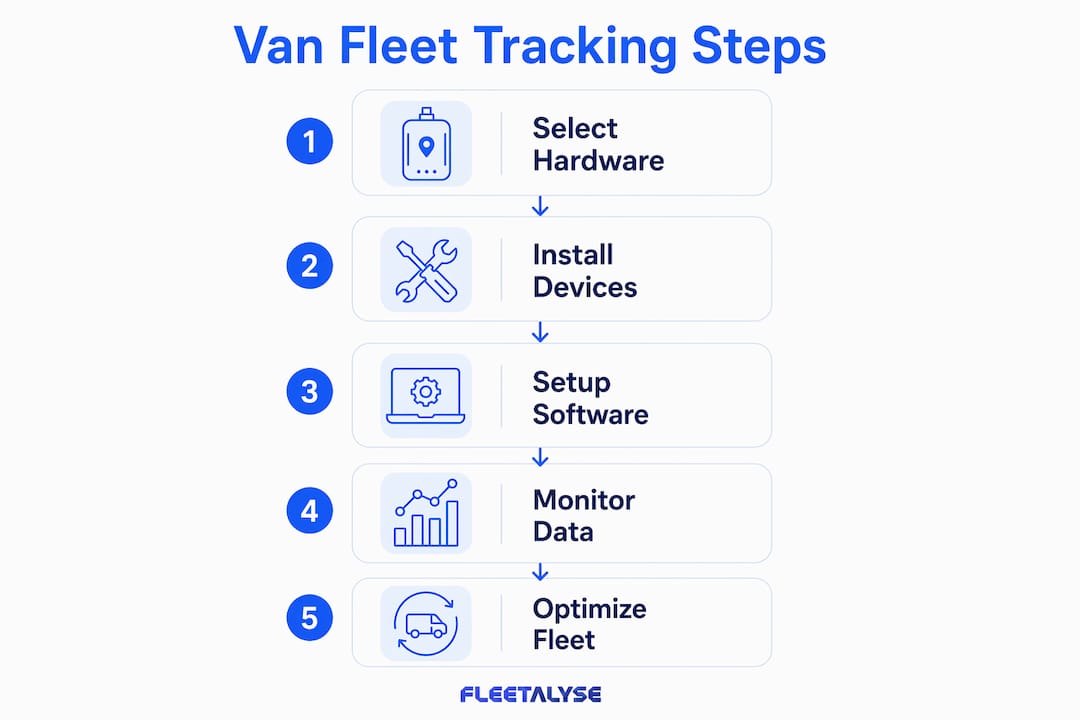
Powered vehicle trackers support real-time location updates, engine-on and engine-off events, and continuous idle monitoring. Battery-powered units typically report at intervals of several minutes or hours, which is sufficient for locating a parked trailer but inadequate for measuring driver behaviour or idle time on a live delivery run. Matching the device type to the operational requirement prevents wasted spend on hardware that cannot deliver the data you actually need.
When evaluating telematics platforms for your van fleet, prioritise these capabilities:
- Real-time GPS location with geofence alerts for depot arrivals and departures
- Engine run time and idle hour logging for accurate utilisation calculations
- Driver behaviour monitoring covering harsh braking, acceleration, and speeding events
- Integration with dispatch and maintenance systems to connect utilisation data with job assignments and service schedules
- Automated reporting and threshold alerts so underperforming vehicles surface without manual analysis
Fleetalyse offers plug-and-play van GPS trackers designed for commercial vehicles operating under UK transport regulations. The platform combines GPS tracking with driver behaviour monitoring and compliance tools, meaning you collect utilisation data and DVSA-relevant records from a single device.
| Feature | Hardwired vehicle tracker | Battery-powered asset tracker |
|---|---|---|
| Power source | Vehicle electrical system | Internal battery |
| Reporting frequency | Real-time or near real-time | Interval-based (minutes to hours) |
| Idle time monitoring | Yes | Limited |
| Driver behaviour data | Yes | No |
| Best suited for | Vans, HGVs, cars | Trailers, equipment, unpowered assets |
Pro Tip: Before purchasing hardware, map your telematics data to your dispatch system’s job codes. If the two systems cannot share a common vehicle identifier, you will spend more time reconciling spreadsheets than analysing utilisation.
What are best practices for accurate utilisation data collection?
Accurate van fleet asset utilisation data starts with standardised definitions. Every site, shift, and vehicle type must use identical status codes: productive, idle, planned downtime, and unplanned downtime. Without this, a vehicle recorded as “available” at one depot may be counted as “in maintenance” at another, corrupting any cross-fleet comparison.
Follow these steps to build a reliable data collection process:
- Define productive work states precisely. Productive time means the vehicle is actively engaged in a revenue-generating or operationally necessary task. Waiting at a loading bay, staging at a depot, or sitting in a traffic queue does not qualify.
- Automate data capture wherever possible. Automating utilisation reporting with consistent status codes eliminates the denominator drift and manual entry errors that make utilisation figures unreliable. Human-entered data introduces inconsistency; telematics data does not.
- Apply consistent denominators across all reporting units. If one depot counts available hours as contracted shift hours and another counts calendar hours, your fleet-wide average is meaningless. Agree on a single denominator definition and enforce it in your telematics configuration.
- Map telematics events to operational states. Engine-on does not always mean productive. Configure your platform to distinguish between engine-on at a customer site (productive) and engine-on at the depot with no job assigned (idle). This mapping is where most utilisation programmes fail.
- Track utilisation at job and zone level, not just fleet average. Zone-level utilisation analysis prevents a high-performing region from masking chronic underuse in another. Fleet averages are useful for board reports; job-level data is what drives operational decisions.
- Set utilisation thresholds and act on them. A healthy van utilisation rate sits between 70% and 85%. Below 62%, fleets carry 15 to 22% excess capacity, which means you are paying to maintain, insure, and store vehicles that are not generating value. Above 90%, you risk driver fatigue and deferred maintenance.
- Audit your data quarterly. Telematics configurations drift over time as vehicles are replaced, routes change, and shift patterns evolve. A quarterly audit catches misconfigurations before they corrupt months of historical data.
Inaccurate utilisation calculations most commonly result from mixing engine-on time with productive work time, or from failing to exclude staging and waiting periods. Correcting this single error often reveals that a fleet’s true utilisation is 10 to 15 percentage points lower than previously reported.
How to use utilisation data to optimise operations and reduce costs
Utilisation data is only valuable when it drives decisions. The most direct application is fleet right-sizing. When you identify vehicles consistently operating below 62% utilisation, you have evidence to support redeployment to higher-demand zones or disposal from the fleet entirely. This is not a theoretical saving. Carrying excess capacity means paying for insurance, road tax, servicing, and depreciation on assets that are not working.
The financial case for acting on utilisation data is straightforward:
- Redeployment: Move underutilised vans from low-demand depots to high-demand zones before committing to new leases or purchases
- Disposal decisions: Use per-vehicle utilisation history to identify candidates for fleet reduction, supported by objective data rather than operational instinct
- Maintenance scheduling: Vehicles with high idle hours accumulate engine wear disproportionate to their mileage. Utilisation data allows you to schedule servicing by engine hours rather than calendar intervals, reducing both unplanned breakdowns and unnecessary early servicing
- Driver behaviour improvement: Idle time is a direct cost. Fuel burned while stationary generates no revenue. Rewards-based telematics programmes using platforms like Geotab Vitality have demonstrated 2 to 6% fuel savings through behavioural coaching, which compounds significantly across a large van fleet
Shifting from punitive to reward-based driver behaviour tracking improves operational asset costs and fleet efficiency. Drivers who understand their scores and receive recognition for improvement engage with the process rather than resisting it.
Utilisation dashboards with automated alerts are the operational tool that ties this together. Rather than waiting for a monthly report, your fleet management platform should flag any vehicle that drops below your defined utilisation threshold in real time. This allows you to investigate the cause, whether it is a scheduling gap, a vehicle off-road for repairs, or a driver issue, before the underuse compounds into a pattern. Container fleet operators have applied similar asset visibility principles across multi-depot networks with measurable reductions in idle asset time, and the same logic applies directly to van fleet management.
Key takeaways
Effective van fleet asset utilisation tracking requires precise metric definitions, automated data capture, and the discipline to act on what the data reveals.
| Point | Details |
|---|---|
| Define productive hours precisely | Exclude idle time, staging, and planned downtime from utilisation calculations to avoid inflated figures. |
| Use three utilisation dimensions | Track time, distance, and capacity utilisation separately to identify different types of operational inefficiency. |
| Automate data capture | Telematics platforms eliminate manual errors and denominator drift that corrupt utilisation reporting. |
| Act on the 62% threshold | Fleets below 62% utilisation carry 15 to 22% excess capacity and should consider redeployment or disposal. |
| Track at job and zone level | Fleet averages mask localised underperformance; granular analysis enables targeted operational improvements. |
Why most van fleets are measuring utilisation wrong
After working closely with UK fleet operators across a range of sectors, the pattern I see most often is not a lack of data. It is a lack of agreed definitions. Fleets invest in telematics hardware, pull utilisation reports, and then spend the next three months arguing about whether the figures are accurate. They usually are not, because nobody defined what “productive” meant before the system went live.
The second mistake is treating fleet average utilisation as a management metric. An average of 72% across 40 vans can hide five vehicles sitting at 40% and five running at 95%. The underused ones are costing you money. The overused ones are heading for a breakdown or a compliance issue. Neither shows up in the average.
What I have found genuinely works is combining telematics data with driver engagement. Drivers who can see their own utilisation and idle time scores, and who receive recognition for improving them, change their behaviour in ways that no policy document achieves. The Geotab Vitality evidence on reward-based coaching is not surprising to anyone who has managed drivers directly. People respond to feedback that feels fair and transparent.
The future of fleet performance monitoring is predictive. Platforms that correlate utilisation patterns with maintenance events will tell you a vehicle is heading for a breakdown before it happens, not after. Fleetalyse is moving in this direction, and fleet managers who build disciplined utilisation tracking habits now will be positioned to benefit from those capabilities as they mature.
The competitive advantage in van fleet management increasingly belongs to operators who treat their data as a strategic asset rather than an administrative record. Start with clean definitions, automate your capture, and review at the vehicle level. The savings follow from that discipline.
— Vytautas
Track smarter with Fleetalyse
Fleetalyse gives UK fleet managers the GPS tracking, driver behaviour monitoring, and automated reporting tools needed to run a disciplined van fleet asset utilisation programme. The platform’s plug-and-play telematics units install without professional setup, and the UK-based support team ensures your configuration captures the right data from day one. Whether you manage a mixed fleet of vans and trailers or a dedicated delivery operation, Fleetalyse’s telematics platform connects utilisation data, compliance records, and driver behaviour into a single operational view. Explore the full range of fleet tracking solutions to find the right fit for your operation.
FAQ
What is van fleet asset utilisation tracking?
Van fleet asset utilisation tracking is the process of measuring productive vehicle hours against total available operating hours to assess and improve fleet efficiency. It uses telematics data including GPS location, engine run time, and idle hours to generate accurate utilisation percentages.
What is a good utilisation rate for a van fleet?
A healthy van fleet utilisation rate sits between 70% and 85%. Fleets operating below 62% typically carry 15 to 22% excess capacity, indicating candidates for redeployment or disposal.
How does telematics improve utilisation accuracy?
Telematics platforms automate the capture of engine run time, idle hours, and location data, eliminating the manual entry errors and inconsistent status codes that distort utilisation calculations. Automated reporting also enables real-time threshold alerts rather than relying on monthly reviews.
What is the difference between time, distance, and capacity utilisation?
Time utilisation measures productive hours against available hours. Distance utilisation tracks revenue-generating miles against total miles driven. Capacity utilisation compares actual load carried to the van’s rated payload. Each metric identifies a different type of inefficiency within the same fleet.
Why should utilisation be tracked at vehicle level rather than fleet average?
Fleet averages mask significant variation between individual vehicles and zones. A vehicle operating at 40% utilisation is invisible inside a fleet average of 72%. Job-level and zone-level analysis surfaces these outliers and enables targeted redeployment or scheduling changes.