


Van fleet fuel efficiency explained: a 2026 UK guide

Van fleet fuel efficiency is defined as the measure of how productively your vans convert fuel into distance travelled, expressed as miles per gallon (MPG) or litres per 100 kilometres (L/100 km). For UK fleet operators, this metric sits at the centre of cost control and carbon reduction. Fuel represents 25–40% of total fleet operating costs. That means a 10% reduction in fuel use across a 20-vehicle van fleet running 30,000 km per vehicle per year can save £4,000–£8,000 annually. Understanding van fleet fuel efficiency explained in practical terms is the first step toward turning those numbers into real savings.
What affects van fleet fuel efficiency?
Multiple variables drive fuel consumption, and most fleet operators underestimate how many of them are within their direct control.
Vehicle specification and load
Engine type, vehicle weight, and body shape all set the baseline for fuel economy. A tall, boxy panel van burns significantly more fuel at motorway speeds than a low-profile car-derived van carrying the same load. Carrying unnecessary weight compounds the problem. Operational discipline, including removing excess equipment and avoiding unnecessary idling, delivers immediate fuel savings without any capital outlay.

Route type and driving conditions
Urban stop-start driving is far harder on fuel economy than a steady motorway run. A van completing 15 deliveries in a city centre will consume proportionally more fuel per kilometre than one making a single long-haul trip. Weather and terrain add further variability: headwinds, hills, and cold temperatures all increase fuel demand.
Driver behaviour
Driver behaviour accounts for 20–30% of fuel consumption variance between identical vans on similar routes. That is a striking figure. It means two drivers in the same vehicle, covering the same road, can produce wildly different fuel bills. Harsh acceleration and braking alone contribute up to 15% excess fuel use.
Maintenance and tyre condition
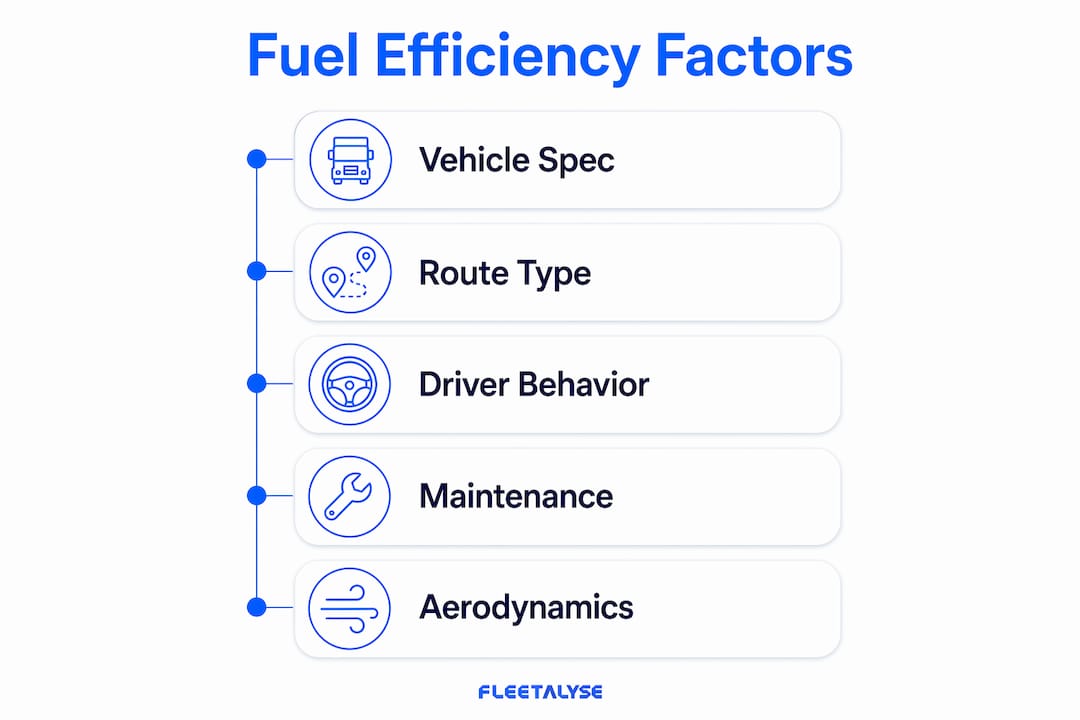
Under-inflated tyres by 20% increase rolling resistance, raising fuel consumption by 2–3%. Tyre management is one of the highest-return maintenance actions available to any fleet. Engine wear, clogged injectors, and failing sensors silently erode efficiency over time.
Aerodynamic drag
Roof racks and external fittings left on vans when not in use are a hidden fuel cost. Aerodynamic drag from roof racks reduces MPG by 5–10%. A simple removal policy for unused equipment pays for itself quickly.
Pro Tip: Conduct a quarterly audit of every van’s external fittings. Remove any roof racks, ladders, or accessories not needed for current jobs. The fuel saving is immediate and costs nothing.
How do you benchmark van fleet fuel efficiency effectively?
Benchmarking is the process of establishing a consistent baseline so you can measure progress and identify outliers. Without it, you are managing fuel costs by instinct rather than evidence.
-
Collect baseline data over 3–6 months. A shorter window introduces seasonal distortion. Winter fuel consumption is higher due to cold starts, heating loads, and road conditions. Three to six months smooths these variables and gives you a reliable starting point.
-
Segment data by vehicle class, route type, and load. A city delivery van and a motorway service vehicle should never share the same benchmark. Segmentation of fuel efficiency data by route type and load is critical to avoid distorted benchmarks and unfair driver comparisons.
-
Calculate internal averages and identify outliers. Once you have segmented data, calculate the mean MPG or L/100 km for each group. Vehicles or drivers sitting more than 10% below the group average warrant investigation, not blame.
-
Compare against external industry benchmarks. UK and EU commercial fleet data provide useful reference points. If your fleet average sits materially below sector norms, the gap represents recoverable cost.
-
Set rolling quarterly improvement targets. Annual targets are too slow to drive behaviour change. Quarterly reviews keep fuel efficiency visible and give managers the frequency needed to course-correct.
-
Avoid the most common benchmarking pitfall. Comparing total fuel spend across vehicles without normalising for distance and load produces meaningless numbers. Always benchmark on a per-kilometre basis.
Fleets that treat fuel efficiency benchmarks as live KPIs rather than annual reports achieve 15–25% fuel cost reductions within 12 months. That result comes from frequency and visibility, not from any single technical intervention.
Proven strategies to improve van fleet fuel efficiency
The most effective approach combines speed management, driver training, maintenance discipline, and technology. Each lever works independently, but the compounding effect of applying all four is where the real gains appear.
Speed management
Reducing average motorway speeds from 70 mph to 60 mph can improve fuel economy by 10–15% in tall, boxy commercial vans due to reduced aerodynamic drag. Speed limiters and telematics alerts make this policy enforceable rather than aspirational. Fuel consumption increases non-linearly above 50 mph, so even modest speed reductions produce disproportionate savings.
Driver training
Training targeted at harsh acceleration, unnecessary braking, and idling reduction addresses the 20–30% behavioural variance identified in fleet data. The most effective programmes combine classroom instruction with in-cab feedback. Drivers who can see their own scores in real time adjust their behaviour faster than those who receive only periodic reports.
Maintenance and predictive diagnostics
Predictive maintenance identifies mechanical issues like clogged injectors and failing oxygen sensors before they cause major failures. Catching these faults early prevents 5–10% fuel economy drops that would otherwise go unnoticed until the next service interval. Tyre pressure checks should be weekly, not monthly.
Aerodynamic and load management
Remove roof racks and external accessories when they are not in use. Audit van loads before each shift to eliminate unnecessary weight. These two actions cost nothing and produce consistent, measurable fuel savings across the fleet.
Technology adoption
AI-driven telematics solutions provide real-time data enabling detection of hidden fuel waste. Telematics units fitted to each vehicle capture speed profiles, idling time, harsh braking events, and fuel consumption per journey. That data feeds directly into driver scorecards and management dashboards, making fuel efficiency a visible, daily metric rather than a monthly report.
Pro Tip: Pair telematics data with AI dashcam footage to give drivers context for their scores. Seeing the moment of harsh braking on video is far more persuasive than a number on a spreadsheet.
How do you monitor and manage fuel efficiency for continuous improvement?
Measurement without management produces data, not results. The fleet operators who achieve sustained fuel savings embed efficiency metrics into daily operations.
-
Define clear KPIs from day one. Set targets for MPG or L/100 km by vehicle class and route type. Review them monthly at the operational level and quarterly at the management level. KPIs without review cycles are decoration.
-
Use telematics data to identify waste patterns. GPS tracking and CAN-bus data reveal where fuel is being lost: excessive idling at collection points, speeding on dual carriageways, or cold-start patterns in winter. Fleetalyse provides real-time telematics and driver behaviour monitoring that surfaces these patterns automatically.
-
Schedule maintenance proactively, not reactively. Efficiency creep caused by minor mechanical degradations silently reduces fleet fuel economy over time. Only predictive maintenance fully counters this. Build automated service alerts into your fleet management system so no vehicle slips past its service window.
-
Engage drivers with transparent scorecards. Drivers respond to fairness. Scorecards that account for route type and load, rather than raw MPG figures, produce more honest comparisons and better engagement. Incentive programmes tied to quarterly scores reinforce the right behaviours.
-
Review and adjust targets on a rolling basis. As your fleet improves, static targets become too easy. Rolling targets that adjust upward as performance improves maintain the pressure needed for continuous gains. Fuel efficiency improvement is not a project with an end date. It is an ongoing operational discipline.
The biggest fuel savings come from fleets that embed efficiency metrics into real-time operational culture, not just from technology adoption alone. Technology provides the data. Culture determines what happens with it.
Key takeaways
Sustained van fleet fuel savings require live benchmarking, driver accountability, and predictive maintenance working together, not in isolation.
| Point | Details |
|---|---|
| Fuel costs are significant | Fuel represents 25–40% of fleet operating costs; a 10% reduction saves thousands annually. |
| Driver behaviour is the biggest variable | Behaviour accounts for 20–30% of fuel variance; training and scorecards deliver measurable change. |
| Benchmark by segment, not total fleet | Segment data by route type and load to avoid distorted comparisons and unfair driver assessments. |
| Speed management pays immediately | Dropping from 70 mph to 60 mph on motorways improves fuel economy by 10–15% in commercial vans. |
| Predictive maintenance prevents silent losses | Mechanical degradation silently erodes efficiency; proactive servicing prevents 5–10% fuel economy drops. |
Why data culture matters more than the tools you buy
Fleet managers often ask me which technology will fix their fuel costs. My honest answer is that no single tool does. I have seen fleets with the latest telematics hardware still running 15% above their sector benchmark, because the data sat in a dashboard nobody reviewed. The technology was there. The culture was not.
The shift that actually moves the needle is treating fuel efficiency as a live operational metric, the same way you treat delivery completion rates or vehicle availability. When a driver’s fuel score appears in the morning briefing alongside their route plan, behaviour changes. When a manager receives an alert about a van idling for 40 minutes at a collection point, they act on it. That is the difference between a fleet that improves and one that just measures.
AI-powered platforms are genuinely changing what is possible here. The ability to detect hidden fuel waste in real time, rather than discovering it in a monthly report, is a meaningful operational shift. But the operators getting the most from these tools are the ones who have already built the habit of acting on data. The technology accelerates a culture that already exists. It does not create one from scratch.
My practical recommendation for 2026: start with your benchmarking process before you invest in any new hardware. Understand what your fleet actually consumes, segmented by route and vehicle class. Then identify your three biggest waste drivers. Only then will you know which tools are worth buying.
— Vytautas
Fleetalyse: built for UK van fleet fuel management
Fuel waste is rarely visible until you have the right data in front of you. Fleetalyse gives UK fleet operators that visibility through GPS vehicle tracking, real-time driver behaviour monitoring, and fuel consumption analysis built into a single platform.
The Fleetalyse platform connects directly to your vans through plug-and-play telematics units, capturing speed profiles, idling time, harsh braking events, and fuel use per journey. The Teltonika FMB920 GPS tracker is a popular choice for van fleets, delivering detailed CAN-bus data without complex installation. Pair it with Fleetalyse fleet tracking solutions to turn raw telematics data into driver scorecards, maintenance alerts, and fuel efficiency KPIs your team will actually use. UK-based support means you get practical help from people who understand the operational realities of running vans on British roads.
FAQ
What is van fleet fuel efficiency?
Van fleet fuel efficiency is the measure of how effectively a fleet’s vans convert fuel into distance travelled, expressed as MPG or L/100 km. It is a key operational metric for controlling costs and reducing carbon emissions.
How much of fleet operating costs does fuel represent?
Fuel typically represents 25–40% of total fleet operating costs. For a 20-vehicle van fleet, a 10% fuel reduction can save £4,000–£8,000 annually.
How does driver behaviour affect fuel consumption?
Driver behaviour accounts for 20–30% of fuel consumption variance between identical vans on similar routes. Harsh acceleration and braking alone contribute up to 15% excess fuel use.
What is the fastest way to reduce van fleet fuel costs?
Speed management and tyre pressure checks deliver the fastest returns. Reducing motorway speeds from 70 mph to 60 mph improves fuel economy by 10–15%, and correcting tyre under-inflation reduces fuel consumption by 2–3%.
How does telematics help with fuel efficiency monitoring?
Telematics captures real-time data on speed, idling, braking, and fuel use per journey. AI-driven platforms like Fleetalyse use this data to identify hidden fuel waste and surface it as driver scorecards and management alerts.