


Vehicle immobiliser telematics: fleet manager’s guide

Most fleet managers think of an immobiliser as a passive device that sits quietly in a vehicle until something goes wrong. In reality, understanding what is vehicle immobiliser telematics means recognising a far more sophisticated system. Modern immobiliser telematics combines remote engine control with real-time GPS data, cloud connectivity, and automated security triggers to give you genuine command over every vehicle in your fleet. This guide covers how the technology works, why it matters for your operations, and how to deploy it effectively across your assets.
Table of Contents
- Key takeaways
- What is vehicle immobiliser telematics?
- Safety protocols for remote immobilisation
- Benefits for fleet security and efficiency
- Immobiliser types and emerging trends
- Implementing immobiliser telematics in your fleet
- My perspective on where immobiliser telematics is heading
- How Fleetalyse supports your fleet security
- FAQ
Key takeaways
| Point | Details |
|---|---|
| More than an alarm | Vehicle immobiliser telematics actively controls engine functions remotely, not just lock doors or sound alerts. |
| Safety-first design | Immobilisation only activates when a vehicle is stationary, preventing dangerous mid-journey shutdowns. |
| Dramatically improved recovery | Thatcham-approved tracker and immobiliser combinations achieve over 96% recovery rates against 2 to 8% for traditional methods. |
| Operational integration | Telematics data from GPS, sensors, and engine diagnostics supports both security decisions and everyday fleet management. |
| Deployment needs structure | Role-based access, geofencing rules, and staff training determine whether your system works well under pressure. |
What is vehicle immobiliser telematics?
Vehicle immobiliser telematics is the integration of a remote immobiliser system with a telematics control unit (TCU) installed in your vehicle. To understand the combined system, it helps to separate the two components first.
A vehicle immobiliser system is a hardware relay wired into the starter motor circuit, fuel pump, or both. When triggered, it physically cuts the electrical supply to those components, preventing the engine from starting. This is not software-level trickery. It is a hard electrical interruption.
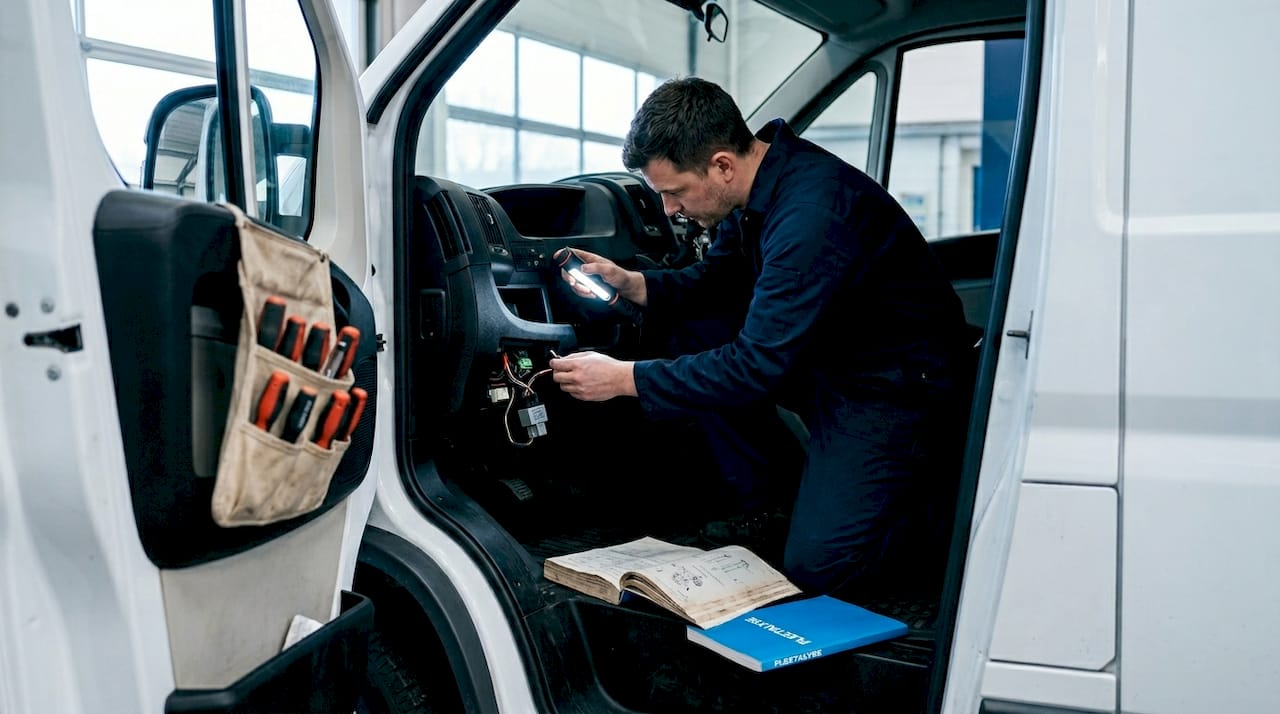
Telematics in vehicles refers to the technology that collects and transmits vehicle data, including location, speed, engine status, and sensor readings, to a cloud platform where you can view and act on it. The TCU is the hardware that makes this possible. It communicates via cellular or eSIM connection, sending data to your fleet management software and receiving commands back.
When these two systems work together, the result is powerful. Your telematics platform detects an anomaly, confirms the vehicle’s GPS location, checks engine status, and sends a command to activate the immobiliser relay. The engine cannot restart until an authorised operator sends the release command. That entire sequence can happen within seconds, from any location with internet access.
Here is what the core hardware and software stack typically includes:
- GPS receiver feeding real-time location data to the cloud platform
- Telematics control unit with cellular or eSIM connectivity for two-way command delivery
- Immobiliser relay wired to the starter motor or fuel pump circuit
- Cloud management platform where fleet managers view vehicle status and issue commands
- Fleet management app providing mobile access to tracking and immobilisation controls
- Secure authentication layer ensuring only authorised personnel can trigger immobilisation
Telematics control units include cellular eSIMs, secure storage, and software stacks supporting remote device lifecycle management, meaning the command to immobilise a vehicle reaches its destination reliably even in areas with variable connectivity.
Safety protocols for remote immobilisation
The most common concern fleet managers raise about remote immobilisation is driver safety. What happens if someone activates it while a vehicle is travelling at speed on a motorway? The answer is that well-designed systems make this physically impossible by design.
Immobilisation features activate only when the vehicle is stationary and the engine is off, preventing any risk of a mid-journey power cut. The system does not respond to an immobilisation command while the vehicle is in motion. This is not a policy setting you configure. It is an architectural constraint built into the hardware logic.
Beyond this baseline protection, responsible deployment involves a structured set of protocols:
- Confirm vehicle status before activation. Your platform should show GPS speed, engine state, and location. Activate only when all three confirm the vehicle is parked.
- Use two-stage immobilisation. Two-stage systems prevent abrupt engine shutdown and instead block the starter motor circuit, so the vehicle completes its current stop safely before the immobilisation takes effect on the next start attempt.
- Restrict access with role-based controls. Access to immobiliser controls should be limited to trained personnel with explicit authorisation, reducing the risk of accidental or unauthorised activation.
- Document every activation. Log the time, location, authorising user, and reason for each immobilisation event. This creates an audit trail and supports post-incident review.
- Conduct scenario drills. Practise the activation workflow with your operations team so that, under genuine pressure, nobody is navigating an unfamiliar interface for the first time.
Pro Tip: Set up a two-person confirmation rule for immobilisation commands on vehicles carrying passengers or hazardous loads. One person confirms location and vehicle state; the second authorises activation. This adds roughly 60 seconds but significantly reduces risk.
Benefits for fleet security and efficiency
The practical advantages of combining GPS tracking with remote immobilisation extend well beyond theft prevention. Here is where fleet managers typically see the greatest return.
Theft prevention and unauthorised use. The ability to disable a vehicle instantly changes the risk calculus for opportunistic theft. A vehicle that cannot be moved is far less attractive than one that simply triggers an alarm. This is especially relevant for HGV fleets where the cargo value can far exceed the vehicle itself.
Recovery rates that actually matter. Thatcham-approved GPS trackers with integrated immobilisers achieve over 96% vehicle recovery compared to 2 to 8% using traditional methods. That gap is not marginal. It reflects the difference between a vehicle sitting in a field overnight and one that is located, immobilised, and recovered within hours.
Insurance considerations. Many commercial fleet insurers in the UK recognise Thatcham-approved telematics devices as a risk reduction measure. Fitting approved hardware can support negotiations around your fleet insurance premium at renewal, though the exact impact depends on your insurer and policy terms.
The operational benefits run alongside the security ones:
- Real-time vehicle tracking technology gives you live visibility across your entire fleet, not just alerts when something goes wrong
- Sensor and camera data feeds driver behaviour monitoring, harsh braking detection, and fuel consumption insights
- Engine diagnostics from the TCU support proactive maintenance scheduling, reducing unplanned downtime
- Geofence breaches trigger automatic alerts, allowing rapid response before a vehicle travels far from its authorised zone
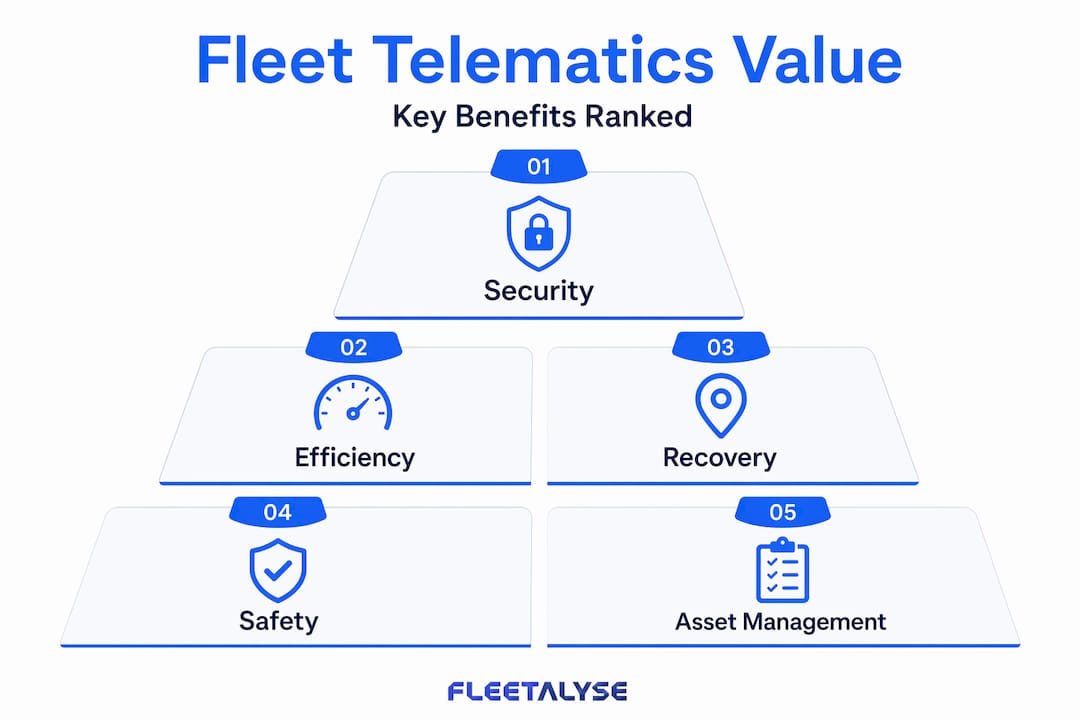
Fleet telematics improves safety, fuel efficiency, and asset management by integrating data from GPS, sensors, and engine diagnostics, turning your fleet’s daily activity into structured operational intelligence rather than a collection of disconnected events.
Immobiliser types and emerging trends
Not every immobiliser system is the same, and understanding the differences will help you make a better procurement decision.
| System type | How it works | Key advantage | Limitation |
|---|---|---|---|
| Factory-fitted immobiliser | ECU-based, activates without correct key signal | Built-in, no installation cost | No remote control, no telematics integration |
| GPS tracker with immobiliser | TCU sends remote command to relay | Remote activation, full tracking | Requires professional wiring to relay |
| Ghost immobiliser | Hidden in CAN-bus, requires PIN sequence | Invisible to thieves, no relay to find | No telematics integration, no remote control |
| Telematics-integrated system | Full TCU plus relay plus cloud platform | Remote control, tracking, data analytics | Higher upfront cost, ongoing subscription |
For fleet operators, the telematics-integrated system is the only category that gives you both remote control and operational data. The others address theft in isolation.
Connectivity is shifting as well. Older telematics units relied on 2G or 3G cellular connections. Current-generation TCUs use eSIM technology and IoT protocols such as MQTT and OMA LwM2M, which provide more reliable command delivery and support over-the-air software updates without physical access to the device.
The direction of travel for the technology is clear. Telematics has evolved beyond simple GPS location tracking into complex systems integrating multiple sensors, cameras, and cloud analytics. AI-assisted safety checks are beginning to appear in higher-end platforms, using sensor fusion to cross-reference vehicle speed, location, and driver behaviour data before confirming whether immobilisation conditions are genuinely met.
Pro Tip: When evaluating telematics platforms, ask specifically whether immobilisation commands are confirmed with an acknowledgement signal back from the vehicle. Some systems send the command without confirming receipt. An acknowledged command loop means you know the relay has actually activated, not just that the instruction was sent.
Implementing immobiliser telematics in your fleet
Deploying these systems effectively requires more than fitting hardware. The way you configure, integrate, and manage the platform determines whether it becomes a genuine security asset or an underused feature.
- Select hardware matched to your vehicle types. Plug-and-play telematics units suit vans and lighter assets well. HGVs and trailers often require hardwired TCUs with dedicated relay connections to the starter circuit. Check device compatibility with your existing tachograph head units if you run vehicles requiring digital tachographs.
- Choose a cloud platform with genuine access controls. Your software must support role-based permissions so that immobilisation commands are restricted to authorised users. A platform where every dispatcher can immobilise any vehicle is an operational liability.
- Configure geofences and automated triggers. Geo-fencing enables automatic immobilisation triggers when vehicles breach defined boundaries or operate outside permitted hours. Set boundaries for your depot perimeters, overnight parking locations, and any restricted zones relevant to your operation.
- Define your incident response workflow. Who receives the alert? Who confirms vehicle status? Who authorises the command? Who contacts the driver? Map this process before you need it, not during an incident.
- Train your team with realistic scenarios. Run tabletop exercises covering theft in progress, unauthorised use during off-hours, and vehicles found outside expected locations. Operators who have practised the workflow respond faster and make fewer errors under pressure.
For logistics fleet management at scale, integrating immobiliser telematics with your existing transport management system reduces duplication and gives your operations team a single interface for security and route management.
My perspective on where immobiliser telematics is heading
I’ve spent years working with fleet operators across the UK, and the conversation around vehicle security has changed considerably. When I first started, most operators treated immobilisers as a box-ticking exercise for their insurance requirements. Fit it, forget it, move on.
What I’ve seen more recently is a genuine shift in how fleet managers think about this technology. The ones getting the most value are not treating immobilisation as a standalone feature. They’re using it as one layer in a broader security and compliance framework that includes driver behaviour monitoring, route verification, and automated alerts. The immobiliser becomes meaningful precisely because it sits alongside all of that other data.
The pitfall I see most often is over-reliance on automated systems without clear human protocols behind them. Geofence triggers and AI-assisted checks are genuinely useful, but they do not replace trained operators who understand the context of an alert. A vehicle stationary outside a depot at 2am looks suspicious in the data. It might also be a driver who pulled over safely due to a medical issue. The technology surfaces the information. Your team needs to interpret it correctly.
My honest view is that the fleet operators who will benefit most from immobiliser telematics in the next few years are those who invest as much in their processes and training as they do in their hardware. The technology is ready. The gap is usually organisational.
— Vytautas
How Fleetalyse supports your fleet security
If you’re ready to move from understanding the technology to implementing it, Fleetalyse offers GPS fleet tracking, smart dashcams, and a telematics platform designed specifically for UK commercial operators.
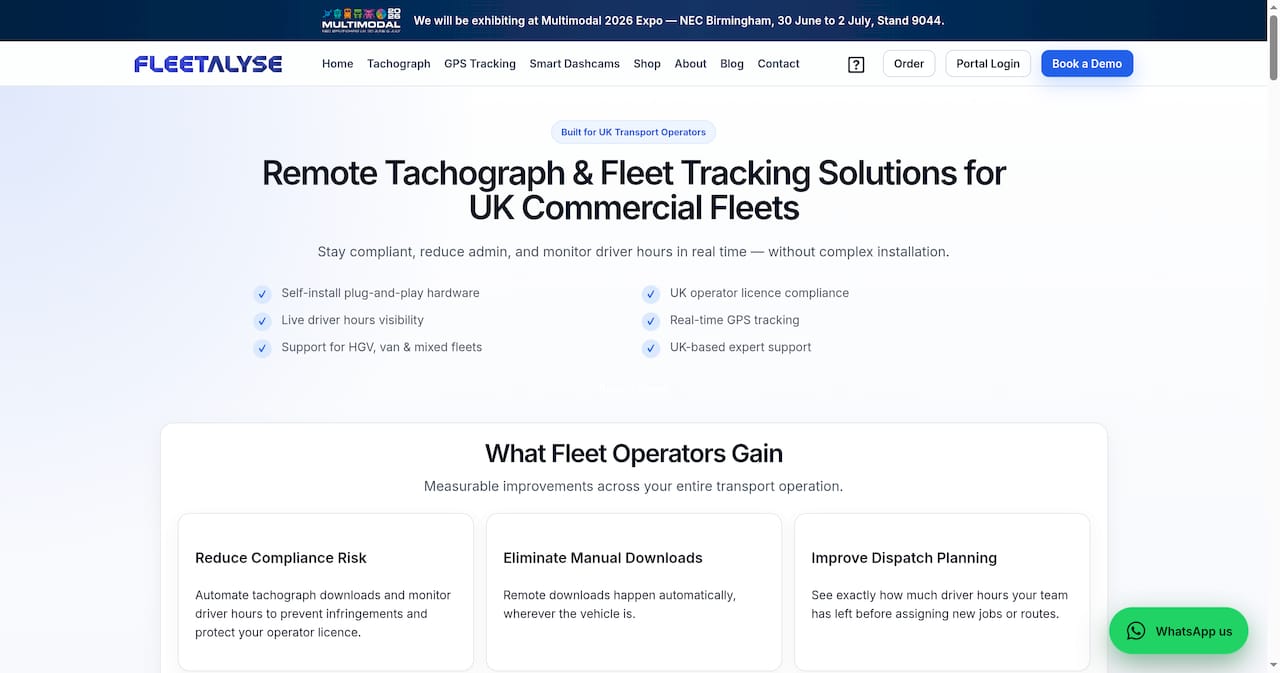
Fleetalyse integrates real-time vehicle tracking with driver behaviour monitoring, compliance reporting, and fleet data analysis in a single cloud platform. Whether you operate vans, HGVs, trailers, or a mixed fleet, the platform supports plug-and-play hardware installation without the need for a specialist engineer on-site. You get live visibility, automated alerts, and the data you need to make informed security decisions quickly. UK-based support means you’re speaking to people who understand your regulatory context. Visit Fleetalyse to explore the full product range or request a demo from the team.
FAQ
What does vehicle immobiliser telematics actually do?
It combines a remote-controlled engine immobiliser relay with a telematics control unit, allowing fleet managers to disable a vehicle’s starter motor or fuel pump remotely via a cloud platform while tracking its GPS location in real time.
Is it safe to remotely immobilise a moving vehicle?
No, and well-designed systems prevent it. Immobilisation activates only when the vehicle is stationary and the engine is off, making accidental mid-journey shutdown an architectural impossibility rather than a configurable setting.
How does telematics improve vehicle recovery rates?
By pairing live GPS tracking with remote immobilisation, Thatcham-approved systems achieve recovery rates above 96%, compared to 2 to 8% using traditional methods, because the vehicle can be located precisely and disabled before it is moved to a concealed location.
What connectivity does a telematics control unit use?
Modern TCUs use cellular eSIM connections along with protocols such as MQTT for reliable two-way communication, supporting remote immobilisation commands, over-the-air software updates, and continuous GPS and sensor data transmission to the cloud platform.
Can geofencing trigger automatic immobilisation?
Yes. Virtual geofence boundaries set within your fleet management software can generate automatic alerts or trigger immobilisation conditions when a vehicle moves outside permitted areas or operates beyond authorised hours.