

What is a fleet management platform?

Most fleet operators assume a fleet management platform is just a more polished way of seeing dots on a map. That assumption costs them significantly. A fleet management platform, known more formally in the industry as a fleet telematics system, is an integrated operational tool that combines vehicle tracking, driver behaviour monitoring, compliance reporting, maintenance scheduling, and performance analytics into a single, connected environment. This guide breaks down exactly how these platforms work, what features to look for, and how choosing the right solution transforms the way you run your transport operation.
Table of Contents
- Key takeaways
- What a fleet management platform actually does
- Types of platforms and pricing models
- The practical benefits for your operation
- How fleet management platforms work: data unification
- Why tracking alone is not enough
- See how Fleetalyse puts this into practice
- FAQ
Key takeaways
| Point | Details |
|---|---|
| Beyond vehicle tracking | Fleet management platforms unify telematics, compliance, and analytics far beyond basic GPS location data. |
| Integration is critical | Platforms that connect GPS, OBD, and ELD data into one dashboard prevent siloed insights and manual errors. |
| Pricing varies widely | Subscription, per-vehicle, and feature-based models each suit different fleet sizes and operational goals. |
| Compliance becomes automated | Automated driver hours monitoring and reporting reduces the administrative burden of regulatory obligations. |
| Selection depends on your goals | There is no single best platform; your operational priorities should drive the decision. |
What a fleet management platform actually does
The phrase “fleet management software” gets used loosely, but the technology behind modern platforms covers far more ground than most operators realise. Fleet management capabilities span vehicle tracking, maintenance scheduling, fuel management, driver safety monitoring, performance analytics, and route optimisation across leading platforms. Each of those functions sounds simple in isolation, but the real value comes from how they interact.
Here is what you should expect from a mature fleet management platform:
- Real-time GPS tracking and geofencing. You see where every vehicle is at any given moment, and you receive automatic alerts when a vehicle enters or leaves a defined zone. For transport managers overseeing HGV deliveries across multiple sites, this removes the need for manual check-in calls entirely.
- Predictive maintenance scheduling. Instead of waiting for a fault code to trigger, the platform monitors engine data, mileage, and usage patterns to flag upcoming service requirements. This reduces unexpected breakdowns and keeps vehicles on the road longer.
- Fuel management and cost control. The system identifies excessive idling, harsh acceleration, and inefficient routing, all of which inflate your fuel bill unnecessarily. Some platforms connect directly to fuel card data for end-to-end cost visibility.
- Driver behaviour monitoring. Speeding events, harsh braking, and phone usage behind the wheel are logged automatically. This data supports driver coaching, reduces accident rates, and builds a defensible record if an incident is disputed. Smart AI dashcams add a visual layer to this data, capturing footage that confirms or contextualises telematics readings.
- Route optimisation and dispatch efficiency. Live traffic data and historical route performance inform smarter dispatch decisions, cutting delivery times and reducing unnecessary mileage.
- Performance analytics and reporting. A well-built platform surfaces trends across your entire fleet, giving you the data to make informed decisions about vehicle replacement, driver training investment, and operational restructuring.
Pro Tip: When evaluating a platform, test the reporting layer first. A system that collects excellent data but buries it in unusable dashboards will not deliver the operational improvements you are looking for.
Types of platforms and pricing models
Not every platform is built the same way, and understanding the distinctions matters before you commit to a contract. At the broadest level, fleet management platforms divide into two categories: standalone GPS tracking tools and fully integrated telematics platforms. The former gives you location visibility; the latter gives you operational intelligence.
| Platform type | Best suited for | Pricing model | Hardware requirement |
|---|---|---|---|
| Standalone GPS tracker | Small fleets needing basic location data | Per-device monthly fee | Plug-and-play GPS unit |
| Integrated telematics platform | Mid to large fleets needing compliance and analytics | Per-vehicle subscription | Telematics unit, often with CAN-bus connection |
| Cloud-based SaaS platform | Fleets prioritising accessibility and low upfront cost | Tiered monthly subscription | Varies by provider |
| Custom-built solution | Large enterprise operators with specific workflows | Project-based or licence fee | Full integration with existing systems |
Cloud-based SaaS platforms have become the dominant model for commercial transport operators in the UK. They reduce upfront capital expenditure, receive continuous updates, and scale as your fleet grows. Custom-built platforms centralise tracking, route optimisation, driver monitoring, and compliance into a single system tailored to your business workflows, but the development cost and implementation timeline are considerably higher.
One detail many operators overlook is hardware dependency. Some platforms rely on third-party GPS providers and integrate their data rather than offering independent tracking. Before signing, confirm whether the hardware is proprietary, what happens if you change providers, and whether the integration quality has been independently verified.
Pro Tip: Ask vendors for a full data portability agreement before signing. If you decide to switch platforms in the future, you want to own your historical fleet data, not lose it.
Modular pricing, where you pay only for the features you activate, suits growing fleets well. You can start with GPS tracking and compliance reporting, then add predictive maintenance or driver coaching modules as your needs develop. Scalable, user-friendly platforms that integrate with your existing systems improve both adoption rates and workflow consistency from day one.
The practical benefits for your operation
The word “benefits” gets thrown around freely in vendor marketing, so it is worth being specific about what a well-deployed fleet management platform actually delivers in real-world operations.
Fleet management software reduces operational expenses by optimising routes, cutting fuel waste, reducing vehicle downtime, and automating compliance reporting. For a fleet of 30 HGVs, even a 10% reduction in fuel consumption represents a meaningful annual saving. When you add reduced maintenance costs from catching faults early, the financial case for deployment becomes straightforward.
The compliance picture is equally important for UK operators. DVSA enforcement has grown more rigorous, and Operator Licence obligations require you to demonstrate systematic oversight of driver hours, vehicle condition, and maintenance records. A platform that automates tachograph data downloads, flags hours breaches before they become infringements, and generates audit-ready reports takes significant pressure off your transport manager.
Beyond cost and compliance, here are the operational improvements most operators notice within the first three months of deployment:
- Fewer missed deliveries. Real-time tracking and live ETA updates let your customer services team manage expectations proactively rather than reacting to complaints.
- Measurable improvement in driver behaviour. When drivers know their performance is recorded and reviewed, habits improve. The reduction in harsh braking and speeding events alone lowers tyre wear and accident frequency.
- Faster incident resolution. When an accident occurs or a customer disputes a delivery, you have timestamped telematics and dashcam footage to review immediately, rather than relying on driver recollection.
- Better vehicle utilisation. Analytics that show which vehicles are underused or which routes carry unnecessary deadhead mileage allow you to right-size your fleet and reduce fixed asset costs.
Platform selection should always start from your primary operational objectives, whether that is visibility, cost reduction, driver accountability, or delivery performance. There is no universal answer, and buying a platform with 40 features when you will realistically use eight of them adds cost without adding value.
How fleet management platforms work: data unification
The technology underpinning these platforms is worth understanding, because it explains why some platforms deliver genuine insight while others produce data overload.
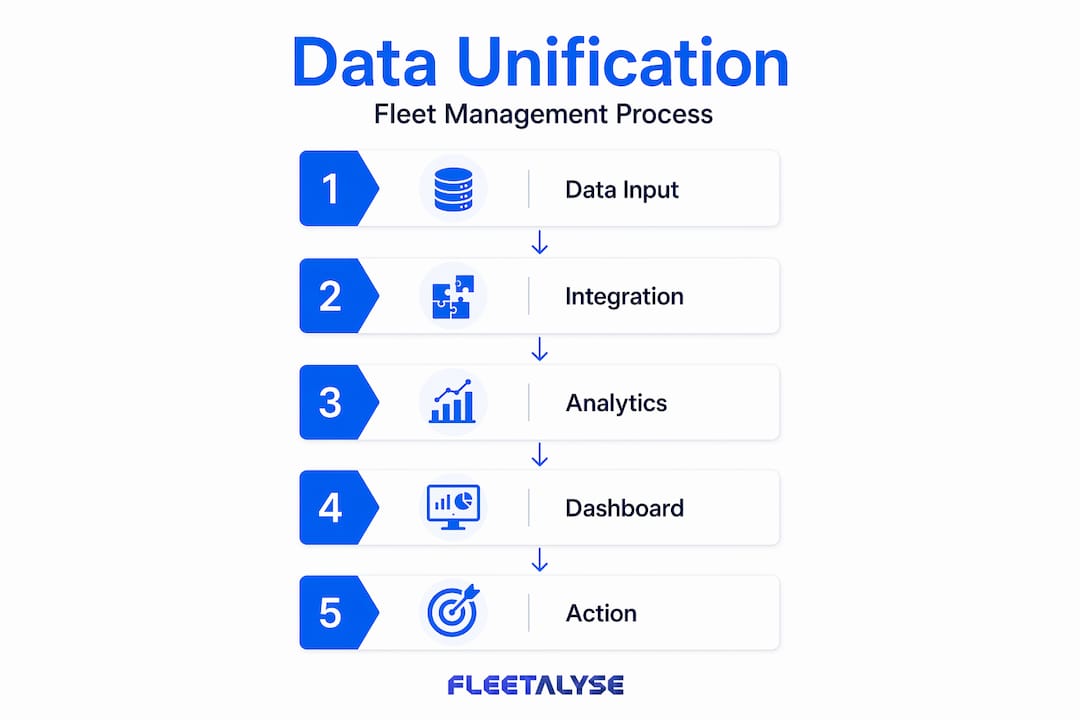
Modern fleet telematics systems pull information from multiple sources simultaneously. GPS units provide location and speed. OBD connectors read engine diagnostics and fuel consumption from the vehicle’s own systems. ELD devices log driving hours automatically. Tachograph head units record regulated driving data for HGV compliance. Integrating all of these sources into a single dashboard enables predictive maintenance and real-time analytics that would be impossible with separate tools.
The problem with fragmented systems is significant. When your GPS data sits in one portal, your tachograph downloads in another, and your fuel card reports in a third spreadsheet, you spend your day reconciling information rather than acting on it. Effective deployment depends on unifying data streams from diverse telematics and IoT sources to avoid siloed insights and manual reconciliation.
APIs and standardised data protocols make this possible. A well-architected platform exposes clean APIs that allow it to receive data from third-party hardware, pass data to your transport management system, and connect with maintenance scheduling tools or payroll software. When evaluating platforms, ask specifically how data flows between components and what integration documentation is available.
Cloud deployment has become the standard for commercial fleet operators because it provides remote access from any device, reduces the need for on-premise server infrastructure, and ensures continuous security updates. For vehicle GPS trackers across HGVs, vans, and trailers, cloud connectivity means every asset reports into the same live dashboard regardless of location.
| Data source | What it provides | Why it matters |
|---|---|---|
| GPS unit | Location, speed, route history | Live tracking and geofence alerts |
| OBD connector | Engine diagnostics, fuel use | Predictive maintenance and fuel analysis |
| ELD device | Driver hours, rest periods | Regulatory compliance and infringement prevention |
| Tachograph unit | Regulated HGV driving records | DVSA compliance and Operator Licence obligations |
| Dashcam | Video footage of driver and road | Incident investigation and driver coaching |
Why tracking alone is not enough
I have spent years reviewing how transport businesses actually use fleet management tools, and the pattern I see repeatedly is this: operators invest in a platform, configure the GPS tracking, and then treat the dashboard as a glorified map. The compliance modules go unconfigured. The driver behaviour reports go unread. The maintenance alerts get dismissed because no one has built a workflow to act on them.
In my view, the biggest risk in fleet management is not choosing the wrong platform. It is underdeploying a good one. Fleet management is strategic oversight, not simple vehicle tracking. The operators who extract the most value are the ones who treat the platform as an operational nerve centre, where data from vehicles, drivers, maintenance records, and compliance obligations flows into decisions that improve the business week by week.
What I have found works in practice is assigning clear ownership for each data stream. Someone is responsible for reviewing driver behaviour scores. Someone else owns the maintenance alerts. The transport manager reviews compliance reports before every DVSA audit window. When accountability is distributed, the platform stops being a dashboard people log into occasionally and starts being the tool the business runs on.
If you are evaluating platforms right now, my advice is to spend more time on the onboarding and support question than you think you need to. A platform with strong UK-based support will save you considerable frustration during the first three months of deployment, when configuration decisions and integration questions come up constantly.
— Vytautas
See how Fleetalyse puts this into practice
If this article has clarified what you need from a fleet management platform, Fleetalyse is built specifically for UK commercial transport operators who need more than dots on a map.
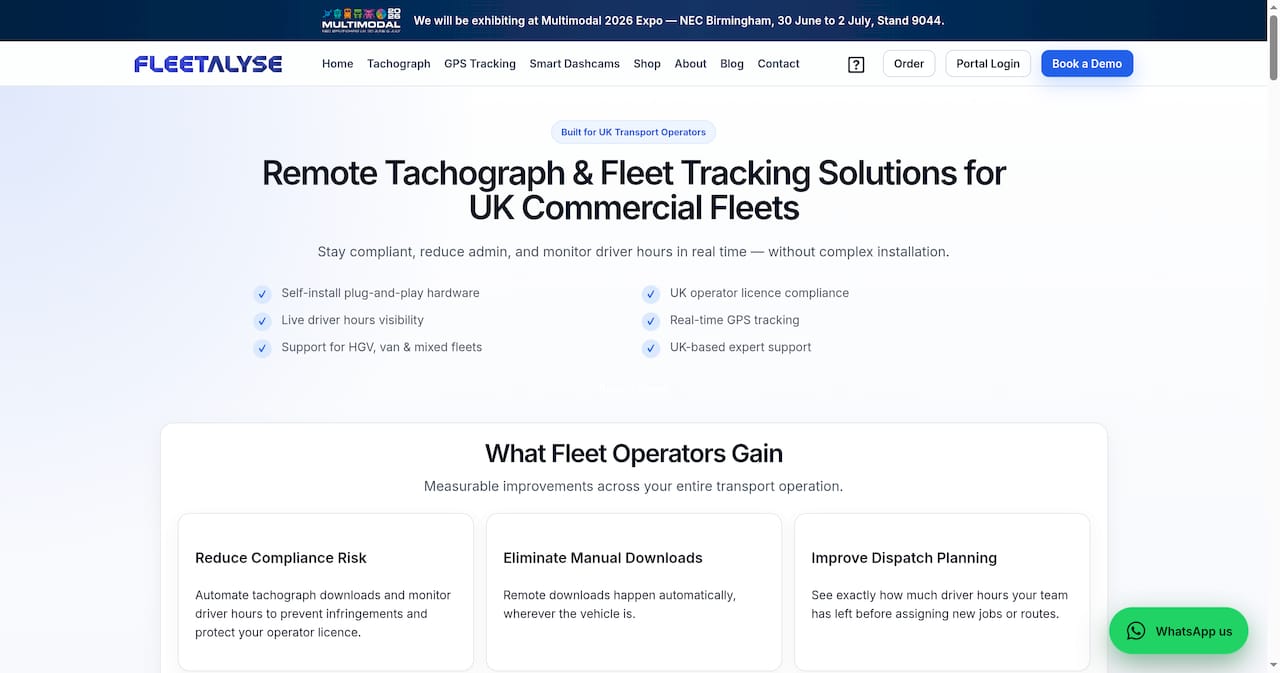
Fleetalyse brings together GPS fleet tracking, tachograph compliance, driver behaviour monitoring, and smart dashcam integration into a single telematics platform designed for HGVs, vans, trailers, and mixed fleets. Every component is supported by UK-based specialists who understand DVSA regulations and Operator Licence requirements. Whether you are managing a fleet of ten vehicles or several hundred, Fleetalyse scales to your operation and removes the administrative friction that costs transport managers hours every week. Explore the full range of Fleetalyse solutions or get in touch with the team to discuss a configuration that fits your fleet.
FAQ
What is a fleet management platform?
A fleet management platform is an integrated software system that combines GPS tracking, driver behaviour monitoring, maintenance scheduling, fuel management, and compliance reporting into a single operational tool for transport operators.
How does fleet management work?
Fleet management platforms collect data from telematics devices fitted to vehicles, including GPS units, OBD connectors, and tachograph units, and consolidate that data into a central dashboard where managers can monitor performance, compliance, and costs in real time.
What does a fleet manager do with the platform?
A fleet manager uses the platform to monitor vehicle locations, review driver behaviour reports, manage maintenance schedules, download tachograph data, and generate compliance reports for DVSA audits and Operator Licence obligations.
What are the main types of fleet management platform pricing?
Fleet management platforms typically use per-vehicle monthly subscriptions, tiered SaaS pricing based on features, or project-based fees for custom-built solutions. Hardware costs are usually separate and depend on the devices required for your fleet type.
What are the key benefits of fleet management software?
The core benefits include reduced fuel costs through route optimisation and behaviour monitoring, lower vehicle downtime through predictive maintenance, simplified regulatory compliance through automated reporting, and improved delivery performance through real-time visibility.