

What is a freight tracking system?

Understanding what a freight tracking system does goes well beyond watching a dot move across a map. A freight tracking system is a digital monitoring platform that records the location, status, and movement of goods throughout the entire supply chain, using a combination of GPS, RFID, cellular networks, and barcode scanning. For fleet operators and logistics professionals, getting to grips with how these systems actually work, and where they fall short of common expectations, is the difference between managing your operation confidently and constantly chasing updates from carriers.
Table of Contents
- Key takeaways
- How freight tracking systems work technically
- From tracking tools to freight management systems
- Tracking across LTL, FTL, and container shipments
- The operational and business case for freight tracking
- My perspective on getting freight tracking right
- How Fleetalyse supports freight tracking for UK fleets
- FAQ
Key takeaways
| Point | Details |
|---|---|
| Tracking is multi-technology | Freight tracking combines GPS, RFID, IoT sensors, and barcode scanning rather than relying on GPS alone. |
| Updates are checkpoint-based | Most freight tracking uses event-based milestones, not continuous feeds, causing expected status freezes. |
| Integration multiplies value | Freight tracking embedded within a freight management system delivers more operational value than a standalone tool. |
| Data quality over quantity | Fewer high-quality carrier integrations outperform large volumes of inconsistent, poorly normalised data. |
| Visibility is a competitive advantage | Real-time exception alerts and branded tracking portals directly improve customer trust and reduce escalations. |
How freight tracking systems work technically
Most people assume freight tracking is simply GPS. It is not. A modern freight tracking system draws on several distinct technologies that each serve a different purpose, and understanding the difference helps you choose the right solution for your fleet type and cargo.
The core technologies at a glance:
- GPS (Global Positioning System): Provides continuous or periodic location data for vehicles and assets. GPS is most effective for FTL (Full Truckload) movements and high-value assets fitted with dedicated tracking hardware.
- RFID (Radio Frequency Identification): Uses electronic tags scanned at fixed reader points such as warehouse gates and depot checkpoints. RFID excels at high-volume parcel and pallet identification without line-of-sight requirements.
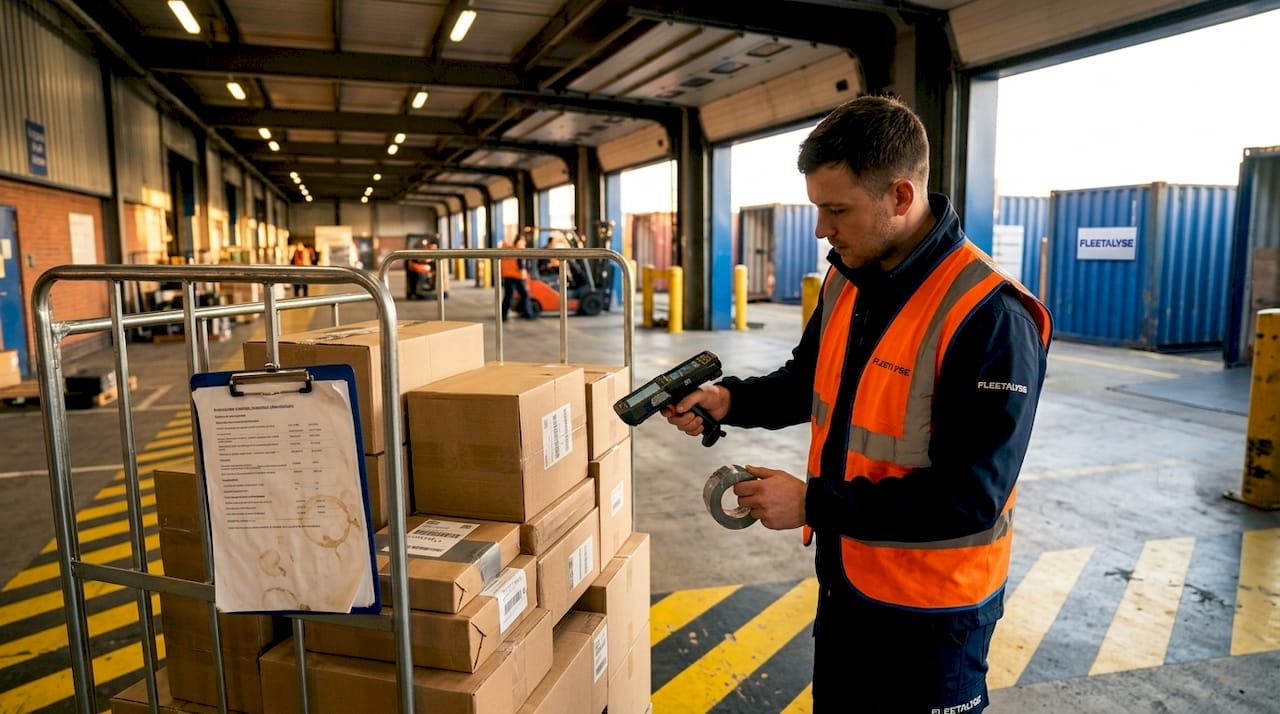
- Barcode scanning: The most widely deployed checkpoint technology. Drivers or warehouse staff scan items at each stage, triggering status updates in the system. Cost-effective but entirely dependent on human action.
- IoT sensors: Internet of Things devices mounted to trailers or containers can monitor temperature, humidity, shock, and door open/close events alongside location. Particularly relevant for perishable or fragile cargo.
- Cellular networks: Transmit data collected by GPS units or IoT sensors back to central platforms in near real-time, provided the vehicle or asset is within coverage.
The distinction between real-time tracking and checkpoint-based event tracking matters enormously in practice. True real-time tracking, where a GPS device transmits a position every few seconds, is reserved for high-value assets with dedicated IoT hardware fitted. Standard freight tracking, which covers the vast majority of LTL and groupage shipments, is checkpoint-based. A scan happens at the depot, another at the destination terminal, and the system logs an event each time. Between those scans, the tracking record is static.
When you combine these technologies, the result is a richer data picture. A trailer fitted with a GPS unit and an IoT door sensor will tell you where it is, whether the door has been opened, and whether the temperature has drifted out of range. That is substantially more useful than a barcode scan alone. Asset and trailer GPS trackers designed for commercial fleets bring these capabilities together in a single hardware unit.
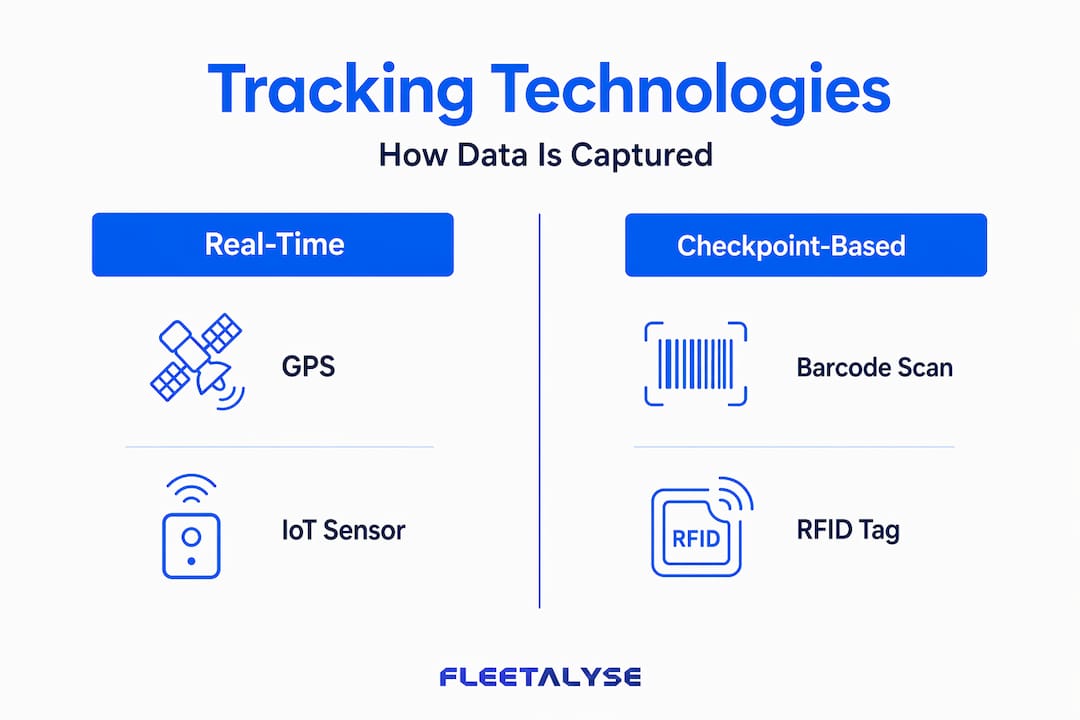
Pro Tip: When evaluating freight tracking tools, always clarify whether the quoted tracking is GPS continuous, GPS periodic (e.g. every five minutes), or checkpoint-based event logging. The difference defines how you interpret the data operationally.
From tracking tools to freight management systems
A standalone tracking tool tells you where a shipment is. A freight management system (FMS) tells you what to do about it. That shift from passive visibility to active management is where the real operational value sits.
Modern freight management systems combine tracking with automated quoting, booking, and billing, eliminating the manual spreadsheet errors that cost logistics teams hours every week. When tracking data feeds directly into these operational workflows, a delayed shipment does not just appear as a red flag on a dashboard. It can automatically trigger a customer notification, flag a billing adjustment, or prompt a rebooking against a contingency carrier.
Key features added when tracking integrates with a broader FMS include:
- Real-time dashboards consolidating shipments across multiple carriers and modes into a single view
- Predictive ETAs that use AI to weigh historical performance, port congestion, and weather data against carrier schedules for more accurate arrival estimates
- Automated exception alerts that notify operations teams the moment a shipment deviates from its expected timeline
- Multi-carrier visibility normalising data from different carriers into consistent status terminology so your team is not decoding carrier-specific codes
The challenge with multi-carrier visibility is data quality. More integrations do not automatically mean better tracking. Prioritising data normalisation across carriers produces consistent, reliable status updates, whereas connecting to dozens of carriers with inconsistent data formats creates noise rather than clarity. The best freight tracking solutions invest heavily in how data is standardised, not just how many carriers they connect to.
Integrated visibility platforms tied to daily operations outperform standalone trackers precisely because they convert raw location data into workflow triggers. For fleet operators already using telematics for driver behaviour and compliance, extending that same integration philosophy to freight tracking is a natural and productive step. You can explore how Fleetalyse approaches this with their fleet tracking solutions.
Tracking across LTL, FTL, and container shipments
Freight tracking does not behave the same way across different shipping modes. Understanding the practical differences prevents misinterpretation and unnecessary escalations within your operations team.
LTL and FTL tracking realities
For LTL (Less than Truckload) shipments, tracking updates occur at terminal touchpoints, typically when freight is received, sorted, transferred, or delivered. Between these events, which can be 12 to 48 hours apart, tracking records do not change. This is not a system error. It reflects the physical reality that freight sits on a trailer between terminals with no scanning equipment present.
FTL shipments behave differently. Because the load is dedicated to one customer, tracking focuses on the vehicle rather than individual pallets. GPS data from the truck provides movement updates, but the granularity of pallet-level status does not exist unless additional RFID or scanning processes are in place.
| Mode | Update method | Typical update frequency | Key identifier |
|---|---|---|---|
| LTL | Barcode scan at terminals | Every 12 to 48 hours | PRO number |
| FTL | GPS vehicle tracking | Periodic or continuous | Load reference or BoL |
| Ocean container | Port/terminal events and IoT | Event-based with IoT overlay | ISO container number or BoL |
Container shipments introduce a further layer of complexity. Multiple tracking identifiers including Master Bills of Lading, House Bills of Lading, and ISO container numbers all reference the same physical cargo at different levels. A normalised tracking platform maps these references together so your team gets coherent visibility regardless of which identifier a carrier or port uses.
Pro Tip: Train your operations team to recognise standard status freezes as a normal part of LTL transit. Understanding tracking gaps reduces unnecessary escalations and keeps carrier relationships professional.
The operational and business case for freight tracking
The importance of freight tracking extends well beyond knowing where a lorry is at any given moment. For fleet operators and logistics professionals, a properly implemented system touches efficiency, risk management, customer experience, and long-term competitiveness.
Operational efficiency improves when your team stops manually calling carriers for updates. Automated milestone notifications mean your planners spend time on exception management, not status chasing. When those exceptions are surfaced early through predictive ETAs and risk alerts, you have time to act rather than react. A system that only shows you a delay after the delivery window has passed is not a management tool. It is a historical record.
Risk mitigation through early exception alerting is particularly valuable in supply chains affected by disruption. Port congestion, weather events, and driver shortages all create knock-on delays that a well-configured tracking system surfaces before they become crises. Supply chain disruptions across 2024 and 2025 demonstrated how operations with intelligent exception management absorbed disruptions with significantly lower costs than those relying on reactive communication.
Customer experience is where tracking investment often pays back fastest. Branded tracking pages and automated notifications reduce the volume of inbound “where is my order” enquiries, freeing your customer service team and building trust through transparency. A logistics business that proactively communicates shipment milestones is perceived as more reliable than one that requires customers to chase.
Visibility is no longer a nice-to-have feature in logistics. It is a baseline expectation from customers, and a genuine competitive differentiator for the operators who deliver it consistently.
For UK fleet operators, this extends to compliance. Integrating freight tracking with telematics data from HGV GPS trackers gives operators a joined-up picture of vehicle activity, driver hours, and shipment status in one place, reducing administrative duplication and supporting DVSA compliance requirements simultaneously. The businesses benefiting most from freight tracking are those treating it as part of their broader fleet management infrastructure, not as an isolated tool sat outside their daily workflows.
For practical guidance on building this kind of integrated approach, the 2026 logistics fleet management guide from Jagelo Haulage offers useful context on where tracking sits within the wider operational picture.
My perspective on getting freight tracking right
I have worked with enough fleet operators to know that the most common mistake with freight tracking is not choosing the wrong software. It is expecting too much from the data and doing too little with the exceptions.
In my experience, operations that invest in high-volume carrier connections but neglect data normalisation end up with dashboards full of conflicting status codes. They have more data than before but no more clarity. What actually moves the needle is a smaller number of well-integrated, properly normalised carrier feeds combined with clear exception rules that tell your team exactly when to act and why.
The tracking freeze issue catches teams out repeatedly. I have seen planners escalate shipments to carriers because tracking had not updated in 18 hours, only to find the freight was in transit exactly as expected. Training your team to understand checkpoint-based update patterns is not a minor operational detail. It prevents damaged carrier relationships and wasted hours.
My honest advice is to resist the temptation to evaluate freight tracking software by the number of carriers it connects to. Evaluate it by how it surfaces problems you did not already know about. A system that tells you a shipment is delayed before you would have noticed the delay yourself is worth far more than one that connects to 300 carriers but delivers the same information your carrier portal already shows you.
— Vytautas
How Fleetalyse supports freight tracking for UK fleets
If you manage HGVs, trailers, or mixed assets in the UK, Fleetalyse offers a practical starting point for real-time freight visibility that connects naturally to your existing compliance and telematics workflows.
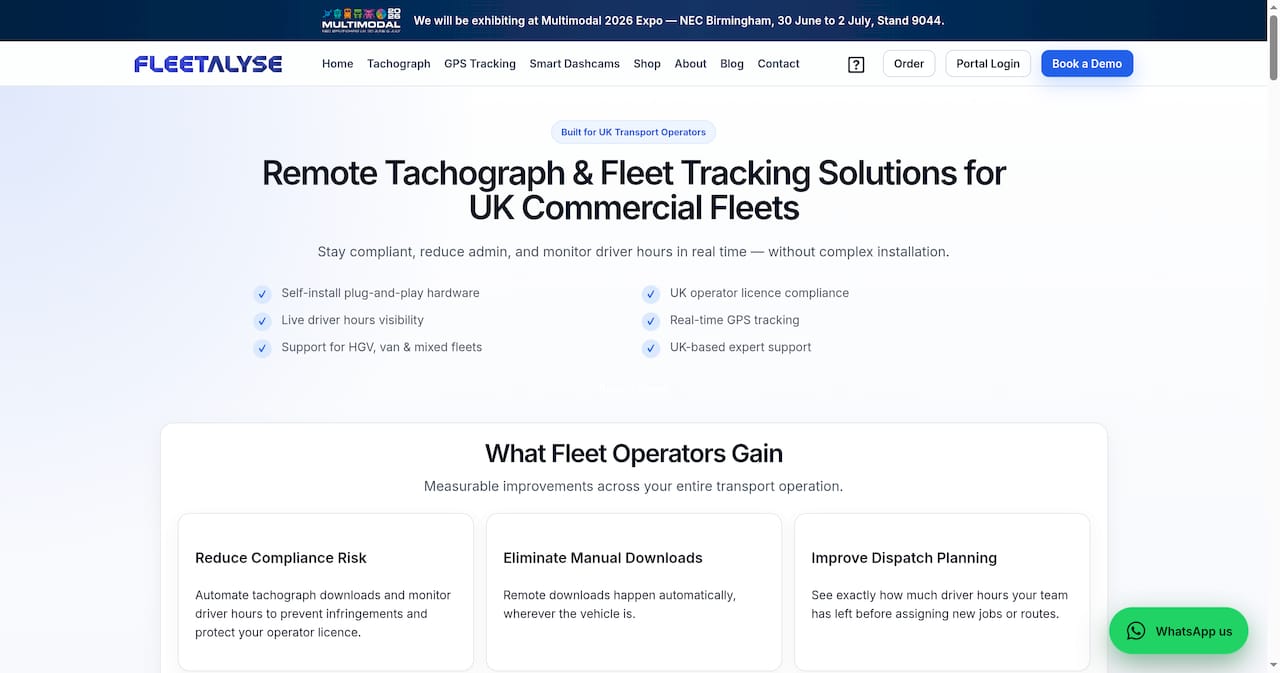
Fleetalyse’s platform centres on live GPS tracking with purpose-built hardware for commercial fleets. Whether you need trailer GPS trackers for unaccompanied assets or full telematics integration for HGV fleets with tachograph support, the system is designed to give you vehicle and asset visibility without complex installation. The same platform that monitors driver behaviour and automates tachograph downloads also provides the live location data that feeds your freight tracking picture. That joined-up approach is what separates useful visibility from another data silo sitting outside your operations.
Explore the full range of asset and trailer GPS trackers from Fleetalyse, or visit fleetalyse.co.uk to see how the platform fits your fleet’s compliance and tracking requirements.
FAQ
What is a freight tracking system?
A freight tracking system is a digital platform that monitors the location, status, and movement of goods through the supply chain using GPS, RFID, barcode scanning, and cellular networks. It records both real-time position data and historical milestone events.
How does freight tracking work in practice?
Most freight tracking is checkpoint-based, meaning status updates are generated when freight is scanned at terminals or depots rather than continuously. LTL shipments typically see updates every 12 to 48 hours depending on transit legs.
Why does my tracking show no updates for hours?
This is normal for LTL and road freight. Standard tracking freezes occur because no scanning equipment is present while freight travels between terminal points. It does not indicate a problem with the shipment.
What is the difference between freight tracking and a freight management system?
Freight tracking monitors shipment location and status. A freight management system integrates that tracking with quoting, booking, billing, and exception alerting, turning location data into operational decisions rather than passive information.
How do I choose the best freight tracking solution?
Prioritise data quality and exception management capability over the number of carrier connections. The best freight tracking solutions surface problems before you would otherwise notice them, rather than simply displaying status information you could find on a carrier portal yourself.