

What is fleet incident reporting: a 2026 guide

Fleet incident reporting is the formal process of recording every unexpected event involving fleet vehicles to minimise disruption, control costs, and maintain safety across your operations. The term covers far more than accidents. Any undesirable event, from a minor scrape in a depot to a near-miss on the motorway, falls within the scope of what the industry formally calls fleet incident management. For UK fleet operators and transport managers, structured reporting is not optional. It sits at the heart of DVSA compliance, Operator Licence obligations, and sound risk management. This guide explains what qualifies as an incident, how to report correctly, and why integration with your fleet management system changes outcomes.
What is fleet incident reporting and why does it matter?
Fleet incident reporting is defined as the systematic documentation of any undesirable event affecting fleet vehicles, drivers, or third parties. Consistent reporting of even minor incidents correlates directly with the prevention of future major accidents by surfacing early risk patterns. That connection matters because most serious accidents are preceded by a trail of smaller, unreported events.
The distinction between an incident and an accident is worth clarifying. An accident involves damage, injury, or a collision. An incident is any event that disrupts normal operations or poses a safety risk, including near-misses, vehicle breakdowns, cargo spills, and driver fatigue events. Fleet safety reporting covers both categories equally.
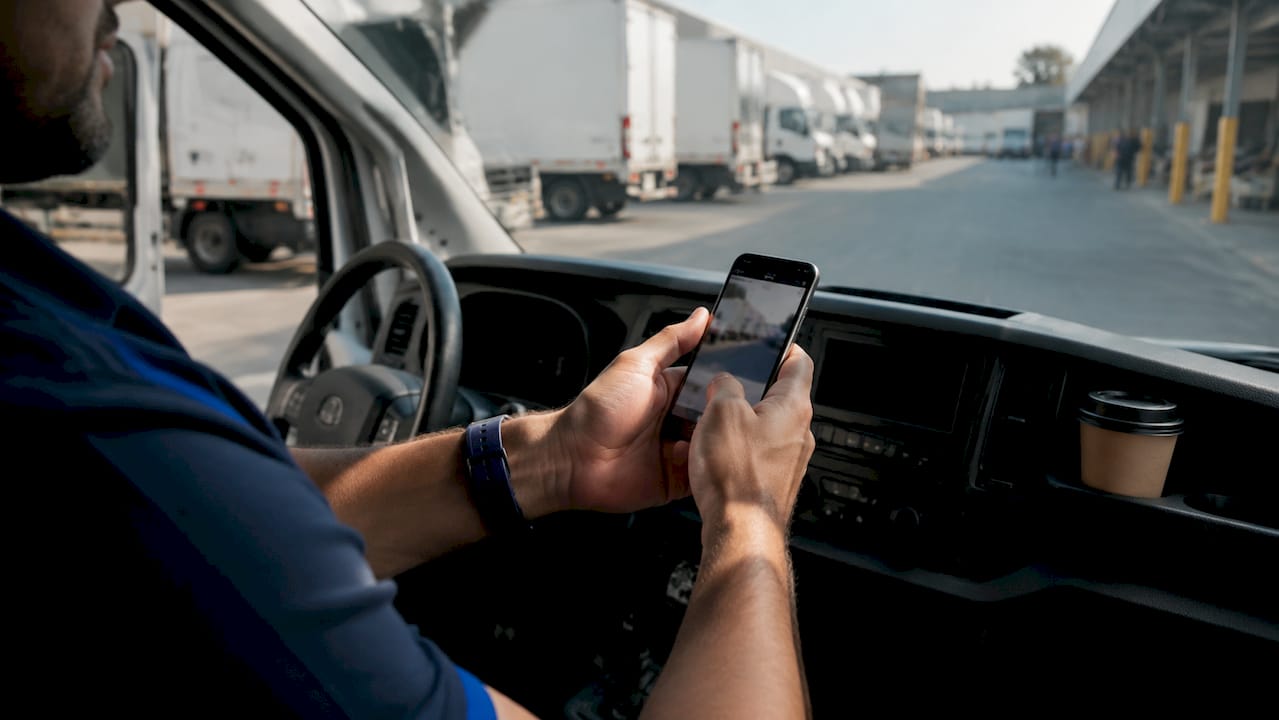
Regulatory expectations reinforce this. The DVSA and Operator Licence framework require operators to demonstrate active safety management. Documented incident records are the primary evidence that this management exists. Without them, you have no audit trail and no defence.
What events qualify as fleet incidents?
The scope of fleet incident management is broader than most operators initially assume. Any of the following events require formal documentation:
- Vehicle collisions, regardless of severity or fault
- Near-misses where contact was avoided but risk was present
- Minor scrapes, kerbing, or bodywork damage in car parks and depots
- Mechanical failures or breakdowns affecting road safety
- Cargo incidents including spillage, shifting loads, or unsecured goods
- Driver health events such as fatigue, illness, or medical episodes at the wheel
- Third-party property damage, even when no injury occurs
Under-reporting of minor incidents hides trends in driver behaviour and vehicle condition. A single unreported kerbing incident means nothing in isolation. Ten unreported kerbing incidents across six months reveal a driver training gap or a vehicle with a steering fault.
The cultural shift required here is significant. Drivers often believe minor bumps need not be reported. That belief is the single biggest obstacle to effective fleet safety reporting. Operators who address it through clear policy and regular briefings build a reporting culture that catches problems before they become costly.
Pro Tip: Create a simple, one-page incident checklist for drivers. When the reporting process feels manageable, compliance rates rise and the quality of initial data improves significantly.
Best practices for timely and accurate incident reporting
Speed and accuracy define the quality of any incident report. Industry best practice requires reports to be submitted within the same shift, or no later than 24 hours after the event. That window exists for a clear reason.
Delays cause witness details to fade, physical evidence to disappear, and dashcam footage to be overwritten. Delayed reports degrade evidence quality, weakening your insurance position and exposing the business to greater liability. The 24-hour rule is not bureaucratic caution. It is the difference between a defensible claim and an indefensible one.
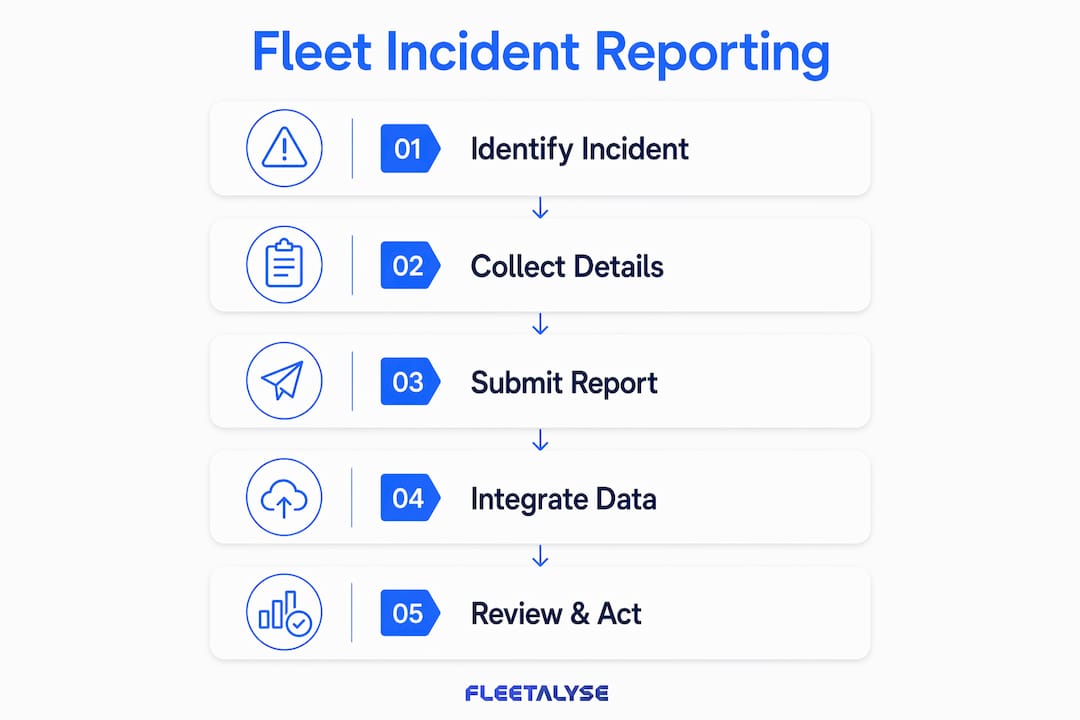
A structured incident reporting process should follow these steps:
- Secure the scene. The driver ensures safety, contacts emergency services if needed, and does not move the vehicle unless required for safety.
- Gather facts at the scene. Collect third-party details, witness names, photographs, and vehicle registration numbers. Facts only. No admissions.
- Submit a digital report immediately. Use a mobile-first reporting tool that captures timestamp, GPS location, and photographic evidence at the point of the incident.
- Notify the transport manager. The manager reviews the report, flags it for investigation, and initiates any insurance notification within the required timeframe.
- Preserve telematics data. GPS track logs, tachograph records, and dashcam footage must be secured before they are overwritten or lost.
- Conduct a post-incident review. Within 48 hours, review all evidence and identify whether the incident was preventable and what corrective action is needed.
Mobile-first digital reporting that captures timestamp, GPS location, and photographs at the scene improves accuracy and reduces disputes. The quality of your legal defence depends directly on the speed and accuracy of that initial data capture.
Pro Tip: Train drivers explicitly to state facts and never admit liability at the roadside. Unverified roadside admissions are regularly used by insurance adjusters to reduce or deny claims.
How does integrating incident data with fleet systems improve outcomes?
Incident reports filed in isolation deliver limited value. The real benefit comes when incident data connects to asset records, maintenance logs, and driver behaviour profiles. Siloed systems hinder root cause analysis and prevent the corrective action planning that stops incidents from recurring.
Consider the difference between two approaches:
| Approach | Data available | Outcome |
|---|---|---|
| Standalone incident form | Event description only | Incident recorded, cause unknown |
| Integrated fleet platform | Incident linked to maintenance history, GPS track, driver score, and dashcam footage | Root cause identified, corrective action taken |
When incident reports link to asset maintenance logs, patterns become visible. A vehicle involved in three incidents within two months may have an unresolved brake fault. A driver with a declining behaviour score may need targeted coaching before a serious collision occurs.
Telematics, GPS tracking, and dashcams play a central role in this integration. Tools like Fleetalyse’s smart dashcams capture incident footage automatically, removing the reliance on driver memory or manual photo-taking at the scene. GPS data provides an objective record of speed, route, and position at the moment of the event.
Automating the first 60 minutes of incident response significantly reduces liability costs and legal risks. Automated retrieval of dashcam footage, instant supervisor notification, and timestamped GPS records all happen without manual intervention. That speed of response is what separates operators who control their incident costs from those who absorb them.
What are the practical benefits of disciplined fleet incident reporting?
Consistent fleet accident reporting delivers measurable benefits across safety, finance, and operations. The advantages extend well beyond compliance.
- Reduced accident frequency. Identifying risk patterns early allows targeted intervention before a minor trend becomes a serious collision. Proactive risk management is cheaper than reactive claims handling.
- Stronger insurance positions. Formal, verified incident reports support stronger defence and fairer claims settlements. Operators with complete digital records settle claims faster and at lower cost.
- Driver behaviour improvement. Linking incident data to individual driver profiles enables targeted coaching. Drivers who receive specific feedback on recorded events improve more consistently than those who receive generic training.
- Maintenance gap identification. Incidents linked to vehicle records reveal whether equipment faults contributed to the event. This protects operators from liability and reduces repeat incidents caused by the same mechanical issue.
- Operational benchmarking. Aggregated incident data allows managers to compare performance across depots, vehicle types, and driver cohorts. That benchmarking informs resourcing decisions and training priorities.
Quick, accurate reporting avoids drawn-out repair and claims delays, reducing vehicle downtime and the associated cost of replacement transport. For operators running tight schedules, that reduction in downtime has a direct impact on service delivery and customer satisfaction.
Effective fleet incident management also supports the broader logistics operation by providing data that informs route planning, vehicle specification decisions, and depot safety reviews.
Key takeaways
Fleet incident reporting is the foundation of a safe, compliant, and cost-controlled fleet operation. Without it, operators are managing risk blind.
| Point | Details |
|---|---|
| Report everything, not just accidents | Near-misses, scrapes, and breakdowns all require documentation to reveal systemic risks. |
| Submit within 24 hours | Delays degrade evidence quality and weaken insurance and liability positions. |
| Use digital, integrated tools | Platforms linking incident data to maintenance and driver records enable root cause analysis. |
| Train drivers on facts, not admissions | Roadside admissions of liability undermine claims defence and cost operators money. |
| Automate the first 60 minutes | Automated dashcam retrieval and supervisor alerts reduce liability exposure significantly. |
Why most fleets are still getting incident reporting wrong
The technology for effective incident reporting has existed for years. The gap is not technical. It is cultural and procedural.
Most operators I speak with have some form of incident reporting in place. What they rarely have is a process that connects the report to the rest of their fleet data. The incident form gets filed, the insurance notified, and the vehicle repaired. Then the same driver, in the same vehicle, on the same route, has another incident six months later. Nothing changed because nothing was analysed.
The 24-hour reporting rule is widely known but inconsistently applied. Drivers report when they feel the incident was serious enough to warrant it. That judgement call is the problem. The driver who decides a minor scrape does not need reporting is the same driver whose vehicle has accumulated three unreported scrapes in a year. By the time a manager notices, the pattern is expensive to address.
I have also seen the roadside admission issue cause real damage to operators who had otherwise strong claims. A driver who says “sorry, my fault” at the scene, even in good faith, hands the other party’s insurer a gift. Training drivers to provide facts and exchange details without commentary is one of the highest-return investments a fleet manager can make.
The future of fleet incident management is automated and mobile-first. Telematics, GPS, and dashcams enable real-time incident alerts and proactive risk management that manual processes simply cannot match. Operators who build that infrastructure now will carry a structural cost and safety advantage for years.
— Vytautas
How Fleetalyse supports your incident reporting process
Effective incident reporting depends on having the right data at the right moment. Fleetalyse brings together GPS fleet tracking, smart dashcams, and telematics into a single platform built for UK commercial operators.
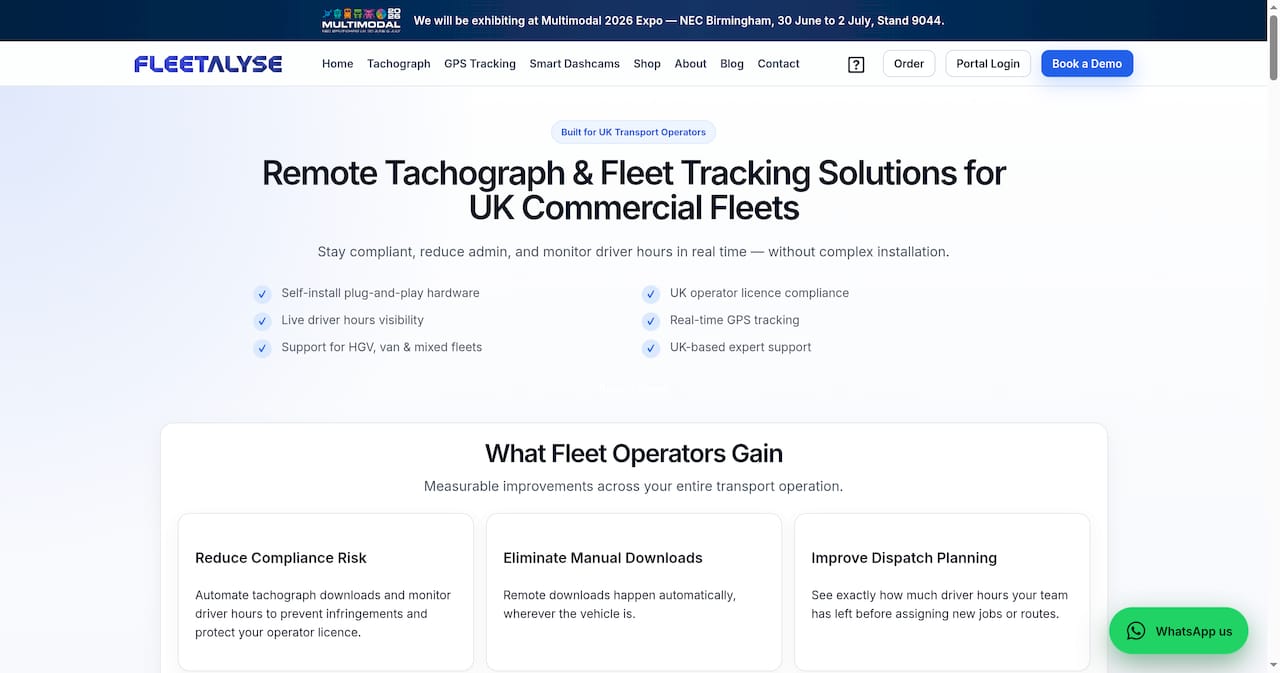
When an incident occurs, Fleetalyse captures GPS position, speed history, and dashcam footage automatically. That data is available immediately, without waiting for a driver to submit a manual report. The platform links incident records to vehicle maintenance histories and driver behaviour scores, giving you the full picture for root cause analysis and insurance claims. Explore the full range of fleet safety solutions and see how integrated telematics changes how you manage risk across your entire operation.
FAQ
What is fleet incident reporting?
Fleet incident reporting is the formal process of documenting any undesirable event involving fleet vehicles, including accidents, near-misses, breakdowns, and cargo incidents. Consistent reporting identifies risk patterns and supports DVSA compliance and insurance claims.
How quickly must a fleet incident be reported?
Industry best practice requires incident reports within the same shift or no later than 24 hours. Delays cause evidence loss and weaken both insurance and liability positions.
What is the difference between a fleet incident and an accident?
An accident involves damage, injury, or a collision. An incident is any event that disrupts operations or poses a safety risk, including near-misses and mechanical failures. Both require formal documentation under fleet safety reporting standards.
Why should drivers avoid admitting liability at the scene?
Unverified roadside admissions are regularly used by insurance adjusters to reduce or deny claims. Drivers should provide facts and exchange details only, leaving liability determination to the formal investigation process.
How does telematics improve fleet incident management?
Telematics, GPS tracking, and dashcams capture objective incident data automatically, including speed, position, and footage. This removes reliance on driver memory and produces the verified records needed for faster, fairer insurance claims settlements.