
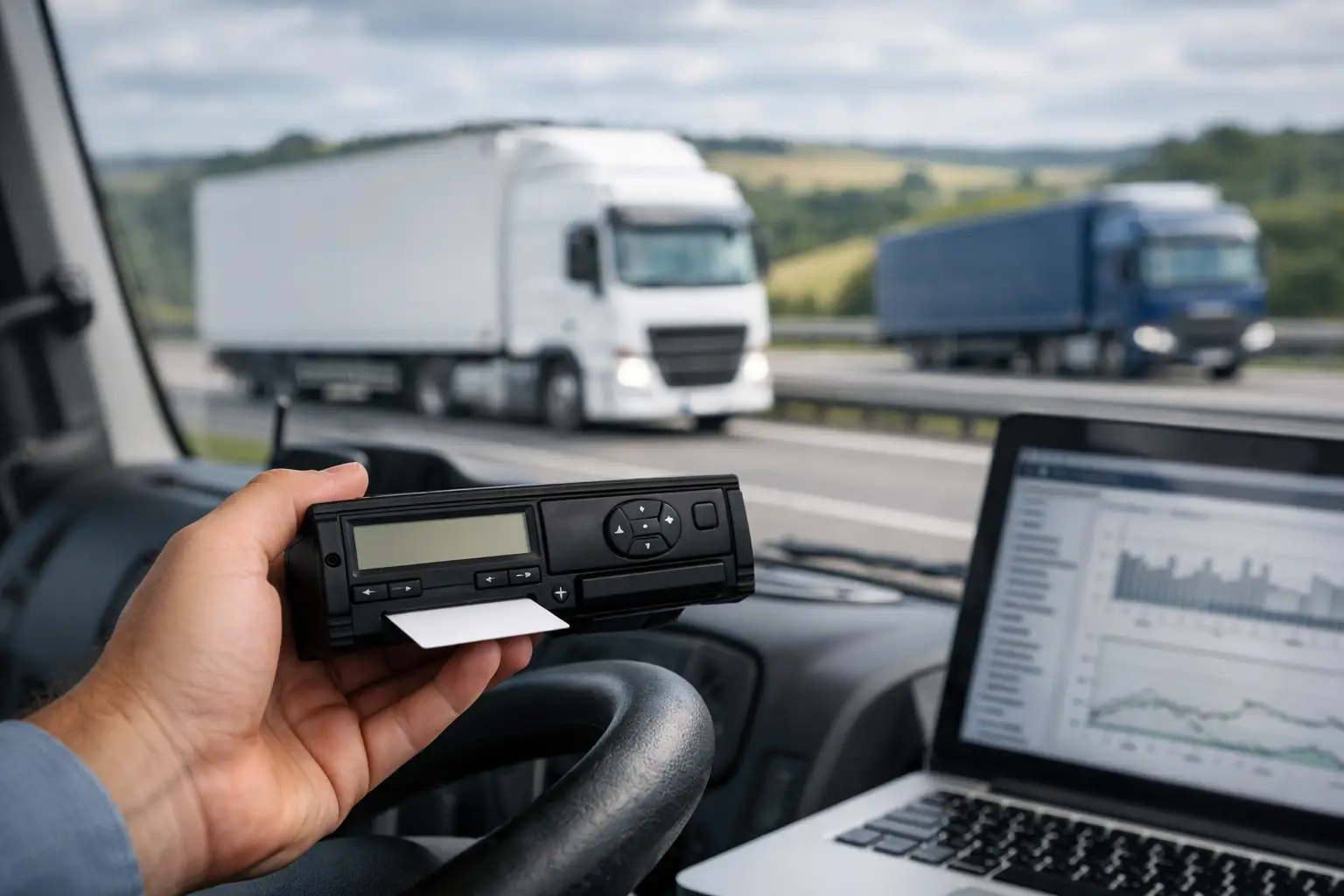
A driver finishes a shift at a customer site 200 miles from the depot. Their driver card data is due for download, the vehicle unit is approaching its deadline, and the transport office is already chasing exceptions across a spreadsheet. This is the practical problem behind the question, what is remote tacho protocol? It is the process and technology that lets an operator retrieve digital tachograph data remotely, rather than waiting for the vehicle and driver card to return to base.
For UK operators, it is not merely a convenience feature. Properly configured remote tachograph downloading gives the transport team a more reliable route to driver-hours visibility, planned downloads and audit-ready records. It also reduces the risk that compliance depends on someone remembering to connect a handheld download device at the right time.
What remote tacho protocol means in practice
“Remote tacho protocol” is commonly used to describe the secure communication method between a digital tachograph, an in-vehicle telematics device and a back-office platform. It allows authorised data to be requested and transferred over the mobile network.
There is not one consumer-style protocol that every operator needs to select or configure by name. In day-to-day fleet management, the term is usually shorthand for a remote tachograph download capability. The underlying technology has to work with the tachograph and the operator’s authentication credentials, then deliver the files into a system where they can be stored, analysed and acted upon.
The key distinction is between collecting data and using it. A remote download can bring back the raw files from the driver card and vehicle unit. Compliance software then interprets those files, helping the operator identify potential infringements, missing activities, upcoming download dates and driver-hours risks. A tracking system alone cannot provide the same compliance evidence.
How remote tachograph downloads work
A compatible telematics device is installed in the lorry and connected to the digital tachograph. Subject to the tachograph type, vehicle configuration and correct authorisation, it can communicate with the vehicle unit and send data through the mobile network to the operator’s platform.
For vehicle unit downloads, the system normally uses the operator’s company card credentials to prove that the business is entitled to access the data. Those credentials should be protected and managed carefully. The system then requests the relevant files, which are transferred remotely and held against the correct vehicle.
Driver card data has a practical dependency: the driver card must be inserted in the tachograph when the request is made. If a driver has removed their card at the end of a shift, a remote system cannot retrieve that card’s latest data until it is inserted again in a compatible vehicle. This is one reason why a clear driver process still matters, even with automated technology in place.
Once files arrive, the platform can combine them with live information such as driver status, vehicle location and planned work. That gives the transport office more context than a folder of downloaded files. A possible driving-hours issue can be viewed alongside the route, shift timing and the vehicle involved.
Driver card and vehicle unit data are different
Both data sources matter, but they serve different purposes. The driver card records activity associated with the individual driver, including driving, other work, breaks and rest. The vehicle unit records activity and technical information associated with the tachograph-equipped vehicle, including data for drivers who have used it.
An operator needs a process for both. Downloading only driver cards can leave gaps in vehicle records, while downloading only vehicle units does not provide a complete individual driver record. A suitable platform should make the status of each download type clear, so the office can see what is due and what has failed.
Why the remote tacho protocol matters to UK operators
The regulatory requirement is not changed by the method of download. Operators remain responsible for obtaining, retaining and reviewing tachograph data properly. However, remote downloading gives them a more controlled way to meet the usual download intervals: at least every 28 days for driver cards and at least every 90 days for vehicle units. Many businesses set more frequent schedules to provide earlier visibility and a buffer before a deadline.
That buffer is valuable. A missed download is rarely caused by one dramatic failure. More often, it results from a vehicle being away on long-distance work, a card being out of the vehicle when an automated request runs, poor mobile coverage or a simple administrative oversight. A system that highlights unsuccessful downloads lets the team chase the exception while there is still time to resolve it.
Remote access also improves the quality of daily planning. If a dispatcher can see current driving and rest status, they can avoid assigning a run that creates an obvious problem later in the shift. It does not remove the need for transport manager judgement, and it should not be treated as a substitute for drivers understanding the rules. It does make decisions faster and more evidence-led.
For an operator licence holder, the benefit is stronger control. During an investigation or audit, the question is not whether the business bought a system. It is whether it had effective processes, whether data was available and whether issues were identified and managed. Remote downloads support that process by reducing the gaps between an activity taking place and the office being able to review it.
What a remote system can and cannot do
Remote tachograph capability can automate data requests, schedule downloads, store files and present potential infringements for review. It can reduce time spent connecting download devices, chasing vehicles back to base and moving files between systems. When it sits alongside GPS tracking, it can also give a more useful operational picture of where the vehicle is and what work remains.
It cannot make a non-compliant duty compliant. It cannot download a driver card that is not inserted, compensate for a faulty tachograph or correct inaccurate manual entries made by a driver. It also cannot remove the operator’s responsibility to investigate alerts and apply a fair, documented process.
Mobile coverage is another real-world consideration. Data cannot be sent until the vehicle has a suitable connection. A well-managed system should retry automatically and show the office whether a download is pending, completed or unsuccessful. The purpose is not to pretend every file appears instantly, but to make the status visible and manageable.
Choosing a practical remote tachograph setup
The best setup depends on the fleet mix, how often vehicles return to base and whether compliance is currently managed in separate tools. A national haulage operation may prioritise automated downloads across vehicles that rarely visit the depot. A mixed fleet may need one platform that handles HGV tachograph compliance while also tracking vans, trailers and driver behaviour.
Ask practical questions before choosing a provider. Can the hardware be fitted without a complex installation process? Does the system clearly show driver card and vehicle unit download status? Can your team view live driver hours alongside vehicle location? Are potential infringements easy to review, assign and evidence? And are monthly costs clear enough to budget without unexpected add-ons?
The answers matter because a technically capable system still fails if it creates another disconnected dashboard or adds work for the depot team. Fleetalyse combines remote tachograph downloading with live fleet visibility, helping operators bring compliance activity, driver-hours monitoring and vehicle tracking into one working view.
Build a process around exceptions, not routine chasing
Automation is most valuable when it removes routine administration and leaves people to deal with the cases that need judgement. Set normal download schedules, appoint someone to check failures and overdue records, and agree how drivers and planners will be notified when an issue needs attention.
Review the data often enough to intervene before problems become patterns. Repeated missed breaks, frequent download failures or the same driver appearing against several alerts may point to a planning issue, a training need or a system configuration problem. Treating every flag as a disciplinary matter is rarely productive; looking for the operational cause usually is.
Remote tacho protocol is therefore best understood as part of an active compliance process, not a standalone technical feature. When remote data, driver-hours checks and live vehicle information are visible in the same place, the transport team can spend less time chasing files and more time keeping work legal, practical and on schedule.