

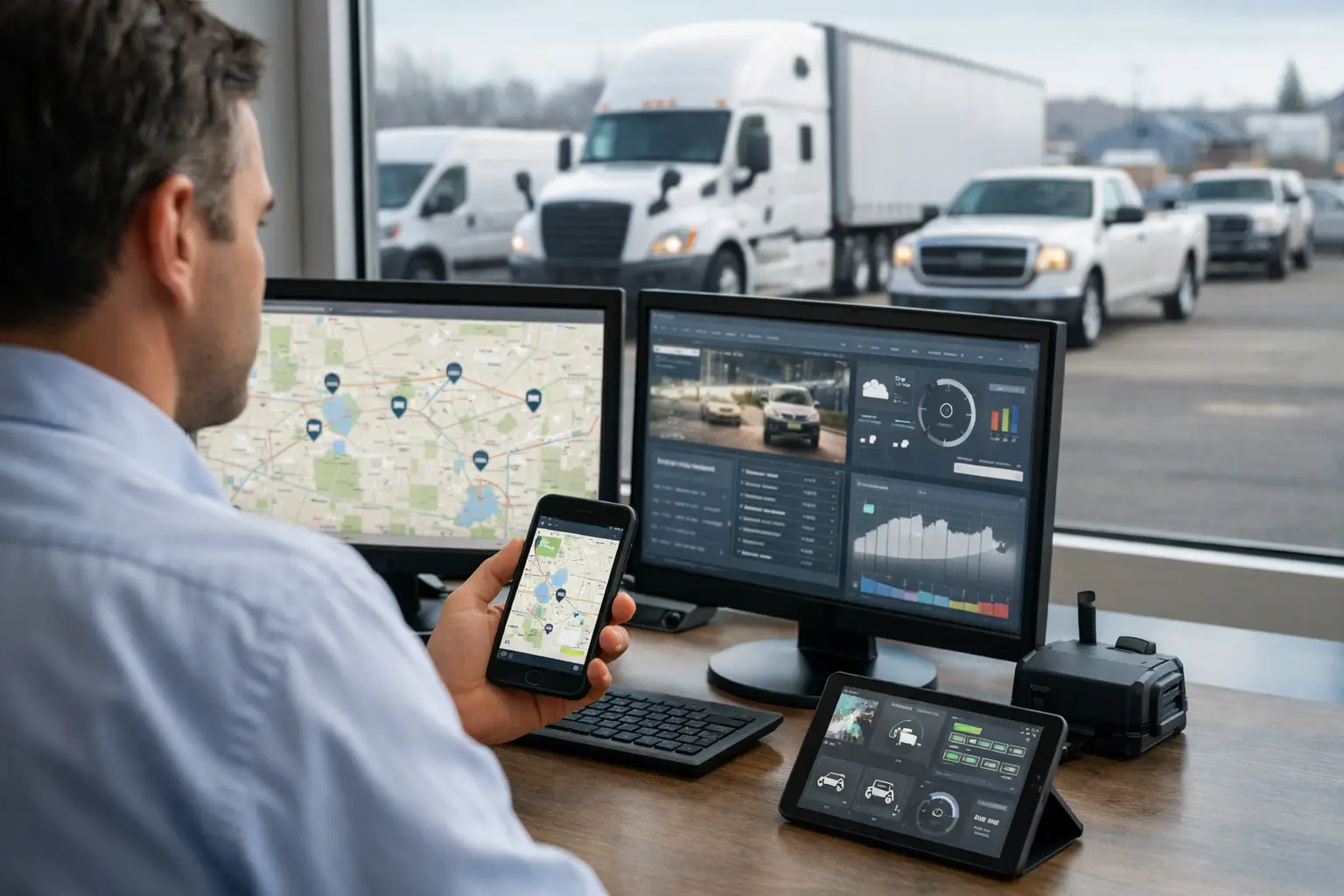
A telematics rollout usually goes wrong long before the first unit is fitted. The real problem is not the hardware. It is buying a system to solve one issue, then expecting it to fix dispatch visibility, driver hours, maintenance planning and compliance admin all at once. A proper fleet telematics implementation guide starts with the day-to-day pressures your operation is already carrying.
For UK fleet operators, that usually means too many manual tachograph downloads, unclear vehicle location, weak trailer visibility, late maintenance actions and reporting spread across different systems. If the platform does not reduce admin and improve control in the depot, it becomes another login your team ignores after the first month.
What a fleet telematics implementation guide should actually cover
Most implementation advice focuses on installation. That is only one part of the job. For a transport manager or operator, implementation really means deciding what data matters, who needs it, and what actions should follow.
If you run HGVs, vans or a mixed fleet, your priorities are rarely identical. A haulage fleet may care most about remote tachograph downloads, live driver hours and operator licence protection. A service fleet may place more weight on route visibility, driver behaviour and fuel use. Mixed fleets tend to need both, which is where disconnected systems start creating extra work.
That is why the first decision is not device type. It is scope. Are you implementing telematics for tracking only, or are you using it to bring compliance, planning and reporting into one place? The broader the outcome you want, the more important system fit becomes.
Start with operational problems, not features
A platform can offer live maps, driver scoring, geofences, fuel reports and dashcam footage, but that does not mean each function will help your team immediately. Good implementation starts by identifying the current operational bottlenecks.
In many fleets, there are three. First, compliance admin takes too long because tachograph data is downloaded manually and driver hours are checked too late. Second, dispatch teams spend too much time chasing drivers for updates because live vehicle and trailer visibility is limited. Third, management reporting depends on spreadsheets, which means fuel, idling, utilisation and maintenance trends are seen after the damage is already done.
Once those problems are clear, the rollout becomes much easier to structure. You are no longer buying technology for its own sake. You are assigning each part of the platform to a practical use case with an obvious owner.
Set clear outcomes before rollout
Implementation works best when each outcome is measurable. “Better visibility” is too vague. “Reduce driver update calls by 40 per cent” is far more useful. The same applies to compliance. “Improve tachograph management” is not enough. “Cut manual download time and flag upcoming driver hours issues before a shift is assigned” gives the team a real target.
For most UK operators, the strongest implementation goals fall into four areas: reducing compliance risk, cutting admin time, improving dispatch planning and lowering avoidable running costs. You may not need all four from day one. In fact, trying to deliver every benefit at once often slows adoption.
A phased rollout is usually more effective. Start with the outcomes that remove the most daily friction, then expand reporting and management controls once the depot team is using the system consistently.
Choose hardware and platform with implementation in mind
This is where many projects become expensive. Operators often focus on headline price without checking how difficult the hardware is to install, whether the platform handles tachograph and tracking together, or how many separate products are needed to cover the full fleet.
A lower unit price can quickly become less attractive if vehicles need to come off the road for fitting, or if your team still has to move between different systems for vehicle tracking, driver hours and trailer management. The hidden cost is not just hardware. It is downtime, training time and duplicated admin.
For that reason, plug-and-play or self-install options can make a genuine difference, especially for fleets that cannot afford workshop disruption. The same applies to pricing transparency. If the commercial model is unclear at the start, implementation becomes harder to plan across the full contract term.
A platform built around UK transport operations will also save time later. Generic tracking software may show where a vehicle is, but if it does not support remote tachograph workflows, live driver hours awareness or operator licence-focused reporting, your team will still be maintaining separate compliance processes in the background.
Build the rollout around the people using it
A fleet system is only useful if the right people can act on the data quickly. That means implementation should follow operational roles, not just technical setup.
Transport managers need an overview of driver hours, infringements risk, vehicle status and maintenance prompts. Dispatch planners need live visibility and confidence in which assets are available. Depot teams need scheduled actions that reduce manual checking. Directors and owners usually want simple reporting on utilisation, fuel waste, exceptions and risk.
If everyone receives the same screens and alerts, adoption tends to drop. The better approach is to define what each role should see every day, what they need to respond to, and what can wait for weekly review. Telematics creates value when it reduces decisions, not when it floods people with data.
Fleet telematics implementation guide for a phased rollout
A sensible rollout usually begins with a pilot. That does not need to be complicated. Choose a section of fleet large enough to test real workflows, but small enough to manage closely. This might be one depot, a group of HGVs on similar work, or a mixed sample of vehicles and trailers.
During the pilot, focus on whether the system changes behaviour in the office as well as on the road. Are remote downloads replacing manual collection? Are planners relying on live vehicle status? Are maintenance reminders being used early enough to avoid missed actions? These are stronger indicators of success than simply confirming that units are reporting data.
After the pilot, the next phase is process adjustment. This is the point where many operators move too quickly. If the platform reveals duplicate admin or gaps in responsibility, fix them before full rollout. There is little value in scaling a poor process with better technology.
The final phase is wider deployment and reporting discipline. Once the system is live across the fleet, agree how often key reports are reviewed, who follows up on exceptions and how results are shared with drivers and depot teams. Without that structure, useful data becomes background noise.
Common mistakes during implementation
The biggest mistake is treating telematics as an IT project instead of an operational one. The system may be technical, but the gains come from transport, compliance and planning teams changing how they work.
Another common issue is overcomplicating the launch. If every dashboard, report and alert is turned on at once, people stop paying attention. Start with the fewest measures that support immediate control - location, driver hours, downloads, maintenance prompts and a short list of driver behaviour exceptions. Expand from there.
It is also easy to underestimate trailer and mixed-asset visibility. Many fleets track powered vehicles well enough but still lose time locating trailers or checking how assets are actually being used. If your operation depends on trailers, implementation should account for them from the outset, not as an afterthought.
Finally, avoid judging the system too early on fuel savings alone. Telematics can help reduce idling, poor driving habits and underused assets, but those gains often follow once visibility and process control are in place. The first wins are usually admin reduction and better decision-making.
How to know the rollout is working
A successful implementation feels quieter in the office. There are fewer phone calls to chase vehicle location, fewer manual downloads, less time spent preparing compliance records and fewer surprises around driver hours or overdue maintenance. Dispatch becomes faster because live information replaces guesswork.
You should also see stronger consistency. Reports are produced from the platform rather than stitched together manually. Exceptions are spotted earlier. Conversations with drivers are based on evidence rather than assumption. That matters not only for efficiency, but for licence protection and day-to-day management confidence.
For operators looking to bring compliance and visibility into one system, this is where a specialist platform can make the difference. Fleetalyse, for example, is designed around the practical needs of UK fleets that need driver hours monitoring, remote downloads, tracking and reporting without adding complexity.
A good telematics rollout does not need to be dramatic. It needs to remove friction from the work your team already does, give you earlier warning of risk and make better decisions easier to take. If your implementation plan can do that from week one, you are on the right track.