

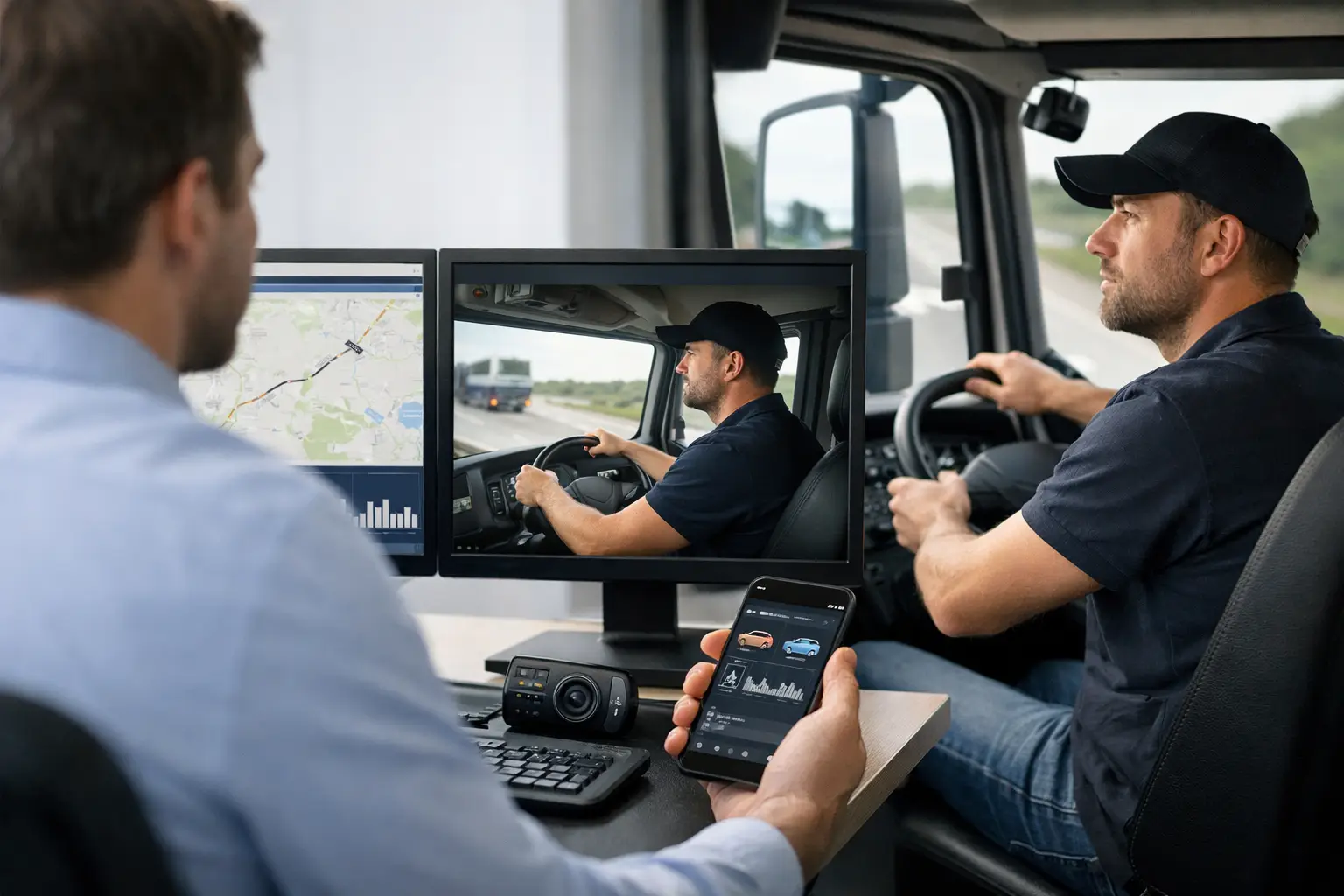
A transport manager usually knows there is a driver behaviour problem before the reports prove it. Fuel starts creeping up. Brake wear looks heavy on a few vehicles. Incidents become harder to explain. Customer complaints mention harsh driving or missed ETA updates. If you are working out how to monitor driver behaviour, the real goal is not watching drivers for the sake of it. It is gaining enough evidence to reduce risk, improve standards and protect the operation.
For UK fleet operators, this matters beyond safety alone. Poor driving habits affect fuel costs, vehicle wear, insurance exposure, service reliability and, in some cases, compliance. The challenge is doing it in a way that is fair, practical and useful for day-to-day fleet control.
What monitoring driver behaviour should actually measure
The starting point is clarity. If your only measure is speed, you will miss most of the picture. Driver behaviour is a pattern made up of how a vehicle is being driven across a shift, a route and a working week.
In practice, the most useful indicators are harsh braking, harsh acceleration, sharp cornering, speeding, excessive idling and repeated over-revving where relevant. For HGV and van fleets, you may also want to look at route adherence, stop durations and how behaviour changes by time of day, traffic conditions or depot.
Not every event means a driver is unsafe. A harsh braking alert in central Birmingham does not carry the same meaning as the same pattern on an open A-road. That is why context matters. Monitoring works best when it highlights trends rather than punishing one-off exceptions.
How to monitor driver behaviour with the right data
If you want reliable answers, use more than one data source. A single tracking point every few minutes will show location, but it will not explain driving quality properly. Behaviour monitoring needs a combination of telematics data, event reporting and, where appropriate, video evidence.
Telematics gives you the pattern
A telematics device can capture the driving events that matter most to fleet performance. This gives transport teams an objective view across the fleet instead of relying on complaints, anecdotal feedback or post-incident guesswork.
Used properly, telematics helps you compare drivers on similar vehicle types and similar work. That last part matters. Comparing a multidrop van in London with an artic on trunking work will produce poor decisions. Segment the data by vehicle class, route type and operating conditions so the comparisons are fair.
Dashcams give you context
Smart dashcams add the missing piece. They help explain whether an event was poor driving, defensive action or something else entirely. That protects the business, but it also protects good drivers from unfair assumptions.
This is especially important when you are managing incident reviews. Without footage, a harsh event can look straightforward when it is not. With footage, you can coach based on what actually happened rather than what the system guessed happened.
Driver hours and compliance data add operational value
In commercial transport, behaviour does not sit in isolation from fatigue, route planning or shift pressure. If a driver is repeatedly showing poor behaviour late in the day, the issue may be workload, scheduling or hours management rather than attitude alone.
That is where an integrated platform earns its keep. When telematics, dashcam and compliance data sit in one place, you can see whether poor driving is linked to rushed schedules, driver hours pressure or low vehicle utilisation. That gives you a better response than simply issuing warnings.
Set a baseline before you intervene
One of the biggest mistakes fleets make is acting too quickly on raw alerts. If you switch on behaviour monitoring and immediately start challenging drivers, you often create resistance without solving the issue.
A better approach is to run an initial assessment period. Use a few weeks of data to establish what normal looks like across your fleet. Identify the most common events, the vehicles involved, the routes where they happen and whether the same names appear repeatedly.
This gives you a baseline. It also shows whether the problem is driver-specific, route-specific, vehicle-specific or planning-related. If one van records repeated harsh braking, the issue could be the driver. If every driver in that van records similar events, inspect the vehicle and the route before you draw conclusions.
Build a fair driver scoring model
If you are serious about how to monitor driver behaviour, scorecards need to be simple enough to trust. Overcomplicated scoring usually leads to arguments. Drivers do not need a black box formula. They need a clear explanation of what is being measured and why.
A practical scorecard often combines speeding, harsh events, idling and repeat patterns over time. Weightings should reflect your operation. A high-mileage motorway fleet may focus more on speed and fatigue-related indicators. A city-based van fleet may place more weight on braking, acceleration and idle time.
Keep the scoring consistent and review it regularly. If the scores are producing odd results, adjust them. The aim is not mathematical perfection. It is a system your transport team can use confidently and your drivers can understand.
Use monitoring for coaching, not just discipline
Driver behaviour monitoring works best when drivers can see the benefit. If the system is only used after something goes wrong, it will be viewed as surveillance. If it is used to improve safety, reduce disputes and support better driving standards, you are more likely to get buy-in.
That means coaching should be the default response for most issues. A short review with event examples, route context and a practical improvement target is usually more effective than a generic warning letter. Good drivers respond well to specific evidence. Poor drivers are harder to shift, but even then, objective data gives you a stronger management basis.
It also helps to recognise improvement. Fleets often spend too much time on the bottom performers and ignore the drivers who have improved their scores, reduced idling or cut harsh events. Recognition supports consistency and makes the process feel balanced.
Make sure the data is usable day to day
A fleet can collect plenty of data and still have very little control. The difference is whether the information reaches the people who need it at the right time.
Transport managers need live visibility for exceptions and urgent issues. Compliance teams may need historical reporting for trends and investigations. Depot teams may only need simple daily views showing which drivers or vehicles need attention. If the platform buries everything in complex menus or exports, the monitoring process slows down and people return to spreadsheets.
Look for reporting that supports operational decisions quickly. You should be able to identify repeated risk by driver, vehicle, depot or route without building custom reports every week. The more friction involved, the less consistently the data will be used.
Privacy, trust and policy matter
Monitoring driver behaviour is not only a technical decision. It is a management and policy decision too. Drivers should know what is being monitored, how the data is used and what the review process looks like.
That does not mean endless paperwork, but it does mean clarity. Be transparent about devices, dashcams, data retention and coaching procedures. Explain that the purpose is to improve safety, reduce false claims, control fuel waste and support compliance standards. In most fleets, resistance drops when people see that the process is consistent and evidence-based.
It is also worth checking that managers use the system consistently. A fair policy applied unevenly will cause more problems than no policy at all.
Common mistakes when monitoring driver behaviour
Most failures come from poor implementation rather than poor technology. Some fleets collect too much data and do nothing with it. Others focus on league tables but never coach. Some review incidents in isolation and miss wider patterns around workload, route design or vehicle condition.
Another common mistake is using separate systems for tracking, video and compliance. That creates gaps. The transport office spends time pulling reports from different places, and by the time the picture is clear, the issue is already old.
For UK operators, there is real value in using one platform that combines telematics, dashcam visibility and compliance oversight. That is where operational control improves - not because you have more software, but because you have fewer blind spots. Fleetalyse is built around that principle, giving operators a practical way to reduce admin while keeping a closer grip on both driver standards and licence protection.
The best monitoring setup is the one your team will actually use every day. Start with the behaviours that affect safety, fuel and service most. Add context with video where needed. Review trends, not just one-off alerts. And keep the process fair enough that good drivers trust it. When the data is clear and the follow-up is practical, driver behaviour monitoring stops being a policing exercise and starts becoming part of running a tighter fleet.