

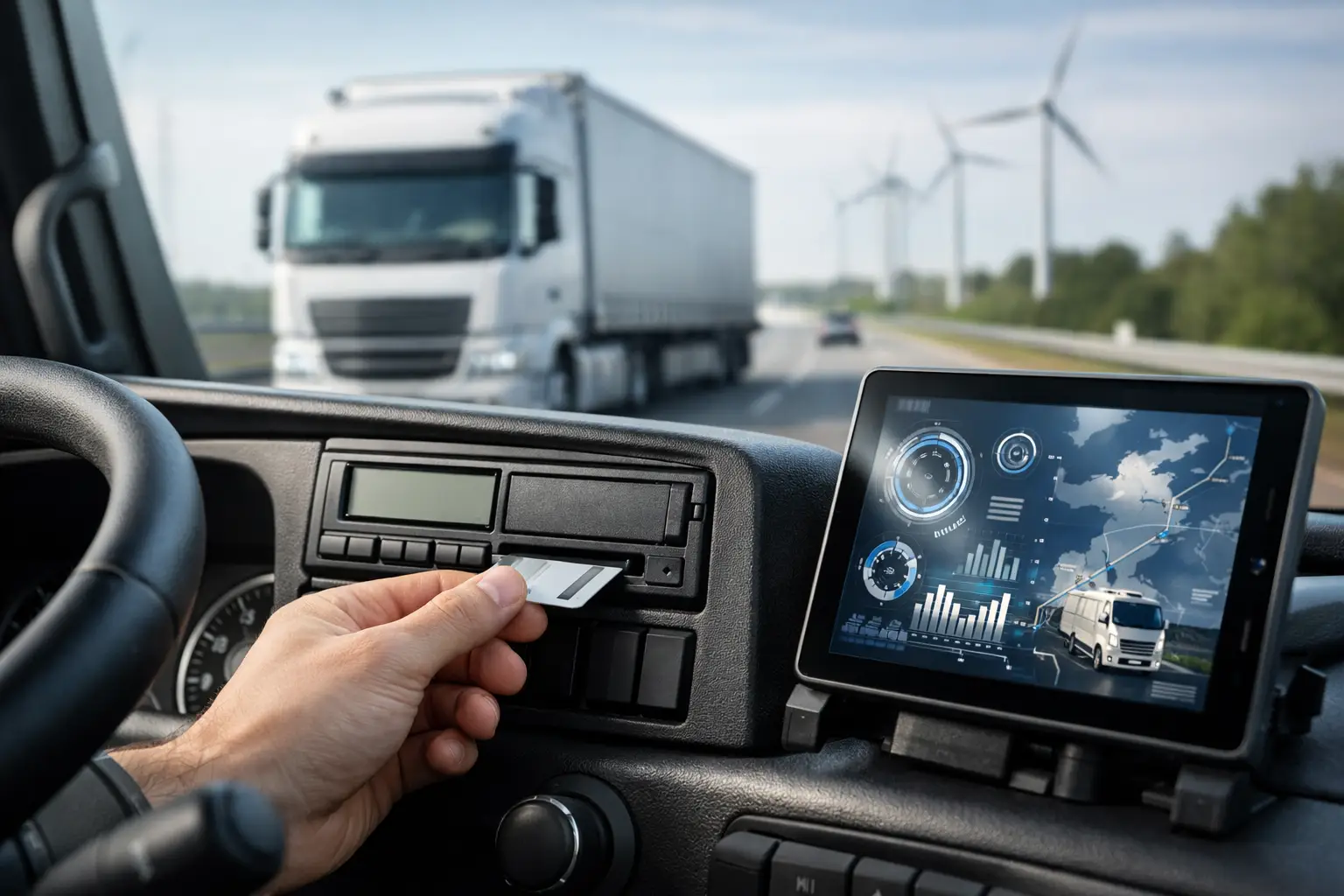
A missed download rarely stays a small issue for long. It turns into a compliance chase, a gap in reporting, and a transport office wasting time piecing together driver hours from different systems. That is why the future of tachograph automation matters now, not in some distant technology roadmap. For UK fleet operators, it is quickly becoming the difference between managing by exception and managing by backlog.
This shift is not really about gadgets or software features in isolation. It is about removing manual steps from compliance, linking tachograph data to live fleet activity, and giving transport teams information early enough to act on it. The operators who benefit most will not necessarily be the biggest fleets. They will be the ones that stop treating tachograph data as a historic record and start using it as an operational control tool.
The future of tachograph automation is moving beyond downloads
For years, tachograph automation has been judged on one main task: can the system collect driver card and vehicle unit data remotely, on time, without someone having to physically chase vehicles and cards? That still matters. If remote download is unreliable, everything else falls apart.
But that is only the baseline now. The future of tachograph automation is not just automated collection. It is automated oversight.
That means identifying drivers nearing working time limits before the planner creates a problem. It means highlighting missing mileage, expired cards, overdue downloads, and unexplained vehicle activity without someone manually checking five reports before breakfast. It also means linking tachograph events with tracking, trailer locations, utilisation, and maintenance schedules so one issue does not sit in its own silo.
In practical terms, transport managers are moving away from asking, "Has the data come in?" and towards asking, "What does this data mean for today’s operation?" That is a far more useful question.
Why transport teams are pushing for more automation
The pressure is coming from day-to-day operations, not technology for its own sake. Driver shortages, tighter margins, rising customer expectations, and the ongoing need to protect the operator licence leave little room for avoidable admin.
Manual tachograph processes slow everything down. Depot teams spend time arranging vehicle access for downloads. Compliance managers export data into spreadsheets to check infringements. Planners work without a clear live picture of available driver hours. When tracking, camera footage, maintenance records, and tachograph data sit in separate systems, every decision takes longer than it should.
Automation solves part of that by removing repetitive tasks. The bigger benefit is consistency. A manual process might work well when one experienced person is keeping the whole thing together. It becomes fragile when that person is off, when the fleet grows, or when multiple depots are involved.
This is where integrated platforms are changing expectations. Operators increasingly want one environment where they can see compliance status, vehicle movement, trailer position, and driver availability together. Not because it sounds modern, but because it reduces delay, duplicate work, and blind spots.
From compliance record to live operational signal
The old model treated tachograph data as something you reviewed after the fact. The newer model treats it as a live signal that affects dispatch, workload allocation, and risk management throughout the day.
If a planner can see remaining driving time alongside vehicle location, dispatch becomes more accurate. If a compliance manager can spot repeated rest breaches tied to one route pattern, the problem can be fixed at source. If a depot can identify underused vehicles and trailers from one platform, utilisation decisions improve as well.
That is a key part of the future. Tachograph automation is no longer sitting in the compliance corner. It is moving into the centre of fleet control.
What better automation will actually look like
Most operators do not need futuristic promises. They need systems that reduce workload and improve control this week. The most valuable developments are likely to be practical rather than flashy.
First, expect more event-based alerts rather than passive reporting. Instead of logging into a dashboard to discover issues, teams will increasingly receive prompts when action is needed: an upcoming download deadline, a likely infringement risk, a driver approaching limits, or a vehicle showing activity that does not match the planned job.
Second, expect tighter links between tachograph compliance and planning. In many fleets, these are still separate conversations. One team deals with legal obligations, another deals with route pressure. Better automation closes that gap. Driver hours data becomes part of planning logic, not a check done afterwards.
Third, expect less dependence on office-based administration. The future is not more data entry. It is fewer reasons to key anything in manually at all. Hardware that is easier to fit, platforms that present information clearly, and workflows that reduce clicks all matter more than long feature lists.
There is also likely to be more intelligent exception handling. Good systems will not force managers to review everything. They will surface what is unusual, what is overdue, and what creates genuine risk. That saves time and improves focus.
The trade-off: more automation still needs clear ownership
There is a temptation to think automation removes the need for process. It does not. It changes the type of work that matters.
When downloads, alerts, and reports are automated, the transport team spends less time collecting data and more time acting on it. That is a better use of resource, but it still requires ownership. Someone needs to decide how alerts are handled, who follows up on repeated infringements, and what the escalation path is when data shows a pattern.
It also depends on the quality of setup. A platform can only automate what it can see. If driver identities are inconsistent, vehicle records are incomplete, or departments work from separate assumptions, automation will expose those issues rather than hide them.
So the future of tachograph automation is not hands-off compliance. It is lower admin with better controls. The fleets that get the best results will be the ones that pair good technology with simple, repeatable processes.
Why integration matters more than standalone features
One of the biggest shifts ahead is that standalone tachograph tools will feel increasingly limited. Remote downloads alone are useful, but they do not give a full operational picture.
A transport manager making decisions at 4pm does not just need to know whether a card has been downloaded. They need to know where the vehicle is, whether the trailer is where it should be, how much driving time remains, whether there is a maintenance issue due, and whether the route plan is still realistic. If those answers live in different systems, time is lost and errors creep in.
This is why integrated fleet platforms are becoming more valuable. They bring compliance and visibility into one place. For UK operators, that matters because operator licence risk rarely sits in one neat category. A missed download, poor route planning, weak utilisation and rushed scheduling often connect.
Fleetalyse is built around that practical reality: combining tachograph compliance with tracking, driver hours visibility, and wider fleet control so transport teams can reduce admin without losing sight of what is happening on the road.
What this means for mixed fleets and growing operators
The future will not look identical for every fleet. An HGV-only haulier with a single depot has different needs from a mixed fleet running vans, trailers, and specialist assets across multiple sites.
For smaller operators, the priority is often replacing manual downloads and spreadsheet reporting with something dependable and easy to run. They need immediate time savings and fewer compliance gaps.
For larger or more complex fleets, the value often comes from coordination. Automation helps standardise compliance across depots, reduce reliance on local workarounds, and give central teams a clearer picture of risk and utilisation.
Mixed fleets add another layer. Even where tachograph rules do not apply in the same way across every asset, operators still benefit from having compliance, location, maintenance, and planning data together. A fragmented setup usually means fragmented decision-making.
That is why simplicity matters. The best future-facing systems will not win because they are packed with complexity. They will win because they make daily control easier for busy teams.
Preparing for the future of tachograph automation
For most operators, preparing does not mean waiting for a major technology overhaul. It means looking honestly at where time is being lost and where risk is being created today.
If downloads still depend on vehicles returning to base, that is a bottleneck worth removing. If planners cannot see driver hours clearly, that is not only a compliance issue but a service issue. If reports are still being stitched together manually, there is a limit to how quickly the business can respond.
The right next step is usually not the most complicated one. It is the one that gives the office and depot teams a clearer, faster way to work with the same set of facts.
The future of tachograph automation is heading towards fewer manual interventions, earlier warnings, and stronger links between compliance and planning. For UK fleet operators, that should be seen as a practical advantage, not just a technology trend. The businesses that move first will spend less time chasing data and more time running the fleet with confidence.