
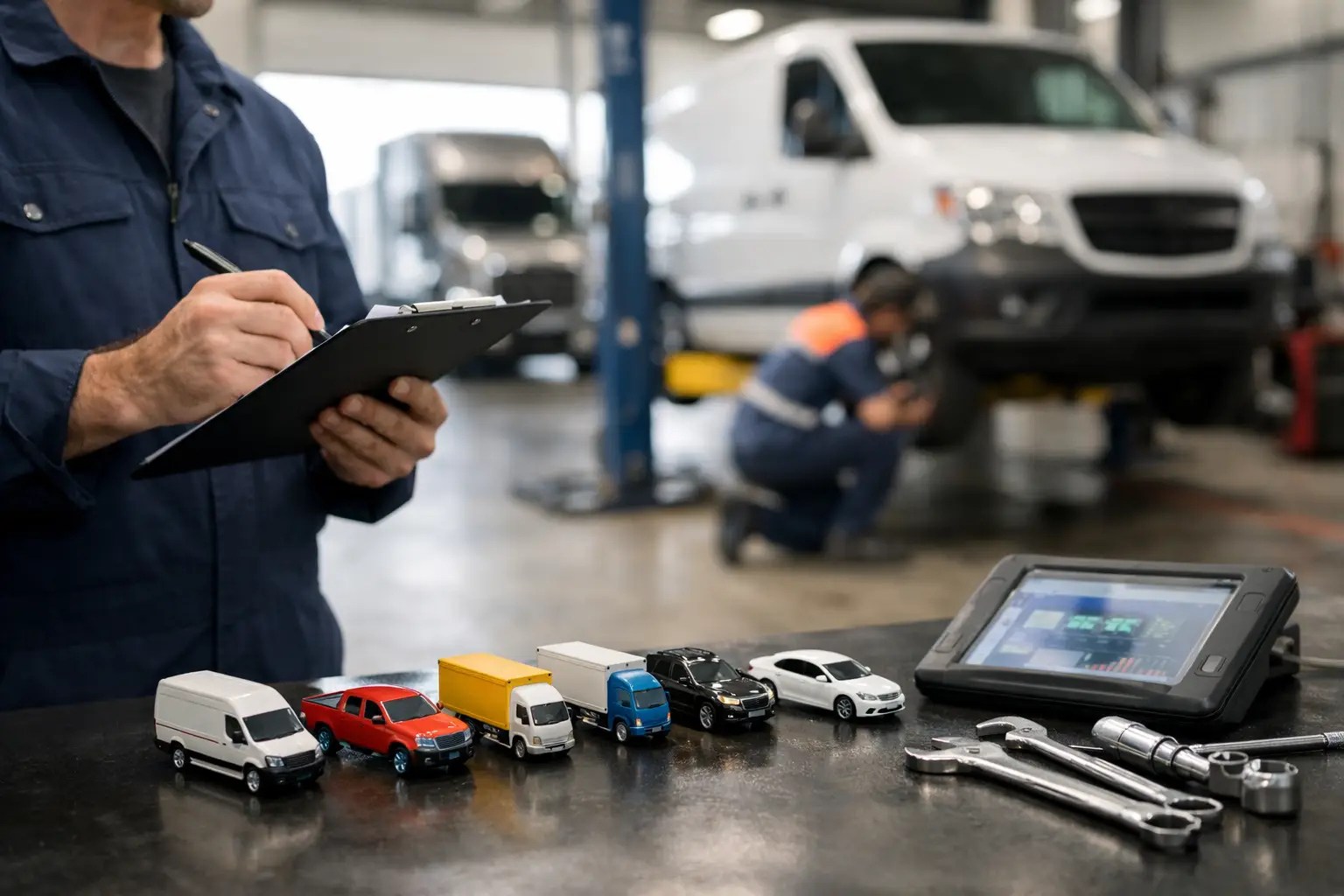
A vehicle off the road does more than miss a job. It throws dispatch plans off course, creates overtime, increases hire costs, and puts pressure on compliance teams to reshuffle drivers and assets at short notice. That is why vehicle downtime reduction strategies matter so much for commercial fleet operators. The best results rarely come from one big change. They come from tighter control over maintenance, driver hours, vehicle visibility, and the admin that sits behind them.
For UK fleets, downtime is rarely just a workshop issue. It often starts much earlier - with missed inspections, poor planning, late fault reporting, disconnected systems, or a driver being allocated work they legally cannot complete. If you want fewer vehicles standing still, you need to manage the causes, not just the breakdowns.
Why vehicle downtime reduction strategies fail in practice
Most operators already know the basics. Service on time, react to defects quickly, and keep an eye on usage. The problem is that many fleets still run those tasks through separate spreadsheets, phone calls, and manual checks. That creates delays between spotting an issue and acting on it.
A van or lorry can be technically roadworthy in the morning and commercially unusable by lunchtime if planning information is poor. If dispatch cannot see where the vehicle is, maintenance cannot see upcoming mileage, and compliance cannot see available driver hours, decisions slow down. Small gaps in visibility become expensive downtime.
That is why practical vehicle downtime reduction strategies focus on operational control. The aim is not simply to collect more data. It is to make sure the right people can act on live information before a minor issue becomes a cancelled job.
Build maintenance around real usage, not guesswork
Time-based servicing still has a place, but fixed intervals on their own can be blunt. Two identical vehicles on paper may have very different duty cycles in reality. One may be doing short urban runs with constant stop-start wear, while another spends most of its time on steady motorway work.
When maintenance schedules are built around actual mileage, utilisation, and vehicle activity, fleets can make better workshop decisions. You reduce the risk of running assets too long between inspections, but you also avoid dragging vehicles in earlier than necessary. Both matter. Late maintenance leads to breakdowns. Premature maintenance creates avoidable downtime.
A proper maintenance reminder system helps here, especially when it is tied to live vehicle data rather than depot wall charts or manual diary entries. Transport teams can see what is due, what is approaching, and which jobs can be planned into quieter operating windows. That gives you a better chance of taking a vehicle off the road on your terms instead of losing it unexpectedly.
Preventive maintenance works best when defects are visible quickly
Even a strong service plan will fail if driver-reported defects get stuck in a notebook or passed on verbally at the end of a shift. The longer a fault sits unreviewed, the greater the chance it turns into roadside failure, missed delivery, or a vehicle prohibition.
Fast defect escalation matters most for the issues that operators tend to underestimate: battery health, tyre condition, brake wear, lighting faults, and recurring warning lights. On their own, they may look minor. In combination, they create repeat downtime because the same vehicles keep returning to the workshop for avoidable reasons.
Use live tracking to protect workshop time and dispatch time
Many fleets think of tracking as a dispatch tool first, but it has a direct impact on downtime. Real-time vehicle visibility helps planners make better decisions when a vehicle is delayed, diverted, or nearing the end of its available working window. Instead of sending work to the wrong asset and having to recover the situation later, you can allocate jobs more realistically from the start.
Tracking also helps reduce unproductive downtime that is often hidden in plain sight. Excess idling, poor route discipline, unauthorised use, and long standing periods all affect asset availability. A vehicle that is technically active but operationally underused still costs money, and poor utilisation can mask the fact that other vehicles are being overworked and pushed closer to failure.
For mixed fleets with trailers, this becomes even more important. If a trailer cannot be found quickly, or its location is only known through a chain of phone calls, the operational impact looks very similar to vehicle downtime. The job still gets delayed. The driver still waits. The depot still loses time.
Reduce driver hours surprises before they create downtime
One of the most common causes of avoidable disruption is assigning work without a clear view of driver availability. A vehicle may be ready to go, but if the allocated driver is close to a working time limit or tachograph break requirement, the asset still ends up parked.
This is where compliance and uptime overlap. Live driver hours monitoring gives transport teams a better foundation for planning the day. You can spot who has capacity, who is approaching a limit, and where a job needs reallocating before it turns into a service failure. That does not just reduce infringements. It reduces stranded vehicles, missed slots, and expensive replanning.
Remote tachograph downloads help for the same reason. Manual download routines are admin-heavy and easy to miss when teams are busy. Once they slip, the knock-on effect is wider than paperwork. Compliance backlogs make it harder to spot trends, harder to coach drivers, and harder to plan with confidence. Fleets that treat tachograph data as a live operational input rather than a historic admin task tend to make quicker, safer decisions.
Spot risky driver behaviour before it becomes repair downtime
Driver behaviour has a direct impact on wear, fuel spend, and workshop demand. Harsh braking, aggressive acceleration, over-revving, and sustained speeding all increase mechanical stress. Over time, that leads to more tyre wear, brake replacement, clutch issues, and higher chances of unscheduled repair.
The point is not to create a blame culture. It is to identify where coaching can protect the vehicle and the operation. Some drivers will improve quickly with clear feedback. Others may need closer management or route-specific support. It depends on the work they do and the standards already in place.
Smart dashcam footage and driver behaviour reporting are particularly useful when incident patterns are disputed or unclear. They give managers context, not just an event score. That means decisions can be based on evidence rather than assumption, which usually leads to better coaching and fewer repeat problems.
Bring compliance, maintenance, and planning into one workflow
A lot of downtime is created by fragmentation. Tracking sits in one system, maintenance in another, tachograph data somewhere else, and reports in spreadsheets that only one person updates properly. The result is familiar: good people spending too much time chasing information instead of acting on it.
One platform will not solve poor processes on its own, but it does remove friction. If the transport office can see vehicle location, maintenance status, driver hours, and asset usage in one place, decisions happen faster. A planner does not need to ring three people to work out whether a lorry can still cover an urgent run. A compliance manager does not need to wait for manual files before identifying risk. A depot team can prepare for upcoming maintenance based on real operational demand.
For many operators, the biggest gain is not dramatic. It is consistency. Fewer missed reminders. Fewer blind spots. Less time spent reconciling disconnected data. That steady reduction in admin friction often has a bigger effect on uptime than headline-grabbing technology features.
Measure the right downtime signals
If you only measure breakdowns, you will miss a large part of the problem. Useful vehicle downtime reduction strategies track the patterns that lead to vehicles becoming unavailable. That includes recurring defects, short-notice workshop bookings, driver hours conflicts, vehicles overdue for service, and assets with low utilisation but high operating cost.
It also helps to separate planned downtime from unplanned downtime. Planned downtime is not always bad if it prevents a larger failure later. The goal is to increase control, not pretend every minute off the road is avoidable. A fleet with more scheduled maintenance may actually be operating better than one with fewer workshop visits but more roadside incidents.
The right reporting should help you answer practical questions. Which vehicles generate the most disruption per month? Which depots report faults late? Which routes create excessive wear? Which drivers or assets are linked to repeat issues? Once those patterns are visible, downtime becomes easier to reduce because decisions stop being reactive.
Make implementation easy enough to stick
The best strategy on paper will fail if it takes months to roll out, needs heavy training, or adds more admin than it removes. Fleet teams are busy. They need systems that fit into daily operations quickly and clearly.
That is why simple deployment matters. Plug-and-play hardware, transparent monthly pricing, and a single platform approach are not just commercial benefits. They remove barriers to adoption. If managers can get better visibility without a complex installation project, they are more likely to use the data consistently and build it into day-to-day planning.
For operators looking to tighten control across compliance and uptime, Fleetalyse is built around that practical need: one platform for tracking, tachograph management, driver visibility, maintenance reminders, and reporting without the usual system sprawl.
Downtime rarely disappears all at once. It drops when daily decisions get easier, faults are seen sooner, and vehicles are managed with less guesswork. That is usually where the strongest gains begin.