

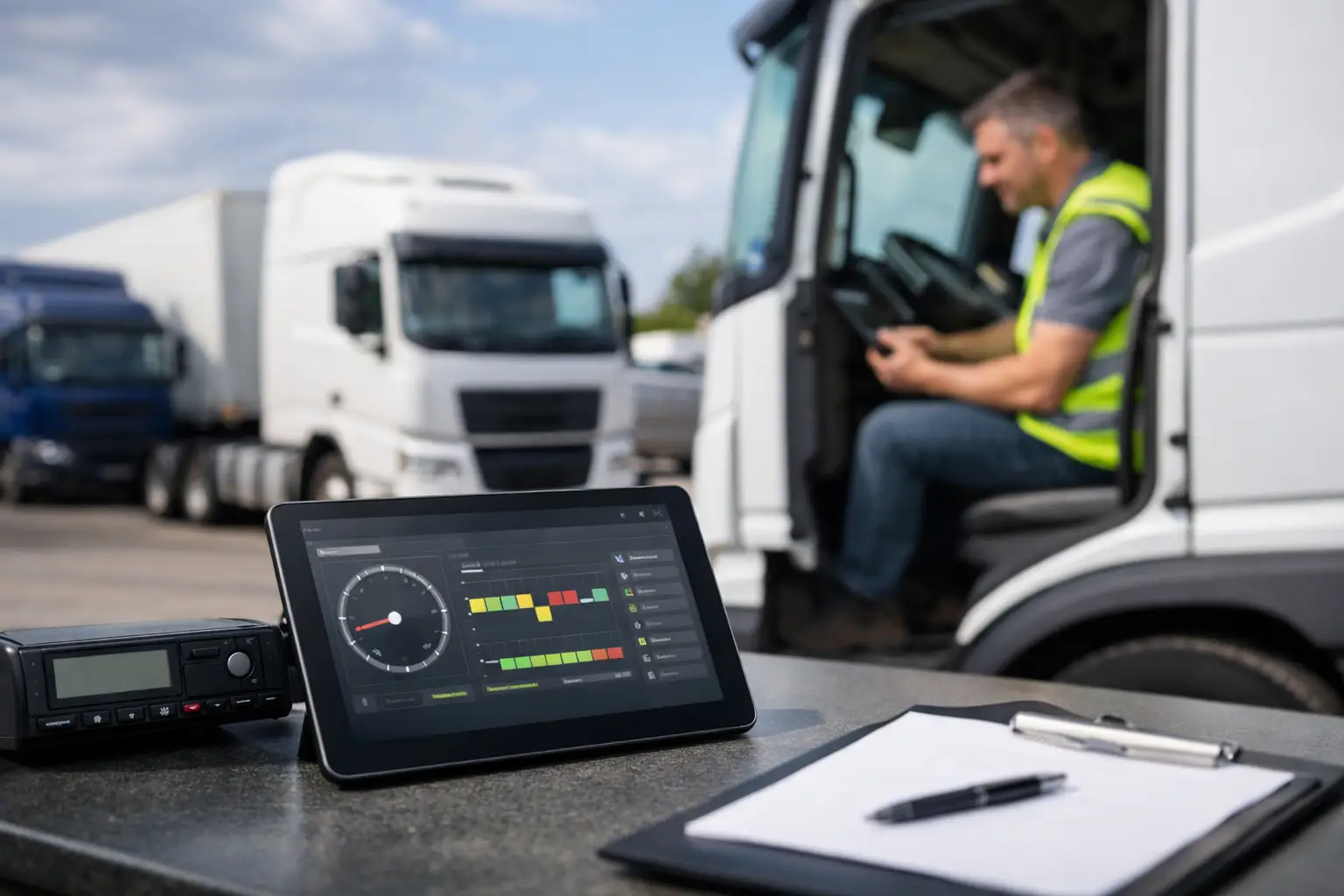

If your team is still checking driver cards, chasing manual downloads and updating spreadsheets to stay on top of hours, the problem is not effort. It is system design. The best driver hours software gives transport managers live visibility, earlier warnings and far less admin, so compliance is controlled before it becomes an infringement.
For UK operators, that distinction matters. Driver hours software is not just a reporting tool. It sits close to your operator licence risk, your daily planning and your ability to keep vehicles moving without pushing drivers into avoidable breaches. Good software should help the office make faster decisions. Poor software simply tells you what went wrong after the fact.
What the best driver hours software should actually do
A lot of platforms claim to manage driver hours, but the real test is whether they support day-to-day transport operations. If your software only produces retrospective reports, it may help with audits, but it will do little for dispatch planning at 10.30 in the morning when a route changes and you need to know who can legally take the work.
The best driver hours software should combine compliance monitoring with live operational visibility. That means remote tachograph downloads, current driving and rest status, alerts before limits are reached, and reporting that is clear enough for the transport office to act on quickly. It should also reduce manual handling. If the team still needs to log in to multiple systems, export files and reconcile data by hand, the software is only moving the admin around.
For mixed fleets, there is another layer. HGV compliance data is far more useful when it sits alongside vehicle tracking, trailer visibility and driver performance. Hours information on its own answers one question. Joined-up fleet data answers several at once - who is available, where the vehicle is, whether the route is on track and where the next compliance risk is likely to appear.
Best driver hours software means fit for UK operation
This is where many generic fleet systems fall short. UK operators do not need a broad platform that treats driver hours as one module among many with little depth behind it. They need software built around tachograph rules, operator licence pressure and the practical reality of running HGVs, vans and trailers across multiple jobs, depots and drivers.
A platform may look polished in a demo, but if it does not handle remote downloads reliably, flag infringements clearly or support transport teams with live duty information, it creates friction rather than control. The strongest systems are designed around UK compliance workflows. They understand that transport managers are balancing legal obligations with customer deadlines, staff availability and vehicle utilisation all at once.
That is also why implementation matters. Software that takes months to deploy, requires heavy installation work or comes with hidden charges often loses support internally before the value appears. In practice, operators tend to get better results from platforms that are straightforward to fit, simple to train on and transparent in monthly costs.
The features worth prioritising
When evaluating options, it helps to ignore feature volume and focus on what changes the working day.
Remote tachograph download is a basic requirement, not a premium extra. If the software cannot automate driver card and vehicle unit downloads, your compliance process remains exposed to missed deadlines and unnecessary office time. Live driver hours visibility is the next step. This allows planners and transport managers to see available driving time, breaks and rest requirements as the day unfolds rather than after the shift has ended.
Alerts are equally important, but only if they are usable. Too many systems flood teams with notifications that do not help prioritisation. The better approach is targeted warnings on approaching infringements, missing downloads or unresolved issues that require intervention.
Reporting should be practical rather than decorative. You need clear infringement analysis, driver-level summaries, and enough management information to spot repeat behaviours and training needs. If reports look impressive but take too long to interpret, they will be ignored during busy periods.
Finally, integration matters more than many buyers expect. Hours data becomes much more valuable when it sits in the same platform as vehicle tracking, maintenance reminders and operational reporting. That single view reduces double entry, cuts down on conflicting data and gives dispatch teams better context when plans change.
Where software often disappoints
The most common issue is delay. Some systems are technically compliant, but they update too slowly to support live planning. That leaves the transport office making judgement calls without reliable hours data, which defeats much of the purpose.
Another weak point is complexity. If it takes specialist knowledge to understand a dashboard, adoption will stay limited to one or two people. That is risky for any fleet business. Driver hours software should support continuity across the whole office, not rely on one compliance expert to translate everything.
Cost structure can also distort value. A low headline price may exclude essential downloads, reporting, support or tracking features, which means the real monthly cost appears later. For operators comparing providers, transparency matters as much as the feature list. Predictable pricing makes it easier to scale across the fleet without unpleasant surprises.
How to compare driver hours software properly
The best comparison is not product against product in isolation. It is software against your current operating pressure.
Start with admin time. How many hours each week are spent downloading tachograph data, checking driver status, correcting records and preparing reports? Any serious system should reduce that number quickly. Then look at risk exposure. Are infringements being identified early enough to prevent repeat issues? Can managers see which drivers, depots or routes need attention without pulling data from several places?
Next, consider dispatch value. If planners cannot use the software to make same-day decisions, you are buying a compliance archive rather than an operational tool. That may still have value, but it is not the best driver hours software for a busy transport business.
Finally, test usability. A strong platform should make sense to transport managers, planners and depot staff without lengthy explanation. If basic tasks are clumsy in a demo, they will be worse under daily pressure.
Why a combined platform usually wins
For many operators, separate systems have built up over time. One provider handles tracking, another handles tachograph downloads, and reporting sits in spreadsheets maintained by the office. That arrangement can work, but it rarely works efficiently.
A combined platform tends to deliver better control because it removes the gaps between compliance and operations. If a planner can see driver hours, vehicle location and trailer status in one place, decisions are quicker and less speculative. If a compliance manager can review downloads, infringements and vehicle activity without switching systems, follow-up is more consistent.
This is especially useful for fleets that are growing or running mixed assets. The more moving parts you have, the more expensive disconnected information becomes. One platform will not solve every transport problem, but it does remove a surprising amount of avoidable friction.
That is the principle behind Fleetalyse - bringing live driver hours, remote downloads, tracking and wider fleet visibility together so operators can reduce admin and stay in control without bolting on multiple systems.
Choosing the best driver hours software for your fleet
There is no single best option for every operator. A small fleet with straightforward work may prioritise ease of use and automated downloads. A larger multi-depot operation may need deeper reporting, live alerts and broader telematics visibility. The right choice depends on where the operational strain is greatest.
What does stay consistent is the benchmark. The best driver hours software should save time every week, give early warning before problems escalate and help the office make better decisions during the day, not just after it. It should be clear, dependable and built around the way UK fleets actually run.
If a platform reduces admin but leaves planners blind, it is only a partial fix. If it offers data but no clear action, the burden stays with your team. The right system should do more than capture compliance. It should make control easier.
That is usually the simplest way to judge it. Ask whether the software helps protect your licence, frees up the transport office and gives your team the confidence to act quickly when the day changes. If it does, you are looking in the right place. If it does not, the cheapest option will still cost you time.