
Finding the right tracking solution for your HGV fleet can feel overwhelming. With dozens of providers claiming to offer “complete” solutions, how do you separate genuine compliance tools from glorified dots on a map? This guide cuts through the noise, explaining exactly what UK operators need from a truck tracking system—and why Fleetalyse is built specifically for this purpose.
Related Fleetalyse guides: lorry tracker guide | HGV tracker guide | fleet analytics platform | book a demo.
Answer in Brief: What Is the Best Tracker for an HGV Fleet?
The best tracker for HGV fleet operations in the UK is one that combines real time tracking with remote tachograph downloads, live driver hours visibility, and tools designed around Operator Licence compliance. For most UK operators running five or more vehicles, Fleetalyse delivers exactly this combination through plug-and-play telematics devices backed by a purpose-built SaaS platform.
For fleets operating under an O-Licence, Fleetalyse addresses DVSA requirements directly. The system installs without complex wiring, scales as you grow, and integrates the features transport managers actually need daily.
Core reasons operators choose Fleetalyse:
Live vehicle locations with frequent GPS updates across UK and European maps
Remote tachograph downloads eliminating manual card reads
Real time visibility of remaining driver hours (daily and weekly limits)
Driver behaviour monitoring with automated scorecards
Maintenance scheduling tied to actual usage, not arbitrary intervals
Fuel usage insights and MPG tracking per vehicle
Unlike generic gps tracking devices aimed at cars or light vans, Fleetalyse focuses on HGV and truck fleets, with UK-based support and platform updates aligned with evolving regulations. The rest of this article explains how to evaluate HGV trackers and why Fleetalyse’s feature set matches those criteria.
Why GPS Tracking Is Crucial for HGV Fleets
HGVs transport over 90% of UK inland freight by volume. Supermarkets, construction sites, pallet networks, and parcel carriers all depend on lorries arriving at precise times. Losing visibility over even one 44-tonne articulated truck can cascade into missed delivery slots, penalty charges, and frustrated customers.
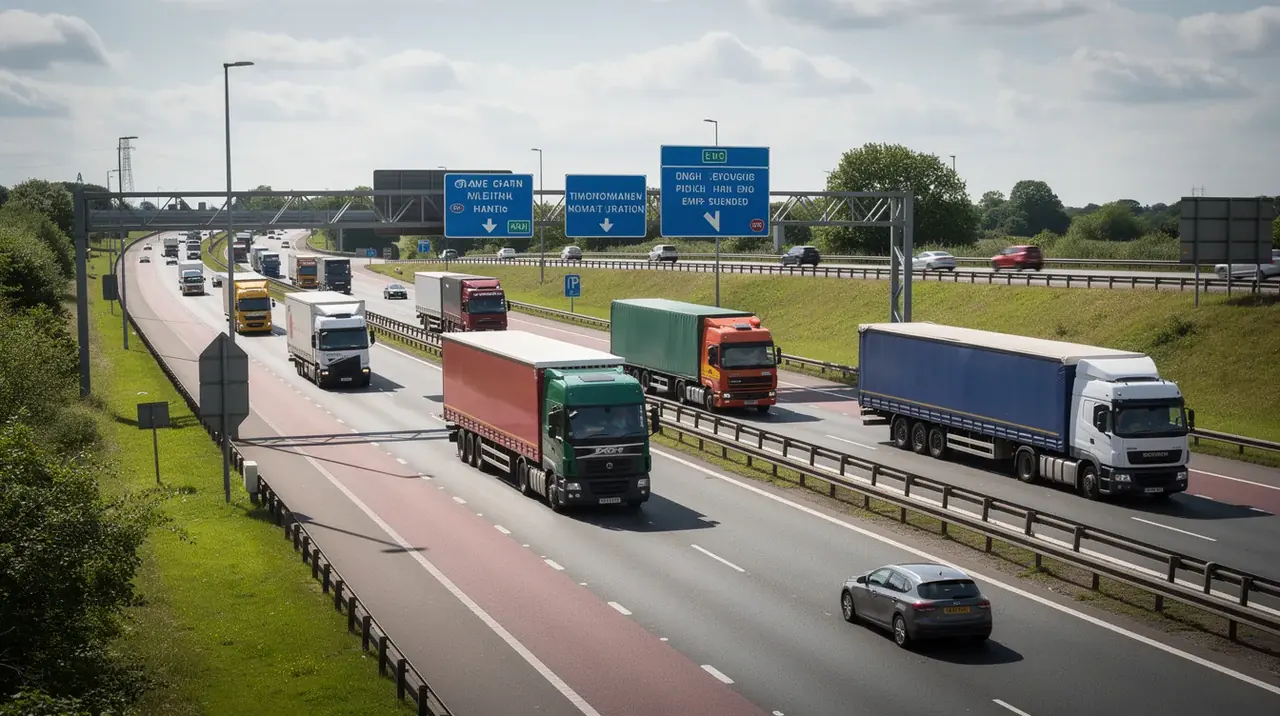
GPS tracking gives dispatchers and transport managers live visibility of every vehicle’s position on a UK or European map. This supports route adherence, on-time delivery, and rapid decision-making when disruptions occur. When the M25 closes unexpectedly or ferries at Dover face delays, planners with real time tracking can reroute vehicles immediately rather than waiting for drivers to call in.
The elevated risk profile of HGVs makes this visibility essential. Individual tractor units often exceed £100,000 in value, with cargo worth considerably more. Serious incidents involving lorries carry significant consequences—financial, operational, and reputational.
For operators running mixed fleets (HGVs plus vans), a single vehicle tracking system like Fleetalyse covering all vehicle types avoids data silos. One platform means simplified control-room workflows and consistent reporting across your entire operation.
Enhancing Fleet Efficiency and Cutting Running Costs
Fuel, tyres, maintenance, and driver wages represent the largest operating costs for UK haulage operations. Fuel alone accounts for 30-40% of HGV expenses. Modern telematics has become a standard tool to identify savings across all these areas.
Real time tracking and historical journey logs reveal patterns that drain budgets:
Wasted mileage from suboptimal routing
Unnecessary detours adding 10-15% to journey distances
Excessive idling at RDCs, ports, or customer sites
With driver behaviour data—harsh braking, speeding, harsh cornering, and prolonged idling—fleet managers can coach drivers toward smoother, more economical driving. Industry benchmarks suggest 5-15% fuel consumption reductions are achievable when these behaviours are addressed systematically.
Fleetalyse aggregates vehicle utilisation metrics including kilometres per day, engine hours, and time parked. This helps operators right-size their truck fleet, identifying under-used tractor units that could be redeployed or removed from the fleet entirely.
Accurate ETA predictions also improve revenue. Fleets reporting better route efficiency consistently achieve more drops per shift and fewer costly redelivery attempts.
Real-Time Location Tracking and HGV-Specific Route Optimisation
Generic sat nav routing is often unsuitable for HGVs. Standard navigation ignores bridge heights, weight limits, Clean Air Zones, and urban restrictions that can leave a 4.2-metre trailer stuck under a railway bridge or trigger ULEZ penalty charges in London.
The best truck tracking solutions combine real time tracking with mapping that factors in vehicle dimensions, weight, and load type. Fleetalyse integrates live traffic data and mapping tools to help planners re-route vehicles around congestion, incidents, or closures as they develop.
Practical benefits include:
Planners and customer service teams can see exact locations and provide accurate ETAs, reducing “where’s my load?” calls
Customer satisfaction improves when delivery status updates are precise rather than vague windows
Historical journey data allows analysis of standard runs—comparing routes from Midlands depots to Felixstowe, Tilbury, or Immingham to identify the most efficient options over time
Route optimisation isn’t just about saving fuel; it’s about protecting margins on every journey.
Driver Monitoring, Safety and Compliance
Driver behaviour links directly to fleet safety, insurance costs, and Operator Licence repute. HGVs are involved in 25% of UK road freight fatalities despite comprising only 5% of vehicles. Insurers increasingly expect telematics data demonstrating safe driving habits before offering favourable premiums.
A robust lorry tracking system should capture:
Speeding events (particularly exceeding limits by more than 5%)
Harsh acceleration and harsh braking (sudden stops exceeding 0.5g)
Harsh cornering (lateral forces above 0.7g)
Extended idling beyond reasonable thresholds
Fleetalyse transforms this data into clear driver scorecards and automated reports. Managers can identify high-risk patterns and run targeted coaching sessions rather than guessing where problems exist.
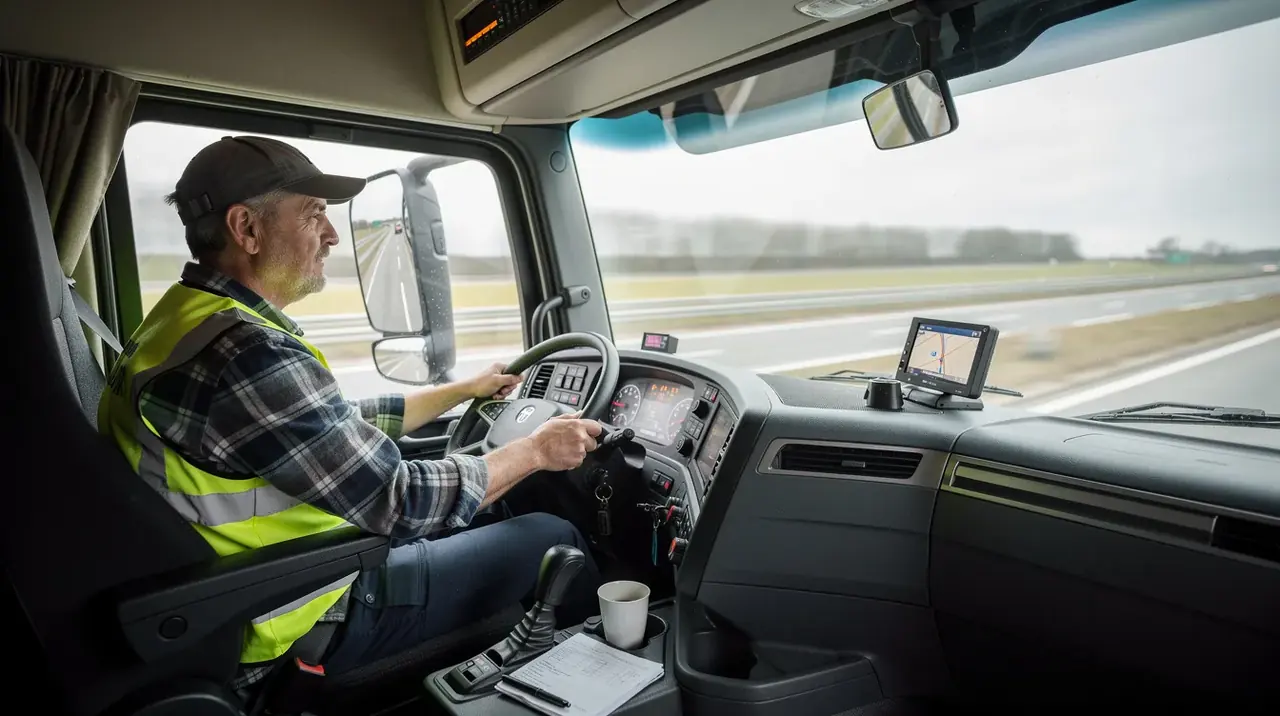
Incident reconstruction through journey replay—with speed and position breadcrumbs—supports internal investigations, insurance claims, and defence against false allegations. This evidence can make the difference when recovering costs from incidents averaging £50,000+.
Driver monitoring also shapes safety culture. Anonymised league tables and recognition schemes encourage safer driving habits across the team, improving both driver performance and fuel spend simultaneously.
Geo-Fencing, Alerts and Asset Security for HGVs
High-value HGV assets and loads attract theft. With over 1,500 HGV thefts annually costing the UK industry around £80 million, vehicle security and enhanced security measures are non-negotiable.
Geo-fencing allows transport managers to draw virtual boundaries around depots, customer sites, ports like Immingham or Felixstowe, and known high-risk areas. The system triggers real time alerts via SMS, email, or in-platform notifications when a vehicle enters or exits unexpectedly.
Alert scenarios worth configuring include:
Out-of-hours movement (a truck leaving at 2am without scheduled work)
Unauthorised route deviation
Extended stops in unusual locations
Fleetalyse supports rapid theft response with recent location history, live tracking during incidents, and easily exportable data for police and insurers. Operators report 40% faster recoveries when location data is immediately available.
Geo-fences serve operational purposes too—confirming arrival and departure times at customer premises, validating demurrage charges, and proving waiting times that would otherwise become disputes.
Predictive Maintenance and Reducing Downtime
Unplanned HGV breakdowns create immediate problems: missed RDC slots, penalty charges, and emergency replacement vehicles costing £1,000+ per day. Reactive maintenance is expensive; predictive approaches deliver better outcomes.
Modern vehicle tracking software captures odometer readings, engine hours, and sometimes engine diagnostics fault codes. This data supports maintenance scheduling based on actual usage rather than arbitrary calendar intervals.
Fleetalyse enables operators to:
Create maintenance schedules for inspections, servicing, MOTs, and tachograph calibrations
Trigger automated reminders before service intervals are due
Spot patterns such as repeated DPF regeneration issues or abnormal fuel consumption on specific vehicles
Predictive maintenance extends vehicle life, improves uptime, and creates documentation proving robust systems to DVSA during Operator Licence reviews. When Traffic Commissioners scrutinise your operation, demonstrating systematic maintenance processes protects your repute.
Ensuring HGV Compliance: Tachographs, Driver Hours and O-Licence Requirements
For UK HGV fleets, the “best tracker” must address Working Time Directive and EU/GB tachograph regulations—not merely show vehicle locations on a map.
Remote tachograph download capability allows Fleetalyse to pull driver card and vehicle unit data over the air without trucks returning to base. This eliminates manual card reads and ensures data is captured within legal timeframes (28 days for vehicle units, 90 days for driver cards).
Compliance features that matter:
Real time visibility of driver hours: driving time used, breaks taken, remaining daily and weekly allowances
Planners can assign loads legally, avoiding inadvertent breaches carrying £1,500+ fines
Secure storage for the required one-year retention period
Export capabilities compatible with analysis tools used by UK compliance consultants
Combining location, speed, and tacho data gives transport managers strong evidence of robust systems during DVSA investigations or Traffic Commissioner hearings. With approximately 20% of Operator Licences facing hearings annually, this documentation is valuable protection.
What Features to Look For in the Best HGV Tracking System
Not all tracking systems deliver equal value. Here’s a concrete checklist for UK HGV operators evaluating options:
Must-have core features:
Real time gps tracking with updates every 30 seconds or less
UK and European map coverage with journey history
Geo-fencing with customisable alert zones
Driver behaviour monitoring with configurable thresholds
Speeding, harsh braking, and idling event capture
Compliance-focused features:
Remote tachograph download (driver card and vehicle unit)
Live driver hours dashboard showing remaining allowances
Secure data retention meeting audit requirements
Operational features:
Maintenance scheduling tied to odometer or engine hours
Fuel usage tracking and MPG insights per vehicle
Ability to generate custom reports by vehicle, driver, or contract
Technical and commercial considerations:
Plug-and-play installation minimising downtime
CAN/OBD connectivity where deeper engine diagnostics data is needed
Scalable per-vehicle monthly pricing
UK-based customer support with HGV expertise
Evaluating HGV Tracking Providers (and Where Fleetalyse Fits)
Providers differ significantly in focus. Some target global enterprises, others compete purely on price, and some—like Fleetalyse—specialise in UK commercial transport compliance and operational efficiency.
Criteria for comparing providers:
Criterion | What to assess |
|---|---|
Hardware reliability | Uptime guarantees, device durability |
Update frequency | Location refresh rates (aim for 30 seconds or less) |
Platform usability | Intuitive dashboards vs cluttered interfaces |
Analytics quality | Actionable insights vs raw data dumps |
Integration options | APIs, TMS compatibility, fuel card integration |
Support responsiveness | UK-based team with HGV knowledge |
Fleetalyse differentiates through deep understanding of Operator Licence requirements, fast deployment with plug-and-play devices, and a platform designed specifically for UK fleet operators rather than adapted from overseas markets.
Data ownership matters. Confirm you can export telematics and tacho data easily if required by auditors or regulators—your data should remain yours.
Request case studies from similar UK fleets (general haulage, temperature-controlled, ADR, construction) to verify real-world performance before committing.
Installation, Integration and Ease of Use
Outfitting an HGV fleet shouldn’t mean weeks of vehicle downtime or complex wiring that voids warranties. Practical deployment matters.
Hard-wired trackers require professional installation and can take vehicles off the road for hours. Plug-and-play units—Fleetalyse’s preferred approach—connect quickly and can typically be installed by drivers or workshop staff without specialist skills.
The platform should be accessible from any modern browser plus mobile apps for managers on the move. Dashboards should surface key information immediately, not bury it in cluttered screens requiring extensive training to navigate.
Integration capabilities extend value:
APIs connecting to TMS and routing systems
Native fuel cards integration reducing manual data entry
Payroll and HR software connections for driver hours data
Good onboarding—webinars, guides, and responsive UK support—ensures teams actually use the system daily rather than letting it gather digital dust.
Cost of HGV Trackers and Return on Investment
UK HGV telematics typically follows monthly subscription pricing per vehicle, sometimes with modest upfront costs for hardware or minimum contract terms (24-36 months is common).
Key cost elements to understand:
Hardware purchase or lease
Installation fees (minimal with plug-and-play)
Monthly software licence per vehicle
Optional add-ons (cameras, trailer or asset tracking)
Integration work if connecting to existing systems
Savings typically appear across multiple areas: reduced fuel costs, fewer accidents and insurance claims, better vehicle utilisation, and reduced admin time on compliance paperwork.
Example ROI calculation:
A 44-tonne artic covering 100,000km annually at 2.5 MPG with diesel at £1.50/litre spends approximately £15,000 on fuel. A 5% reduction through better routing, reduced idling, and smoother driving saves £750 yearly—comfortably exceeding typical monthly subscription costs of £25-40.
Add avoided accident costs, reduced compliance fines, and improved operational efficiency, and payback periods often measure in months rather than years. Fleetalyse can help prospects model expected ROI based on specific fleet profiles.
Are Advanced HGV Trackers Suitable for Smaller Fleets and Owner-Drivers?
Operators with 1-20 vehicles sometimes assume comprehensive telematics is “only for large fleets.” This isn’t accurate.
Modern SaaS platforms like Fleetalyse scale down to single-vehicle operations with flexible per-vehicle pricing. Small operators gain proportionally greater benefits:
Stronger proof of compliance for DVSA audits
Better control over fuel spend when margins are tight
Reduced admin time on driver hours monitoring
More professional customer communication with accurate delivery status updates
As operations grow, additional fleet vehicles can be added without platform changes. Start with a subset of vehicles to build confidence before full rollout—Fleetalyse supports this trial approach.
How HGV Tracking Systems Work in Practice
Understanding the technology builds confidence in its reliability. GPS technology devices fitted to each vehicle record location, speed, timestamp, and ignition status. Data transmits over mobile networks to cloud servers, where it’s processed and displayed in web dashboards or mobile apps.
Advanced units also capture CAN bus data: RPM, fuel consumption, fault codes, and more. Update frequencies of 30 seconds or less ensure near-real-time visibility.
Remote tachograph downloads work through an interface with the vehicle’s tachograph head. Secure authentication certificates enable scheduled or on-demand data retrieval without physical card readings.
Daily workflow example:
Morning check: review fleet positions, monitor vehicle locations, and verify remaining driver hours before assigning work
Live monitoring: track progress against planned routes, handle real time alerts for exceptions
End-of-day review: analyse completed journeys, identify cost saving opportunities, review driver behaviour scores
All data is time-stamped and auditable, supporting both day-to-day decisions and long-term trend analysis.
Choosing the Best Tracker for Your HGV Fleet: Next Steps
The best tracker for your HGV fleet combines real time tracking, driver monitoring, compliance tools, and ease of use—all tailored to UK regulations and operational realities.
Action checklist:
Define priorities: compliance, reduce costs, improve driver safety, or customer service improvements
List must-have key features based on your operation
Shortlist providers with proven UK HGV experience
Request live demos showing real fleet data
Run a trial across representative vehicles
Fleetalyse offers demos walking through live UK HGV fleet views, remote tacho download workflows, and real customer use cases. The team can also assist with migration from legacy platforms, including data export and staff training.
Whether you operate general haulage, refrigerated transport, construction vehicles, tankers, or mixed HGV and truck fleets, contact Fleetalyse to discuss a solution sized to your specific requirements. Call or complete the web form to start the conversation.
Ready to improve visibility, compliance and safety across your fleet? Book a Fleetalyse demo or review our plans and pricing.