
Could your current operations survive a surprise DVSA inspection once the July 2026 mandates take effect? For many UK operators, the fear of licence loss or heavy fines is a constant pressure, especially with the upcoming expansion of regulations to light commercial vehicles. Relying on manual data downloads often leads to delays and gaps in records that you simply can't afford. A robust fleet compliance tachograph system is no longer a luxury. It's a fundamental requirement for protecting your operator licence and maintaining audit-readiness.
We understand that the shift to G2V2 smart tachographs and the decommissioning of 2G networks adds a layer of complexity to an already demanding job. This guide provides a straightforward strategy to automate your remote downloads and gain real-time visibility of driver hours. You'll learn how to meet the 2026 LCV requirements for vehicles over 2.5 tonnes and eliminate the hidden software costs that often plague the industry. We move through the technical essentials of live monitoring and the practical steps needed to ensure your fleet remains fully compliant whilst improving operational efficiency.
Key Takeaways
- Prepare for the July 2026 mandate by identifying which light commercial vehicles over 2.5 tonnes require G2V2 smart tachograph upgrades for international work.
- Implement a modern fleet compliance tachograph system to automate remote data downloads and remove the operational burden of manual vehicle home-basing.
- Use live driver hours to monitor compliance in real-time, allowing you to intercept potential infringements before they lead to DVSA penalties.
- Audit your current hardware for 2G network dependency to avoid connectivity loss during the upcoming European network decommissioning.
- Establish a robust infringement debriefing process by integrating remote downloads with professional tachograph analysis for full audit-readiness.
Understanding Fleet Compliance Tachograph Systems in 2026
A modern fleet compliance tachograph system is far more than a simple recording device. It's an integrated ecosystem that combines hardware, automated data transmission, and intelligent analysis. In 2026, the industry is moving away from the old reactive model. Managers no longer look at data only after an incident occurs. Instead, the focus has shifted to real-time visibility. This proactive approach is essential for protecting your UK Operator Licence. To understand the basics, you might ask, What is a Tachograph? It's a legal requirement, but a professional system turns that obligation into a powerful management tool.
2026 marks a definitive turning point for UK fleet managers. With the expansion of mandates to smaller vehicles and the shift to G2V2 hardware, digital records must be flawless. The DVSA's ability to remotely interrogate smart tachographs means that non-compliance is easier to spot than ever. You cannot rely on basic box-ticking anymore. You need a system that works as hard as your drivers do. It must provide a clear audit trail that proves you are in total control of your fleet's behaviour.
The Core Components of a Compliance System
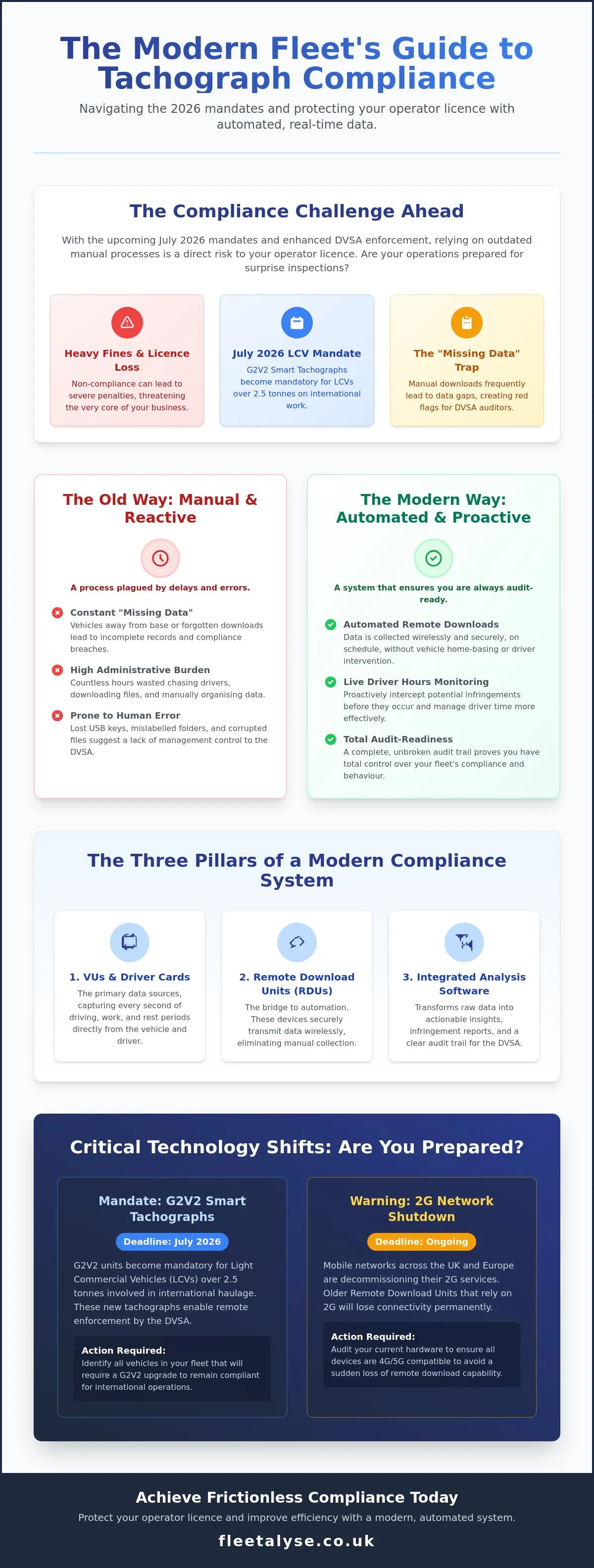
A reliable system relies on three specific pillars to function effectively:
- Vehicle Units (VU) and Driver Cards: These are your primary data sources. They capture every second of driving activity, rest periods, and speed.
- Remote Download Units (RDU): These serve as the bridge to automation. These devices transmit data wirelessly from the vehicle to the office, removing the need for manual intervention.
- Integrated Analysis Software: This transforms raw files into actionable insights. At Fleetalyse, we believe without this integration, you just have a pile of digital files. They offer no protection during a roadside check or a formal audit.
Why Manual Downloads are a Risk to Your Business
Manual downloads are a significant liability for regional operators. The "missing data" trap is the most common pitfall. Whilst the law requires driver card downloads every 28 days and vehicle units every 90 days, relying on physical collection often leads to gaps. If a vehicle is away or a driver forgets to return to the depot, your compliance record breaks. Missing even a single day of data can trigger a red flag with the authorities.
The administrative overhead is also substantial. When you calculate the time spent chasing drivers and manually filing data, the true cost of manual collection often exceeds the price of an automated fleet compliance tachograph system. Most importantly, human error in filing is a common catalyst for DVSA investigations. One lost file or a mislabelled folder can suggest a lack of management control. It puts your entire operation at risk. Don't let paperwork be the reason you lose your licence.
The Mechanics of Remote Tachograph Download and Live Monitoring
Remote technology has fundamentally changed the landscape of transport management. It removes the logistical headache of vehicle "home-basing". You no longer need to wait for a driver to return to the depot to collect data manually. Instead, a modern fleet compliance tachograph system pulls the required files wirelessly. This process adheres to the technical standards set out in Regulation (EU) No 165/2014. Data is synchronised whilst the vehicle is in transit across the UK. It ensures your records stay current without interrupting your daily operation. It's a pragmatic solution for fleets that operate over wide geographic areas.
Security is a primary concern for regional operators moving sensitive data. Wireless transmission uses encrypted channels to protect driver information and vehicle records. This ensures full GDPR compliance and maintains a secure chain of custody. The data moves directly from the vehicle unit to your analysis platform without human interference. This level of automation doesn't just save time; it eliminates the risk of file corruption or loss that often occurs with physical download keys.
Automating the 28-Day and 56-Day Deadlines
Automation is the only reliable way to guarantee compliance across a growing fleet. You can set specific, recurring schedules for driver card and vehicle unit downloads. Whilst the legal maximum for driver cards is 28 days, many operators prefer weekly downloads to catch issues early. If an asset is "out of range" or offline, the system simply queues the request. It completes the download as soon as connectivity returns. Daily data packets provide a granular view of your fleet's activity. This makes tachograph analysis integration much more accurate than monthly bulk uploads. If you're looking to simplify your daily operations, you can view our automated compliance packages to get started.
Live Driver Hours: The Transport Manager’s Dashboard
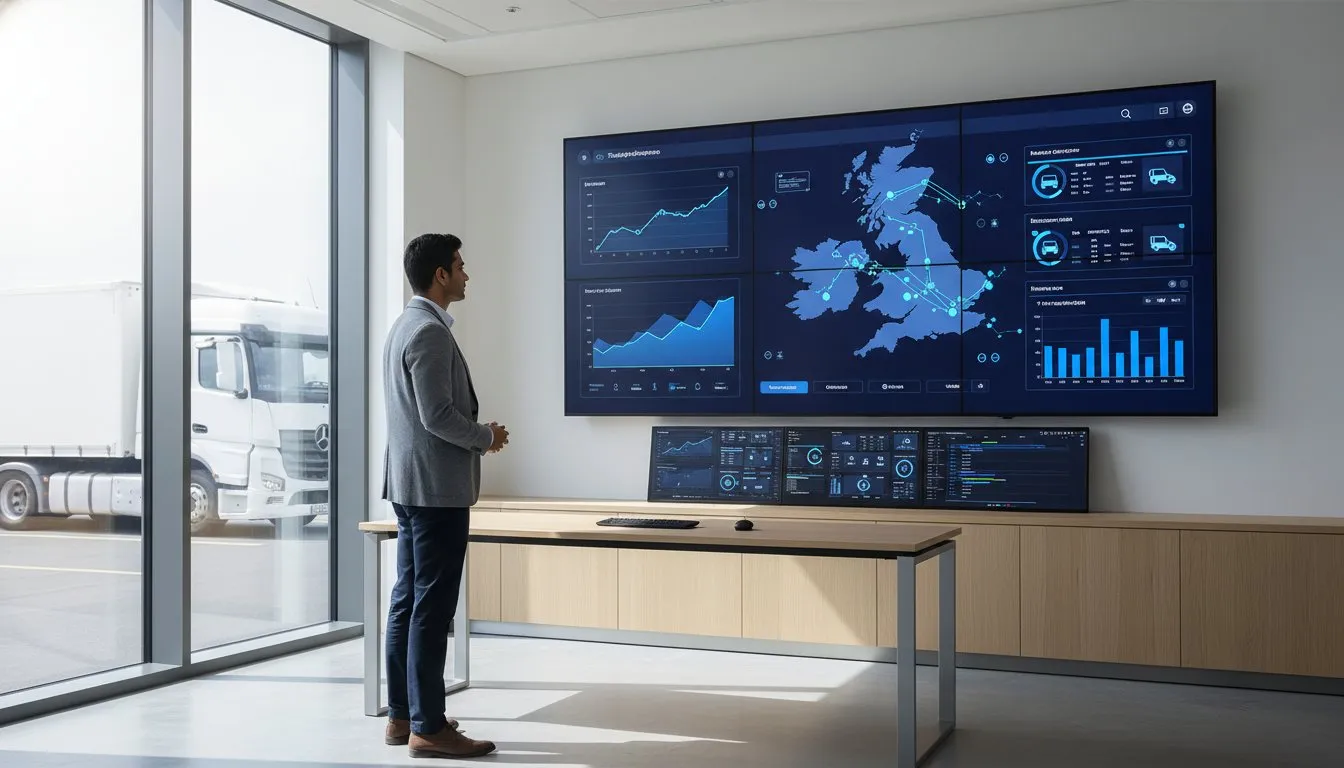
Real-time visibility is a game-changer for effective dispatching. The dashboard displays drive time, break periods, and rest requirements as they happen. This drastically reduces the risk of "accidental" infringements. You can see exactly when a driver is approaching their limit and send an alert before a violation occurs. It's about prevention rather than cure. Managers also use this live data to optimise planning. You can assign the next job based on who has the most remaining hours. It's a practical way to maximise productivity whilst staying strictly within the law. You aren't just ticking boxes; you're running a smarter, safer business.
Navigating 2026 Regulations: Smart Tacho V2 and LCV Mandates
The regulatory landscape for UK operators is undergoing its most significant shift in a decade. On 1 July 2026, new mandates come into force that extend tachograph requirements to a much wider range of vehicles. This change is a core part of the EU Mobility Package. It aims to standardise road safety and fair competition across international borders. To stay ahead, your fleet compliance tachograph system must be capable of handling these new data streams. Reviewing the official EU tachograph rules is the first step in avoiding the operational disruption this deadline could cause.
Retrofitting is another immediate priority. Existing HGVs used for international work must be upgraded to G2V2 hardware by specific deadlines throughout 2024 and 2025. If you haven't audited your heavy fleet yet, you are already behind. The convergence of these mandates and the 2G network shutdown makes proactive planning essential. You can't wait until June 2026 to act. Hardware shortages and workshop backlogs are likely as millions of vehicles across Europe require updates. At Fleetalyse, we recommend a phased approach to hardware replacement to manage costs and vehicle downtime.
The 2026 LCV Tachograph Shift
For the first time, light commercial vehicles (LCVs) with a gross vehicle weight between 2.5 and 3.5 tonnes will fall under these rules. This applies specifically to any van or light truck involved in international transport for hire or reward. It's a hardware challenge as much as an administrative one. These vehicles must be fitted with a second-generation smart tachograph (G2V2). Van drivers will now face the same strict hours-of-service rules as HGV drivers. This creates regulatory parity. It means you must organise training and data collection processes for a segment of your fleet that was previously exempt.
Smart Tacho V2: More Than Just GPS
The G2V2 unit is a sophisticated piece of technology. It automatically records border crossings using satellite positioning (GNSS). It also logs loading and unloading events. These features remove the need for manual entries, which reduces the risk of driver error. Enhanced security features are also built-in to prevent signal jamming and data manipulation. These units interact seamlessly with a modern fleet compliance tachograph system. They provide the granular reporting needed for international cabotage rules. You aren't just tracking location; you're verifying the legality of every journey.
How to Organise a Modern Compliance Strategy for Your Fleet
Organising a modern strategy requires more than just buying new hardware. It's about building a workflow that ensures your fleet compliance tachograph system actually protects your business. Start with a comprehensive audit of your current assets. You must determine which vehicles are already G2V2 compatible and which still rely on older technology that will soon be obsolete. This isn't just about meeting the 2026 deadline. It's about eliminating the operational gaps that lead to fines today. A proactive approach ensures you aren't caught out by hardware shortages or workshop backlogs when the regulations tighten.
Integrating your tachograph data with GPS fleet tracking provides a holistic view of your operation. It allows you to cross-reference location data with driver activity. This ensures your records are accurate and defensible during a DVSA investigation. For example, if a driver card is removed early, GPS data can help verify the vehicle's position and the reason for the stop. Driver training is equally vital. They must understand smart tachograph behaviour, such as how automatic border crossings and load events are logged. Clear training reduces the likelihood of manual entry mistakes that trigger unnecessary alerts.
Step-by-Step: Transitioning to Remote Downloads
Moving away from manual collection should be a structured process. Conduct a fleet-wide hardware audit first to identify legacy units that still require physical downloads. Once you've mapped your vehicles, select a remote download solution that integrates directly with your current analysis provider. Don't settle for siloed data. A phased roll-out is usually the most pragmatic approach. Start with your most active, long-distance assets that are away from the depot for extended periods. This provides the most immediate benefit by removing the highest risk of missing data and reducing administrative pressure.
Maintaining "Audit-Ready" Status
Staying audit-ready means your data must be consistent, secure, and current. Daily data packets are the gold standard for DVSA compliance. However, the raw data is only half the battle. You must document your compliance actions properly. The "debrief" is just as important as the data itself. When your fleet compliance tachograph system flags an issue, you must show you've discussed it with the driver and taken corrective action. Using remote tachograph download simplifies this audit trail by providing a clear, timestamped record of all activity. If you're ready to automate your workflow and protect your licence, order your remote download hardware today.
Achieving Frictionless Compliance with Fleetalyse Solutions
Fleetalyse doesn't operate like a distant, global software provider. We are a localized specialist built specifically for the needs of regional operators. Our approach to a fleet compliance tachograph system is rooted in operational clarity and financial transparency. You won't find hidden costs or complex contractual traps here. We provide technical and financial details upfront because we value your time and resources. Our solutions are designed for the rigours of the UK road network. We ensure your data is accurate and your business remains protected against regulatory scrutiny.
The benefit of specialized tachograph analysis integration cannot be overstated. It moves your operation beyond simple data collection. By combining live driver hours with asset tracking and GPS fleet tracking, we provide a unified view of your entire operation. You can see exactly where your trailers are whilst monitoring how many hours your drivers have left on their shift. This isn't flashy technology for the sake of it. It's a functional utility that helps you make better dispatch decisions. It prevents infringements before they happen and keeps your fleet moving efficiently.
A Pragmatic Partner for UK Hauliers
Working with us means you get direct access to industry expertise rather than a generic call centre. We understand the daily struggles of a transport manager. Our solutions are built for real-world UK transport applications, not theoretical data models. We focus on what matters most: regulatory adherence and operational utility. By choosing a partner that understands local infrastructure and DVSA expectations, you gain a reliable ally. We help you navigate the complexities of the 2026 mandates without the typical marketing hyperbole found elsewhere in the sector.
Ready to Modernise Your Compliance?
Modernising your compliance system shouldn't be a source of stress. A Fleetalyse-managed system reduces administrative friction and increases fleet security. You get a streamlined workflow that handles everything from remote tachograph download to trailer tracking in one place. This integrated approach ensures your records are always audit-ready. You can stop chasing driver cards and start focusing on your core business. Our team is ready to help you transition to a more efficient, automated future. Speak to a Fleetalyse expert about your compliance system today and secure your operator licence for the years ahead.
Secure Your Fleet’s Future for 2026 and Beyond
Compliance isn't a static box to tick; it's an ongoing commitment to your operator licence. As the 2026 mandates approach, the shift from manual data collection to automated, real-time visibility is essential. By implementing a robust fleet compliance tachograph system, you eliminate the administrative delays and risks associated with missing data. You gain the clarity needed to intercept infringements before they become costly DVSA penalties. This proactive approach protects your business from the disruptions of hardware shortages and the decommissioning of legacy mobile networks.
Fleetalyse provides the pragmatic tools required for this transition. We are specialists in remote tachograph automation with a focus on seamless analysis integration. Our UK-based technical support ensures you have direct access to industry expertise when you need it most. We prioritise functional utility and transparency over flashy, unnecessary features. It's about providing the reliability you need for real-world applications and maintaining a clean audit trail without the typical administrative friction.
See our published pricing for your fleet compliance system today. Take control of your data and ensure your operation remains fully audit-ready for the challenges ahead.
Frequently Asked Questions
What is a fleet compliance tachograph system exactly?
A fleet compliance tachograph system is an integrated solution that automates the collection, transmission, and storage of driver and vehicle data. It combines hardware fitted to the vehicle with software that ensures you meet legal download deadlines without manual intervention. This system provides the transparency needed to protect your operator licence and maintain a clean audit trail for the authorities.
Do I need a tachograph for a van under 3.5 tonnes in 2026?
Yes, if the vehicle weight is between 2.5 and 3.5 tonnes and it's used for international transport for hire and reward. This mandate takes effect on 1 July 2026. Affected vans must be fitted with a G2V2 smart tachograph to comply with the EU Mobility Package. Domestic-only operations currently remain exempt from this specific regulatory change.
How often do I need to download driver card data remotely?
Legally, you must download driver card data at least every 28 days. However, most operators using a remote fleet compliance tachograph system schedule weekly or even daily downloads. Frequent automated downloads allow you to identify and debrief infringements immediately. This proactive approach is far more effective than waiting for the end of the month to spot errors.
What happens if I fail a DVSA tachograph compliance audit?
Failing an audit can result in heavy fixed penalties, significant fines, or a summons to a Public Inquiry. The Traffic Commissioner has the authority to suspend or revoke your operator licence if they find a lack of management control. Consistent, automated record-keeping is your best defence against these severe operational risks and potential business closure.
Can remote tachograph systems integrate with my existing analysis software?
Yes, professional remote systems are built to bridge the gap between your vehicle units and your analysis provider. They transmit raw files automatically to your chosen platform for processing. This integration eliminates manual filing errors and ensures your analysis is based on the most current data available. It creates a frictionless workflow for your transport office.
Is a Smart Tachograph Version 2 mandatory for all HGVs now?
It depends on your vehicle's age and where you operate. All newly registered HGVs must have G2V2 units. Existing vehicles used for international journeys must be retrofitted by specific deadlines throughout 2024 and 2025. Domestic-only HGVs fitted with older smart tachographs don't require an immediate upgrade yet, but auditing your fleet now is a pragmatic move.
How does live driver hours tracking help my transport manager?
Live tracking provides real-time visibility of remaining drive time and required rest periods on a central dashboard. This allows managers to plan routes accurately and prevent infringements before they occur. It removes the guesswork from dispatching. You can see exactly which driver has the legal capacity to take on an additional job whilst staying compliant.
What are the costs associated with remote tachograph download systems?
Costs usually involve an initial hardware investment for the remote download unit and a monthly service fee for data transmission. We prioritise financial transparency, so you won't encounter hidden software fees or complex long-term contracts. The investment often pays for itself by reducing administrative labour and preventing expensive DVSA fines that stem from missing data.
Frequently asked questions
The Core Components of a Compliance System
A reliable system relies on three specific pillars to function effectively:
Why Manual Downloads are a Risk to Your Business
Manual downloads are a significant liability for regional operators. The "missing data" trap is the most common pitfall. Whilst the law requires driver card downloads every 28 days and vehicle units every 90 days, relying on physical collection often leads to gaps. If a vehicle is away or a driver forgets to return to the depot, your compliance record breaks. Missing even a single day of data can trigger a red flag with the authorities. The administrative overhead is also substantial. When you calculate the time spent chasing drivers and manually filing data, the true cost of manual collection often exceeds the price of an automated fleet compliance tachograph system. Most importantly, human error in filing is a common catalyst for DVSA investigations. One lost file or a mislabelled folder can suggest a lack of management control. It puts your entire operation at risk. Don't let paperwork be the reason you lose your licence. Remote technology has fundamentally changed the landscape of transport management. It removes the logistical headache of vehicle "home-basing". You no longer need to wait for a driver to return to the depot to collect data manually. Instead, a modern fleet compliance tachograph system pulls the required files wirelessly. This process adheres to the technical standards set out in Regulation (EU) No 165/2014. Data is synchronised whilst the vehicle is in transit across the UK. It ensures your records stay current without interrupting your daily operation. It's a pragmatic solution for fleets that operate over wide geographic areas. Security is a primary concern for regional operators moving sensitive data. Wireless transmission uses encrypted channels to protect driver information and vehicle records. This ensures full GDPR compliance and maintains a secure chain of custody. The data moves directly from the vehicle unit to your analysis platform without human interference. This level of automation doesn't just save time; it eliminates the risk of file corruption or loss that often occurs with physical download keys.
Automating the 28-Day and 56-Day Deadlines
Automation is the only reliable way to guarantee compliance across a growing fleet. You can set specific, recurring schedules for driver card and vehicle unit downloads. Whilst the legal maximum for driver cards is 28 days, many operators prefer weekly downloads to catch issues early. If an asset is "out of range" or offline, the system simply queues the request. It completes the download as soon as connectivity returns. Daily data packets provide a granular view of your fleet's activity. This makes tachograph analysis integration much more accurate than monthly bulk uploads. If you're looking to simplify your daily operations, you can view our automated compliance packages to get started.
Live Driver Hours: The Transport Manager’s Dashboard
Real-time visibility is a game-changer for effective dispatching. The dashboard displays drive time, break periods, and rest requirements as they happen. This drastically reduces the risk of "accidental" infringements. You can see exactly when a driver is approaching their limit and send an alert before a violation occurs. It's about prevention rather than cure. Managers also use this live data to optimise planning. You can assign the next job based on who has the most remaining hours. It's a practical way to maximise productivity whilst staying strictly within the law. You aren't just ticking boxes; you're running a smarter, safer business. The regulatory landscape for UK operators is undergoing its most significant shift in a decade. On 1 July 2026, new mandates come into force that extend tachograph requirements to a much wider range of vehicles. This change is a core part of the EU Mobility Package. It aims to standardise road safety and fair competition across international borders. To stay ahead, your fleet compliance tachograph system must be capable of handling these new data streams. Reviewing the official EU tachograph rules is the first step in avoiding the operational disruption this deadline could cause. Retrofitting is another immediate priority. Existing HGVs used for international work must be upgraded to G2V2 hardware by specific deadlines throughout 2024 and 2025. If you haven't audited your heavy fleet yet, you are already behind. The convergence of these mandates and the 2G network shutdown makes proactive planning essential. You can't wait until June 2026 to act. Hardware shortages and workshop backlogs are likely as millions of vehicles across Europe require updates. At Fleetalyse, we recommend a phased approach to hardware replacement to manage costs and vehicle downtime.
The 2026 LCV Tachograph Shift
For the first time, light commercial vehicles (LCVs) with a gross vehicle weight between 2.5 and 3.5 tonnes will fall under these rules. This applies specifically to any van or light truck involved in international transport for hire or reward. It's a hardware challenge as much as an administrative one. These vehicles must be fitted with a second-generation smart tachograph (G2V2). Van drivers will now face the same strict hours-of-service rules as HGV drivers. This creates regulatory parity. It means you must organise training and data collection processes for a segment of your fleet that was previously exempt.
Smart Tacho V2: More Than Just GPS
The G2V2 unit is a sophisticated piece of technology. It automatically records border crossings using satellite positioning (GNSS). It also logs loading and unloading events. These features remove the need for manual entries, which reduces the risk of driver error. Enhanced security features are also built-in to prevent signal jamming and data manipulation. These units interact seamlessly with a modern fleet compliance tachograph system. They provide the granular reporting needed for international cabotage rules. You aren't just tracking location; you're verifying the legality of every journey. Organising a modern strategy requires more than just buying new hardware. It's about building a workflow that ensures your fleet compliance tachograph system actually protects your business. Start with a comprehensive audit of your current assets. You must determine which vehicles are already G2V2 compatible and which still rely on older technology that will soon be obsolete. This isn't just about meeting the 2026 deadline. It's about eliminating the operational gaps that lead to fines today. A proactive approach ensures you aren't caught out by hardware shortages or workshop backlogs when the regulations tighten. Integrating your tachograph data with GPS fleet tracking provides a holistic view of your operation. It allows you to cross-reference location data with driver activity. This ensures your records are accurate and defensible during a DVSA investigation. For example, if a driver card is removed early, GPS data can help verify the vehicle's position and the reason for the stop. Driver training is equally vital. They must understand smart tachograph behaviour, such as how automatic border crossings and load events are logged. Clear training reduces the likelihood of manual entry mistakes that trigger unnecessary alerts.
Step-by-Step: Transitioning to Remote Downloads
Moving away from manual collection should be a structured process. Conduct a fleet-wide hardware audit first to identify legacy units that still require physical downloads. Once you've mapped your vehicles, select a remote download solution that integrates directly with your current analysis provider. Don't settle for siloed data. A phased roll-out is usually the most pragmatic approach. Start with your most active, long-distance assets that are away from the depot for extended periods. This provides the most immediate benefit by removing the highest risk of missing data and reducing administrative pressure.
Maintaining "Audit-Ready" Status
Staying audit-ready means your data must be consistent, secure, and current. Daily data packets are the gold standard for DVSA compliance. However, the raw data is only half the battle. You must document your compliance actions properly. The "debrief" is just as important as the data itself. When your fleet compliance tachograph system flags an issue, you must show you've discussed it with the driver and taken corrective action. Using remote tachograph download simplifies this audit trail by providing a clear, timestamped record of all activity. If you're ready to automate your workflow and protect your licence, order your remote download hardware today. Fleetalyse doesn't operate like a distant, global software provider. We are a localized specialist built specifically for the needs of regional operators. Our approach to a fleet compliance tachograph system is rooted in operational clarity and financial transparency. You won't find hidden costs or complex contractual traps here. We provide technical and financial details upfront because we value your time and resources. Our solutions are designed for the rigours of the UK road network. We ensure your data is accurate and your business remains protected against regulatory scrutiny. The benefit of specialized tachograph analysis integration cannot be overstated. It moves your operation beyond simple data collection. By combining live driver hours with asset tracking and GPS fleet tracking, we provide a unified view of your entire operation. You can see exactly where your trailers are whilst monitoring how many hours your drivers have left on their shift. This isn't flashy technology for the sake of it. It's a functional utility that helps you make better dispatch decisions. It prevents infringements before they happen and keeps your fleet moving efficiently.
A Pragmatic Partner for UK Hauliers
Working with us means you get direct access to industry expertise rather than a generic call centre. We understand the daily struggles of a transport manager. Our solutions are built for real-world UK transport applications, not theoretical data models. We focus on what matters most: regulatory adherence and operational utility. By choosing a partner that understands local infrastructure and DVSA expectations, you gain a reliable ally. We help you navigate the complexities of the 2026 mandates without the typical marketing hyperbole found elsewhere in the sector.
Ready to Modernise Your Compliance?
Modernising your compliance system shouldn't be a source of stress. A Fleetalyse-managed system reduces administrative friction and increases fleet security. You get a streamlined workflow that handles everything from remote tachograph download to trailer tracking in one place. This integrated approach ensures your records are always audit-ready. You can stop chasing driver cards and start focusing on your core business. Our team is ready to help you transition to a more efficient, automated future. Speak to a Fleetalyse expert about your compliance system today and secure your operator licence for the years ahead. Compliance isn't a static box to tick; it's an ongoing commitment to your operator licence. As the 2026 mandates approach, the shift from manual data collection to automated, real-time visibility is essential. By implementing a robust fleet compliance tachograph system, you eliminate the administrative delays and risks associated with missing data. You gain the clarity needed to intercept infringements before they become costly DVSA penalties. This proactive approach protects your business from the disruptions of hardware shortages and the decommissioning of legacy mobile networks. Fleetalyse provides the pragmatic tools required for this transition. We are specialists in remote tachograph automation with a focus on seamless analysis integration. Our UK-based technical support ensures you have direct access to industry expertise when you need it most. We prioritise functional utility and transparency over flashy, unnecessary features. It's about providing the reliability you need for real-world applications and maintaining a clean audit trail without the typical administrative friction. See our published pricing for your fleet compliance system today. Take control of your data and ensure your operation remains fully audit-ready for the challenges ahead.
What is a fleet compliance tachograph system exactly?
A fleet compliance tachograph system is an integrated solution that automates the collection, transmission, and storage of driver and vehicle data. It combines hardware fitted to the vehicle with software that ensures you meet legal download deadlines without manual intervention. This system provides the transparency needed to protect your operator licence and maintain a clean audit trail for the authorities.
Do I need a tachograph for a van under 3.5 tonnes in 2026?
Yes, if the vehicle weight is between 2.5 and 3.5 tonnes and it's used for international transport for hire and reward. This mandate takes effect on 1 July 2026. Affected vans must be fitted with a G2V2 smart tachograph to comply with the EU Mobility Package. Domestic-only operations currently remain exempt from this specific regulatory change.
How often do I need to download driver card data remotely?
Legally, you must download driver card data at least every 28 days. However, most operators using a remote fleet compliance tachograph system schedule weekly or even daily downloads. Frequent automated downloads allow you to identify and debrief infringements immediately. This proactive approach is far more effective than waiting for the end of the month to spot errors.
What happens if I fail a DVSA tachograph compliance audit?
Failing an audit can result in heavy fixed penalties, significant fines, or a summons to a Public Inquiry. The Traffic Commissioner has the authority to suspend or revoke your operator licence if they find a lack of management control. Consistent, automated record-keeping is your best defence against these severe operational risks and potential business closure.
Can remote tachograph systems integrate with my existing analysis software?
Yes, professional remote systems are built to bridge the gap between your vehicle units and your analysis provider. They transmit raw files automatically to your chosen platform for processing. This integration eliminates manual filing errors and ensures your analysis is based on the most current data available. It creates a frictionless workflow for your transport office.
Is a Smart Tachograph Version 2 mandatory for all HGVs now?
It depends on your vehicle's age and where you operate. All newly registered HGVs must have G2V2 units. Existing vehicles used for international journeys must be retrofitted by specific deadlines throughout 2024 and 2025. Domestic-only HGVs fitted with older smart tachographs don't require an immediate upgrade yet, but auditing your fleet now is a pragmatic move.
How does live driver hours tracking help my transport manager?
Live tracking provides real-time visibility of remaining drive time and required rest periods on a central dashboard. This allows managers to plan routes accurately and prevent infringements before they occur. It removes the guesswork from dispatching. You can see exactly which driver has the legal capacity to take on an additional job whilst staying compliant.
What are the costs associated with remote tachograph download systems?
Costs usually involve an initial hardware investment for the remote download unit and a monthly service fee for data transmission. We prioritise financial transparency, so you won't encounter hidden software fees or complex long-term contracts. The investment often pays for itself by reducing administrative labour and preventing expensive DVSA fines that stem from missing data.