

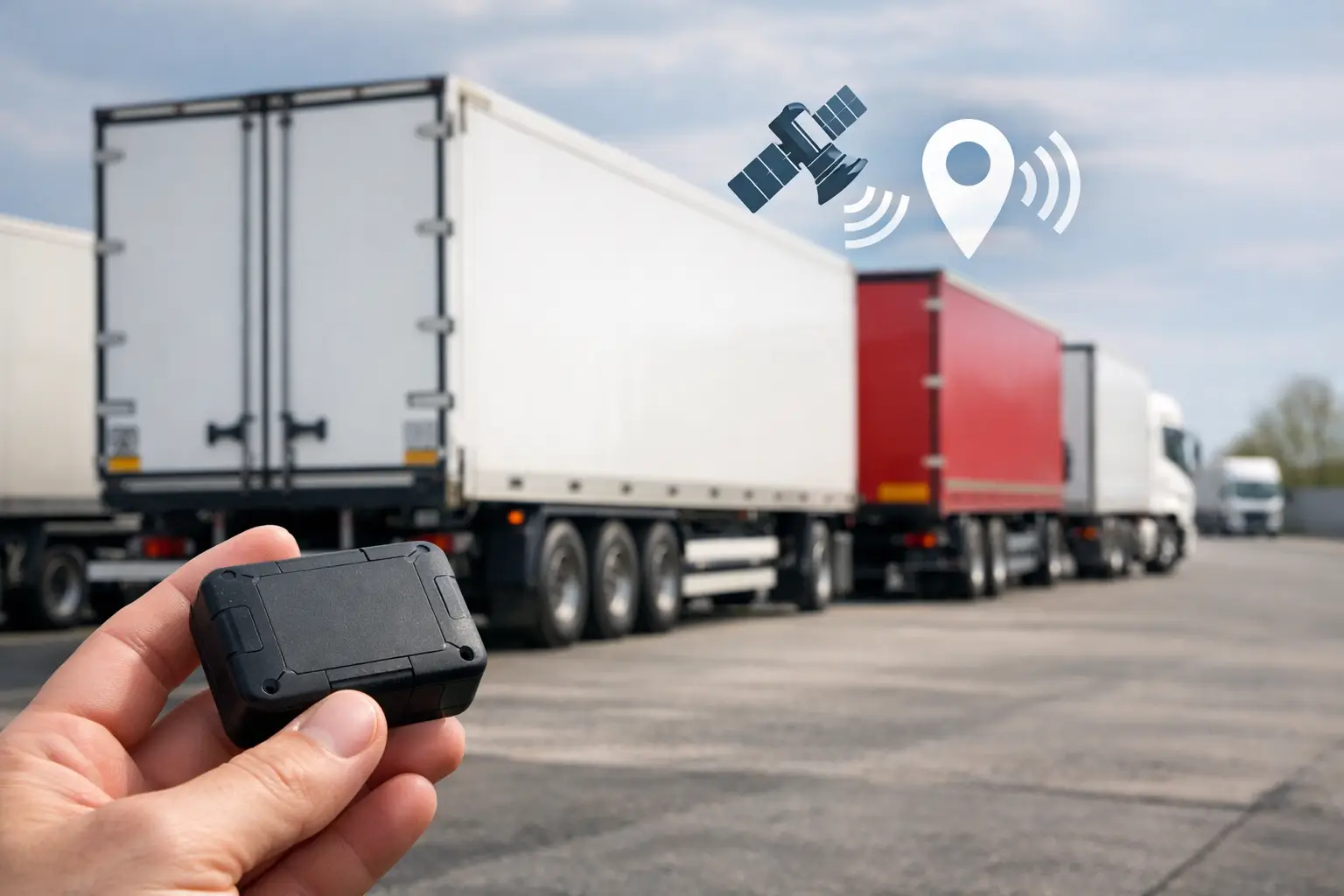
A trailer goes missing, and the first question is rarely whether it was stolen. More often, it is whether anyone knows where it was last dropped, who moved it, and whether it should have been idle for three days in the first place. That is why the best trailer tracking devices matter to transport operators - not just for security, but for day-to-day control.
For UK fleets running HGVs, vans and mixed assets, trailer tracking is no longer a nice extra. It helps planners find available equipment faster, gives depot teams a clearer view of utilisation, and reduces the time spent chasing drivers or checking yards manually. The right device can also support maintenance planning, asset recovery and cleaner handovers between sites.
What makes the best trailer tracking devices?
Not every trailer tracker solves the same problem. Some are built mainly for theft recovery. Others are designed for ongoing fleet visibility, with regular location updates, geofencing and movement alerts. For a commercial operator, the best choice usually comes down to how the trailer is used, how often it moves and how much operational detail the office needs.
Battery life is one of the first trade-offs. A long-life battery tracker can be ideal for trailers that sit idle for periods or move between subcontractors and customer sites. It avoids wiring and can be quicker to deploy across a large estate. The compromise is that update frequency is often lower, especially if you want the battery to last years rather than months.
A wired unit gives more regular reporting and can support richer data, but it depends on the trailer’s power setup and may require a more fixed installation approach. That works well for high-utilisation assets where live visibility matters every day. It is less attractive if you need something simple to fit and scale quickly.
Build quality matters too. Trailer trackers live in a harsher environment than many vehicle devices. Water ingress, vibration, impact and temperature swings are part of normal use. If the hardware is not designed for that, reliability starts to drop exactly when you need it most.
The 7 best trailer tracking devices for different fleet needs
1. Long-life battery GPS trackers
For many operators, this is the most practical starting point. A long-life battery tracker suits curtainsiders, box trailers, plant trailers and other non-powered assets that need visibility without wiring work. These devices usually send location updates based on movement, time intervals or exceptions such as unauthorised towing.
They are a strong fit if your main issue is poor asset visibility across yards, customer sites and drop locations. They also work well for fleets that want fast rollout with minimal disruption. The limitation is refresh rate. If you need second-by-second tracking, this type is rarely the answer.
2. Wired trailer tracking units
A wired trailer tracking unit is better suited to operators that want frequent location updates and more consistent data flow. This can be useful for high-value trailers, intensive trunking work or operations where dispatch teams need near-live visibility throughout the day.
The benefit is control. The trade-off is installation complexity and dependency on power. In some fleets that is perfectly acceptable. In others, especially where trailers are diverse or older, battery-powered devices are easier to standardise.
3. Solar-assisted trailer trackers
Solar-assisted trackers sit somewhere between battery simplicity and higher reporting frequency. They are useful where trailers spend enough time outdoors to maintain charge and where operators want better update performance without regular battery replacement.
This option can be attractive for regional haulage and yard-based fleets, but it depends on real operating conditions. If trailers spend long periods in covered depots, under loading bays or in poor light, the benefit can be reduced. It is a sensible choice only when the duty cycle supports it.
4. Covert theft-recovery trackers
Some fleets prioritise recovery over operational tracking. A covert device, hidden well on the trailer, is intended to stay undetected if the asset is stolen. These trackers often wake under movement or tamper conditions and may be paired with dedicated recovery processes.
That makes sense for theft-prone cargo types or for operators with trailers left in unsecured locations. The downside is that covert trackers are not always the best tool for routine planning. If the office wants regular utilisation data and location history for day-to-day decisions, a covert-only setup may leave gaps.
5. Multi-sensor trailer trackers
A more advanced option combines GPS tracking with sensors for door status, coupling events, load movement or temperature, depending on trailer type. For refrigerated fleets or security-sensitive operations, that extra layer can be valuable.
These devices earn their place when the trailer itself is part of the service promise. If you are moving temperature-controlled goods or high-risk freight, knowing where the trailer is may not be enough. You may also need alerts when doors open out of sequence or when movement happens outside approved times.
6. Bluetooth-enabled yard visibility devices
Some trailer tracking setups use Bluetooth or nearby gateway technology to improve yard visibility and check-in accuracy. This is especially useful at busy depots where trailers are shuffled frequently over short distances and satellite-only updates can feel too slow or too broad.
For depot teams, that can cut time spent searching for equipment. It is less useful as a standalone answer for long-distance tracking, but it can add value inside a broader telematics setup.
7. Integrated trailer tracking platforms
The best trailer tracking devices often perform best when they sit inside a wider platform rather than as a standalone map. For commercial fleets, location data is more useful when it connects with vehicle tracking, driver activity, maintenance planning and compliance reporting.
That is where integrated systems stand out. If a transport office can see trailers alongside lorries, usage patterns, maintenance reminders and live fleet activity in one place, the operational value is much higher. Fleetalyse takes this approach by combining trailer visibility with the wider controls transport teams already need, rather than asking them to manage another isolated system.
How to choose the right device for your operation
The right choice depends less on brand names and more on operating model. A general haulage fleet with mixed trailer usage usually needs dependable location data, geofencing and low admin overhead. In that case, battery-powered or solar-assisted units often make the most sense.
If your trailers are moving constantly and planners need frequent updates, wired units may justify the extra installation effort. If theft is the main issue, covert recovery devices deserve a place. If service delivery depends on trailer conditions or door events, sensor-led devices will be worth considering.
It is also worth looking beyond the hardware. Ask how alerts are handled, how often positions update, how easy battery maintenance is, and whether the reporting is useful to a transport office rather than just technically impressive. A tracker that generates data without helping dispatch, compliance or utilisation is only doing half the job.
Features that matter in practice
Geofencing is one of the most useful features because it turns tracking into action. Instead of just seeing a trailer on a map, the office gets an alert when it leaves a customer site, enters a depot or moves outside approved hours. That helps with both security and planning.
Movement alerts are equally valuable for idle assets. If a trailer should be parked and suddenly starts moving at 02:00, the team can act quickly. Position history also matters. When disputes arise over drop times, trailer dwell or handover delays, historical tracking data gives a clearer record than phone calls and guesswork.
Battery status should not be overlooked. A dead tracker creates false confidence, which is often worse than having no tracker at all. Good systems make battery health easy to monitor and schedule.
Finally, reporting matters more than many buyers expect. If you cannot quickly see which trailers are underused, where idle time is building up, or which assets spend too long off-network, the value of tracking stays limited.
Common buying mistakes
One common mistake is buying purely for theft recovery when the wider problem is poor asset control. Recovery matters, but many fleets lose more time through misplaced trailers, uncertain availability and unnecessary shunting than through outright theft.
Another is choosing the cheapest hardware without checking the platform behind it. Hidden costs, awkward installation and weak support quickly wipe out any saving. The same applies to systems that look good in a demo but do not fit how transport teams actually work.
A final mistake is treating trailer tracking as separate from the rest of fleet operations. In practice, dispatch, maintenance, compliance and asset visibility overlap every day. The less your team has to jump between systems and spreadsheets, the more value you will get from the data.
The best trailer tracker is not necessarily the one with the longest specification sheet. It is the one that gives your team clearer control of where assets are, how they are being used and what needs attention next. If it reduces chasing, guesswork and avoidable downtime, it is doing its job properly.