
Holding a plastic smart card won't protect your operator licence on its own. If you are searching for how to apply for a UK company tacho card, you likely want to get the administrative process sorted swiftly without facing frustrating DVLA rejections. Commercial transport regulations leave no room for guesswork, and worrying about conflicting application guidance or missing strict 56-day vehicle download deadlines is an administrative headache no transport manager needs.
You already know that keeping your vehicles road-legal requires precision, but the paperwork shouldn't slow your business down. In this guide, you'll learn exactly how to apply for, renew, and utilise a UK company tachograph card to keep your fleet fully compliant. We'll walk you through the first-time online submission process, explain how to lock company data to your vehicle units properly, and examine how automated remote downloads can eliminate the hassle of manual card readers across your fleet.
Key Takeaways
- Understand the essential role of the company card in locking commercial vehicle unit data and preventing unauthorised third-party extraction.
- Follow clear steps on how to apply for a UK company tacho card online to avoid standard DVLA processing delays and rejection errors.
- Track statutory application fees, card lifespans, and renewal windows to ensure your fleet never breaches transport operating standards.
- Discover how remote tachograph download hardware uses your company card to automate statutory vehicle and driver file transfers effortlessly.
- Eliminate depot card swaps and manual downloads by connecting your card directly to live compliance analysis systems.
What Is a UK Company Tachograph Card and Who Needs One?
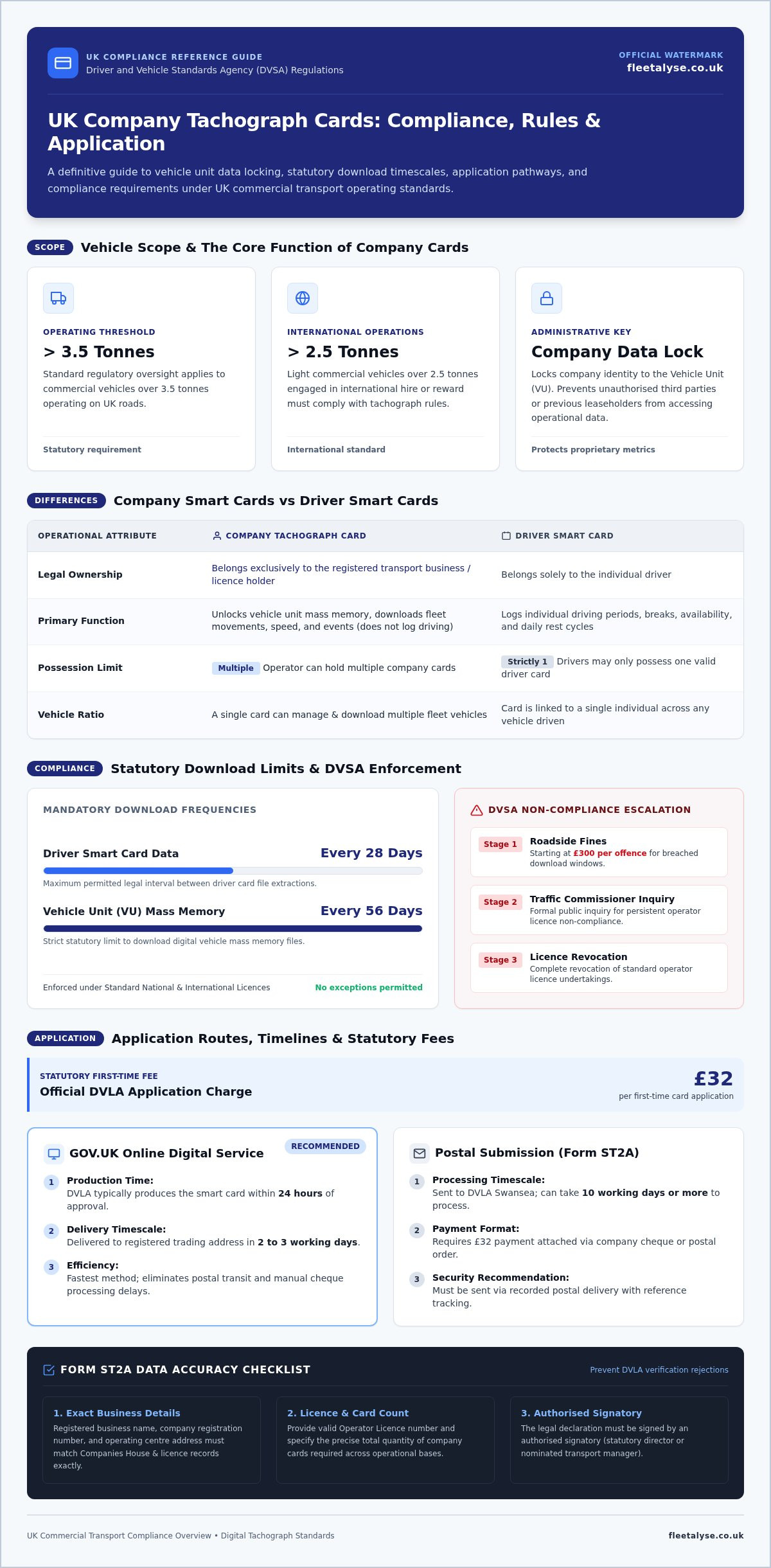
Operating commercial vehicles over 3.5 tonnes, or lighter commercial vehicles over 2.5 tonnes engaged in international hire or reward, requires strict regulatory oversight. Central to this system is the digital tachograph, an electronic recording device fitted to your commercial fleet. While individual drivers carry personal smart cards to capture their daily work, transport operators require a dedicated company tachograph card to oversee their statutory obligations.
A company card acts as an administrative key. It unlocks the digital tachograph vehicle unit (VU), allowing you to extract mass memory files and perform vital data locks. Inserting the card locks your company's identity to the VU. This step ensures commercial operational records remain private, preventing unauthorised third-party businesses or previous vehicle leaseholders from accessing proprietary journey metrics. Understanding how to apply for a UK company tacho card ensures your business establishes this critical data boundary before a new commercial vehicle turns a wheel.
Company Cards vs Driver Cards: Understanding the Critical Differences
Confusing company smart cards with driver cards creates serious operational missteps. These two digital cards serve entirely different functions under domestic road transport laws:
- Ownership: A driver card belongs solely to the individual driver. A company card belongs exclusively to the registered transport business or operator licence holder.
- Function: Driver cards log specific driving periods, breaks, and rest cycles. Company cards do not record driving activity; they download aggregated fleet movements, speed data, and system events.
- Fleet ratio: Drivers may only possess one valid driver card. Conversely, an operator can hold multiple company cards, and a single company card can manage and download multiple vehicles across your entire commercial fleet.
Legal Obligations Under DVSA Operator Licensing
Holding a standard national or international operator's licence carries rigid enforcement standards from the Driver and Vehicle Standards Agency (DVSA). Fleet operators must download digital vehicle unit data at least once every 56 days without exception. Additionally, driver card data must be collected every 28 days.
Missing these statutory windows breaches your licence undertakings. Persistent non-compliance attracts roadside fines starting at £300 per offence, escalating rapidly to formal Traffic Commissioner public inquiries or complete licence revocation. Mastering how to apply for a UK company tacho card before acquiring new transport assets safeguards your operational continuity, proving to DVSA enforcement officers that your compliance architecture remains active, robust, and audit-ready from day one.
Step-by-Step: How to Apply for a UK Company Tacho Card
Securing your fleet's digital credentials is straightforward once you know the required documentation. When working out how to apply for a UK company tacho card, preparation prevents unnecessary DVLA rejections. Government portals now handle first-time corporate applications primarily through the GOV.UK digital service, though paper submissions using Form ST2A are still maintained for specific fleet updates. Before you begin, reviewing official guidance on what is a UK company tachograph card will help you determine the exact quantity of cards your business needs across its operational bases.
Completing Form ST2A Accurately
Accuracy is critical when inputting corporate data. Match your registered business name, company registration number, and operating centre address exactly to your Companies House and operator licence records. Even minor spelling variations between databases can trigger manual verification flags. You must supply your operator licence number, specify the total cards required, and ensure an authorised signatory, such as a statutory director or nominated transport manager, signs the declaration.
Submission Routes: Online Services vs Postal Applications
Choosing the digital route saves substantial administration time. Applying online via GOV.UK is the fastest method; the DVLA typically produces the card within 24 hours, delivering it to your registered trading address in two to three working days. In contrast, paper applications sent by post to DVLA Swansea can take ten working days or more to process.
If you submit by post, send Form ST2A using recorded postal delivery, track the reference number, and include payment for the £32 statutory first-time application fee via company cheque or postal order. Once your smart card arrives, pairing it immediately with remote tachograph download technology ensures your business can automate scheduled vehicle data collection without assigning staff to physical cab visits.
Company Card Costs, Delivery Timescales, and Eligibility Rules
Budgeting for commercial compliance means accounting for statutory DVLA licensing charges alongside operational hardware. Any commercial entity operating relevant goods vehicles can apply, including sole traders, partnerships, and limited companies. Following the rollout of Smart Tachograph 2 rules requiring vehicles over 2.5 tonnes used for international haulage or cabotage to be equipped with digital recording devices, the pool of eligible transport operators now covers many regional van couriers alongside traditional heavy haulage fleets. Knowing the precise costs and scheduling windows ensures your fleet avoids legal operational blackouts.
Application Fees and Replacement Charges
Every first-time commercial card costs £32 paid directly to the licensing authority. Unlike certain driver medical renewals, commercial fleet cards do not qualify for statutory fee concessions. If a card is lost, stolen, or damaged through depot wear and tear, the replacement fee is £19. Should a smart card malfunction mechanically through an internal chip defect, the DVLA waives the replacement fee, provided you return the faulty card within the required administrative period; otherwise, the standard £19 replacement charge applies.
Fleet operators managing distributed depots frequently purchase additional backup cards. Having redundant cards on hand prevents operational paralysis if an active card fails during mandatory download cycles.
Anticipated Delivery Timelines and Delays
Delivery timeframes depend heavily on the submission channel you select when planning how to apply for a UK company tacho card:
- Online applications: Digital approvals via GOV.UK are typically issued within 24 hours, arriving at your registered trading address in two to three working days.
- Replacement requests: Cards ordered to replace lost or damaged units are generally processed and dispatched within five working days.
- Postal submissions: Hardcopy forms sent to Swansea take between ten and fifteen working days, particularly during peak freight seasons.
Administrative discrepancies cause the vast majority of application delays. Submitting an unsigned mandate, entering an unregistered operating centre address, or failing to match corporate details with Companies House records will prompt the DVLA to reject the filing. Reviewing every data field before submission ensures your cards arrive well before your new commercial vehicles enter front-line service.
Managing, Renewing, and Replacing Your Fleet Tachograph Cards
Every commercial card remains valid for exactly five years from the date of issue. Once that validity window lapses, the card cannot unlock vehicle units or authorise data extractions. Transport managers must treat renewal dates with the same rigour as vehicle MOTs or operator licence reviews. While understanding how to apply for a UK company tacho card gets your fleet running initially, long-term operational continuity relies on structured lifecycle management across every depot you operate.
Handling Lost, Damaged, or Expired Cards
A damaged chip or lost card stops manual download schedules instantly. If a card is misplaced or corrupted, notify the DVLA immediately online to request a replacement. The turnaround for replacements sits at roughly five working days, leaving a potential blind spot if your statutory vehicle download deadlines fall within that window.
Keep a physical paper trail during this gap. Document the date of loss, retain your online DVLA confirmation reference, and record all vehicle movements manually if a download window approaches. If your transport operations rely on manual card insertion at the cab, holding a secondary backup card prevents costly download defaults while your replacement processes.
Maintaining a Comprehensive Fleet Card Register
Physical cards circulating across busy transport offices inevitably vanish without strict administrative oversight. Operating multiple operating centres increases this risk substantially. Protect your compliance by maintaining a central digital card register that logs:
- Card identity: The unique 16-digit card number and its formal expiry date.
- Current custody: The specific depot, reader rack, or nominated transport manager holding the physical asset.
- Renewal triggers: Automated calendar reminders set at 90 days and 15 working days before statutory expiration.
- Operational status: Active, pending renewal, or returned to Swansea due to chip faults.
The DVLA issues renewal notifications up to 90 days before your card expires, but you must submit your online renewal at least 15 working days before the deadline. Waiting until the final fortnight risks severe compliance interruptions. If you prefer to eliminate the risk of lost cards and depot swaps entirely, you can host your company card centrally and order remote tachograph download hardware to automate every scheduled vehicle download across your entire UK fleet.
Putting Your Card to Work: Streamlining Tachograph Compliance with Fleetalyse
Securing the physical smart card is merely the starting point. Learning how to apply for a UK company tacho card guarantees your business satisfies mandatory DVLA licensing prerequisites, but how you put that card to work dictates your daily compliance workload. Traditional fleet operations require transport staff to visit each vehicle physically, inserting download keys into cab units across wet depot yards. This manual approach wastes driver hours, introduces human error, and disrupts delivery schedules.
Moving Beyond Inefficient Manual Downloads
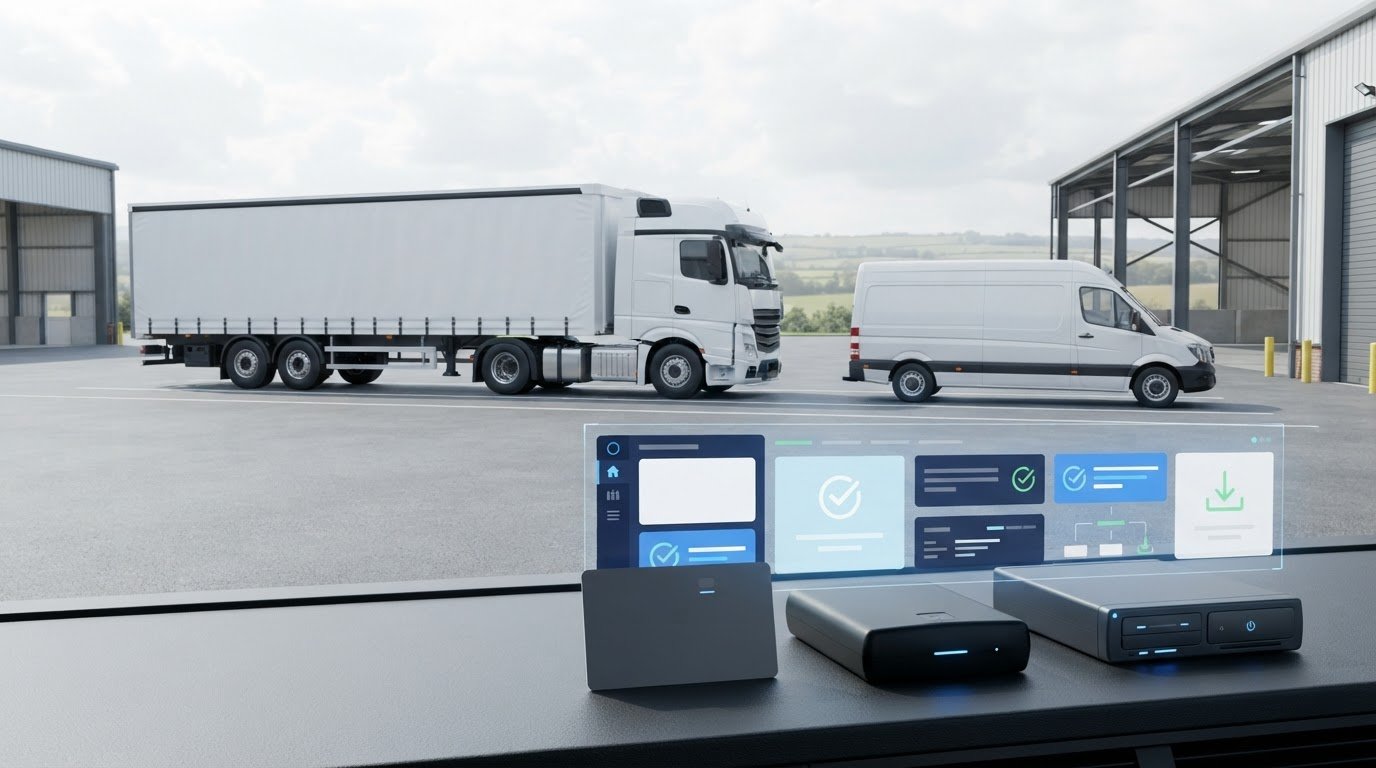
Manual data collection forces vehicles back to base purely to extract files before the strict 56-day deadline strikes. Remote tachograph download hardware completely eliminates this operational friction. Your company card sits permanently inside a networked card reader connected to your server infrastructure. When a scheduled download window arrives, the system authenticates the connection remotely over the air, extracting encrypted mass memory and driver card files automatically while the vehicle remains out on the road.
Integrating Live Driver Hours and Analysis Software
Pairing automated remote downloading with dedicated tachograph analysis integration converts raw cryptographic data into actionable fleet intelligence. Transport managers gain immediate visibility through live driver hours tracking, monitoring accumulated driving periods, required rest breaks, and available shift availability in real time. This proactive oversight stops accidental infringements before drivers commit them, shielding your business from severe roadside enforcement fines.
Automating this cycle ensures you never miss a mandatory 28-day driver card or 56-day vehicle download target. Now that you understand how to apply for a UK company tacho card and establish your legal credentials, simplify your daily fleet administration using Fleetalyse automated compliance solutions. Order your connected hardware directly through the Fleetalyse checkout portal to protect your operator licence with continuous, hands-off compliance.
Take Control of Your Fleet Compliance from Day One
Knowing how to apply for a UK company tacho card provides your business with the legal key needed to operate commercial transport assets legally. Accurately submitting your details through the GOV.UK portal, securing your initial card, and monitoring its five-year lifecycle prevents costly enforcement penalties. Holding the physical card is vital, but managing your daily statutory data shouldn't drain depot resources.
Manual cab downloads and depot card swaps create unnecessary operational drag. By pairing your credentials with specialist UK remote tachograph download and driver tracking technology, you eliminate yard routines and manual intervention entirely. Automated compliance monitoring ensures both 28-day driver and 56-day vehicle records flow seamlessly into your analysis platform, no matter where your vehicles travel nationwide.
Take advantage of direct online ordering and setup to modernise your transport office today. Simply upgrade to automated remote downloads and protect your fleet with Fleetalyse to secure continuous, effortless compliance across your entire fleet.
Frequently Asked Questions
Can a transport business operate commercial vehicles without a company tacho card?
No, you cannot operate legally over time without one. While a driver can drive using their driver card, the business cannot lock company data or perform mandatory 56-day vehicle unit downloads. Operating without a company card leaves your fleet exposed to data locking failures and severe DVSA enforcement action, including fines starting at £300 per offence. You must obtain a card before deploying in-scope vehicles.
How much does a UK company tachograph card cost from the DVLA?
A first-time company tachograph card costs £32 when ordered through the DVLA. If your card is lost, damaged, or stolen, a replacement costs £19. Renewing an expired card also costs £19. If an internal chip malfunctions through no operational fault and you return the defective card within the required administrative period, the DVLA issues a replacement without charging a fee.
What happens if our company tacho card expires before we renew it?
An expired card stops working immediately. You cannot unlock vehicle units, carry out manual downloads, or authenticate remote transfers. If your 56-day vehicle download deadline lapses while waiting for a renewal, you will breach your operator licence undertakings. That's why understanding how to apply for a UK company tacho card renewal at least 15 working days before expiration is essential for avoiding DVSA penalties and audit failures.
Can one company tachograph card be used across multiple commercial vehicles?
Yes, a single company card can manage an unlimited number of commercial vehicles across your entire fleet. You can use one card to lock company data across multiple vehicle units and authorise manual or automated downloads. However, larger transport operations with separate operating centres often purchase additional cards so depot managers don't have to courier physical cards between different operating sites.
How does remote tachograph downloading work with a company card?
Remote tachograph downloading removes the need to touch vehicles physically. Your company card sits permanently inside an office card reader connected to a local server. When scheduled vehicle or driver downloads occur, the telematics hardware installed in your vehicle connects remotely over the mobile network. The system verifies company credentials through your card reader, extracts encrypted data over the air, and forwards files directly to your analysis software.
Is a company tachograph card the same as an operator licence card?
No, they are distinct regulatory assets. An operator licence grant proves your legal authority to operate commercial goods vehicles, whereas a company tachograph card is an electronic authentication device issued by the DVLA. The physical card contains a microchip specifically designed to communicate with digital tachograph vehicle heads, locking corporate data and enabling mandatory downloads under road safety regulations.
Can an external transport consultant use their own company card for our fleet?
No, external consultants cannot substitute their company cards for yours. Digital tachograph units lock proprietary transport data to the specific business holding the operator licence. If a third-party consultant locks their card to your vehicle, your business cannot legally access its own operational data. Learning how to apply for a UK company tacho card in your company's legal name ensures your business retains absolute ownership of its compliance records.
Frequently asked questions
Can a transport business operate commercial vehicles without a company tacho card?
No, you cannot operate legally over time without one. While a driver can drive using their driver card, the business cannot lock company data or perform mandatory 56-day vehicle unit downloads. Operating without a company card leaves your fleet exposed to data locking failures and severe DVSA enforcement action, including fines starting at £300 per offence. You must obtain a card before deploying in-scope vehicles.
How much does a UK company tachograph card cost from the DVLA?
A first-time company tachograph card costs £32 when ordered through the DVLA. If your card is lost, damaged, or stolen, a replacement costs £19. Renewing an expired card also costs £19. If an internal chip malfunctions through no operational fault and you return the defective card within the required administrative period, the DVLA issues a replacement without charging a fee.
What happens if our company tacho card expires before we renew it?
An expired card stops working immediately. You cannot unlock vehicle units, carry out manual downloads, or authenticate remote transfers. If your 56-day vehicle download deadline lapses while waiting for a renewal, you will breach your operator licence undertakings. That's why understanding how to apply for a UK company tacho card renewal at least 15 working days before expiration is essential for avoiding DVSA penalties and audit failures.
Can one company tachograph card be used across multiple commercial vehicles?
Yes, a single company card can manage an unlimited number of commercial vehicles across your entire fleet. You can use one card to lock company data across multiple vehicle units and authorise manual or automated downloads. However, larger transport operations with separate operating centres often purchase additional cards so depot managers don't have to courier physical cards between different operating sites.
How does remote tachograph downloading work with a company card?
Remote tachograph downloading removes the need to touch vehicles physically. Your company card sits permanently inside an office card reader connected to a local server. When scheduled vehicle or driver downloads occur, the telematics hardware installed in your vehicle connects remotely over the mobile network. The system verifies company credentials through your card reader, extracts encrypted data over the air, and forwards files directly to your analysis software.
Is a company tachograph card the same as an operator licence card?
No, they are distinct regulatory assets. An operator licence grant proves your legal authority to operate commercial goods vehicles, whereas a company tachograph card is an electronic authentication device issued by the DVLA. The physical card contains a microchip specifically designed to communicate with digital tachograph vehicle heads, locking corporate data and enabling mandatory downloads under road safety regulations.
Can an external transport consultant use their own company card for our fleet?
No, external consultants cannot substitute their company cards for yours. Digital tachograph units lock proprietary transport data to the specific business holding the operator licence. If a third-party consultant locks their card to your vehicle, your business cannot legally access its own operational data. Learning how to apply for a UK company tacho card in your company's legal name ensures your business retains absolute ownership of its compliance records.