
An unmonitored trailer is more than a security risk; it's a direct threat to your Operator Licence. You know the frustration of losing visibility over non-powered assets and the heavy administrative burden that manual logging creates. The constant anxiety of a DVSA audit is a reality for every UK transport manager. Implementing robust asset tracking isn't just about theft prevention. It's a strategic move to ensure your operations remain efficient, transparent, and fully compliant.
We understand that your time is best spent on the road, not buried in spreadsheets. This guide explores how advanced tracking technology secures your fleet and streamlines daily tasks. You'll discover how to achieve real-time visibility across all mobile assets whilst reducing insurance premiums through enhanced security. We'll show you how to automate your data collection to maintain rigorous compliance standards without the manual paperwork headache. From protecting your licence to boosting your bottom line, we'll examine the practical steps to modernise your asset management.
Key Takeaways
- Understand why asset tracking is vital for protecting your Operator Licence and creating a digital audit trail for vehicle movements.
- Learn to differentiate between tracking hardware for HGVs and non-powered trailers to optimise your equipment investment.
- Evaluate the trade-off between battery life and update frequency to maintain visibility without causing operational downtime.
- See how integrating GPS data with tachograph analysis simplifies compliance reporting and reduces your administrative burden.
- Discover the efficiency gains of managing all mobile assets, driver hours, and tacho downloads through a single, integrated platform.
What is Asset Tracking in the UK Transport Industry?
In the context of UK logistics, what is asset tracking? At its core, it's the real-time monitoring of mobile equipment and vehicles using digital sensors. Whilst vehicle tracking often focuses solely on the HGV or van, asset tracking covers everything from trailers and plant machinery to shipping containers. We've moved beyond the era of magnetic whiteboards and manual logbooks. Today, regional operators use platforms like Fleetalyse to maintain operational clarity. In 2026, this technology is no longer a luxury. It's a standard requirement for anyone serious about DVSA compliance and fleet efficiency.
The difference between simple vehicle tracking and broader asset management is significant. Vehicle tracking tells you where the driver is. Asset management tells you where your entire inventory is located, regardless of whether it's attached to a tractor unit. This level of visibility is essential for resource planning. If you don't know exactly which yard a specific trailer is sitting in, you're losing money through wasted fuel and driver hours. Digital systems eliminate the administrative burden of chasing drivers for location updates or physically checking depots. This shift to automation allows managers to focus on high-level decision-making rather than basic data collection.
Powered vs. Non-Powered Asset Tracking
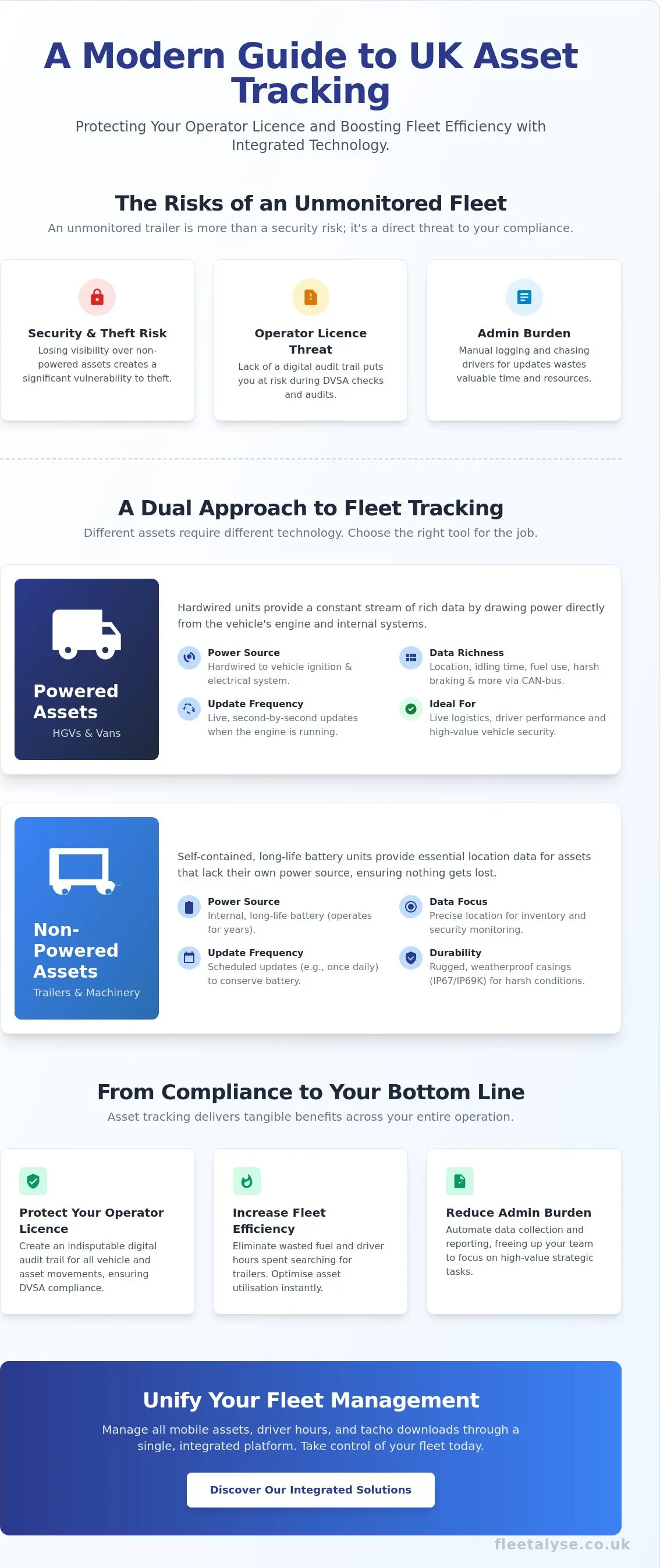
Tracking an HGV or van is relatively straightforward because the vehicle provides a permanent power source. The hardware draws from the engine to provide constant, live updates. Non-powered assets, such as standalone trailers or plant machinery, present a different challenge. Historically, these were "black holes" in a fleet manager's visibility. Long-life battery technology has changed this. Modern trailer tracking units can now operate for years without a recharge, providing hauliers with precise location data even when the trailer is uncoupled in a remote yard. These devices are built for the rigours of the road, featuring rugged, weatherproof casings that withstand the harsh British weather.
The Role of GPS and Telematics in Modern Logistics
Understanding your fleet requires two distinct data points: location and behaviour. GPS provides the "where" by pinpointing the asset's coordinates on a map. Telematics provides the "how", offering insights into how the asset is being utilised. A critical factor here is the "ping rate". For high-value HGVs, you might require live, second-by-second updates. For a trailer sitting in storage, a scheduled daily update might suffice. This data is transmitted via cellular networks directly to your desktop or mobile app. It creates a seamless flow of information from the road to the office, allowing for faster response times and improved security amongst your mobile fleet.
GPS Technology for Powered and Non-Powered Assets
Managing a mixed fleet requires a dual approach to hardware. You can't treat a curtain-sider the same as a Scania tractor unit. Whilst both require reliable GPS data, the power availability and data requirements differ vastly. High-quality asset tracking relies on choosing the right tool for the specific job. For HGVs, this means hardwired units that pull data directly from the vehicle. For trailers, it means independent, long-life power sources that can survive months without being coupled to a tractor.
British weather and road conditions are notoriously harsh on external hardware. Road salt, heavy rain, and constant vibrations will quickly destroy consumer-grade electronics. Professional-grade trackers must be ruggedised and rated to IP67 or IP69K standards. This ensures they remain operational through every jet wash and winter grit run. Effective monitoring helps you adhere to the standards set out in the Goods vehicle operator licensing guide, ensuring your fleet stays on the right side of the Traffic Commissioner. You can view our range of tracking hardware to find the best fit for your specific vehicle types.
Hardwired Trackers for HGVs and Vans
Hardwired units connect directly to the vehicle's electrical system and ignition. This allows for live, second-by-second updates whilst the engine is running. These devices do more than just report location; they monitor idling time and aggressive driver behaviour like harsh braking. CAN-bus integration is the gold standard for vehicle tracking. By tapping into the vehicle's internal data network, managers gain a transparent view of fuel consumption and engine health alongside GPS coordinates. This level of detail is crucial for reducing operational costs across your van and truck fleet.
Battery-Powered and Solar Solutions for Trailers
Trailer tracking requires a "fit and forget" philosophy. Modern units use high-capacity internal batteries that only wake up to transmit data at set intervals, such as once or twice a day. Solar-assisted units take this further by using small, reinforced panels to trickle-charge the battery, potentially extending the device's lifespan for several years. Security is a primary concern here. Most trailer trackers are designed for stealth installation, hidden within the chassis or behind light clusters. This prevents unit tampering and ensures that if a trailer is stolen, the asset tracking hardware remains active and undetected by thieves.
Geofencing provides the final layer of operational control. By drawing digital boundaries around your distribution centres or customer sites, the system sends an instant alert if an asset moves without authorisation. This is particularly useful for managing "dead time" in busy yards. You'll know exactly when a trailer arrives, how long it has been parked, and the moment it departs. This automated data replaces the need for manual gate logs and provides an indisputable record of vehicle movements for your compliance files.
The Link Between Asset Management and Operator Licence Compliance
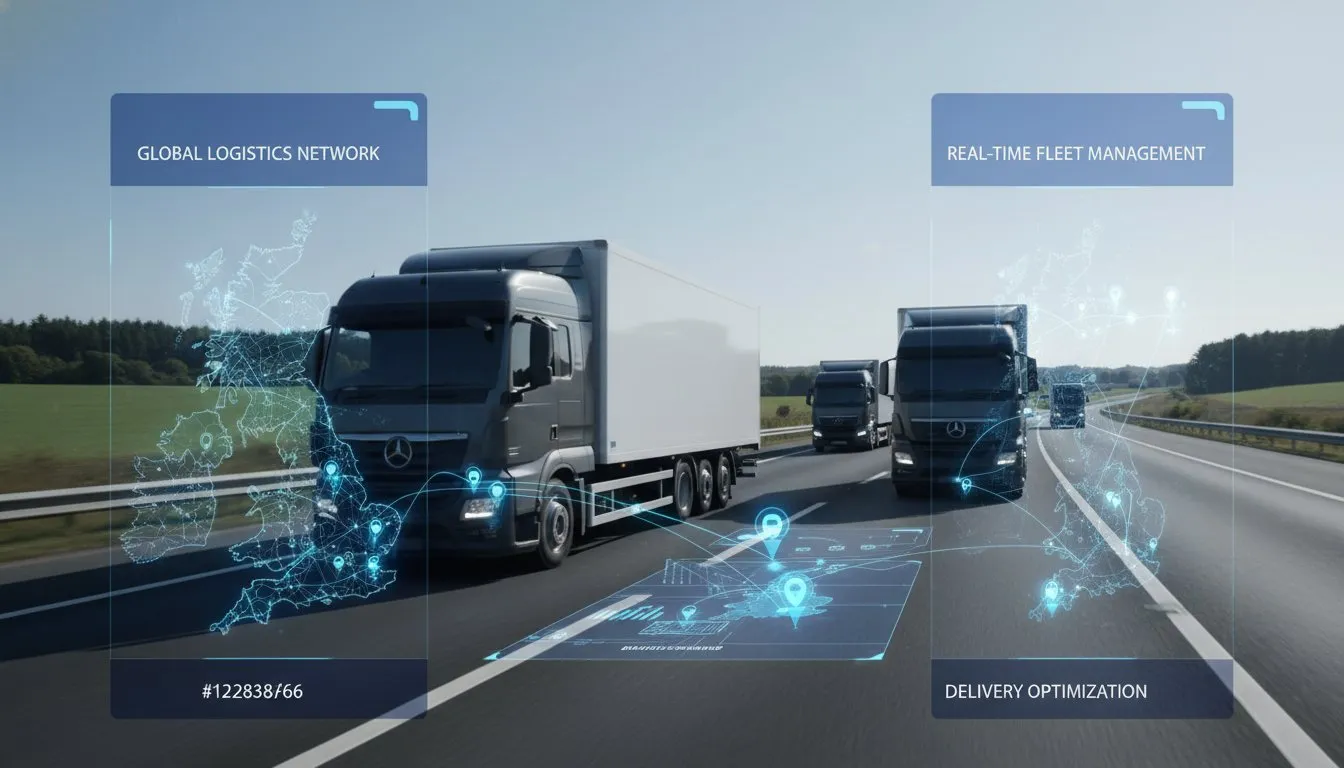
Many operators still believe they only need asset tracking to recover stolen trailers. This is a narrow view that ignores the regulatory pressure of modern UK haulage. Whilst theft recovery is a valuable benefit, the primary role of tracking hardware in 2026 is protecting your Operator Licence. The Future of Asset Tracking Solutions lies in this intersection of logistics and law. Digital data provides an indisputable audit trail of vehicle movements, proving that your fleet is operating within the legal framework at all times.
Professional Competence is a core requirement of your O-Licence. It requires you to have continuous and effective control over your transport activities. If a vehicle is pulled over for a DVSA roadside stop, having access to accurate location data provides immediate evidence of your oversight. It shows you know exactly where your assets are, who is pulling them, and whether they are sticking to planned routes. This transparency builds trust with authorities and helps safeguard your business from the risk of public inquiries or licence revocation.
Supporting Your DVSA Earned Recognition Status
For fleets aiming for or maintaining Earned Recognition, automated data is essential. The system monitors your assets to ensure you never miss a scheduled Periodic Maintenance Inspection (PMI). By linking location data to your maintenance schedule, you can ensure trailers are returned to the correct depot in time for their safety checks. This level of digital record-keeping proves a manager is in effective control of the fleet. It replaces the unreliable nature of manual logs with a transparent, automated system that satisfies the most rigorous audit standards.
Integrating Tracking with Remote Tachograph Downloads
There is a powerful synergy between knowing where a truck is and knowing the driver’s current hours. Fleetalyse combines location data with live tachograph monitoring to give you a complete operational picture. You no longer have to cross-reference multiple systems to see if a driver has the remaining hours to complete a specific journey. Unifying these systems significantly reduces administrative hours. It removes the need for manual data entry and ensures that your compliance reporting is based on real-time, accurate information from the road. This integrated approach allows you to manage by exception, identifying and correcting potential infringements before they become serious regulatory issues.
Choosing the Right Tracking Hardware for Your Fleet
Selecting the correct asset tracking hardware is a balancing act between data requirements and physical constraints. You must decide how often you actually need a location update. A trailer pinging its location every ten minutes provides high visibility but will exhaust its battery within weeks. Conversely, a device that reports once a day can last for years. Most UK operators find a middle ground, such as four updates a day or "movement-only" alerts, to ensure the unit remains active without constant maintenance.
Visibility shouldn't be restricted to the office desktop. Yard managers and drivers need a user-friendly mobile app to locate assets whilst on the move. Searching for a specific trailer in a dark, wet yard is a waste of time and a safety risk. A mobile interface allows staff to pinpoint equipment instantly. Also, ensure your hardware is future-proof. With 2G and 3G networks being phased out across the UK, investing in 4G or 5G compatible units is essential to avoid a costly fleet-wide upgrade in eighteen months.
Reliability is non-negotiable. When a unit fails in the field, you need UK-based support that understands the local infrastructure. Dealing with global call centres often leads to delays that your operation cannot afford. You can browse our professional tracking units to see hardware designed specifically for the rigours of British transport.
Key Features Every Transport Manager Needs
Effective management requires automated tools that flag issues before they become crises. Essential features include geofence alerts to notify you if an asset moves outside of your yard during unauthorised hours. Historical route reporting is equally vital; use these breadcrumb trails to resolve delivery disputes and prove exactly when a trailer arrived at a customer site. Finally, ensure your system provides low battery notifications for non-powered units so you can organise a recharge before the asset goes dark.
Evaluating the Total Cost of Ownership (TCO)
The headline price of a tracker is rarely the final cost. Be wary of cheap hardware that carries hidden roaming charges or high monthly subscription fees. A transparent contract with no hidden extras is always more cost-effective in the long run. Consider the ROI through improved asset utilisation; if asset tracking helps you find a "lost" trailer two days faster, the unit has paid for itself. Additionally, check for Thatcham-approved hardware, as many UK insurance companies offer lower premiums for fleets using certified security equipment.
Optimising Your Fleet with Fleetalyse Integrated Solutions
Modern transport management requires more than just raw data. You need a partner that understands the specific pressures of the UK road haulage industry. Fleetalyse positions itself as a specialist in transport compliance and asset tracking, offering a localized expertise that global software providers often lack. We don't just provide hardware. We provide a "single pane of glass" that unifies your remote tachograph downloads, live driver hours, and asset locations into one manageable dashboard. This integration allows you to move from reactive firefighting to proactive fleet management.
Transparency is the foundation of our service. Unlike many competitors, we provide clear financial and contractual details upfront. There are no hidden complexities or unexpected roaming fees. Our goal is to ensure your operation remains profitable whilst staying strictly compliant with DVSA standards. By centralising your data, you reduce the risk of human error and eliminate the need to cross-reference multiple platforms. It's a straightforward, efficient approach built for the rigours of real-world application.
Why Fleetalyse Understands the UK Haulier
We focus specifically on regional operators and the unique challenges of the UK market. Our pragmatic expert approach focuses on solving your compliance headaches rather than selling flashy, unnecessary features. One of our core strengths is the seamless integration with your existing tachograph analysis software. This means that when you check an asset's location, you're seeing it alongside the driver's current legal standing. It provides a complete operational picture that helps you make faster, safer, and more profitable scheduling decisions amongst your mobile fleet.
Getting Started: From Audit to Implementation
Onboarding with Fleetalyse is a logical and efficient process. We begin by understanding your current fleet structure and identifying the specific tracking needs for your powered and non-powered units. Our implementation team ensures that the hardware is installed correctly and that your office staff are fully trained on the dashboard. We provide ongoing support to ensure the system delivers maximum ROI, focusing on reducing fuel waste and improving asset utilisation from day one. Digital asset tracking shouldn't be a burden. It should be the catalyst for your operational improvement.
Don't leave your compliance to chance. Take control of your fleet visibility and protect your Operator Licence with a system designed for the British transport industry. Book a demo of the Fleetalyse asset tracking platform today and see how our integrated solutions can streamline your business.
Secure Your Fleet’s Future
Effective fleet management in 2026 demands more than just knowing where your trucks are. Integrating asset tracking with your compliance workflow protects your Operator Licence and streamlines daily operations. By choosing ruggedised, 4G-compatible hardware and unifying your data through a single dashboard, you eliminate the administrative burden of manual logging. This proactive approach ensures you're always prepared for a DVSA audit whilst maintaining full visibility over every trailer and van in your fleet.
We're here to help you move away from reactive firefighting. Fleetalyse provides UK-based expert support and specialises specifically in HGV and trailer compliance. We believe in absolute transparency; you'll find no hidden fees or complex jargon in our agreements. Our systems are built for the practical rigours of the British transport industry, providing the reliable data you need to make informed decisions. It's time to transform your mobile assets into a source of operational strength.
See our published pricing for your fleet tracking needs and start optimising your operations today. Your fleet deserves a partner that values your time and resources as much as you do.
Frequently Asked Questions
What is the difference between vehicle tracking and asset tracking?
Vehicle tracking typically monitors powered units like HGVs and vans, focusing on driver behaviour and live telematics. Asset tracking is a broader solution designed to monitor everything from non-powered trailers to plant machinery. Whilst vehicle tracking relies on the engine's power, asset trackers often use independent, long-life batteries to provide visibility over equipment that isn't always coupled to a tractor unit.
Do I need to charge the battery on a trailer tracker?
Most modern trailer trackers are fit and forget units that don't require manual charging. They use high-capacity internal batteries designed to last for several years or solar-assisted panels that trickle-charge the device during daylight hours. You'll receive an automated notification if a battery level drops below a certain threshold, allowing you to organise a replacement or recharge before the unit goes dark.
Can asset tracking help with my Operator Licence compliance?
Yes, asset tracking is a vital tool for maintaining your Operator Licence and proving effective control over your fleet. It creates a digital audit trail of vehicle movements and ensures you never miss a Periodic Maintenance Inspection (PMI). This automated data collection satisfies DVSA requirements and helps you maintain the high standards necessary for Earned Recognition status without the administrative burden of manual logging.
Will these trackers work whilst my vehicles are in Europe?
Our tracking solutions are designed to operate seamlessly whilst your vehicles are in Europe. Most units use multi-network roaming SIMs that connect to the strongest available signal across the continent. This ensures you maintain full visibility of your trailers and HGVs during international hauls. You should always verify the specific roaming terms in your contract to ensure there are no unexpected data charges for cross-border movements.
How long does it take to install a tracker on an HGV?
A standard hardwired tracker installation for an HGV usually takes between 45 and 90 minutes. This process involves connecting the device to the vehicle's power and ignition systems, and often the CAN-bus network for deeper engine data. Because these are professional installations, they're typically carried out at your depot to minimise vehicle downtime and ensure the hardware is hidden securely from view.
Can I geofence my customer sites to monitor delivery times?
You can easily set up digital geofences around customer sites to automate your delivery monitoring. The system sends an instant alert the moment an asset enters or leaves these predefined boundaries. This provides indisputable evidence of arrival and departure times, helping you resolve delivery disputes and improve the accuracy of your customer billing without relying on manual driver logs.
Is the data from asset trackers secure and GDPR compliant?
All tracking data is handled with strict adherence to UK GDPR and industry security standards. Information is encrypted during transmission from the asset to the server and stored in secure data centres. We prioritise your data privacy and ensure that only authorised personnel have access to your fleet’s historical and live location records, protecting your business from unauthorised data exposure.
What happens if a tracker is tampered with or removed?
Professional trackers include anti-tamper technology that triggers an immediate alert if the unit is interfered with or disconnected. Because the hardware is often installed in a stealth location, it's difficult for unauthorised individuals to find. If a unit is moved without the ignition being active, the system's motion sensors will flag a potential theft, allowing you to take immediate action to recover the asset.
Frequently asked questions
Powered vs. Non-Powered Asset Tracking
Tracking an HGV or van is relatively straightforward because the vehicle provides a permanent power source. The hardware draws from the engine to provide constant, live updates. Non-powered assets, such as standalone trailers or plant machinery, present a different challenge. Historically, these were "black holes" in a fleet manager's visibility. Long-life battery technology has changed this. Modern trailer tracking units can now operate for years without a recharge, providing hauliers with precise location data even when the trailer is uncoupled in a remote yard. These devices are built for the rigours of the road, featuring rugged, weatherproof casings that withstand the harsh British weather.
The Role of GPS and Telematics in Modern Logistics
Understanding your fleet requires two distinct data points: location and behaviour. GPS provides the "where" by pinpointing the asset's coordinates on a map. Telematics provides the "how", offering insights into how the asset is being utilised. A critical factor here is the "ping rate". For high-value HGVs, you might require live, second-by-second updates. For a trailer sitting in storage, a scheduled daily update might suffice. This data is transmitted via cellular networks directly to your desktop or mobile app. It creates a seamless flow of information from the road to the office, allowing for faster response times and improved security amongst your mobile fleet. Managing a mixed fleet requires a dual approach to hardware. You can't treat a curtain-sider the same as a Scania tractor unit. Whilst both require reliable GPS data, the power availability and data requirements differ vastly. High-quality asset tracking relies on choosing the right tool for the specific job. For HGVs, this means hardwired units that pull data directly from the vehicle. For trailers, it means independent, long-life power sources that can survive months without being coupled to a tractor. British weather and road conditions are notoriously harsh on external hardware. Road salt, heavy rain, and constant vibrations will quickly destroy consumer-grade electronics. Professional-grade trackers must be ruggedised and rated to IP67 or IP69K standards. This ensures they remain operational through every jet wash and winter grit run. Effective monitoring helps you adhere to the standards set out in the Goods vehicle operator licensing guide, ensuring your fleet stays on the right side of the Traffic Commissioner. You can view our range of tracking hardware to find the best fit for your specific vehicle types.
Hardwired Trackers for HGVs and Vans
Hardwired units connect directly to the vehicle's electrical system and ignition. This allows for live, second-by-second updates whilst the engine is running. These devices do more than just report location; they monitor idling time and aggressive driver behaviour like harsh braking. CAN-bus integration is the gold standard for vehicle tracking. By tapping into the vehicle's internal data network, managers gain a transparent view of fuel consumption and engine health alongside GPS coordinates. This level of detail is crucial for reducing operational costs across your van and truck fleet.
Battery-Powered and Solar Solutions for Trailers
Trailer tracking requires a "fit and forget" philosophy. Modern units use high-capacity internal batteries that only wake up to transmit data at set intervals, such as once or twice a day. Solar-assisted units take this further by using small, reinforced panels to trickle-charge the battery, potentially extending the device's lifespan for several years. Security is a primary concern here. Most trailer trackers are designed for stealth installation, hidden within the chassis or behind light clusters. This prevents unit tampering and ensures that if a trailer is stolen, the asset tracking hardware remains active and undetected by thieves. Geofencing provides the final layer of operational control. By drawing digital boundaries around your distribution centres or customer sites, the system sends an instant alert if an asset moves without authorisation. This is particularly useful for managing "dead time" in busy yards. You'll know exactly when a trailer arrives, how long it has been parked, and the moment it departs. This automated data replaces the need for manual gate logs and provides an indisputable record of vehicle movements for your compliance files. Many operators still believe they only need asset tracking to recover stolen trailers. This is a narrow view that ignores the regulatory pressure of modern UK haulage. Whilst theft recovery is a valuable benefit, the primary role of tracking hardware in 2026 is protecting your Operator Licence. The Future of Asset Tracking Solutions lies in this intersection of logistics and law. Digital data provides an indisputable audit trail of vehicle movements, proving that your fleet is operating within the legal framework at all times. Professional Competence is a core requirement of your O-Licence. It requires you to have continuous and effective control over your transport activities. If a vehicle is pulled over for a DVSA roadside stop, having access to accurate location data provides immediate evidence of your oversight. It shows you know exactly where your assets are, who is pulling them, and whether they are sticking to planned routes. This transparency builds trust with authorities and helps safeguard your business from the risk of public inquiries or licence revocation.
Supporting Your DVSA Earned Recognition Status
For fleets aiming for or maintaining Earned Recognition, automated data is essential. The system monitors your assets to ensure you never miss a scheduled Periodic Maintenance Inspection (PMI). By linking location data to your maintenance schedule, you can ensure trailers are returned to the correct depot in time for their safety checks. This level of digital record-keeping proves a manager is in effective control of the fleet. It replaces the unreliable nature of manual logs with a transparent, automated system that satisfies the most rigorous audit standards.
Integrating Tracking with Remote Tachograph Downloads
There is a powerful synergy between knowing where a truck is and knowing the driver’s current hours. Fleetalyse combines location data with live tachograph monitoring to give you a complete operational picture. You no longer have to cross-reference multiple systems to see if a driver has the remaining hours to complete a specific journey. Unifying these systems significantly reduces administrative hours. It removes the need for manual data entry and ensures that your compliance reporting is based on real-time, accurate information from the road. This integrated approach allows you to manage by exception, identifying and correcting potential infringements before they become serious regulatory issues. Selecting the correct asset tracking hardware is a balancing act between data requirements and physical constraints. You must decide how often you actually need a location update. A trailer pinging its location every ten minutes provides high visibility but will exhaust its battery within weeks. Conversely, a device that reports once a day can last for years. Most UK operators find a middle ground, such as four updates a day or "movement-only" alerts, to ensure the unit remains active without constant maintenance. Visibility shouldn't be restricted to the office desktop. Yard managers and drivers need a user-friendly mobile app to locate assets whilst on the move. Searching for a specific trailer in a dark, wet yard is a waste of time and a safety risk. A mobile interface allows staff to pinpoint equipment instantly. Also, ensure your hardware is future-proof. With 2G and 3G networks being phased out across the UK, investing in 4G or 5G compatible units is essential to avoid a costly fleet-wide upgrade in eighteen months. Reliability is non-negotiable. When a unit fails in the field, you need UK-based support that understands the local infrastructure. Dealing with global call centres often leads to delays that your operation cannot afford. You can browse our professional tracking units to see hardware designed specifically for the rigours of British transport.
Key Features Every Transport Manager Needs
Effective management requires automated tools that flag issues before they become crises. Essential features include geofence alerts to notify you if an asset moves outside of your yard during unauthorised hours. Historical route reporting is equally vital; use these breadcrumb trails to resolve delivery disputes and prove exactly when a trailer arrived at a customer site. Finally, ensure your system provides low battery notifications for non-powered units so you can organise a recharge before the asset goes dark.
Evaluating the Total Cost of Ownership (TCO)
The headline price of a tracker is rarely the final cost. Be wary of cheap hardware that carries hidden roaming charges or high monthly subscription fees. A transparent contract with no hidden extras is always more cost-effective in the long run. Consider the ROI through improved asset utilisation; if asset tracking helps you find a "lost" trailer two days faster, the unit has paid for itself. Additionally, check for Thatcham-approved hardware, as many UK insurance companies offer lower premiums for fleets using certified security equipment. Modern transport management requires more than just raw data. You need a partner that understands the specific pressures of the UK road haulage industry. Fleetalyse positions itself as a specialist in transport compliance and asset tracking, offering a localized expertise that global software providers often lack. We don't just provide hardware. We provide a "single pane of glass" that unifies your remote tachograph downloads, live driver hours, and asset locations into one manageable dashboard. This integration allows you to move from reactive firefighting to proactive fleet management. Transparency is the foundation of our service. Unlike many competitors, we provide clear financial and contractual details upfront. There are no hidden complexities or unexpected roaming fees. Our goal is to ensure your operation remains profitable whilst staying strictly compliant with DVSA standards. By centralising your data, you reduce the risk of human error and eliminate the need to cross-reference multiple platforms. It's a straightforward, efficient approach built for the rigours of real-world application.
Why Fleetalyse Understands the UK Haulier
We focus specifically on regional operators and the unique challenges of the UK market. Our pragmatic expert approach focuses on solving your compliance headaches rather than selling flashy, unnecessary features. One of our core strengths is the seamless integration with your existing tachograph analysis software. This means that when you check an asset's location, you're seeing it alongside the driver's current legal standing. It provides a complete operational picture that helps you make faster, safer, and more profitable scheduling decisions amongst your mobile fleet.
Getting Started: From Audit to Implementation
Onboarding with Fleetalyse is a logical and efficient process. We begin by understanding your current fleet structure and identifying the specific tracking needs for your powered and non-powered units. Our implementation team ensures that the hardware is installed correctly and that your office staff are fully trained on the dashboard. We provide ongoing support to ensure the system delivers maximum ROI, focusing on reducing fuel waste and improving asset utilisation from day one. Digital asset tracking shouldn't be a burden. It should be the catalyst for your operational improvement. Don't leave your compliance to chance. Take control of your fleet visibility and protect your Operator Licence with a system designed for the British transport industry. Book a demo of the Fleetalyse asset tracking platform today and see how our integrated solutions can streamline your business. Effective fleet management in 2026 demands more than just knowing where your trucks are. Integrating asset tracking with your compliance workflow protects your Operator Licence and streamlines daily operations. By choosing ruggedised, 4G-compatible hardware and unifying your data through a single dashboard, you eliminate the administrative burden of manual logging. This proactive approach ensures you're always prepared for a DVSA audit whilst maintaining full visibility over every trailer and van in your fleet. We're here to help you move away from reactive firefighting. Fleetalyse provides UK-based expert support and specialises specifically in HGV and trailer compliance. We believe in absolute transparency; you'll find no hidden fees or complex jargon in our agreements. Our systems are built for the practical rigours of the British transport industry, providing the reliable data you need to make informed decisions. It's time to transform your mobile assets into a source of operational strength. See our published pricing for your fleet tracking needs and start optimising your operations today. Your fleet deserves a partner that values your time and resources as much as you do.
What is the difference between vehicle tracking and asset tracking?
Vehicle tracking typically monitors powered units like HGVs and vans, focusing on driver behaviour and live telematics. Asset tracking is a broader solution designed to monitor everything from non-powered trailers to plant machinery. Whilst vehicle tracking relies on the engine's power, asset trackers often use independent, long-life batteries to provide visibility over equipment that isn't always coupled to a tractor unit.
Do I need to charge the battery on a trailer tracker?
Most modern trailer trackers are fit and forget units that don't require manual charging. They use high-capacity internal batteries designed to last for several years or solar-assisted panels that trickle-charge the device during daylight hours. You'll receive an automated notification if a battery level drops below a certain threshold, allowing you to organise a replacement or recharge before the unit goes dark.
Can asset tracking help with my Operator Licence compliance?
Yes, asset tracking is a vital tool for maintaining your Operator Licence and proving effective control over your fleet. It creates a digital audit trail of vehicle movements and ensures you never miss a Periodic Maintenance Inspection (PMI). This automated data collection satisfies DVSA requirements and helps you maintain the high standards necessary for Earned Recognition status without the administrative burden of manual logging.
Will these trackers work whilst my vehicles are in Europe?
Our tracking solutions are designed to operate seamlessly whilst your vehicles are in Europe. Most units use multi-network roaming SIMs that connect to the strongest available signal across the continent. This ensures you maintain full visibility of your trailers and HGVs during international hauls. You should always verify the specific roaming terms in your contract to ensure there are no unexpected data charges for cross-border movements.
How long does it take to install a tracker on an HGV?
A standard hardwired tracker installation for an HGV usually takes between 45 and 90 minutes. This process involves connecting the device to the vehicle's power and ignition systems, and often the CAN-bus network for deeper engine data. Because these are professional installations, they're typically carried out at your depot to minimise vehicle downtime and ensure the hardware is hidden securely from view.
Can I geofence my customer sites to monitor delivery times?
You can easily set up digital geofences around customer sites to automate your delivery monitoring. The system sends an instant alert the moment an asset enters or leaves these predefined boundaries. This provides indisputable evidence of arrival and departure times, helping you resolve delivery disputes and improve the accuracy of your customer billing without relying on manual driver logs.
Is the data from asset trackers secure and GDPR compliant?
All tracking data is handled with strict adherence to UK GDPR and industry security standards. Information is encrypted during transmission from the asset to the server and stored in secure data centres. We prioritise your data privacy and ensure that only authorised personnel have access to your fleet’s historical and live location records, protecting your business from unauthorised data exposure.
What happens if a tracker is tampered with or removed?
Professional trackers include anti-tamper technology that triggers an immediate alert if the unit is interfered with or disconnected. Because the hardware is often installed in a stealth location, it's difficult for unauthorised individuals to find. If a unit is moved without the ignition being active, the system's motion sensors will flag a potential theft, allowing you to take immediate action to recover the asset.